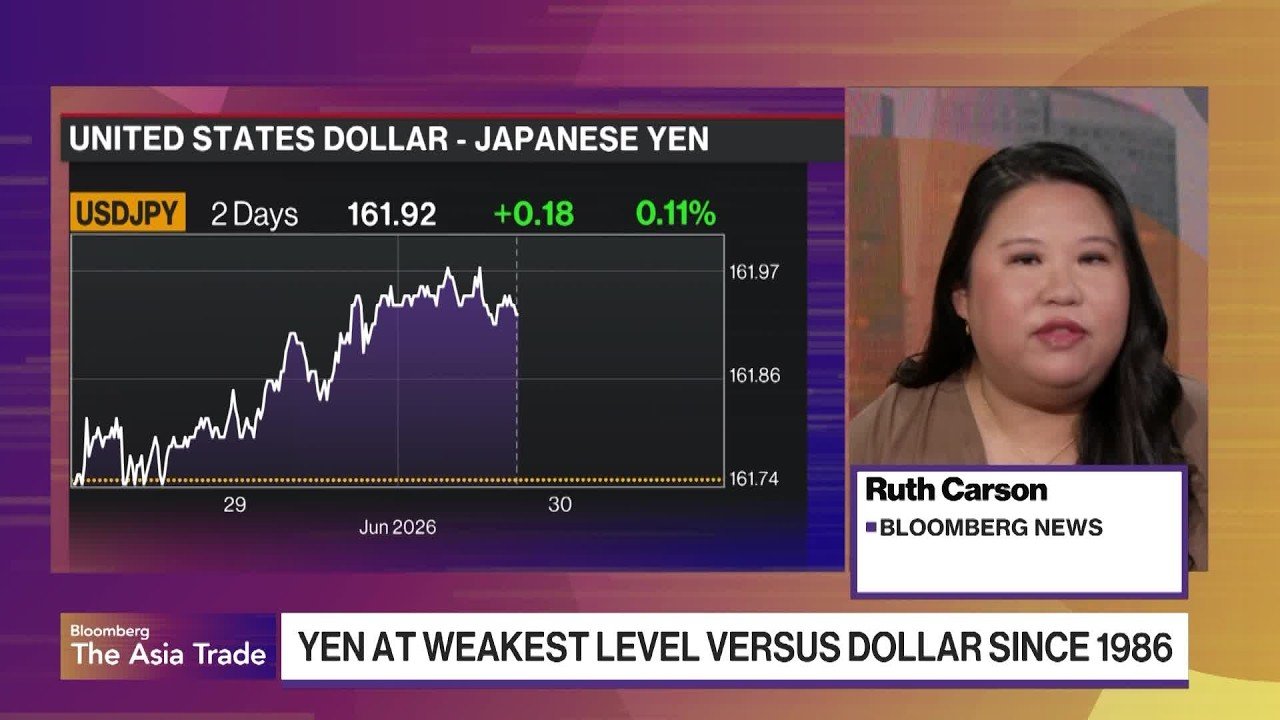




The Japanese yen has fallen to its weakest level in four decades, with the dollar briefly pushing through the 162 yen zone and traders now watching closely for another round of government intervention.
The currency’s slide has revived fears of imported inflation, renewed scrutiny of the Bank of Japan’s policy stance, and fresh speculation that Tokyo may be preparing a more secretive “ambush” style of intervention.
The move underscores a structural problem Japan has struggled to contain: a wide interest-rate gap with the United States.
Reuters reported that even after the Bank of Japan lifted rates to around 1%, US policy remained much tighter, keeping yield-seeking capital tilted toward dollar assets. That gap has been reinforced by carry-trade flows, in which investors borrow cheap yen and invest in higher-yielding currencies and assets elsewhere.
What’s driving the drop
Japan’s currency weakness is not being caused by one event alone. Rising US yields, persistent rate differentials, and the yen carry trade have all kept pressure on the currency, while geopolitical stress and higher energy prices have added another layer of demand for dollars from Japanese importers.
Reuters also noted that Tokyo has been monitoring the 160-per-dollar level closely, a threshold many traders treat as a warning line for possible action.
The yen’s weakness has also been amplified by market positioning. Traders have rebuilt short yen bets, and Reuters reported that the largest short positions in nearly two years have encouraged momentum against the currency. That makes the market especially vulnerable to sharp reversals if officials intervene unexpectedly or if US data weakens the dollar.
Tokyo’s response
Japan’s authorities have already spent heavily trying to slow the slide. Reuters said the government intervened with roughly 11.7trillion yen, or about $72billion to $74billion, in late April and early May, but the market quickly erased those gains. Finance Minister Satsuki Katayama has continued to signal readiness to act, while Reuters reported that Japanese officials remain in close contact with U.S. counterparts.
A notable shift is the reported move toward surprise intervention rather than advance warnings. Reuters sources said Japan is increasingly relying on silence to catch short sellers off guard, especially during thin trading windows such as US holidays. That tactic may create short-term volatility, but analysts quoted by Reuters warned it cannot solve the underlying problem of a strong dollar and relatively low Japanese yields.
Why it matters
A weak yen helps some exporters, but it also raises the cost of imports, especially food, fuel, and industrial inputs. Reuters said Tokyo inflation data had already accelerated, and the currency’s decline threatens to deepen cost-of-living pressure for households that are still absorbing higher living expenses. That is especially painful for smaller firms, which have less pricing power and are more exposed to imported costs.
The broader market risk is that a disorderly unwind of yen carry trades could spill into global assets, including equities and bonds. For now, the yen remains trapped between structural policy weakness and the threat of sudden official action, leaving traders braced for outsized moves in both directions.