



Amazon officially entered the exclusive US$3trillion market capitalization club on August 3, 2026, after its shares jumped roughly 5% to close at a record US$285.79. The milestone caps a multi-day surge that added more than US$550billion in market value following a blockbuster second-quarter earnings report that blew past Wall Street expectations.
With the move, Amazon became only the fifth company in history to reach a US$3trillion valuation, joining Nvidia, Alphabet, Apple and Microsoft at the pinnacle of global equities.
Earnings beat triggers historic rally
The rally was ignited by Amazon’s Q2 2026 results, released on July 30, which showed net sales rising 20% year-over-year to US$200.6billion — the first time the company has crossed the US$200billion mark in a single quarter. Operating income climbed 43% to US$27.5billion, while earnings per share came in at US$5.75, far exceeding analyst estimates of around US$1.82.
Shares responded immediately, with the stock rallying double digits post-earnings and continuing to climb into the following week as analysts upgraded price targets and reaffirmed “buy” ratings.
AWS and AI monetization drive the re-rating
The core of the re-rating was Amazon Web Services, which posted its fastest growth in 18 quarters. AWS revenue jumped 37% year-over-year to US$42.2billion in Q2, lifting the unit’s annualized revenue run rate to about US$169billion. Operating margin for AWS reached 39.4%, with operating income of US$16.6billion in the quarter.
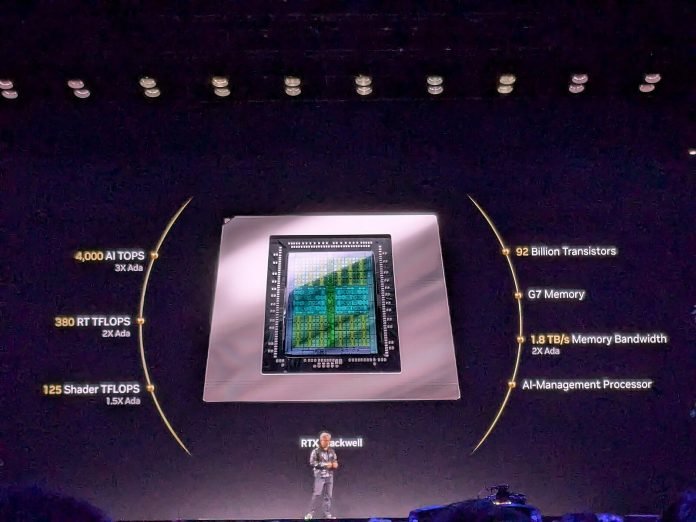
Management highlighted that both Amazon’s AI services business and its custom silicon (chips) division have now each surpassed a US$25billion annualized revenue run rate, growing at triple-digit rates. AWS CEO Matt Garman and CEO Andy Jassy have repeatedly pointed to surging demand for AI training and inference capacity as a key driver, with Jassy noting that AI demand could outstrip available cloud capacity into 2027–2028.
The backlog underlines that momentum: AWS now sits on a US$496billion contract backlog, growing at triple-digit rates, according to the company’s earnings disclosures.
Anthropic investment masks underlying profitability
A large portion of Amazon’s headline net income in Q2 came from accounting gains rather than operating profit. Net income soared to US$62.6billion, but that figure includes a US$53.4billion non-operating pre-tax gain primarily from revaluing Amazon’s stake in Anthropic, the maker of the Claude AI models.
Excluding that one-off gain, Amazon’s core operating performance was still strong, with operating income up 43% and AWS margins expanding, but the Anthropic revaluation significantly boosted the bottom-line print.
Other segments also contributed: digital advertising revenue grew 26% year-over-year to US$19.8billion, supported by AI-enhanced shopping tools and Prime Video ad inventory, according to company commentary and analyst notes.
Capital spending ramps up to defend cloud lead
To protect its position against rivals in the hyperscaler race, Amazon is aggressively scaling infrastructure. The company raised its full-year 2026 capital expenditure outlook to roughly US$220billion, the highest capex budget on Wall Street, aimed at securing data centers, specialized AI chips, and memory through 2028.
In Q2 alone, capital expenditures hit US$54.2billion, up about 68% year-over-year, reflecting the intensity of the AI build-out. On a trailing-twelve-month basis, free cash flow turned negative, with around US$7.6billion in cash burn as heavy investment outpaced operating cash generation.
Management’s message to investors has been that this spending is necessary to capture long-term AI-driven cloud demand, with AWS positioning AI revenues as an increasing share of total cloud sales.
Where Amazon stands among the $3trillion elite
Amazon’s entry into the US$3trillion club places it firmly among the world’s most valuable companies, though it still trails the current leaders by market cap. As of early August 2026, approximate valuations were:
- Nvidia: Approximately US$5.00trillion
- Alphabet: Approximately US$4.55trillion
- Apple: Approximately US$4.42trillion
- Microsoft: Approximately US$3.62trillion
- Amazon: Approximately US$3.06trillion
These figures fluctuate daily with share-price movements, but the ranking underscores Amazon’s position as the fifth member of the US$3trillion cohort.
The pace of Amazon’s ascent has accelerated: it took more than six years to move from US$1trillion in 2018 to US$2trillion in June 2024, but just over two years to add the third trillion.