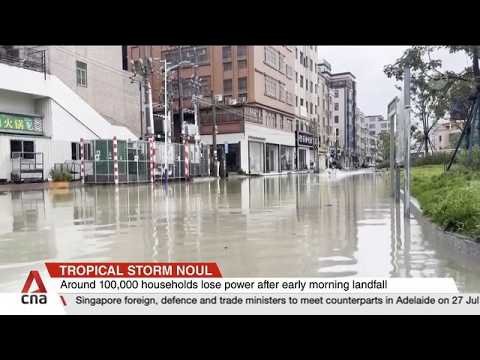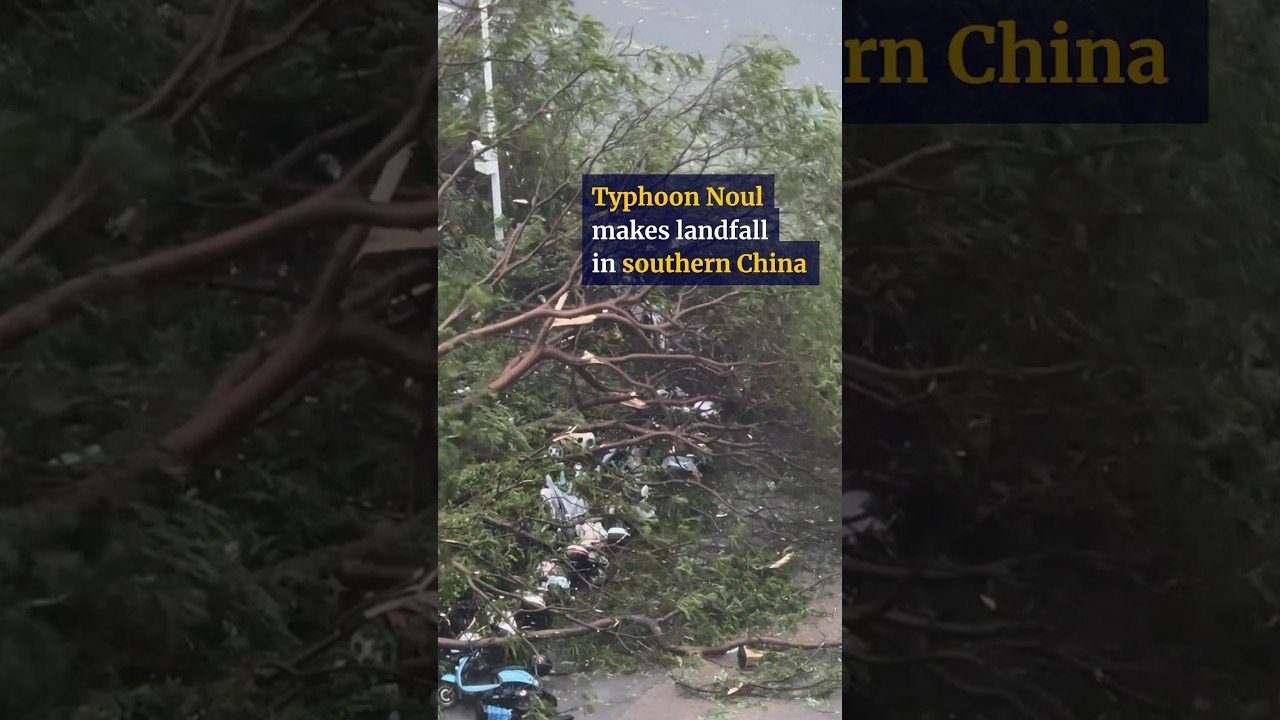



Typhoon Noul made landfall in southern China on Sunday, bringing destructive winds, heavy rain and widespread disruption across Guangdong province and surrounding areas. The storm arrived after authorities had already moved large numbers of residents from vulnerable coastal and low-lying communities, with emergency planners warning of flash flooding, landslides and transport chaos.
The typhoon struck during a period of heightened seasonal flood risk, adding pressure to local authorities already managing summer weather hazards. In several areas, the main threat shifted quickly from wind damage to persistent rainfall and water accumulation.
Landfall in Huizhou
Noul came ashore in Huizhou, on Guangdong’s coast, in the early hours of Sunday morning. At landfall, it packed maximum sustained winds of around 140 km/h, according to the figures included in the reporting you provided.
The storm’s broad circulation brought intense rain bands across the Pearl River Delta and nearby coastal districts. Even after landfall, the system continued to produce dangerous weather conditions inland as it tracked farther into southern China.
Large-scale evacuations
Authorities evacuated more than 715,000 residents across Guangdong province ahead of the storm, while another 23,000 people were moved in neighboring Fujian province. The evacuations were concentrated in areas most exposed to storm surge, flooding and wind damage.
Local governments also appeared to prioritize people in older housing blocks, coastal neighborhoods and areas with weaker drainage systems. That scale of movement suggests officials were treating Noul as a serious regional emergency rather than a routine weather event.
Transport disruption
The typhoon caused major disruption across southern China’s transport network. Rail services were suspended in Guangdong, while ferry routes and bridge operations were also halted in exposed coastal areas.
Air travel was heavily affected as well, with hundreds of flights cancelled or delayed across Hong Kong and southern China. The disruption spread through major hubs including Hong Kong, Guangzhou, Shenzhen, Zhuhai and Xiamen, underscoring how quickly typhoons can paralyze one of Asia’s busiest transport corridors.
Hong Kong impact
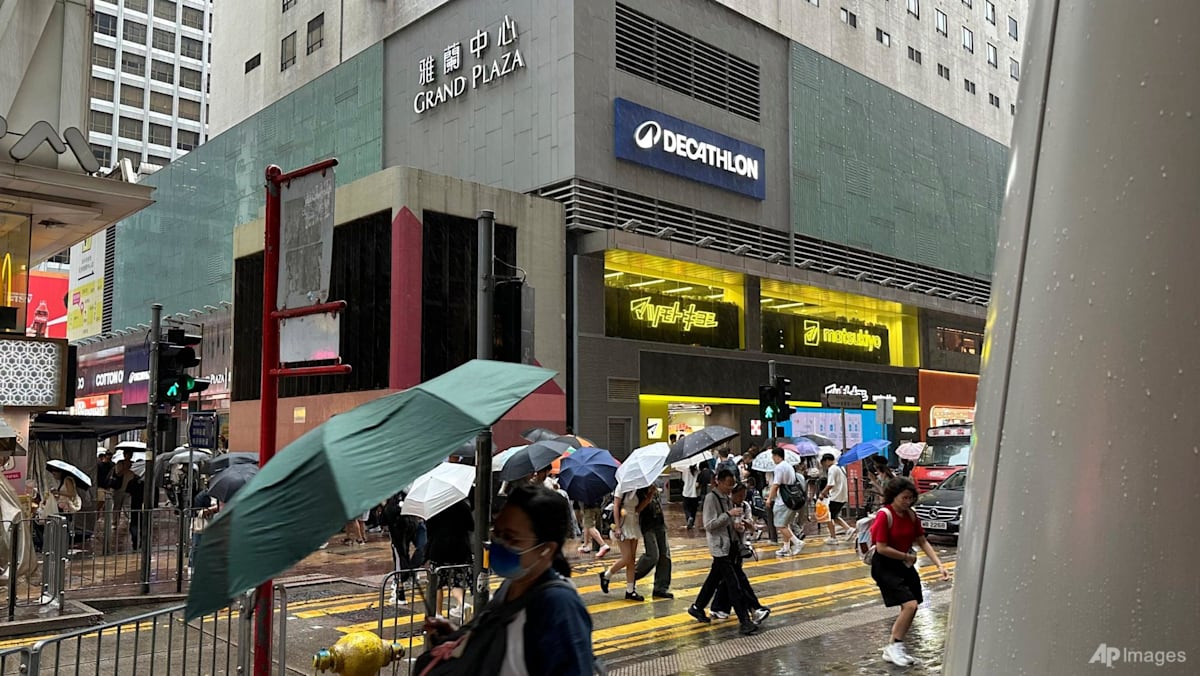
Hong Kong was also hit by the storm’s outer bands, with strong winds, heavy rain and travel cancellations affecting the city through the weekend. The Hong Kong-Zhuhai-Macao Bridge was closed, and many airlines reduced or suspended flights to and from the territory.
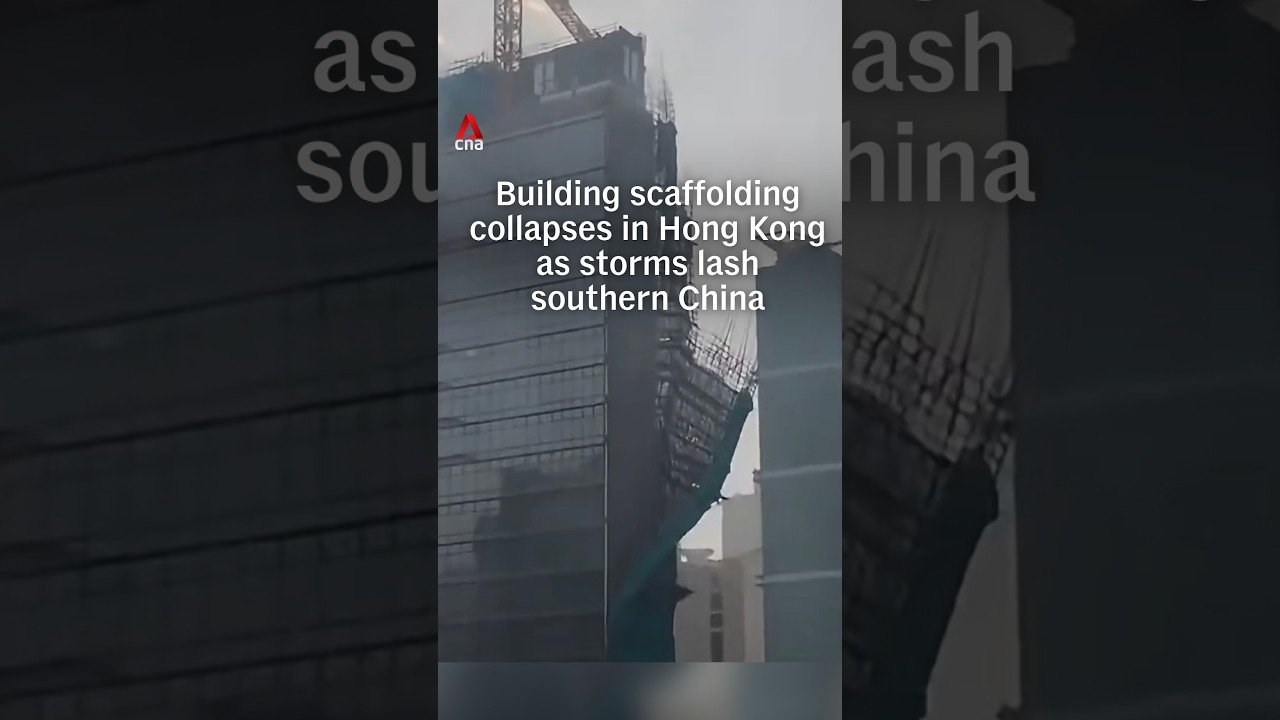
Storm-related damage was also reported in the city, including high-rise scaffolding failures. Those incidents are a recurring hazard in Hong Kong during severe wind events, especially in dense urban districts with major construction activity.
Flood risk and warnings
Meteorological authorities warned that localized rainfall totals could reach 500 to 600 millimeters in parts of eastern Guangdong and southern Fujian. That level of rainfall raises the risk of flash floods, road washouts and landslides, especially in steep or poorly drained areas.
In addition to Guangdong and Fujian, inland provinces such as Jiangxi and Hunan were also watching the storm’s path closely. Even where the typhoon’s winds weakened, the rainfall threat remained significant as the system moved inland.
Regional reach
The storm’s effects were not confined to mainland China. Rainbands also brushed past parts of southern and eastern Taiwan, adding to the wider regional weather disruption.
That broad footprint reflects the size and reach of tropical systems in the South China Sea, where one storm can affect multiple territories, ports and air corridors within a short period of time. For shipping, aviation and emergency planners, that kind of regional overlap is often as disruptive as the landfall itself.
Ongoing concerns
As Noul moved inland, the biggest concern shifted to continued rainfall, swollen rivers and localized flooding. Authorities remained on alert for waterlogging, infrastructure strain and further transport delays as the storm weakened.
Even after the center of the storm passes, the aftermath can remain dangerous for hours or days. In southern China’s summer flood season, that lingering rainfall risk is often what turns a typhoon from a weather event into a wider public safety emergency.