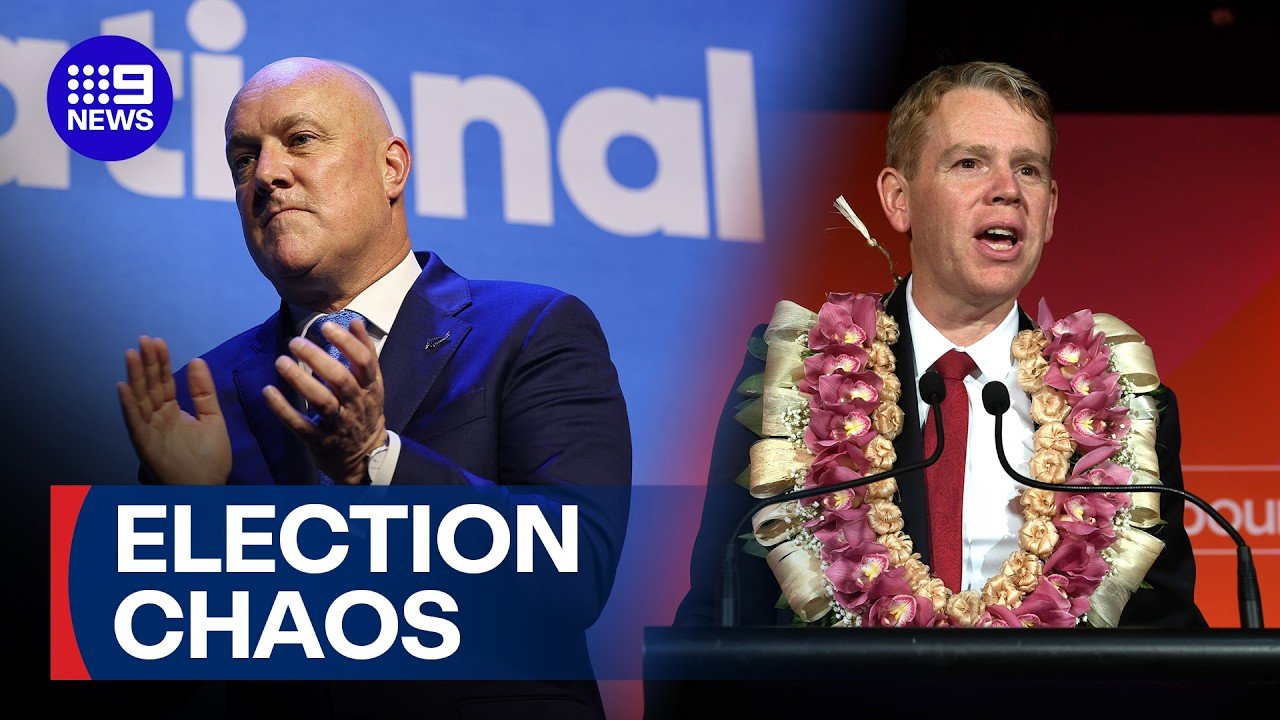


























Labour leads the party vote, but Christopher Luxon’s centre-right partners hold a provisional parliamentary majority. About 400,000 uncounted special votes could determine whether they can govern without additional support.
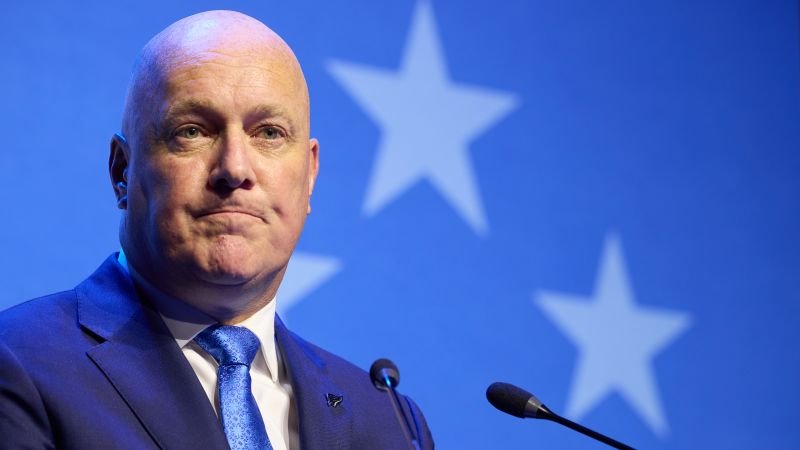
New Zealand’s election has left Prime Minister Christopher Luxon’s centre-right coalition holding a fragile parliamentary advantage, with hundreds of thousands of outstanding votes still capable of changing the path to government. Preliminary results from the November 7 election give National, ACT and New Zealand First a combined 67 seats in an enlarged 131-member Parliament, where 66 seats would constitute a majority.
Labour, led by former prime minister Chris Hipkins, narrowly leads National in the party vote: 29.36% against 29.21%, a difference of 3,650 votes. National nevertheless holds more projected seats because its strong performance in local electorates has produced an unusually large overhang, expanding Parliament beyond its standard 120 members.
The result is not a confirmed hung parliament: the incumbent parties currently have enough seats to govern together. But their position remains provisional, with approximately 400,000 special votes outstanding and official results scheduled for Friday, November 27.
Where the preliminary results stand
National is projected to hold 42 seats, all won in electorates, compared with Labour’s 36. ACT’s 13 seats and New Zealand First’s 12 bring the incumbent coalition to 67. Labour, the Greens and Te Pāti Māori together hold 57, while the Opportunity Party has seven.
| Party | Preliminary party vote | Electorate seats | List seats | Total seats |
|---|---|---|---|---|
| National | 29.2% | 42 | 0 | 42 |
| Labour | 29.4% | 21 | 15 | 36 |
| Green Party | 13.3% | 2 | 14 | 16 |
| ACT New Zealand | 10.9% | 1 | 12 | 13 |
| New Zealand First | 9.8% | 0 | 12 | 12 |
| Opportunity Party | 6.0% | 0 | 7 | 7 |
| Te Pāti Māori | 0.6% | 5 | 0 | 5 |
| Total seats | — | 71 | 60 | 131 |
Source: RNZ’s preliminary results, using Electoral Commission data. Electorate figures represent current leads, not confirmed wins.
The figures show a shift within the centre-right as well as between the competing blocs. Westpac’s economics team said National had lost support to its coalition partners, while the centre-left grouping had picked up several seats. Opportunity’s entry into Parliament added another potential negotiating partner to an already fragmented result.
Why Labour can lead the vote but trail in seats
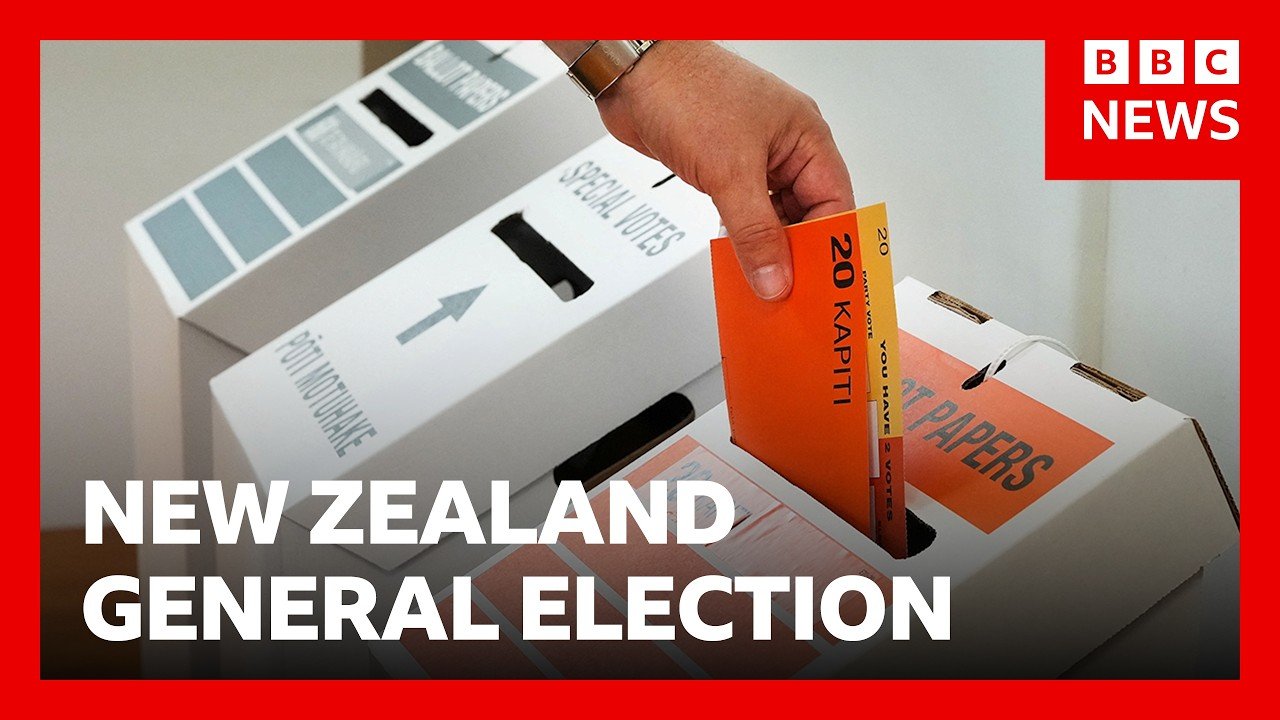
New Zealand’s mixed-member proportional system gives voters two votes: one for a local electorate candidate and another for a political party. The party vote generally determines a party’s overall share of parliamentary seats, with list MPs supplementing those elected in constituencies. Parties normally qualify for proportional representation by winning at least 5% of the party vote or one electorate.
An overhang occurs when a party wins more electorate seats than its party-vote entitlement would otherwise allow. Those electorate winners retain their places, and Parliament expands to accommodate the additional seats.
The preliminary allocation contains 11 overhang seats, arising from National and Te Pāti Māori winning more electorates than their proportional entitlements. National’s 42 electorate victories leave it with no list seats, explaining why it can hold six more seats than Labour despite receiving fewer party votes.
That distinction also explains why Labour’s narrow party-vote lead does not by itself establish a right to govern. The decisive question is which party or combination of parties can assemble sufficient parliamentary support.
Special votes could change both the seats and the majority threshold
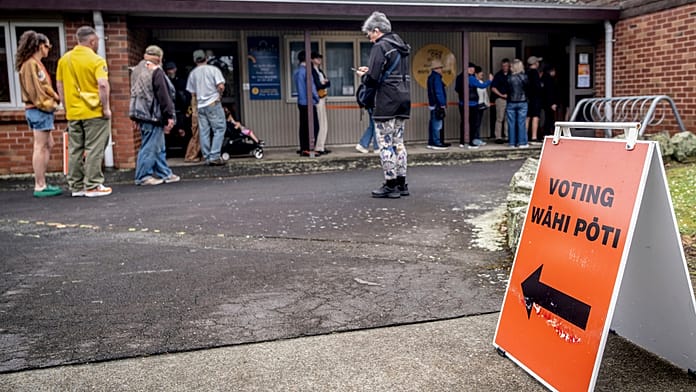
The Electoral Commission says the election-night results are indicative only. They are based on the initial count of ordinary votes and will change after special votes have been checked and counted.
The official count also involves recounting ordinary ballots, checking electoral rolls and validating special-vote declarations. Special votes, including overseas ballots, take considerably longer to process because officials must establish their validity before counting them.
Westpac estimates that about 400,000 special votes remain outstanding. Its economists said these votes have tended to reduce the centre-right parties’ combined vote share by around 1.6 to 1.7 percentage points, creating a risk that the incumbent grouping will lose its preliminary majority. That is an analytical assessment, not a prediction from the Electoral Commission.
Close electorate contests add another complication. Westpac identified the possibility of National losing two marginal electorates once the count is complete. Because electorate outcomes help determine the overhang, such changes could alter both the coalition’s seat total and the overall size of Parliament.
The current 66-seat majority threshold therefore should not be treated as fixed independently of the final allocation. It reflects the provisional 131-seat House.
Opportunity could become pivotal—but cannot yet choose the government
The Opportunity Party’s projected seven seats could become crucial if National, ACT and New Zealand First fall short after the final count. Its preliminary 6% party-vote share places it above the threshold for parliamentary representation.
Westpac considers a centre-right government the more likely eventual outcome, potentially relying on Opportunity through a confidence-and-supply agreement rather than full participation in Cabinet. Under that scenario, Opportunity could provide support for the government’s survival and funding in exchange for negotiated policy concessions. The bank presented this as a possible arrangement, not an agreement already reached.
Calling Opportunity an outright “kingmaker” is premature, however. On the current figures, Labour, the Greens and Te Pāti Māori would have 64 seats even with Opportunity’s seven—still below the provisional 66-seat majority threshold. A viable alternative government would therefore require a more favourable final allocation or additional parliamentary support.
Westpac nevertheless said a centre-left government could not be ruled out, particularly if special votes substantially improved its position and negotiations between Opportunity and the incumbent parties failed.
National’s electorate success comes with a personnel cost
National’s lack of list seats has consequences beyond coalition arithmetic. Finance Minister and deputy leader Nicola Willis is among the senior figures not returned on the preliminary allocation, according to Westpac.
The bank said Willis would continue in a caretaker capacity but would need to be replaced in a new centre-right government on those results. That would put the leadership of economic policy into the coalition negotiations as well as the broader question of who governs.
The outcome illustrates an important feature of MMP: a strong electorate result does not necessarily protect senior list-only candidates. When a party fills or exceeds its proportional entitlement through electorate victories, there may be no list places available.
What happens next
Luxon remains in office under caretaker conventions while the outcome is unresolved. The preliminary result leaves his existing coalition ahead, but without certainty that its majority will survive the official count.
The Electoral Commission has scheduled the official declaration for November 27. Westpac expects substantive coalition negotiations to gather momentum after that point and warns that recounts could cause further delays.
The policy stakes extend beyond the identity of the next prime minister. Westpac argues that a government dependent on several parties and a narrow parliamentary margin would face constraints on major changes: a centre-right administration could struggle to pursue its preferred pace of fiscal consolidation, while a centre-left arrangement might have to scale back tax and spending ambitions. Those are potential consequences of the parliamentary arithmetic, rather than settled outcomes of negotiations.