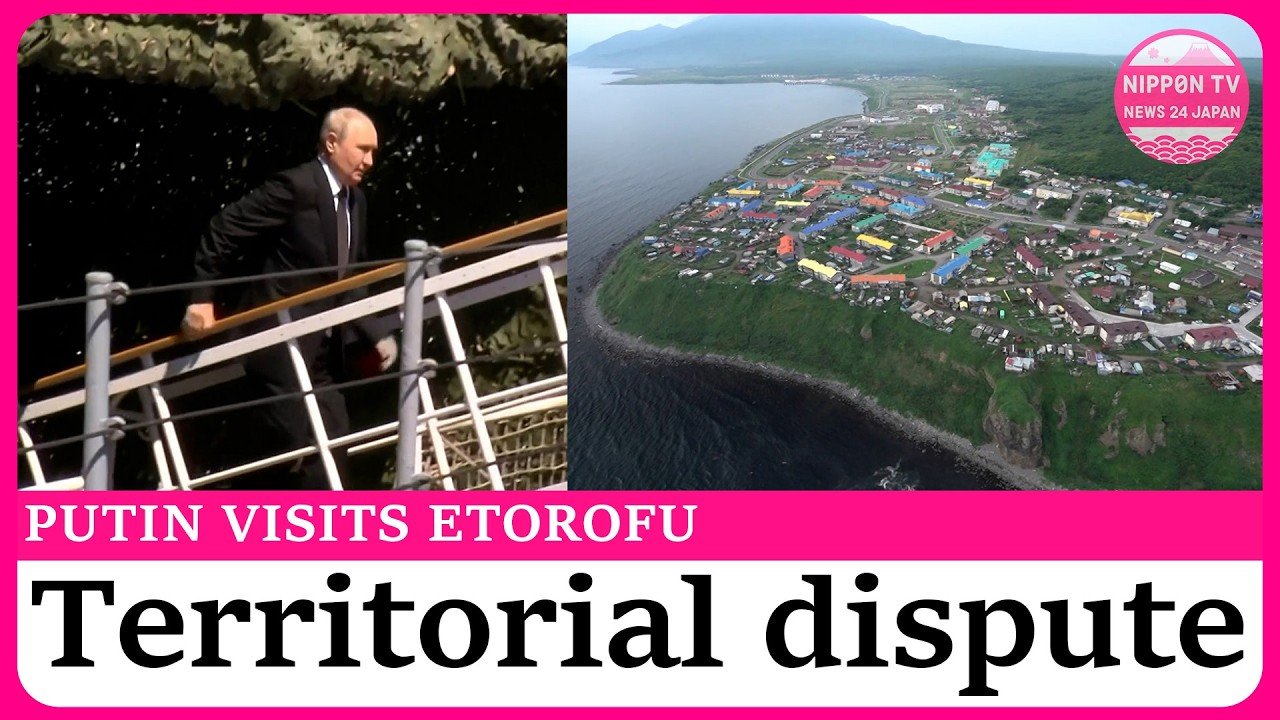



Russian President Vladimir Putin made his first-ever visit to the disputed Kuril Islands on Thursday, touring a fish-processing facility on Etorofu Island (known as Iturup in Russia) in a move that has drawn sharp condemnation from Tokyo and further strained already-fractured Russia-Japan relations.
According to Russian state news agency TASS and Kremlin-released footage, Putin arrived on Etorofu Island on August 13, 2026, accompanied by Sakhalin Region Governor Valery Limarenko, who oversees administration of the islands.
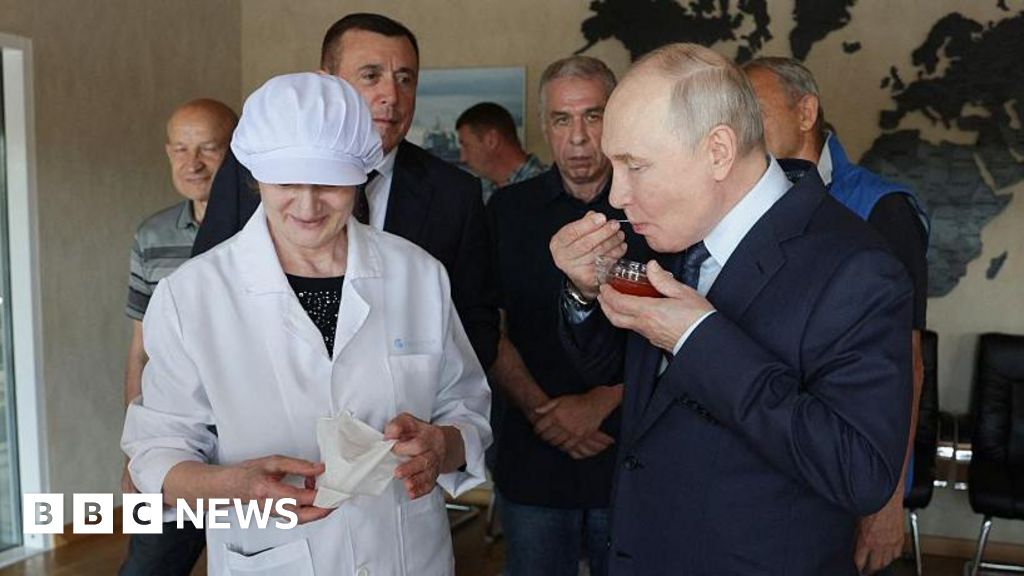
During his visit, the Russian president toured the Yasny fish-processing plant, sampled locally produced fish roe, and held conversations with plant workers and residents.
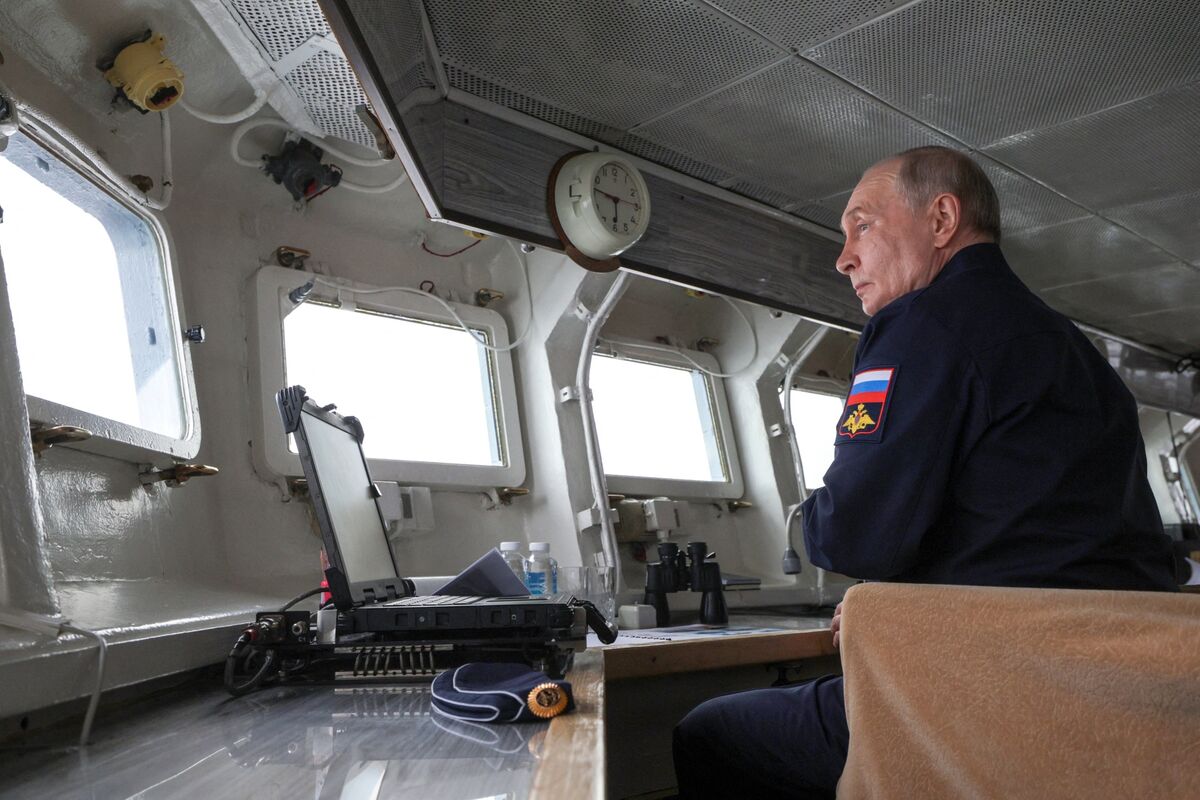
The trip came one day after Putin oversaw major Russian Pacific Fleet naval exercises in the region, which included live-fire drills and missile demonstrations. The timing has raised eyebrows among analysts, with some suggesting the visit was deliberately coordinated to reinforce Moscow’s territorial claims amid heightened military activity in the Pacific.
Japan’s immediate and forceful response
Tokyo reacted swiftly and strongly to the news of Putin’s visit. Japanese Foreign Minister Toshimitsu Motegi took to social media platform X to lodge an official protest, stating: “The Northern Territories, including Etorofu, are Japan’s inherent territory both historically and based on international law. Japan strongly protests this visit.”
ロシア大統領の択捉島訪問についての茂木外務大臣のメッセージです。
— 外務省 (@MofaJapan_jp) August 13, 2026
本日、ロシアのプーチン大統領が、択捉島を訪問したとの報に接しました。択捉島を含む北方四島は、歴史的にも国際法上も我が国固有の領土であり、日本国として今回の訪問について強く抗議します。 pic.twitter.com/EDIxTmUD8r
Prime Minister Sanae Takaichi, who has maintained Japan’s commitment to resolving the territorial dispute despite deteriorating bilateral ties, reiterated the government’s position to reporters in Tokyo. According to Japanese government sources cited by multiple outlets, Putin’s unannounced trip caught Tokyo by surprise, adding to the diplomatic friction.
A conflict rooted in World War II
The Kuril Islands dispute dates back to the final days of World War II. In August 1945, the Soviet Union seized the island chain—comprising Etorofu (Iturup), Kunashiri (Kunashir), Shikotan, and the Habomai islets—deporting approximately 17,000 Japanese residents in the process.
Japan maintains that these four southernmost islands, which it calls the “Northern Territories,” were illegally occupied and are not part of the Kuril archipelago that Japan renounced under the 1951 San Francisco Peace Treaty. Russia, however, insists its sovereignty over the islands is legally settled and non-negotiable, pointing to post-war international agreements.
No Peace Treaty After 80 Years
As a direct result of this unresolved territorial dispute, Japan and Russia have never signed a formal peace treaty to officially end World War II hostilities—making them one of the last remaining pairs of nations still technically at war from that conflict.
Relations between the two countries have deteriorated significantly since Japan joined Western nations in imposing economic sanctions on Russia following its 2022 invasion of Ukraine. In February 2026, Kremlin spokesperson Dmitry Peskov declared that Russia-Japan relations had been “reduced to zero” due to Tokyo’s “unfriendly position,” with no ongoing dialogue toward a peace treaty.
Strategic and economic stakes
The disputed islands hold both strategic military value and economic importance. Russia has developed the islands into fortified military bases, while Japan emphasizes their potential for joint economic development and fishing rights.
In recent years, Moscow has intensified symbolic activities on the islands to reinforce its claims, including plans to name one of the disputed features after Richard Sorge, a Soviet spy who operated in pre-war Japan. Russia has also invested in infrastructure projects, including the Yasny fish-processing facility that Putin visited Thursday.
International context
While most countries avoid taking explicit positions on the sovereignty dispute, major powers including the United States and European Union have expressed support for Japan’s position that the southern Kuril Islands are “occupied” by Russia and should be returned.
The visit comes amid broader geopolitical tensions in the Pacific, with Russia strengthening ties with China and North Korea—both of which have conducted their own military exercises in the region.
What’s next?
For now, prospects for renewed negotiations appear dim. Japanese officials have stated they remain “patiently urging” Moscow to return to the negotiating table, but Kremlin officials have made clear that any resumption of territorial talks depends on Japan abandoning its sanctions and what Russia terms its “anti-Russian course.”
As the 80th anniversary of the end of World War II passes without a peace treaty, Putin’s historic visit to the disputed islands signals that Moscow has no intention of softening its stance—and that Tokyo’s path to reclaiming the Northern Territories remains as distant as ever.