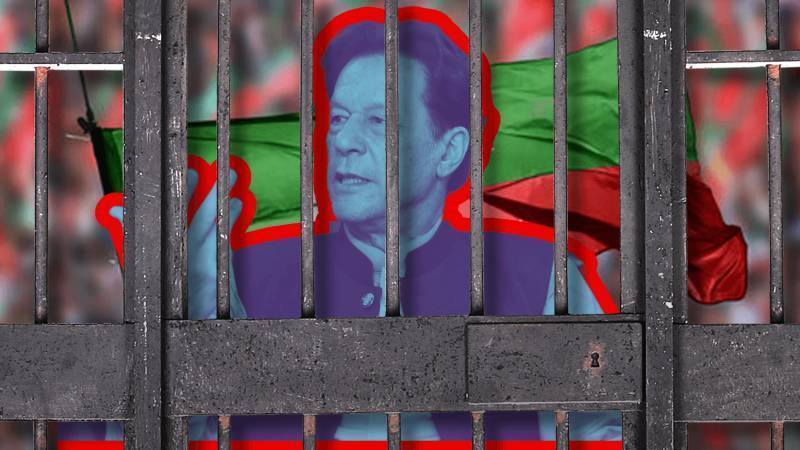
Former Pakistani Prime Minister Imran Khan was sentenced to 14 years in prison in January 2025 after being convicted of corruption in the high-profile Al-Qadir Trust case, the latest chapter in a long-running series of legal battles that have kept the popular opposition leader behind bars for nearly two years.
Khan, along with his wife Bushra Bibi, was found guilty by an accountability court of misusing £190 million ($231 million) in repatriated funds originally recovered by the UK’s National Crime Agency from property tycoon Malik Riaz. The couple has strongly denied the charges, calling them politically motivated attempts to sideline him from Pakistani politics.
The core allegations
The case revolves around events in 2019, when the UK returned assets worth hundreds of millions of pounds to Pakistan. Prosecutors claim that instead of depositing the money into the national treasury, Khan’s government — through his then-aide Shahzad Akbar — arranged for the funds to be routed through a special Supreme Court account. The money was then allegedly used to offset a massive fine owed by Malik Riaz’s company, Bahria Town.
In return, prosecutors say Riaz’s company gifted hundreds of kanals of valuable land in Sohawa, Jhelum, to the Al-Qadir University Project Trust — a charitable organisation founded by Imran Khan and Bushra Bibi.
Khan’s defence maintained that the land was a legitimate donation for an educational institution aimed at providing free education. The court, however, ruled that the arrangement amounted to illegal gratification.
A pattern of legal cases
This is not Khan’s first conviction. The cricketer-turned-politician, who served as Prime Minister from 2018 to 2022, has faced over 100 cases since his ouster in a no-confidence vote. He accuses the powerful military establishment and the current government of waging a “witch hunt” to prevent his political comeback.
While several earlier convictions have been suspended or overturned on appeal, Khan remains imprisoned due to multiple ongoing sentences, including this latest 14-year term.
Political fallout
Khan’s Pakistan Tehreek-e-Insaf (PTI) party condemned the verdict as a “black day” for justice. Senior PTI leader Zulfi Bukhari called it another example of “undeclared martial law,” claiming the judiciary lacks independence.
Supporters continue to view Khan as Pakistan’s most popular political figure despite his prolonged detention, and the party has vowed to appeal the ruling.
This is another example of undeclared martial law in practice, which allows those in power to make a mockery of the justice system in order to silence their political opponents.
Zulfi Bukhari, an adviser to Khan and spokesperson for PTI
Read also:
)