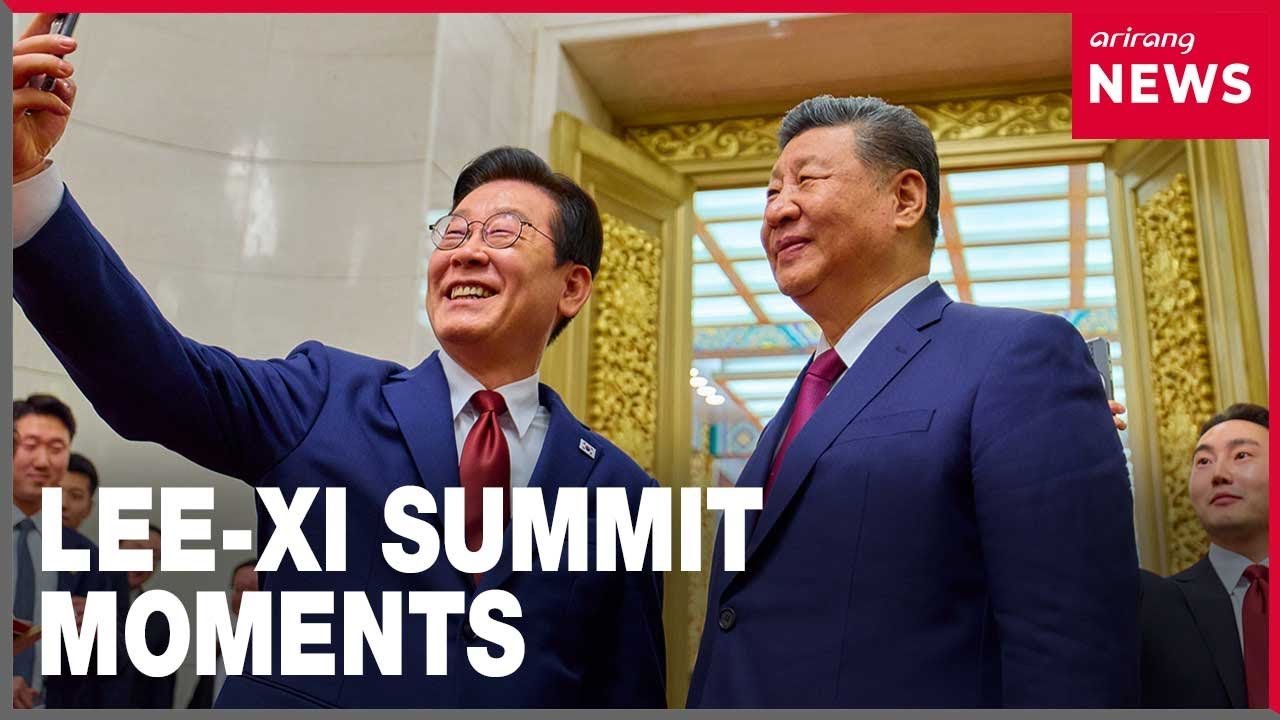
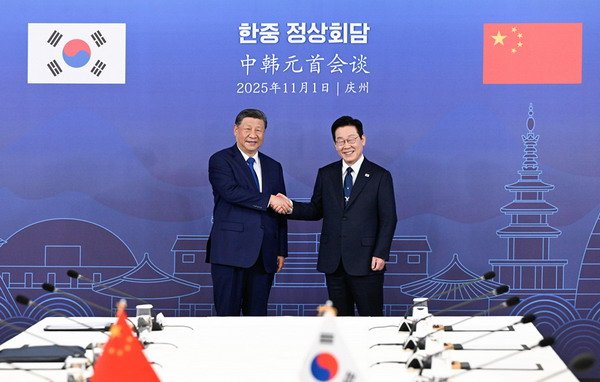
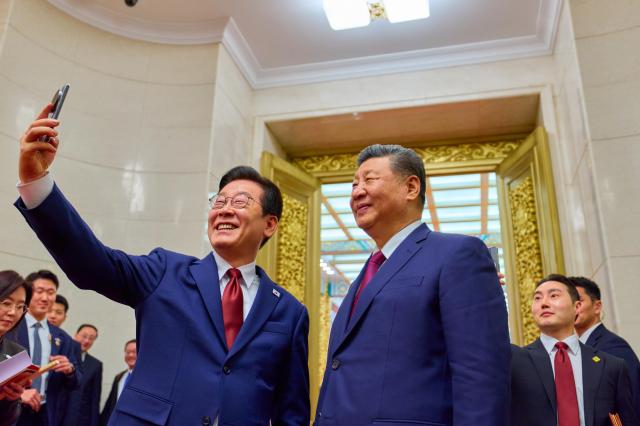
South Korean President Lee Jae-myung’s state visit to China was characterized as a “full-scale restoration” of bilateral relations. The summit between President Lee and Chinese President Xi Jinping resulted in 15 high-level cooperation documents and several key strategic commitments.
South Korean President Lee Jae-myung conducted a four-day state visit to China from January 4 to 7, 2026, and met with Chinese President Xi Jinping in Beijing on January 5. This was the second meeting between the two leaders in just two months, following a November 2025 encounter in Gyeongju, South Korea.
“Inaugural year” of fully restored relations
Both leaders designated 2026 as the “inaugural year” of fully restored relations, committing to annual leadership meetings and restoring strategic dialogue channels for diplomacy and security.
The leaders signed 14 memorandums of understanding (MOUs) covering trade, technology (including AI), environmental issues like fine dust, and food exports. They agreed to launch a ministerial-level commerce dialogue channel, with the first meeting scheduled for the first half of 2026.
Discussions addressed North Korean missile launches (which occurred just before the summit) and maritime stability. Both sides pledged to explore “new diplomatic approaches” to promote peace on the Korean Peninsula.
President Lee Jae-myung (elected in June 2025) has pursued a “pragmatic diplomacy” aimed at balancing ties between the US and China, seeking to mend relations with Beijing that had been strained since the 2017 THAAD dispute. Despite the thaw, analysts note that South Korea’s status as a US ally continues to set limits on the depth of its alignment with China.
14 MOUs signed on critical minerals, AI technology, and IP protection
A total of 14 MOUs were signed, establishing a regular dialogue platform between commerce ministries and ensuring cooperation on critical minerals, technology, and intellectual property.
China pledged active cooperation and licensing systems to ensure a stable supply of critical minerals for South Korean firms. The two countries committed to joint development in AI, digital technology, and support for venture startups, while strengthening enforcement against trademark infringement and protecting Korean brands in China.
An “understanding” was reached to relocate a Chinese maritime platform from a disputed area in the Yellow Sea, a move seen as a significant diplomatic gesture. They agreed to hold official vice-ministerial talks on maritime boundary delimitation within 2026 and to strengthen joint communication against illegal fishing.
North Korea, cultural exchanges, and historical legacy at center of discussions
President Lee sought Beijing’s “constructive role” in resuming dialogue with Pyongyang. While “denuclearization” was notably absent from the joint rhetoric, they agreed to pursue “creative approaches” to easing tensions and building peace.
Discussions focused on a “step-by-step” expansion of cultural content. While no immediate lifting of the unofficial “Hallyu ban” was announced, they agreed to initial exchanges in sports (baduk and football) and future consultations on films and dramas.
In Shanghai, Lee visited the site of the Provisional Government of the Republic of Korea, with both sides pledging to cooperate on preserving historical independence movement sites.
$44million in trade deals, 200 business leaders attend
A delegation of over 200 business leaders (including heads of Samsung, SK, and Hyundai) signed nine separate private-sector agreements, including an export deal between Shinsegae and Alibaba.
South Korea and China signed 24 export contracts valued at $44.11 million, covering sectors like consumer goods, food products, and cosmetics.
The visit also yielded 32 MOUs between companies and 15 intergovernmental cooperation documents focusing on technology, intellectual property, supply chains, and environmental issues. Building on existing visa-free programs, both sides committed to further restoring people-to-people exchanges to boost tourism and domestic consumption. P
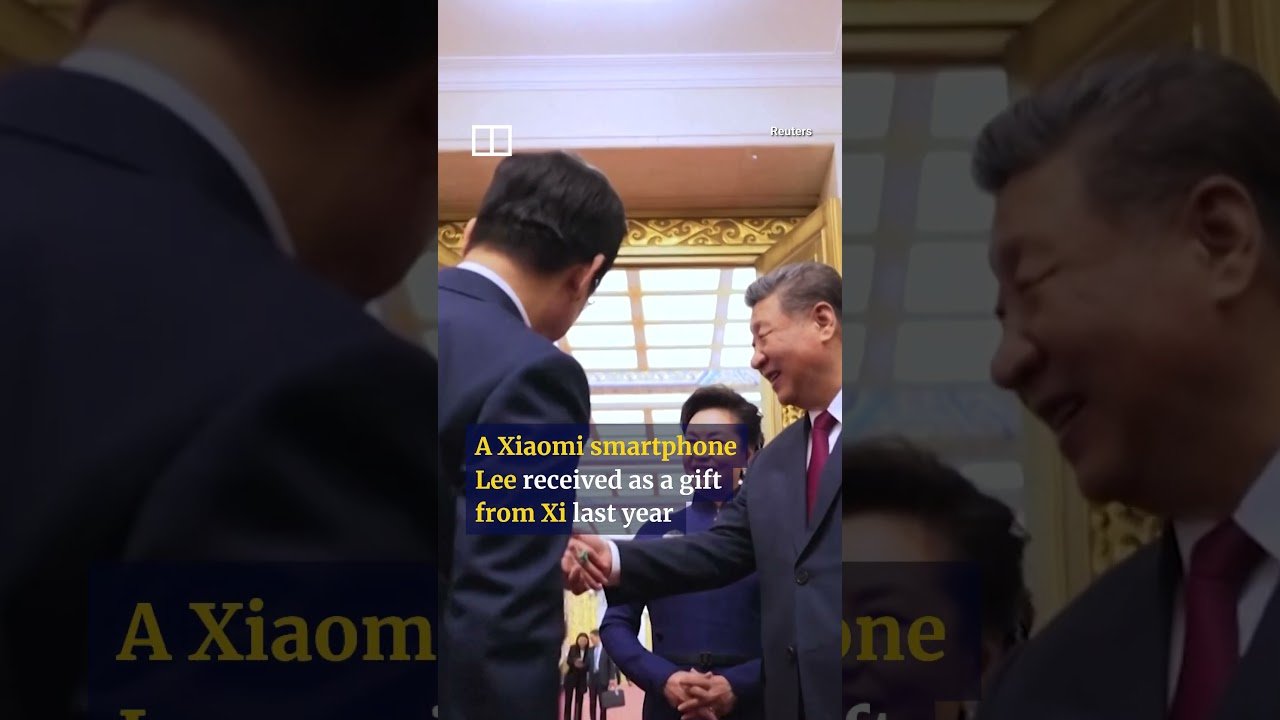
President Xi presented Lee with a Chinese-made smartphone as a gesture of goodwill; Lee also returned a pair of Qing dynasty-era stone lion statues to China.
US watchful, Japan Cautious, North Korea launches missiles
The January 2026 summit between President Lee Jae-myung and President Xi Jinping sparked varied reactions across the region, characterized by a mix of cautious optimism and strategic concern.
The US has maintained a watchful stance, with some officials emphasizing the need for South Korea to remain a key part of the US-led coalition of democracies despite its “pragmatic diplomacy” with China. However, President Donald Trump recently threatened to increase tariffs on South Korean imports (from 15% to 25%), accusing Seoul of failing to enact agreed-upon investment deals.
Japanese Prime Minister Sanae Takaichi has responded “calmly and appropriately,” though some in Tokyo worry about Seoul “sliding toward Beijing”. To balance the Beijing visit, President Lee held a “shuttle diplomacy” summit with Takaichi in Nara just a week later, reaffirming trilateral cooperation with the US.
Pyongyang has displayed a mixed reaction, reportedly launching ballistic missiles shortly after the summit as a show of force yet signaling some openness to dialogue — a shift analysts attribute to China’s “quiet diplomatic nudging”.
66% hold unfavorable view of China despite economic thaw
Domestic views remain deeply divided. While some welcome the economic thaw and 15 signed cooperation deals, a June 2025 poll showed 66.3% of South Koreans held an unfavorable view of China.
Critics of the Lee administration have labeled the President a “China sympathizer”, arguing that the “restoration” comes at the cost of weakening the US alliance. During the summit, protesters in Seoul demonstrated against Chinese influence, calling for a firmer stance on Beijing’s support for North Korea.
Upcoming defense and commerce meetings
Officials from both defense ministries met in Beijing for their 21st working-level policy meeting on February 5, 2026. They discussed resuming joint maritime search-and-rescue drills, which had been largely suspended for 15 years.
The newly established ministerial-level commerce dialogue is expected to hold its first meeting before July 2026. South Korea has expressed support for China hosting the 2026 APEC Economic Leaders’ Meeting in late 2026, which will likely serve as another venue for high-level interaction.