

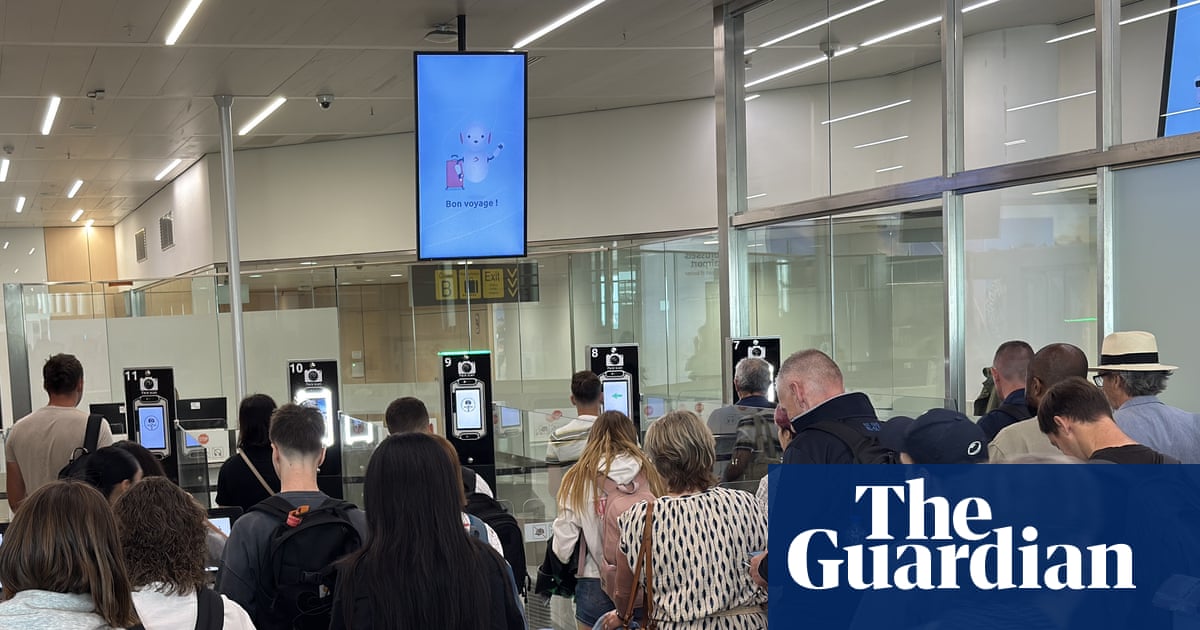


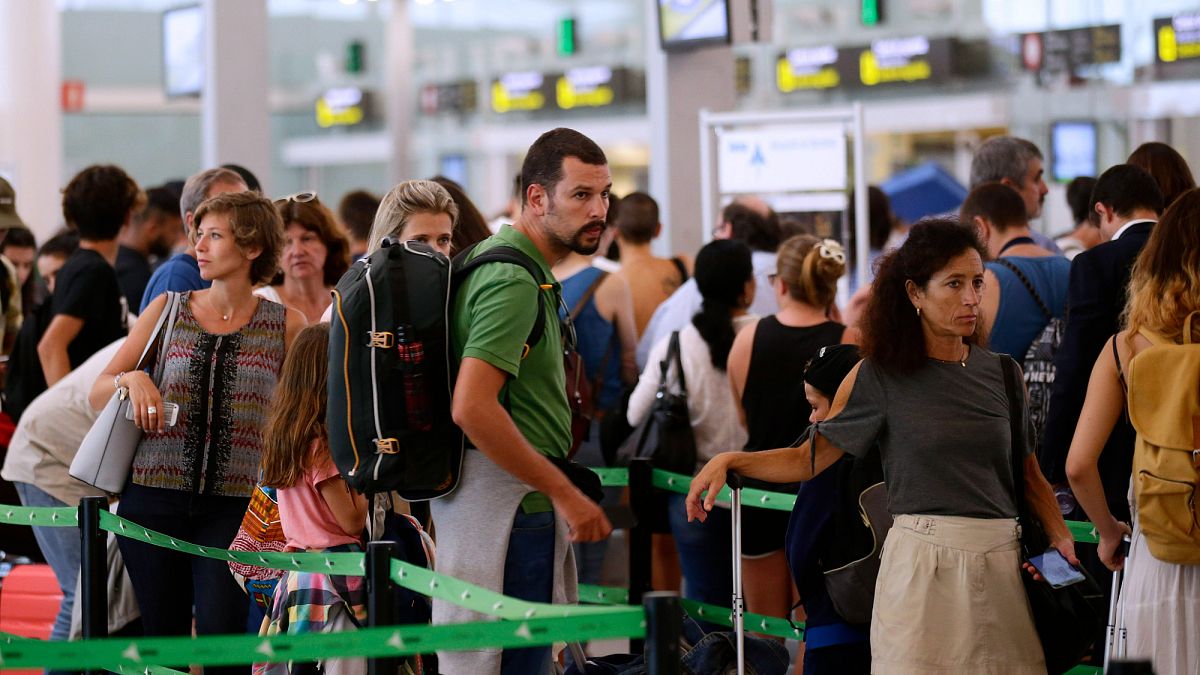
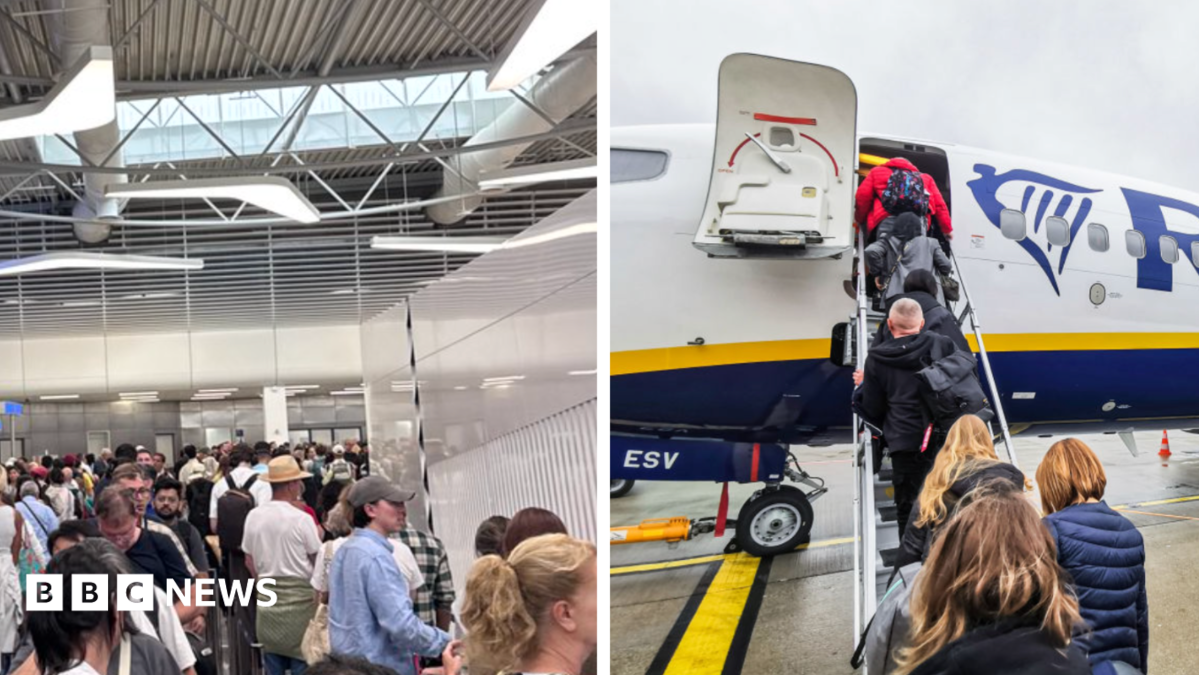
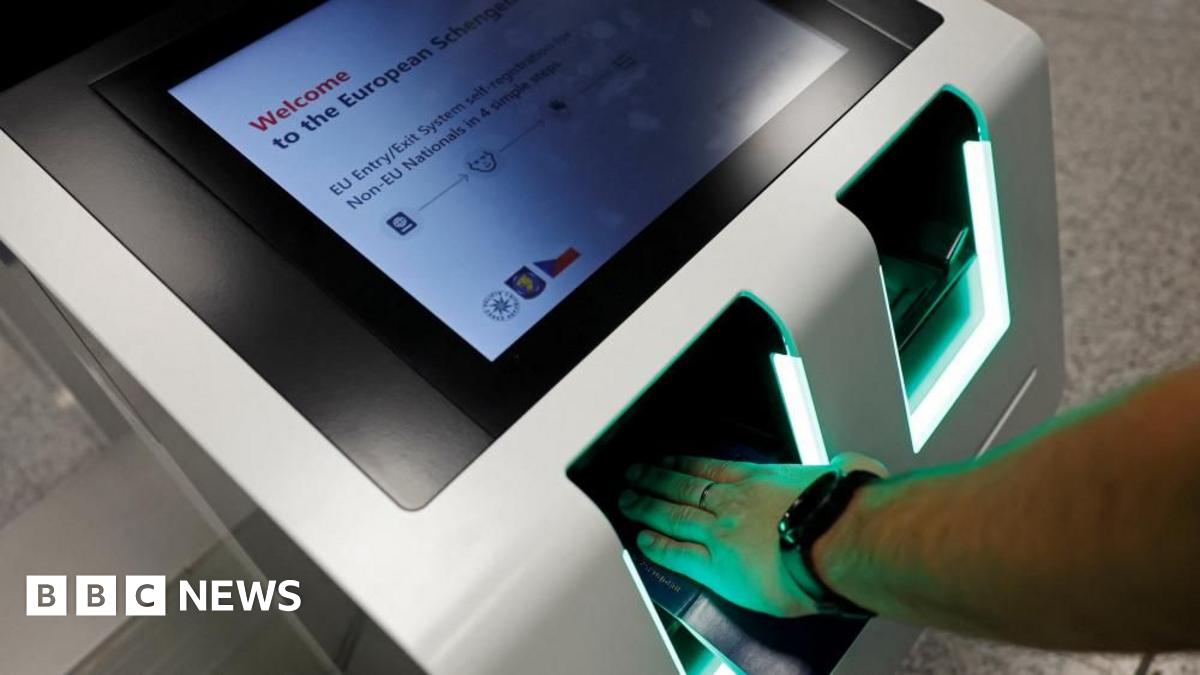
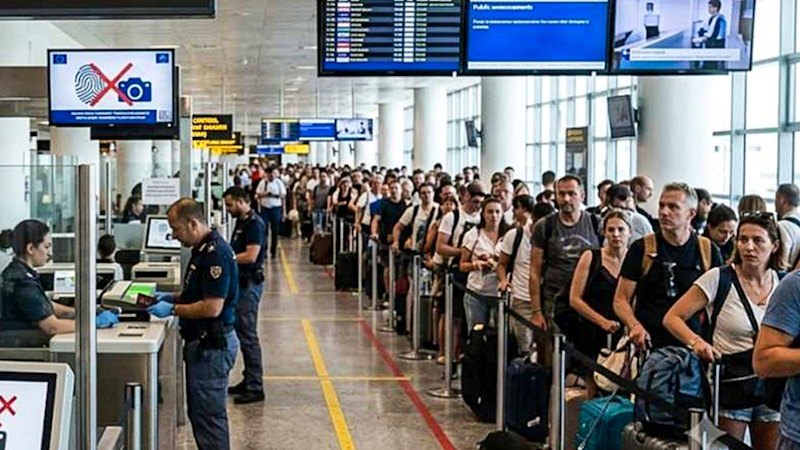

Europe’s newly rolled-out Schengen Entry/Exit System (EES) has triggered severe disruption at airports across the bloc, with industry groups warning of wait times of up to five hours at peak periods and urging Brussels to allow an emergency suspension during July and August.
The EES replaces manual passport stamping for most non‑EU travellers with digital biometric enrolment —fingerprints and facial images — on first entry and automated checks thereafter.
The system was introduced progressively between late 2025 and mid‑2026 as part of Schengen border modernisation efforts and is intended to speed processing and strengthen security once fully bedded in.
However, industry sources say the bed‑in phase has exposed significant practical frictions, especially during the first‑time enrolment step.
Aviation bodies: EES rollout has reached a “critical point”
Aviation bodies ACI EUROPE, Airlines for Europe (A4E) and the International Air Transport Association (IATA) published an urgent open letter to European Commission President Ursula von der Leyen saying the EES rollout has reached a “critical point” and is creating “severe operational consequences” for passengers, airports and border staff.
The letter reports waiting times at border control of up to five hours during peak traffic, saying delays are causing missed connections, delayed departures and mounting pressure on frontline staff.
Industry groups estimate European airports will handle roughly 40 million more passengers in July and August than in the previous two months, raising the risk that backlogs will worsen without immediate action.
“Severe operational consequences”
- Queueing and wait times: Airports and airline groups report peak waiting times stretching to several hours in some hubs, with passengers queuing for biometric enrolment at passport control longer than the time many have between arrival and connecting flights.
- Missed departures and half‑empty flights: When travellers remain in immigration lines, airlines say they are forced to close gates and depart on schedule to meet crew‑duty regulations, leaving aircraft underfilled and stranding passengers.
- Strained facilities at regional airports: Smaller holiday destinations with limited border infrastructure have seen queues spill outside terminals and, in some accounts, onto tarmacs, creating safety and operational headaches for ground handling teams.
- Affected hubs: Coverage to date highlights stress at both major city airports and numerous regional holiday gateways; named examples in reporting include several southern European capitals and Mediterranean resort airports.
- Passenger volumes: Industry briefings underline the added pressure from the summer surge, when many airports see tens of millions of additional travellers across July and August, compounding the strain on newly introduced processes.
- Operational and economic fallout: Airlines face schedule integrity problems and higher operational costs, while tourism economies risk reputational damage if travellers encounter repeated systemic delays.
- Long‑term adaptation: If enrolment and infrastructure issues take many months to resolve, airports and carriers will need sustained investment and contingency planning well beyond the immediate summer peak.
Causes identified by industry
- First‑time biometric bottlenecks: Fingerprint capture and facial enrolment for first‑time entrants are slower than manual stamping, particularly when equipment needs calibration or passengers are unfamiliar with the process.
- Equipment and rollout issues: Reports cite faulty or insufficient kiosks and uneven deployment of automated systems across member states, which amplifies delays at busy checkpoints.
- Staffing shortages and training gaps: Several airports attribute much of the local backlog to inadequate numbers of trained border staff to operate biometric systems efficiently during surge periods.
Industry demands
- Immediate temporary suspension: Major aviation organisations have called for member states to be allowed to temporarily suspend EES enrolment and revert to manual passport stamping when passenger volumes exceed operational capacity, at least for the peak July–August window.
- Formal bypass mechanism by September: The sector is pushing for a clear legal framework that lets states pause biometric processing during exceptional circumstances without legal ambiguity, so operational leaders can act quickly in future surges.
- Funding and deployment support: Airports want accelerated delivery of functional kiosks and prioritized equipment maintenance, along with EU support for rapid staff training and surge rostering during high seasons.
EU and agency responses
The European Commission has emphasized that EES is operating normally in most major hubs and has placed responsibility for local backlogs on member states’ staffing and equipment deployment decisions.
Frontex and other officials have acknowledged the challenge of first‑time enrolments and signalled that stabilisation of the process will take time, with some warnings that full normalisation may stretch across subsequent summers while systems and workflows mature.
How EU states are responding to EES disruption
EU member states and Schengen partners are reacting unevenly to the Entry/Exit System (EES) rollout. Some are invoking temporary suspensions or contingency measures at busy entry points, others insist the system is working and point to staffing and equipment shortfalls, while several governments are seeking urgent talks with Brussels about legal and operational fixes.
- Greece and Italy have been among the most vocal about using temporary measures at island and holiday airports where EES enrolment queues risk crippling operations; Rome’s airport operator said it was preparing to suspend biometric checks at specific points if necessary, while Greek authorities signalled they could limit biometric collection at particularly crowded islands under existing flexibility rules.
- Spain has faced heavy pressure from airlines and regional airports (Madrid, Barcelona) and has been reported to be considering using the regulation’s 90‑day opt‑out or other short suspensions at specific entry points to ease queues during the peak season.
- Germany’s airport operators and some city hubs have described waits of up to two hours in certain terminals and called for more clarity on contingency powers; however, national authorities have largely emphasised that EES functions correctly in most large airports and focused public remarks on the need for better staffing and harmonised subsystems.
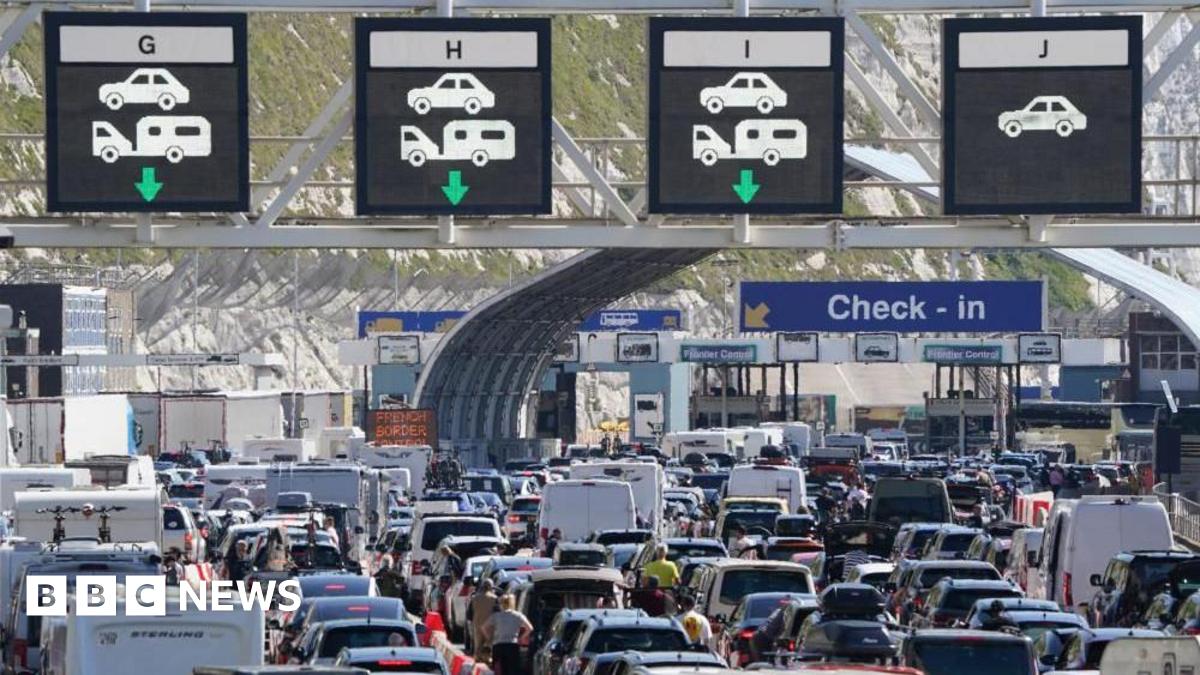
- France, which controls checks at Dover for cross‑Channel operations and operates large continental hubs, has faced scrutiny over activation of new kiosk arrays; French authorities have been working with ports and rail operators to sequence rollouts and ensure equipment activation is coordinated with neighbouring states.
- Sweden has been an outlier in early technical options — reports note it permitted pre‑registration app use in pilots, something most other states have not done, easing enrolment pressure where deployed.
Smaller states and Schengen partners: local shutdowns and stepped approaches
Several smaller Schengen partners and microstates have restricted or adapted EES operations at particular points of entry rather than nationwide, citing limited border‑processing capacity at seasonal hotspots; these decisions have been framed as temporary, point‑specific measures allowed under EES rules to prevent unsafe queues.
Switzerland, Norway and Iceland — while not EU members but part of Schengen information sharing — have emphasised careful, phased rollouts and targeted staffing increases rather than broad suspensions, signalling preference for operational fixes over legal opt‑outs in public statements to date.euronews+1
Political and legal positioning
Several national governments and airport operators are urging Brussels for clearer legal authority to pause biometric enrolment during exceptional surges and for rapid guidance on how to implement temporary suspensions lawfully; they argue current provisions are too narrow or unclear for the scale of the summer peak.
The European Commission has pushed back against broad suspension calls, saying EES is working in most hubs and that local backlogs are mainly caused by member states not deploying enough border staff or functioning equipment; nonetheless, Brussels has agreed to urgent talks with affected countries and industry players.
Operational measures governments are taking now
- Targeted suspensions at entry points where wait times exceed safety thresholds, reverting temporarily to manual passport stamping in those locations.
- Fast‑track deployment of additional kiosks and automated gates, with prioritized maintenance and software fixes for faulty machines where reported.
- Surge staffing: reallocating border guards from lower‑traffic points and fast‑tracking training to increase the number of officers able to operate biometric enrolment stations during peak hours.
- National contingency protocols: instructing airports to open overflow processing areas, extend opening hours for border posts and coordinate flight‑handling rules with airlines to reduce the number of passengers stuck in enrolment queues.
What remains unsettled
Cross‑border coordination gaps persist — ports and rail operators (Dover, Eurostar, Eurotunnel) have reported technical and jurisdictional issues when activating EES checks that require bilateral resolution, especially where one country’s activation depends on its neighbour’s readiness.
Which countries will formally issue national suspension orders beyond point‑specific measures remains unclear; public reporting mentions draft measures in Italy and active consideration in Spain and Greece but no comprehensive, coordinated list of national actions has been published.
What to watch next
- Outcomes of urgent Brussels meeting: An emergency meeting between the Commission, border agencies and industry stakeholders is expected to determine whether temporary operational waivers or clearer suspension powers are granted.
- National contingency orders: Several member states are reported to be preparing or considering temporary measures — watch for formal decrees from tourism‑heavy countries affecting airport procedures.
- Frontex guidance and timeline updates: Any revision to forecasts about how long stabilisation will take, or new procedural guidance for first‑time enrolments, will materially affect airport planning.