






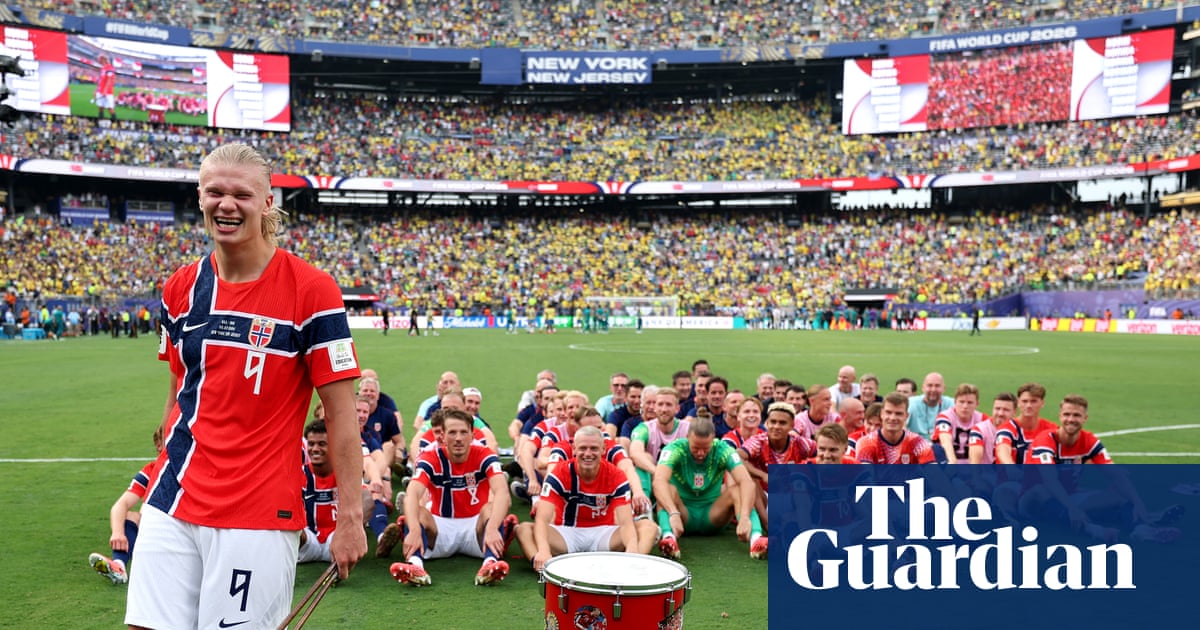


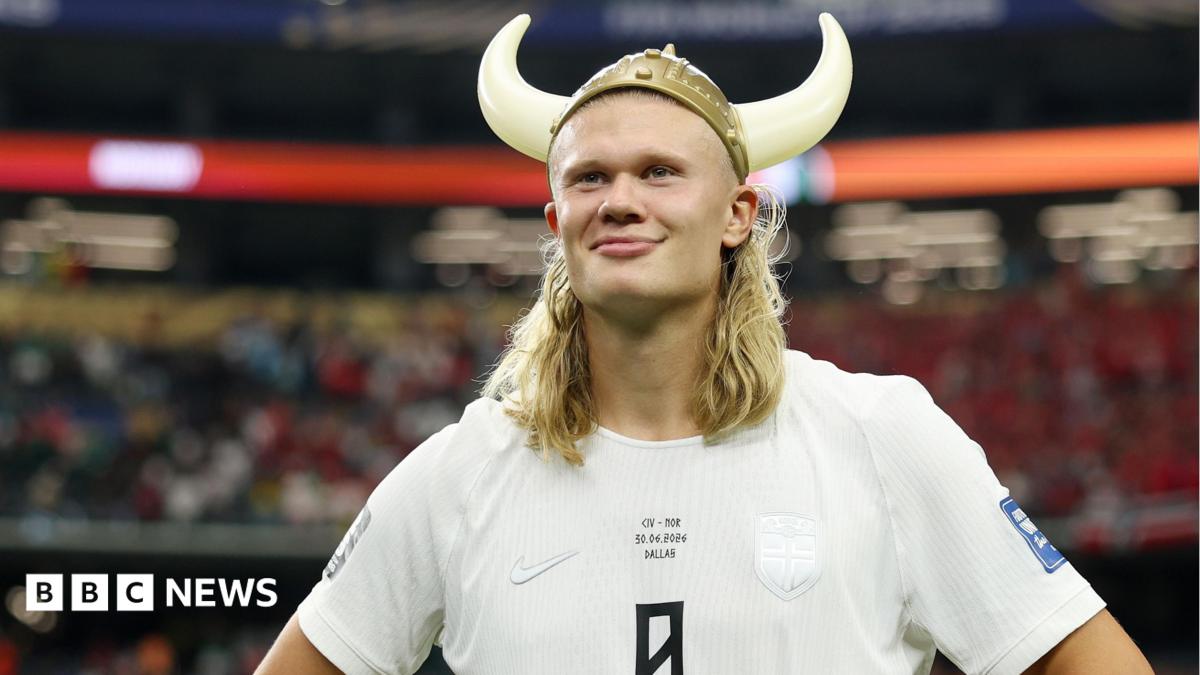

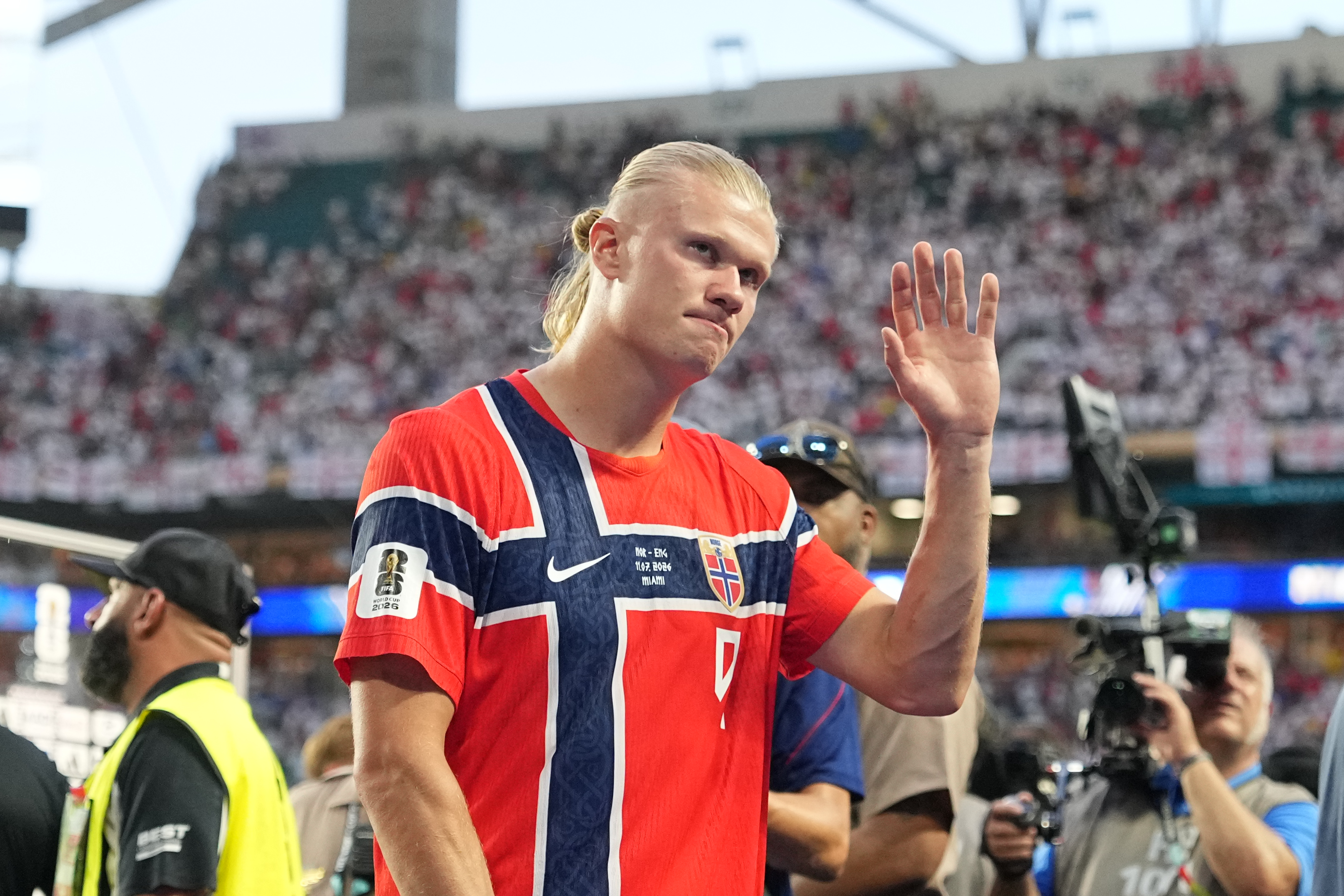

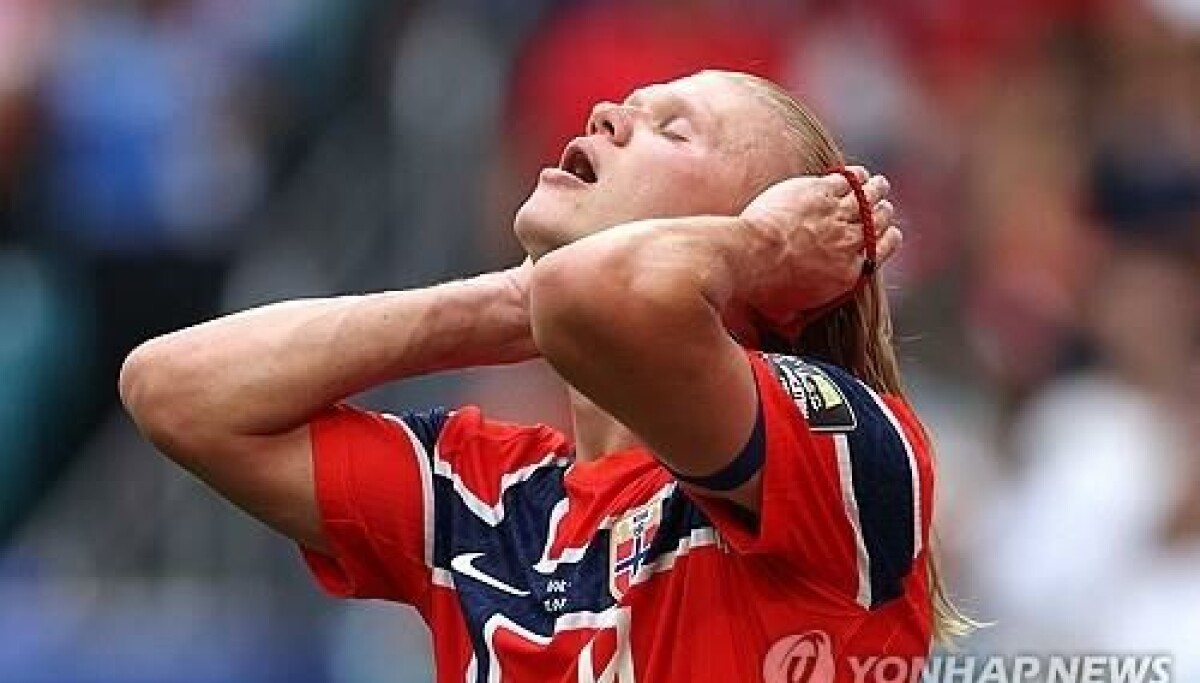
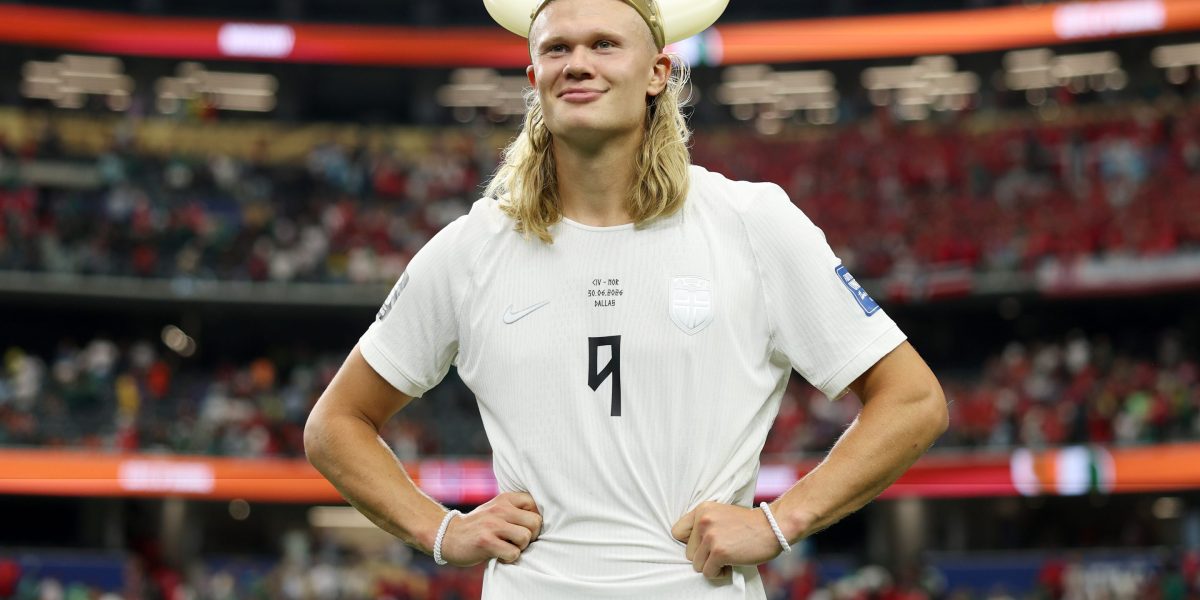

Under the lights at MetLife Stadium, Erling Haaland did what no Norwegian had done before: he carried a nation 28 years in the making to the brink of World Cup immortality.
Two late goals against Brazil. A first-ever quarter-final. Seven goals in five matches. And then, in the days that followed, a strange transformation: from football’s most feared striker to the internet’s unlikeliest “babygirl,” fashion icon, and accidental star of a taxidermy raccoon craze.
For Norway, the 2026 FIFA World Cup was more than a tournament; it was a reckoning. The last time this country qualified was in 1998, when a young Haaland was still a toddler. This time, the 26-year-old Manchester City striker arrived as the face of a side determined to prove they belonged.
They did more than belong. In the Round of 16, Norway faced five-time champions Brazil in front of a glitzy New York crowd. Trailing 1–0 late in the match, Haaland equalized in the 79th minute, then struck again in the 90th to complete a 2–1 upset that sent shockwaves through the tournament.
Goalkeeper Ørjan Nyland’s first-half penalty save from Bruno Guimarães kept Norway alive, but it was Haaland’s finishing that defined the night. For the first time in history, Norway was heading to a World Cup quarter-final.
Seven goals, five matches: The Golden Boot run
Haaland finished the tournament with 7 goals in 5 matches, claiming third place in the Golden Boot race behind Lionel Messi (8 goals, 4 assists) and Kylian Mbappé (8 goals, 3 assists).
His numbers were not just prolific — they were efficient. Haaland averaged a goal every 51 minutes, the best debut scoring rate since Poland’s Grzegorz Lato in 1974. His tally included:
- Four goals with his left foot
- Two goals with his right
- One header
- Six goals from inside the box
- One goal from outside the box
According to Opta data, Haaland was the only player at the 2026 World Cup to score in all five categories, a statistical signature of a truly complete forward.
Norway’s run ended in Miami, where they fell 2–1 to England after extra time in the quarter-final. Jude Bellingham scored both English goals, but Haaland’s tournament had already secured his place in football history.
Records rewritten: Norway’s all-time great
Haaland’s World Cup performance pushed his international tally past 60 goals in just 54 caps, cementing his status as Norway’s all-time leading scorer.
For a country that had never before reached a World Cup quarter-final, Haaland didn’t just participate — he transformed expectations. His late goals against Brazil, his clinical finishing, and his ability to score in every conceivable way made him the tournament’s most complete attacker.
The “Babygirl” phenomenon: Haaland conquers the Internet
Off the pitch, Haaland’s 1.95-metre frame and unfiltered online persona turned him into an unlikely internet darling.
Fans affectionately dubbed him a “babygirl” and “princess”, a meme subculture fueled by:
- Posts showing his color-coordinated hair ties for his long blond hair
- Self-deprecating jokes comparing himself to Shrek
- An earnest, unpolished “golden retriever energy” that resonated far beyond traditional football audiences
During the World Cup alone, Haaland gained roughly 26 million new Instagram followers, according to social media tracking, amplifying his reach into fashion, entertainment, and meme culture.
From the Pitch to the Front Row: Haaland as Fashion Icon
Haaland has emerged as one of sport’s most compelling style figures, drawing comparisons to David Beckham for his willingness to embrace glamour and luxury.
Highlights include:
- A private luxury handbag collection reportedly valued at over $800,000, including rare Hermès Birkin and Haut à Courroies (HAC) pieces
- A show-stopping appearance at the Dolce & Gabbana Alta Sartoria event in Sicily, where he paired an ivory silk blazer with an eccentric satin scarf and a gold frog brooch — a look that went viral across fashion and sports circles
In Haaland, high fashion found a new, unexpectedly relatable muse.
Hollywood, Raccoons, and Viral Moments
Haaland’s off-field charm caught the attention of Hollywood, most notably after actor Tom Holland revealed on The Tonight Show that Haaland had left his dinner invitation on “read”.
Haaland later responded publicly to accept the invitation under the show’s Instagram post. The exchange became a viral moment, blending football, film, and fan culture in one thread.
Meanwhile, his American travels sparked an unlikely shopping craze. After being spotted boarding a plane with a $750 taxidermy “Whiskey Raccoon” from Wild Bill’s Western Store in Dallas, the shop was flooded with international orders.
- The raccoon — technically holding a bottle of Wild Berry Gin — sold out almost immediately, with the store scrambling to locate the retired artisan who made them.
- Haaland also bought python boots and two taxidermy squirrels (one posed as a sheriff, another with a Budweiser can), further fueling the oddball souvenir frenzy.
The Haaland Effect: Sport, Style, and Internet Culture Converge
| Dimension | Key Details |
|---|---|
| Sporting Legacy | 7 goals in 5 matches; 3rd in Golden Boot; Norway’s first World Cup quarter-final; all-time national top scorer (>60 goals in 54 caps) |
| Scoring Profile | Only player to score with left foot, right foot, header, from inside and outside the box |
| Cultural Impact | ~26M new Instagram followers; “babygirl” meme culture; fashion icon with $800k+ bag collection |
| Viral Moments | Tom Holland dinner invite response; “Whiskey Raccoon” Dallas shopping spree causing global sell-out |
For Nousworthy readers tracking the intersection of sport, media, and culture, Haaland’s 2026 World Cup offers a rare case study: how elite performance, personality, and internet dynamics can converge to create a global phenomenon.
In East Rutherford, he was Norway’s hero. On the internet, he became something else entirely: a symbol of how modern stardom is made — one goal, one meme, one raccoon at a time.