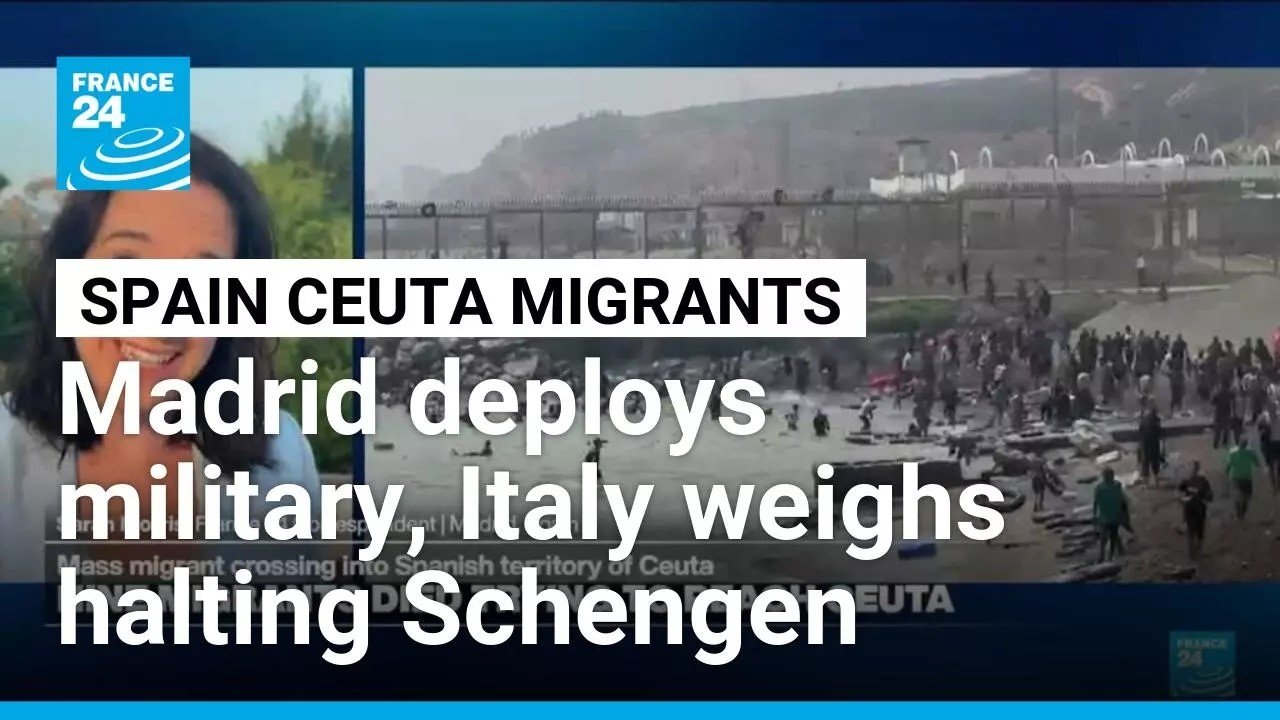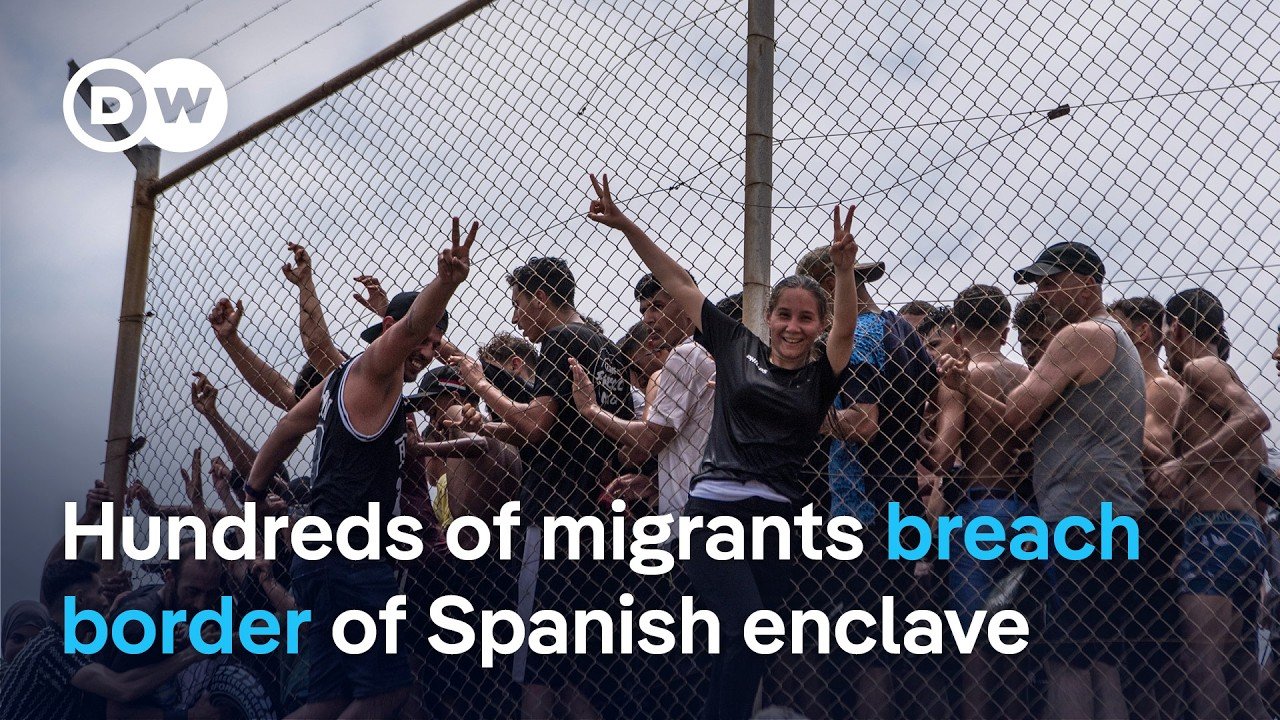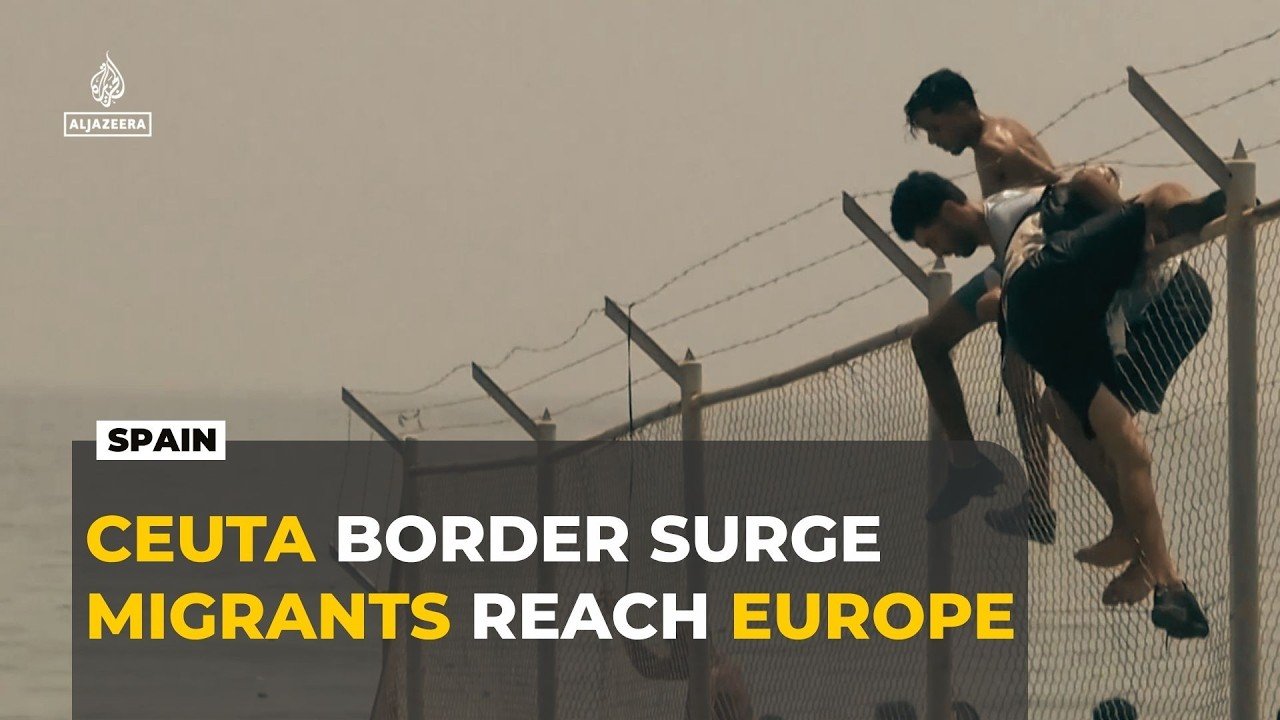



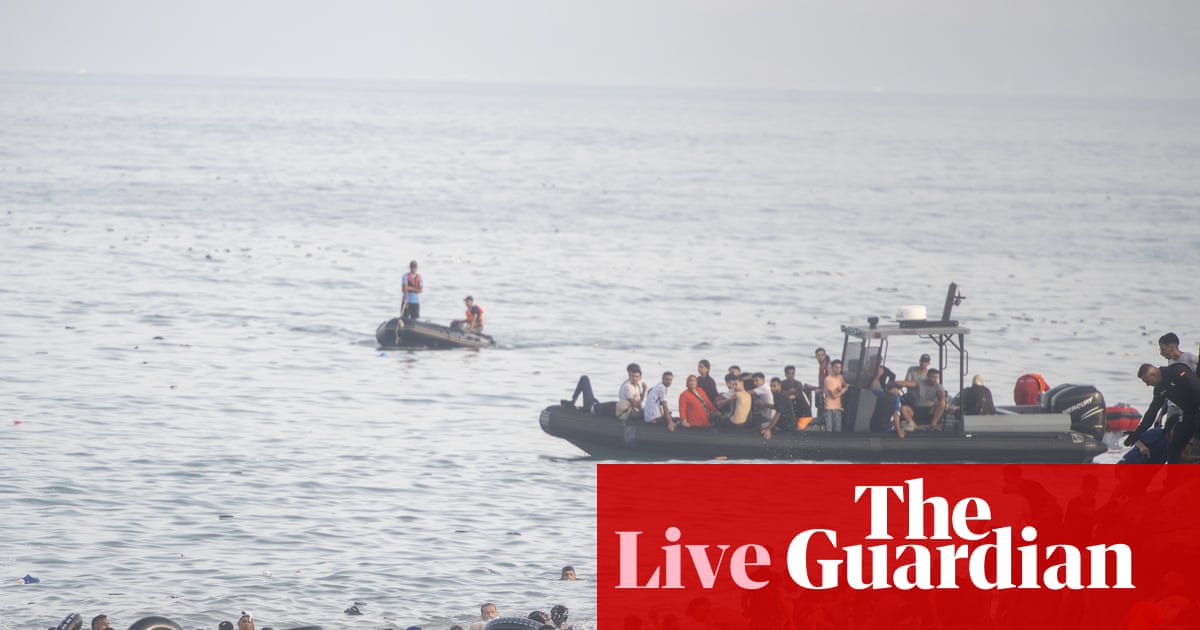

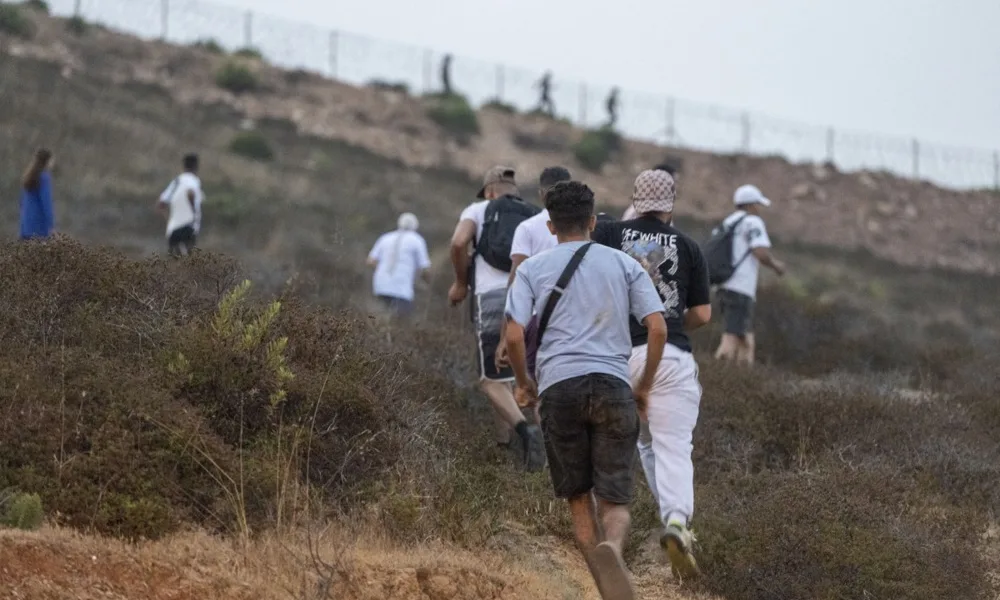
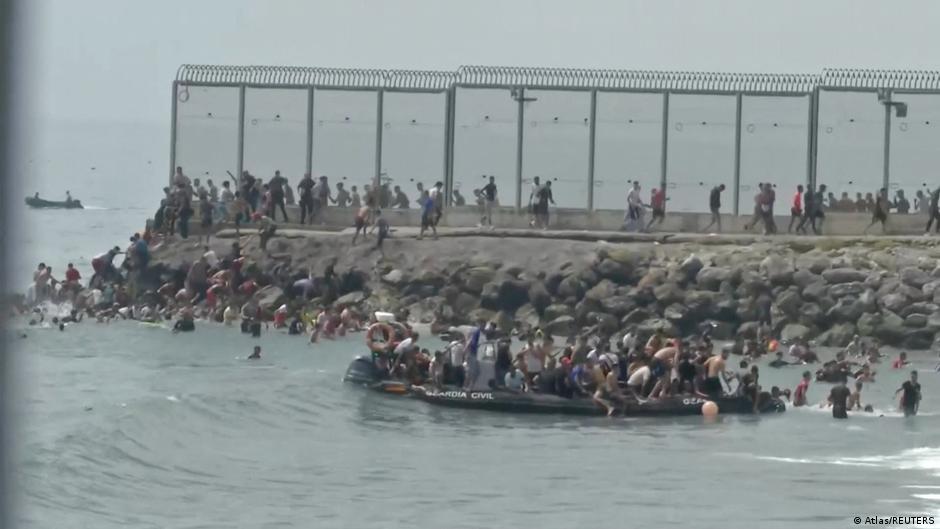
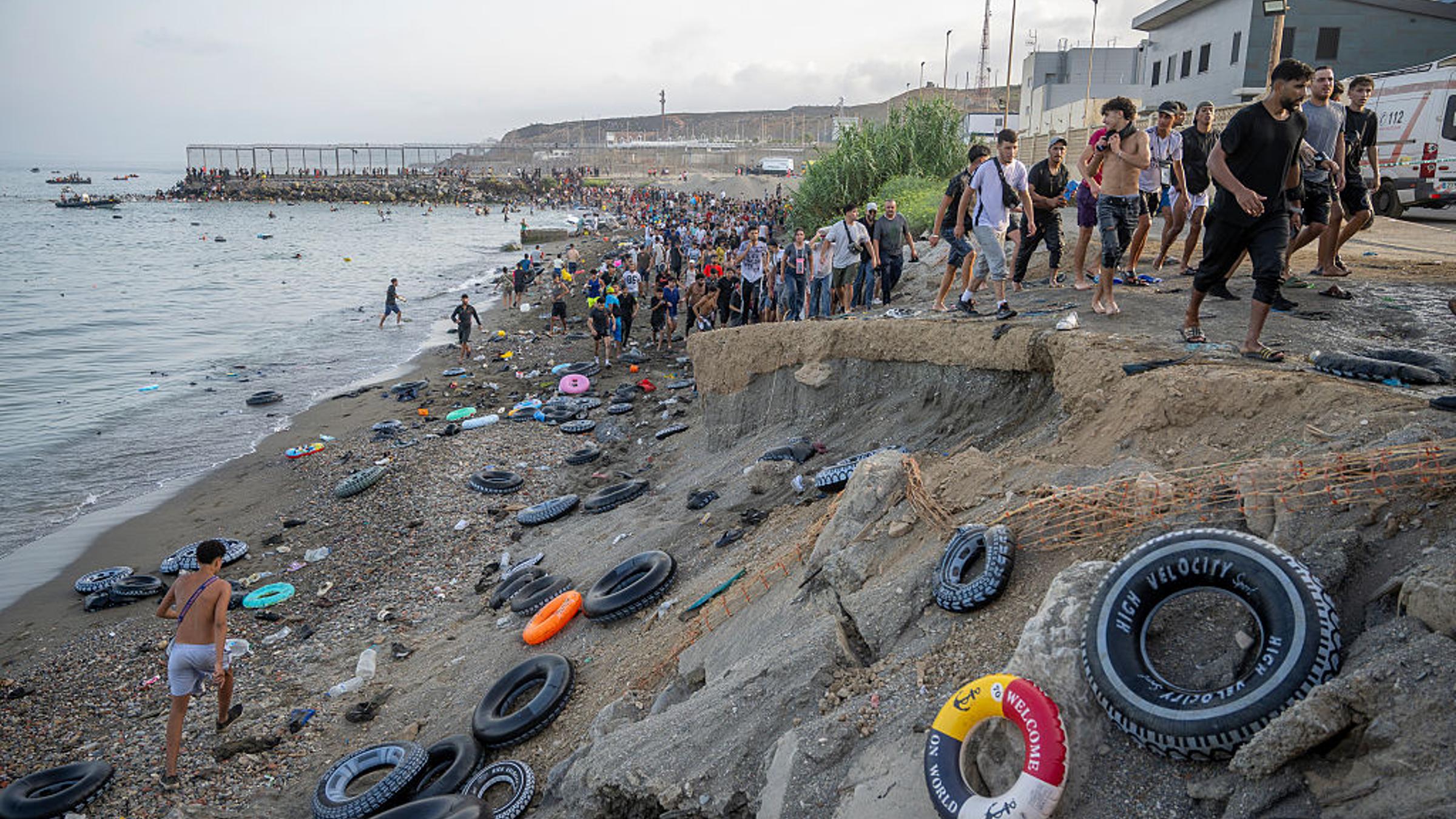


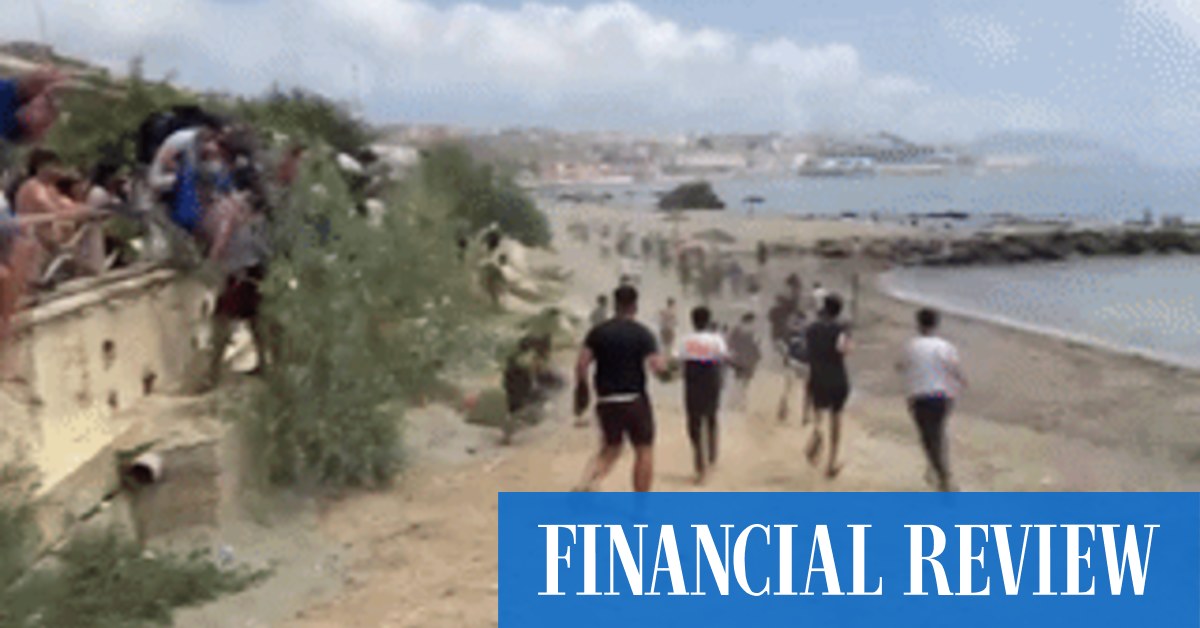

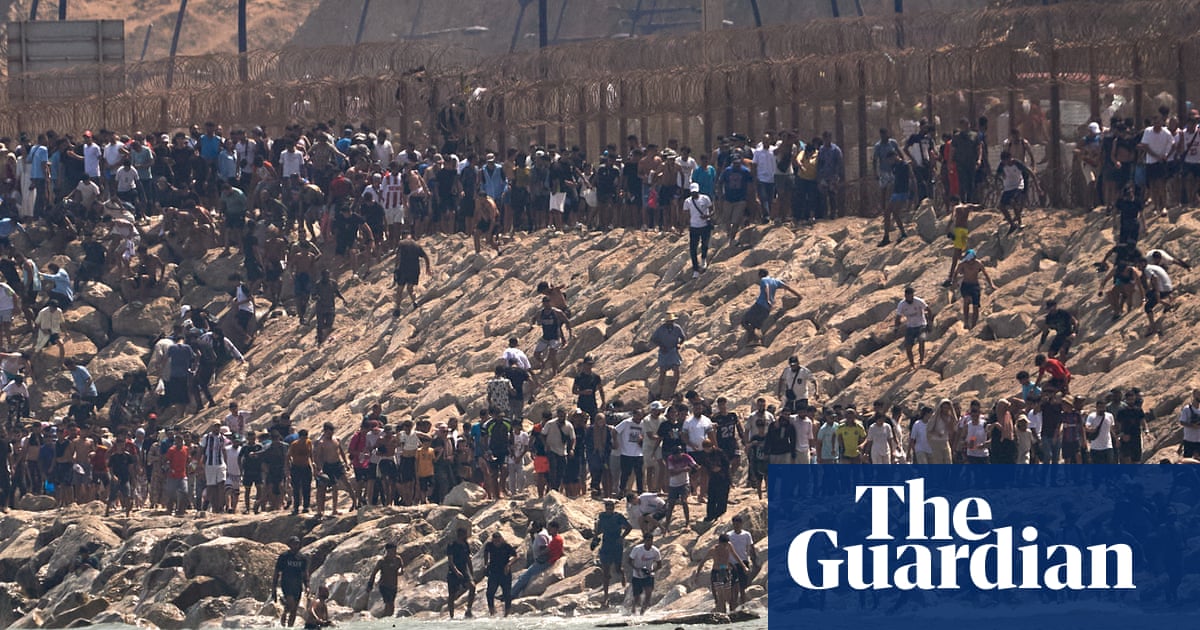

Spain’s North African enclave of Ceuta was thrown into crisis after a massive influx of migrants from Morocco overwhelmed border controls, emergency shelters, and local authorities.
Spanish officials said roughly 49,000 people entered in a 24-hour period, while the death toll rose amid repeated attempts to swim around sea barriers and reach Spanish territory.
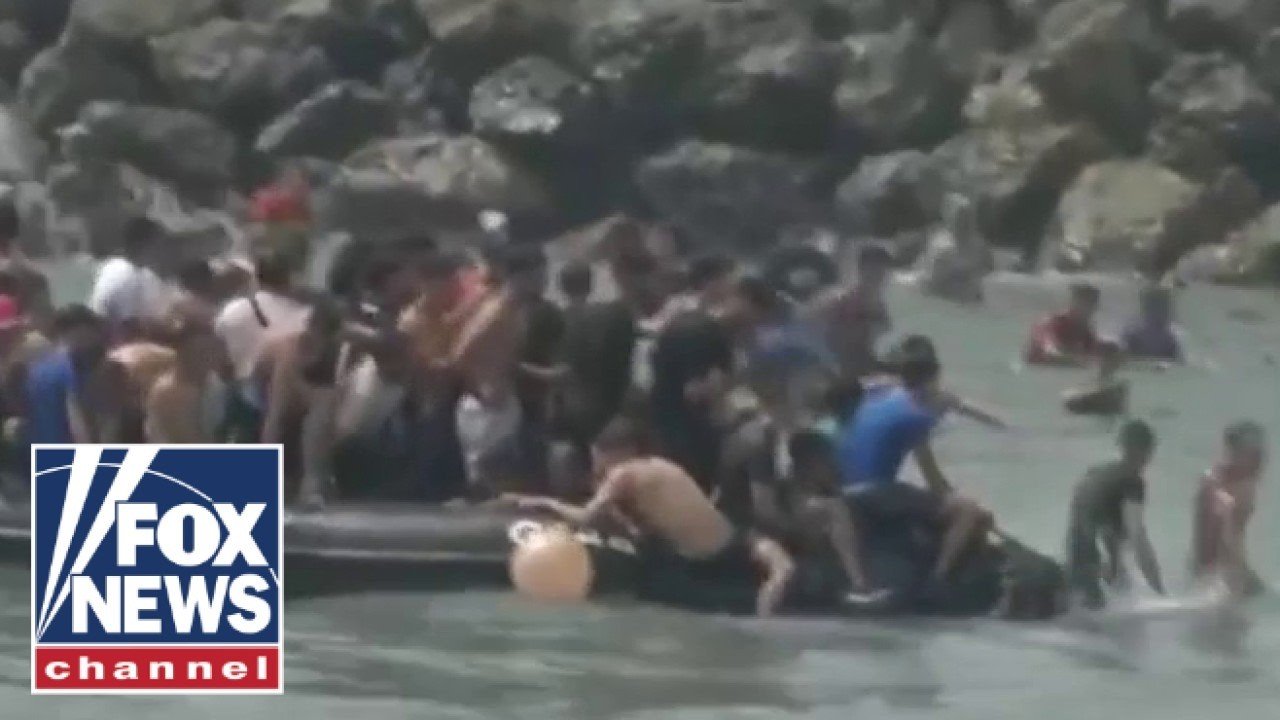
Many of the fatalities occurred near the Tarajal breakwater, where migrants tried to cross by sea, often in dangerous conditions. Authorities said the situation quickly became a humanitarian emergency as rescue crews struggled to recover bodies and assist those arriving exhausted and injured.
Prime Minister Pedro Sánchez said that Spain was mobilizing all necessary resources and working with Moroccan and international authorities to restore normality in Ceuta.
Lo que ha sucedido es un ataque a la integridad territorial de España y merece nuestra más rotunda y enérgica condena.
— Pedro Sánchez (@sanchezcastejon) July 31, 2026
Toda España está con la ciudadanía de Ceuta. El Gobierno de España está con la Ciudad Autónoma.
Gracias por la cooperación que siempre hemos mantenido con el… pic.twitter.com/ZqKdUdu7Oy
El Gobierno garantizará la seguridad de los vecinos y vecinas de Ceuta, intensificando la presencia de las Fuerzas y Cuerpos de Seguridad en las calles de la ciudad.
— Pedro Sánchez (@sanchezcastejon) July 31, 2026
Además, vamos a desplegar una barrera física de contención en el mar para facilitar la repatriación en frontera,… pic.twitter.com/Mj2LrcoBV9
Why migrants are heading to Ceuta
Ceuta has long been seen as one of the fastest entry points into European territory because it is Spanish soil on the North African coast. For many migrants, that makes it a direct route to the European Union, even if the crossing is extremely risky and heavily policed.
Spanish officials have blamed the surge on human trafficking networks exploiting a recent Supreme Court ruling that restricted the use of summary returns for migrants intercepted at sea. Observers also point to unusual lapses in enforcement on the Moroccan side of the Tarajal crossing, suggesting the sudden influx may have been shaped not only by smuggling networks, but also by wider political tensions between Madrid and Rabat.
Ceuta’s location also makes it especially vulnerable, since people can try to reach it both by swimming and by moving along the shoreline at low tide.
Madrid sends in reinforcements
Spain responded by deploying troops, a diving unit, a military vessel, and additional police to reinforce the border and restore control. Reuters reported that the Interior Ministry ordered three platoons of soldiers and special police units to the enclave as the situation worsened.
Prime Minister Pedro Sánchez was expected to visit Ceuta as Madrid faced pressure to stabilize the territory and manage the political fallout. Spanish authorities also said they would pursue rapid expulsions of those who entered illegally, though that approach is complicated by recent court rulings on how migrants intercepted at sea must be handled.
Italy steps into the dispute
The crisis has spilled beyond Spain and Morocco into wider European politics. Reporting indicated that Italy’s government, led by Giorgia Meloni, sharply criticized the situation and raised the prospect of pressing Spain on border and Schengen-related concerns.
That reaction reflects a broader EU dispute over migration responsibility, external borders, and how member states should respond when one frontier becomes overwhelmed. The Ceuta crisis has therefore become not just a border emergency, but also a test of solidarity inside the European Union.
Morocco and Spain face renewed tension
The surge has also renewed suspicion that Morocco may be using border pressure as leverage in its disputes with Spain. Observers and activists pointed to unusual conditions on the Moroccan side, while Spanish officials blamed trafficking networks and border instability for the sudden wave of crossings.
Morocco has not offered a full public explanation for the scale of the incident, but the episode has reopened long-standing tensions over migration control and the politics of Spain’s North African enclaves.
EU response and next steps
France moved to reinforce checks along its border with Spain after the Ceuta crossings, underscoring how quickly a localized border crisis can spill into broader European migration politics. French officials said they would step up inspections and deploy rapid intervention border forces, reflecting concerns that the crisis could create secondary pressure across the Schengen area.
Face à la situation constatée dans l’enclave de Ceuta, j’ai, dès hier soir, donné des instructions pour renforcer sans attendre les contrôles à la frontière espagnole. Par ailleurs, j’active la Force Frontière d’intervention rapide pour des contrôles en profondeur.
— Laurent Nuñez (@NunezLaurent) July 31, 2026
The European Commission has said it is prepared to support Spain with additional operational help, including possible Frontex involvement. For now, the priority is stopping further crossings, identifying the dead and missing, and preventing the crisis from spreading further across the EU’s southern border.
The images coming from Ceuta are unacceptable.
— Ursula von der Leyen (@vonderleyen) July 31, 2026
We cannot allow anyone to come to our Union without abiding by our rules.
Dangerous crossings must stop immediately. Smuggling networks must be dismantled. And returns must be swift, as our rules allow.
I tasked two Commissioners…