


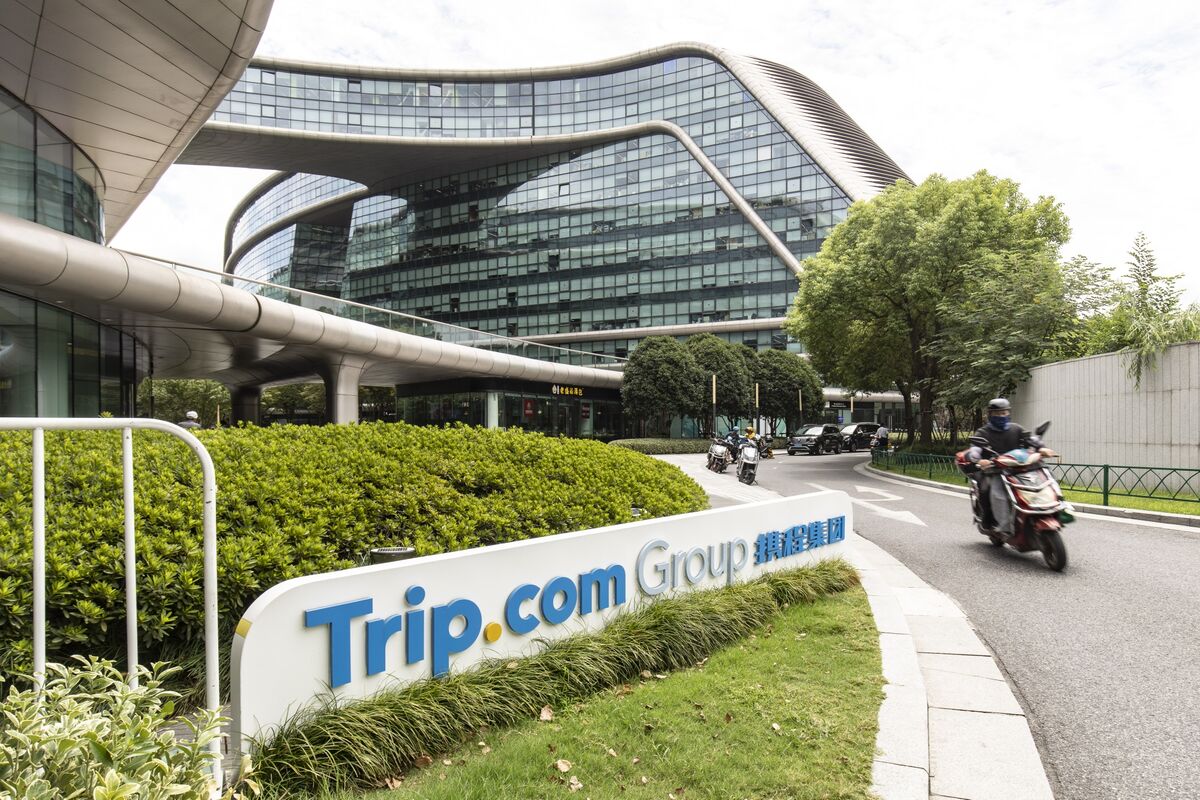



China’s top market regulator has imposed a sweeping 5.2billion yuan (approximately $770million) antitrust penalty on Trip.com Group, marking one of the most significant enforcement actions in the country’s ongoing campaign to rein in platform monopolies.
The State Administration for Market Regulation (SAMR) said the online travel giant abused its dominant position in China’s hotel booking market through a range of exclusionary and price-control practices that distorted competition and harmed both merchants and consumers.
The penalty follows a six-month investigation launched in January 2026, but authorities found that the anti-competitive conduct stretched back as far as 2020.
Breakdown of the penalty
The total enforcement package combines fines, confiscations, and restitution orders:
- Administrative fine of 3.52billion yuan, equivalent to 7.5% of Trip.com’s 2025 domestic revenue
- Confiscation of 1.66billion yuan in illegal gains
- Mandatory refund of 122million yuan in withheld hotel deposits to affected partners
The structure reflects Beijing’s increasingly standardized approach to antitrust enforcement, where penalties are tied directly to domestic revenue and supplemented by disgorgement of profits deemed unlawfully obtained.
How Trip.com violated antitrust rules
Regulators concluded that Trip.com leveraged its scale—through platforms including Ctrip, Qunar, and Skyscanner—to systematically suppress competition in China’s online hotel booking sector.
Key violations included:
- Enforcing exclusivity agreements that prevented hotels from listing rooms on rival platforms, effectively locking in supply
- Imposing “lowest price guarantees” that required hotels to offer their best rates on Trip.com, limiting independent pricing strategies
- Using algorithmic tools and traffic allocation systems to penalize non-compliant hotels and undercut competitors
These tactics, SAMR said, reduced market choice, weakened smaller booking platforms, and squeezed hotel operators’ margins—particularly independent and mid-sized properties that rely heavily on online distribution.
The case echoes earlier antitrust rulings against Chinese tech firms in sectors such as e-commerce and food delivery, where regulators targeted similar “choose one from two” exclusivity practices.
Regulatory context and policy direction
The action against Trip.com fits into China’s broader regulatory push to curb what authorities describe as “disorderly expansion of capital” in platform economies.
In recent years, Beijing has shifted from rapid digital platform growth to a more controlled environment emphasizing:
- Fair competition and merchant protection
- Reduction of predatory pricing practices
- Greater transparency in algorithmic decision-making
Unlike earlier crackdowns that triggered sharp market selloffs, recent enforcement actions have been more measured and predictable, signaling a transition toward normalized regulatory oversight rather than sweeping industry disruption.
Company response and required reforms
Trip.com said it accepted the penalty and will implement 19 corrective measures mandated by regulators.
These reforms include:
- Ending exclusivity requirements for hotel partners
- Allowing full pricing autonomy across platforms
- Adjusting algorithmic ranking and traffic allocation systems
- Strengthening internal compliance and antitrust oversight
The company emphasized that it will “fully cooperate” with regulators and align its business practices with China’s competition laws.
Market reaction
Despite the size of the penalty, investor sentiment was notably positive. Trip.com’s shares in Hong Kong rose more than 7% following the announcement, reflecting relief that a major regulatory overhang has been resolved.
Analysts viewed the outcome as relatively constructive: while financially significant, the fine was within expected bounds and did not impose structural breakups or severe operational restrictions.
Industry implications
The ruling is likely to reshape competitive dynamics in China’s online travel sector.
Hotels are expected to gain greater flexibility in pricing and distribution, potentially boosting margins and allowing multi-platform strategies. Meanwhile, smaller booking platforms may benefit from reduced barriers to accessing inventory.
For the broader tech sector, the case reinforces a clear message: dominant platforms can continue to operate at scale, but only within stricter regulatory boundaries designed to prevent market foreclosure and algorithmic abuse.
As China’s digital economy matures, enforcement actions like this suggest a new equilibrium—where growth is permitted, but not at the expense of competition or market fairness.