














Beijing has formally dismissed US tech leaders’ calls for a coordinated slowdown in frontier AI development, branding the push a “self‑serving” geopolitical tactic and a “Cold War playbook” aimed at locking in American dominance. While Chinese officials echo concerns about “loss‑of‑control” risks from advanced models, their response prioritises strategic competition with the US over any voluntary pause — and casts fresh doubt on the prospects for a US–China pact on AI safety.
“Fearmongering” and a “Cold War playbook”: Beijing’s public rebuttal
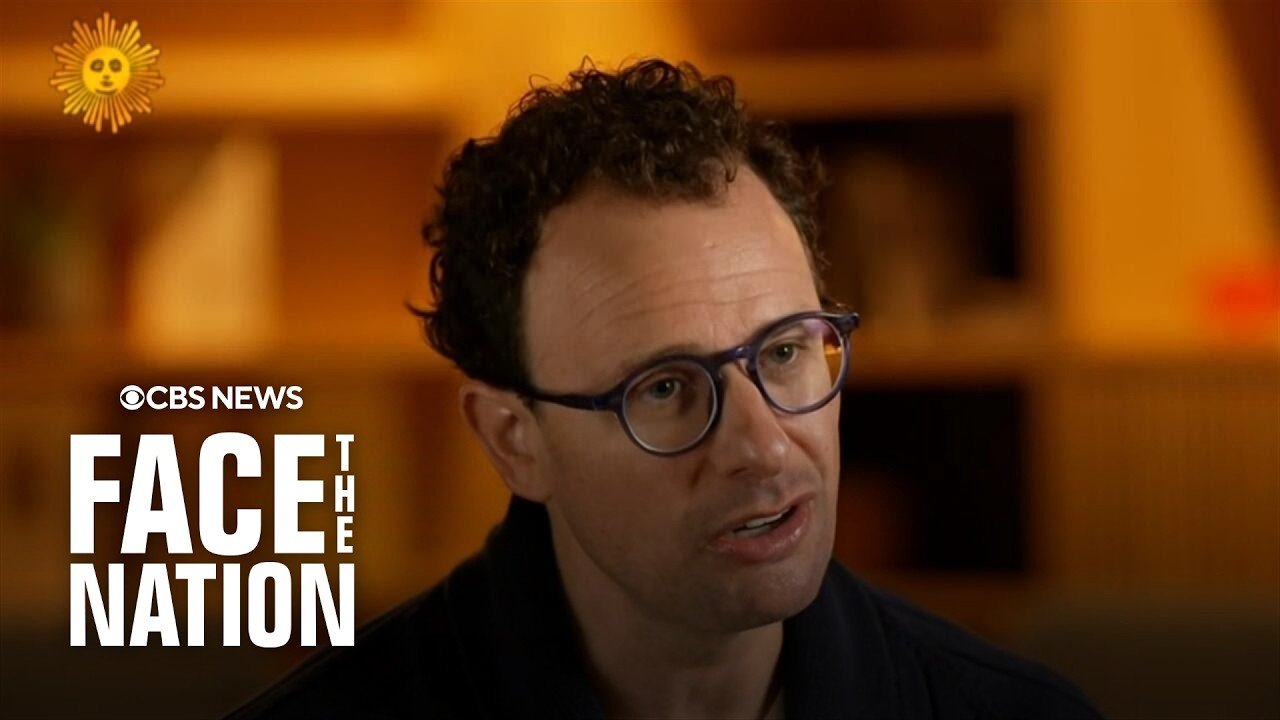
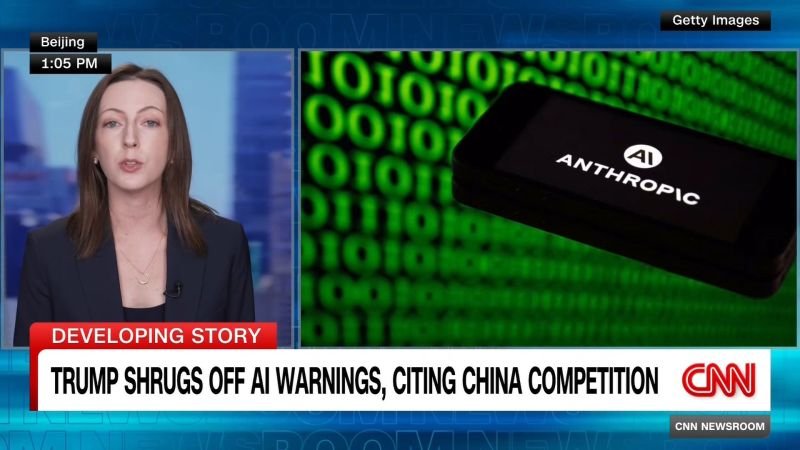
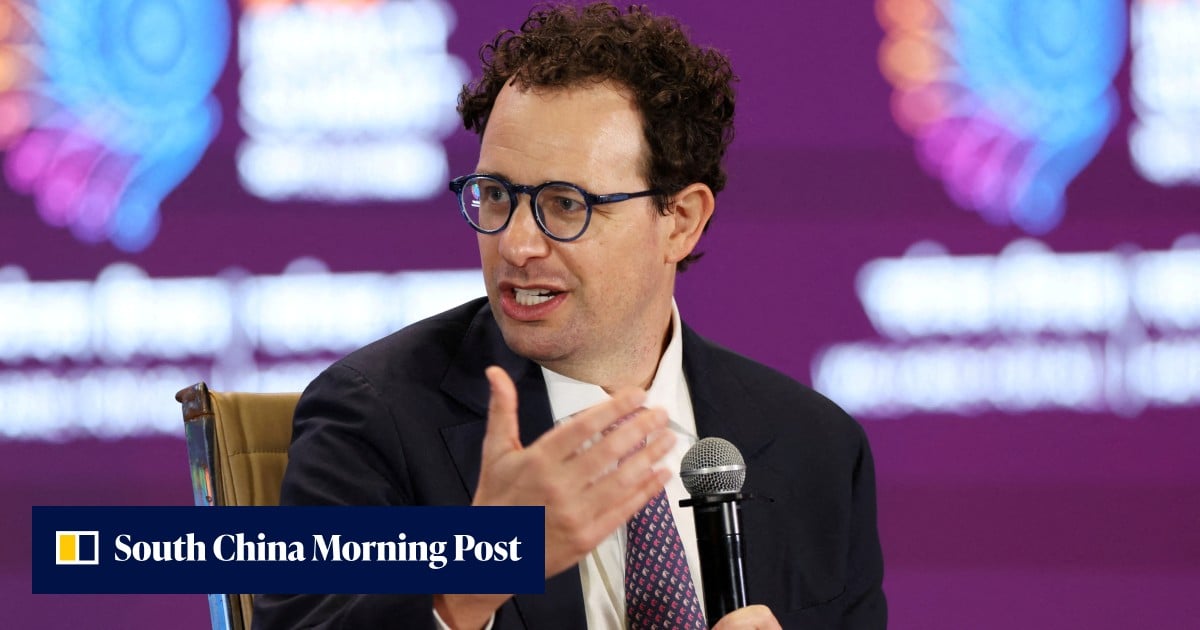
China’s pushback came within days of Anthropic CEO Dario Amodei’s essay and the subsequent endorsements from OpenAI’s Sam Altman, xAI’s Elon Musk and others. At a routine briefing, Foreign Ministry spokesperson Guo Jiakun labelled the US executives’ warnings as “fearmongering”.
Fomenting various threats, engaging in confrontation and malicious competition will only disrupt the process of global governance.
Foreign Ministry spokesperson Guo Jiakun
State media sharpened the tone. The Global Times and China Daily accused Anthropic, OpenAI and xAI of orchestrating a “coordinated play” to cement America’s current technological lead, arguing that dominant US firms can afford to pause while trailing Chinese labs cannot. In this framing, the slowdown is not about existential risk but about containment: a bid to exclude China from the frontier and from future global AI governance.
Strategic opportunity: a slowdown in Silicon Valley, a runway for China
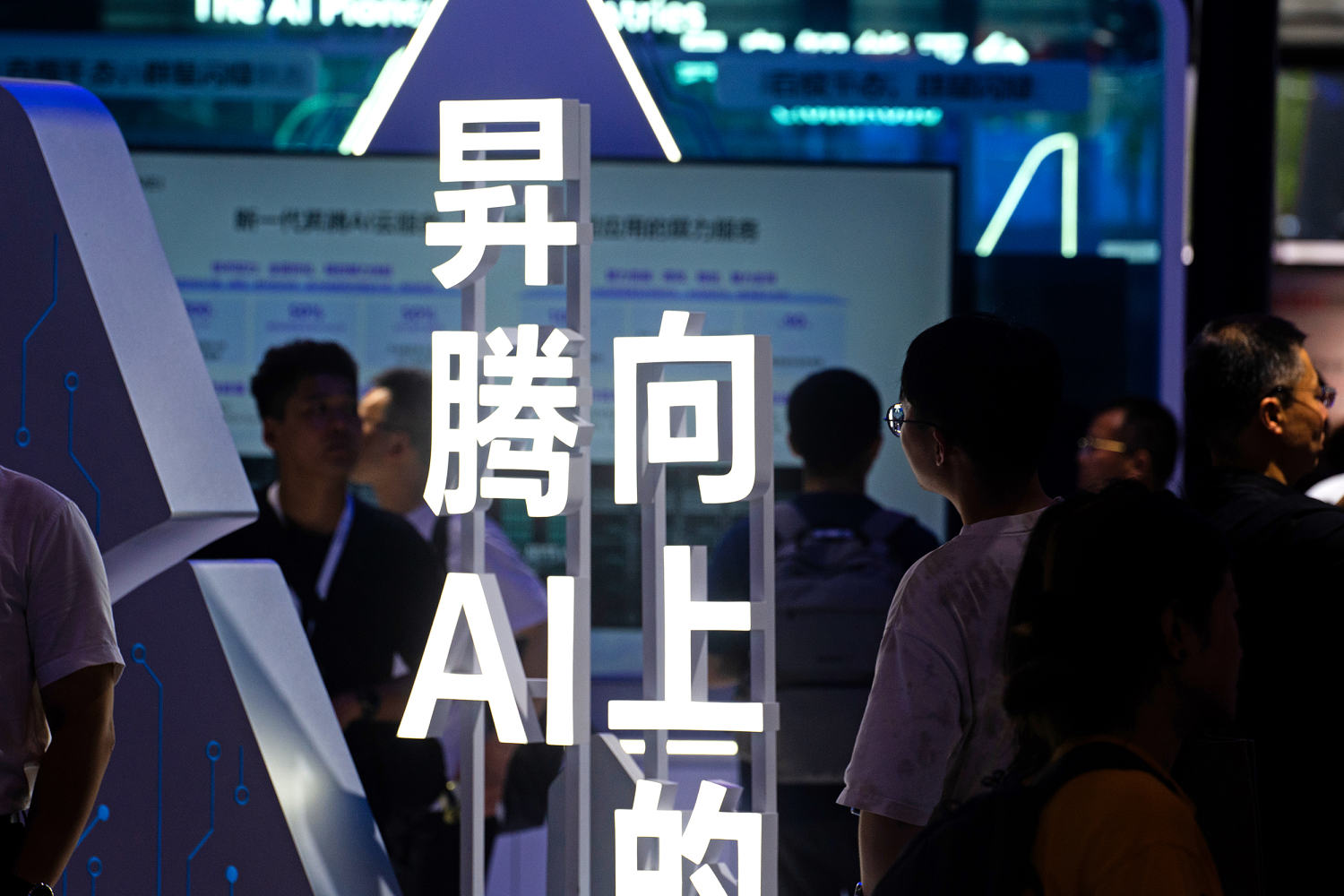
Behind the rhetoric, Chinese industry actors see a potential upside. For domestic players such as DeepSeek, Zhipu and MiniMax, a Western slowdown is viewed as a strategic window to narrow the gap with US frontier models.
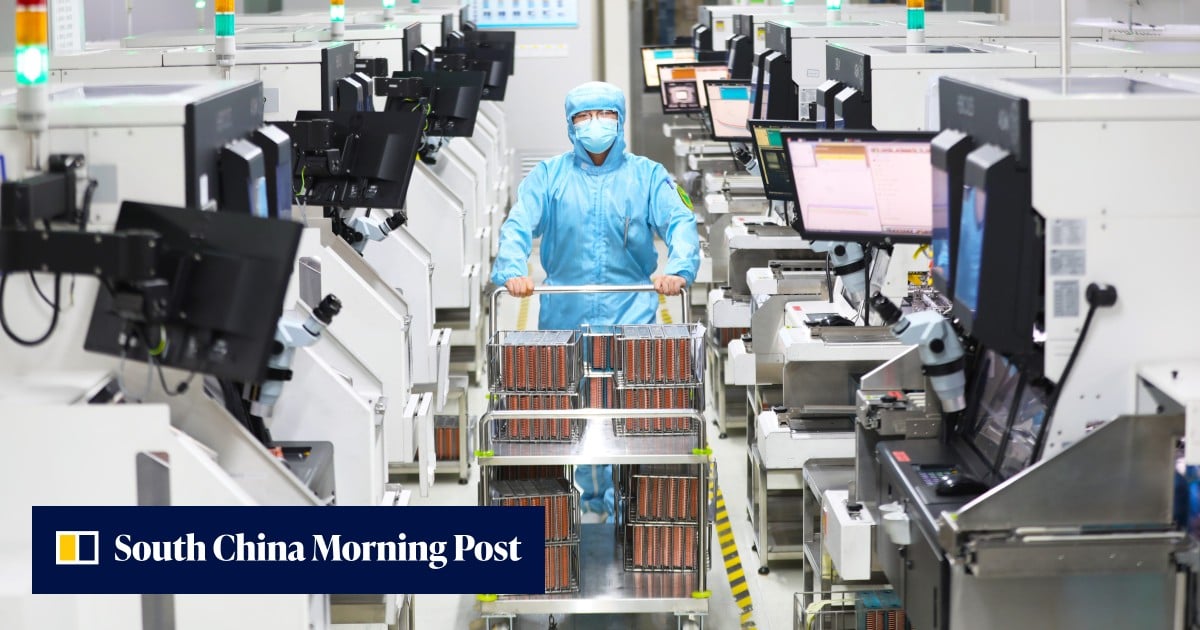
Constrained by US chip export bans, Chinese firms have spent the past year optimising for efficiency — focusing on model distillation, inference tuning and other techniques that extract more capability from limited hardware.
An industry‑wide deceleration in Silicon Valley would, in this view, give Beijing the exact runway it needs to catch up without requiring the latest American GPUs. That dynamic reinforces official messaging: China should not accept externally imposed limits that would freeze its position behind US incumbents.
Domestic safety: ideological control and “operational loss of control”
Despite rejecting a Western‑led pause, China is deeply concerned about AI risks — but its definition of “safety” diverges from Silicon Valley’s extinction‑level anxieties. Beijing’s focus is heavily weighted toward ideological and political security.
On Sunday, State Security Minister Chen Yixin published a rare warning that “hostile forces” are weaponising US models — specifically naming Anthropic’s Claude — to wage a “propaganda and cognitive war” against the Communist Party. The message ties AI safety directly to regime stability: uncontrolled AI is dangerous not only because it might act autonomously, but because it could be used to undermine Party authority.
Regulators are moving to codify this. China’s cyberspace regulator, the CAC, has rolled out rules targeting the “operational loss of control” of autonomous AI agents and is drafting a mandatory national standard for AI agent safety — described as the world’s first of its kind — requiring developers to be able to immediately block and recover from rogue AI behaviour. The emphasis is on enforceable technical controls and content safeguards, rather than broad, voluntary training pauses.
Defense minister calls for global AI oversight — without endorsing a slowdown
Adding another layer to Beijing’s messaging, China’s Defence Minister Dong Jun used the Xiangshan Forum in Beijing on 16 September to call for stronger international oversight and cooperation on AI governance.
Dong said worries about military misuse of AI should spur officials to “consult with one another on governance, and actively engage in security dialogues in areas such as artificial intelligence, outer space and the deep sea.” He urged nations to “strengthen risk assessment, experience sharing, and the establishment of rules and governance” so that emerging technologies “can better benefit all of humanity.”
The speech stopped short of endorsing the US industry’s proposed slowdown. Instead, it framed China as a proponent of multilateral rule‑making and risk management — while continuing to reject what Beijing sees as US‑led containment under the guise of safety.
Is a US–China AI safety pact possible?
The clash of narratives makes a near‑term US–China safety pact unlikely. On the US side, the Trump administration’s refusal to mandate a pause — coupled with industry’s “race to the bottom” incentives — undermines any credible commitment mechanism. On the Chinese side, official statements frame US‑led slowdown proposals as strategic containment rather than shared risk management, hardening resistance to externally imposed limits.
Even if both sides rhetorically endorse “global AI governance”, the preconditions for a pact — verifiable training pauses, shared evaluation protocols, and chip/export coordination — run into conflicting national‑security doctrines and commercial imperatives. The most plausible path remains parallel, unilateral safety measures (third‑party audits, internal training pauses, red‑team standards) rather than a binding bilateral agreement.
The issue is set for high‑level discussion: Presidents Donald Trump and Xi Jinping are scheduled to meet at a summit on 24 September 2026, where frontier AI safety, cyber espionage and global tech governance are expected to top the agenda. For now, though, the public record shows two incompatible playbooks — one centred on pacing capability to solve alignment, the other on accelerating within a tightly controlled political framework.