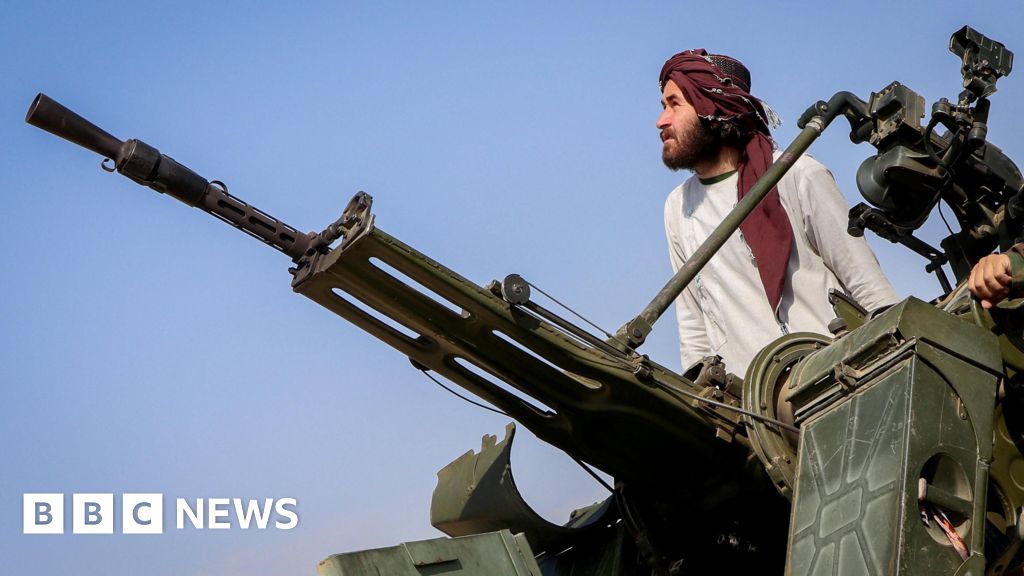
In early 2026, long-standing tensions erupted into a full-scale military conflict between Pakistan and Afghanistan. Following a string of terrorist attacks in Islamabad, Bajaur and Bannu, Pakistan launched retaliatory airstrikes on February 21, targeting TTP and ISIS-K camps in Nangarhar, Paktika and Khost.
While Pakistan reported 80 militant deaths, Afghan officials and UNAMA reported civilian fatalities, including 18 in Nangarhar. The situation spiralled on February 26 when Afghanistan launched a counter-offensive involving border clashes and drone strikes. Pakistan immediately escalated with Operation Ghazab Lil Haq, a broad campaign that shifted from border skirmishes to nationwide airstrikes.
By February 27, Pakistan Defence Minister Khawaja Asif officially declared a state of “open war,” as Pakistani forces began striking strategic targets deep within Afghanistan, including Kabul.
Long-standing tensions reach breaking point
The conflict is the culmination of long-standing friction over Pakistan’s claims that the Taliban provides safe haven to the TTP and other militants.
Although Qatar brokered a ceasefire in October 2025 following deadly border clashes, subsequent peace talks collapsed, leaving only a fragile and frequently violated peace. Even the Saudi-mediated release of three Pakistani POWs just days prior could not prevent the slide toward war.
The immediate trigger followed a violent February 2026, including a week-long BLA offensive in Balochistan, a devastating ISIS-P suicide bombing in Islamabad on February 6 that killed 36, and a TTP raid in Bajaur on February 16 that claimed 11 soldiers and a child.
After issuing a final diplomatic démarche on February 19 and a public ultimatum from Defence Minister Khawaja Asif to act before Ramadan, Pakistan followed through on its threat to launch cross-border air operations when the Taliban failed to intervene.
Islamabad Mosque bombing triggers escalation
The suicide bombing on February 6, 2026 at the Khadija Tul Kubra Mosque, a prominent Shia mosque in the Tarlai Kalan area on the southeastern outskirts of Islamabad, was the deadliest terrorist attack in the Pakistani capital in nearly two decades. It served as the primary justification for Pakistan’s subsequent military escalation against Afghanistan.
At least 38 people were killed and over 170 injured. Many of the victims were worshippers gathered for Friday prayers, including children. Witnesses reported that at least one assailant opened fire on security guards at the entrance before a suicide bomber managed to bypass the gate and detonate his vest in the last row of worshippers.
The Islamic State – Pakistan Province, a regional affiliate of ISIS, claimed responsibility for the attack via Telegram, citing anti-Shia motives. While ISIS claimed the bombing, the Pakistani government quickly linked the atrocity to the broader regional conflict.
Defence Minister Khawaja Asif stated the bomber was an Afghan national with a history of travelling to and from Afghanistan. Pakistan alleged the “planning, training and indoctrination” for the attack occurred on Afghan soil. Interior Minister Mohsin Naqvi accused Indian intelligence of funding the operation and providing targeting information to the attackers. Both India and the Afghan Taliban officially denied any involvement.
Authorities identified the suicide bomber as Yasir Khan Yasir, a Pakistani national who reportedly received training in Afghanistan’s Kunar province. Security forces reportedly arrested the Afghan national and his mother in Islamabad, as well as his brother and brother-in-law in Peshawar and Karachi.
It was the first mass-casualty event in the capital since the 2008 Marriott Hotel bombing, highlighting a significant breach in urban security that analysts say forced the Pakistani military to adopt a “zero-tolerance” cross-border offensive.
Operation Ghazab Lil Haq continues
Pakistan’s military operation, Operation Ghazab Lil Haq, is ongoing as of March 8, 2026. Pakistan claims to have killed 583 Afghan Taliban operatives and injured nearly 800 since the start of hostilities.
Unlike previous conflicts, Pakistan is now directly targeting Afghan government military sites, including brigade and battalion headquarters in Kandahar and Nangarhar, as well as drone storage facilities in Jalalabad.
Pakistan claims its ground forces have crossed the border from North Waziristan to capture Taliban outposts and have seized roughly 32 square kilometres of strategic territory known as the Ghudwana enclave south of the Zhob sector.
The Afghan Taliban continue to launch retaliatory strikes against Pakistani border posts along the Durand Line, claiming to have killed over 320 Pakistani soldiers. They also reportedly downed a Pakistani drone during heavy fighting on March 4.
Humanitarian crisis and regional displacement
As of March 6, the UN reported that over 115,000 Afghans and 3,000 Pakistanis have been displaced by the fighting. UNAMA has recorded at least 67 civilian deaths and 136 injuries in Afghanistan, though Afghan officials place the death toll as high as 128 civilians.
The 2,600-kilometre border remains largely closed to trade and transit, further straining Afghanistan’s economy.
Mixed international reactions
UN Secretary-General António Guterres called for an immediate cessation of hostilities. UNAMA has specifically raised alarms over the 42 confirmed civilian deaths, including 24 children, and the displacement of over 115,000 people.
The OIC issued a statement expressing “grave concern” over the military confrontation between two member states and urged a return to the October 2025 ceasefire terms.
The US has expressed strong support for Pakistan’s right to self-defence against the TTP. Under Secretary of State Allison Hooker noted the Taliban’s failure to uphold counter-terrorism promises. President Donald Trump reportedly praised Pakistan’s leadership, though the State Department has urged both sides to avoid civilian casualties.
China is acting as a “neutral” mediator. Beijing has called for restraint to protect its CPEC investments. Chinese Special Envoy Yue Xiaoyong visited Kabul on March 8 to push for a ceasefire, describing both nations as “inseparable neighbours.”
Despite formally recognizing the Taliban regime in July 2025, Russia has called for an immediate halt to cross-border strikes and offered to facilitate diplomatic dialogue to prevent a “Central Asian wildfire.”
India has strongly condemned Pakistan’s airstrikes, specifically highlighting that they occurred during Ramadan. Indian officials accused Islamabad of “externalising its internal failures” and reiterated support for Afghanistan’s territorial integrity.
Iran’s Foreign Minister Abbas Araghchi called for “Islamic solidarity” and offered to host peace talks, fearing that the conflict could drive a fresh wave of refugees across the Iranian border.
Turkey’s President Erdoğan offered to mediate on March 3. While the Taliban expressed interest, Pakistan has stated it is “in no hurry” for a ceasefire until there is “verifiable evidence” of TTP expulsion.
Read also:
India-Pakistan “100-hour War” 2025
2026 Balochistan attacks