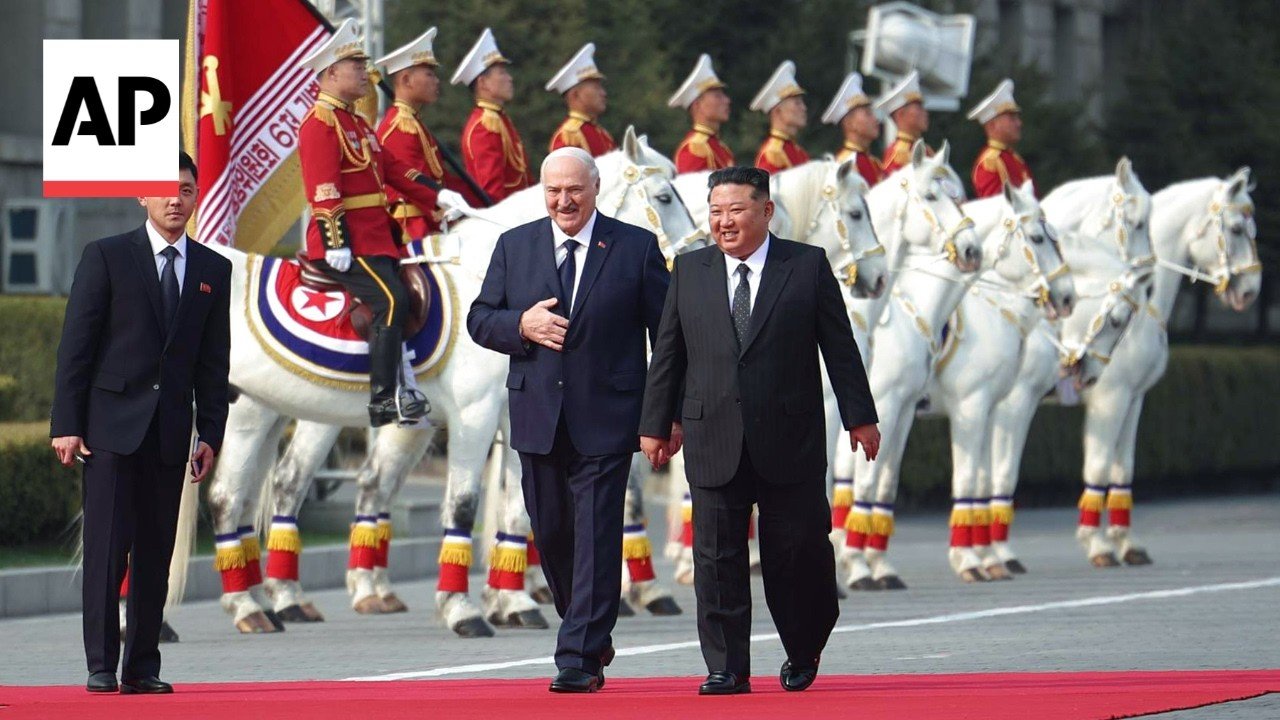
On March 26, 2026, Belarusian President Alexander Lukashenko and North Korean leader Kim Jong Un signed a Treaty on Friendship and Cooperation in Pyongyang, marking the first official state visit by a Belarusian president to North Korea.
The deal, which both sides describe as ushering in a “fundamentally new stage” in relations, creates a legal framework for long‑term cooperation between two heavily sanctioned states closely aligned with Russia. Both leaders expressed shared views on international affairs, specifically opposing “illegitimate pressure” and sanctions from Western nations.
According to state media readouts, the treaty spans diplomacy and public outreach, agriculture and food security, healthcare and pharmaceuticals, and education and information technology.
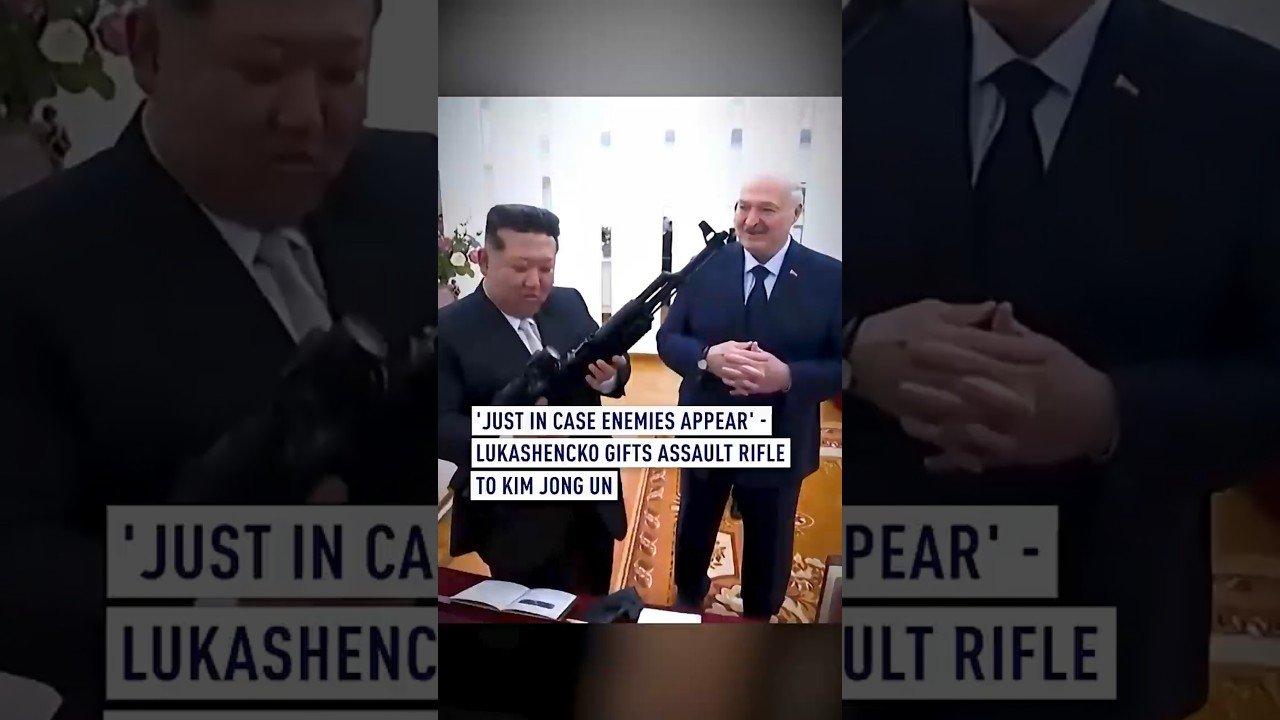
During the summit, Lukashenko handed Kim an automatic rifle, joking it was for use “in case enemies appear,” while Kim reciprocated with a saber and a custom vase.
Analysts view this visit as a move to strengthen a “Pyongyang-Moscow-Minsk axis” in opposition to the Western-led global order. This treaty further solidifies their mutual support within the “anti-Western bloc”.
The “spectacle” of the visit, including a 21-cannon salute and white-horse cavalry, is intended to show that Western efforts to isolate these nations have failed and that an “alternative center of power” is rising.
What’s in the treaty?
Agriculture and food security is a primary focus for both nations. Belarus, a major producer of agricultural machinery, plans to export food products and potentially farming equipment to North Korea.
Belarus aims to export pharmaceutical products to North Korea. Conversely, North Korea intends to export its cosmetics, which Belarusian officials noted are “renowned for their quality and affordable prices,” to Belarus.
Both countries signed memorandums to increase exchanges in education and information sectors, though specific project details remain largely classified.
The treaty establishes a permanent legal framework for high-level diplomatic visits and reactivates intergovernmental committees that had been dormant since the 1990s.
Beyond economic ties, the leaders emphasized “consolidating efforts” to protect their sovereignty against “unlawful pressure” and Western sanctions.
What is the scope of the Russia-Belarus-North Korea Alliance?
This “axis” is not a formal tripartite alliance but a practical coordination of three heavily sanctioned states.
Moscow provides the strategic coordination, military-industrial expertise, and diplomatic cover for both smaller states.
North Korea provides raw military power, including millions of rounds of ammunition and roughly 14,000 soldiers for Russian operations.
Belarus acts as a logistics hub and an active intermediary for sanctions evasion. It also hosts Russian tactical nuclear weapons, which adds a layer of deterrence against NATO.
While Belarus served as a launchpad for Russia’s 2022 invasion of Ukraine, North Korea has reportedly provided millions of rounds of ammunition and thousands of troops to support Russian efforts.
How Kyiv, Washington and South Korea are likely to see it
Global responses have been characterized by concern over regional stability and a perceived shift in global power dynamics.
South Korean officials noted that while the focus appeared economic, the trip was part of a broader effort to reinforce ties between Pyongyang, Minsk, and Moscow.
Both Seoul and Kyiv view the deepening of this “anti-Western bloc” as a direct threat, given North Korea’s provision of troops and ammunition to Russia’s war effort and Belarus’s role as a launchpad for the initial invasion.
The summit occurred amid a complex diplomatic backdrop. US President Donald Trump has recently sought to thaw relations with Belarus, easing some sanctions following the release of political prisoners.
Analysts suggest this “balancing act” by Lukashenko, engaging with both Washington and Pyongyang, is an attempt to gain leverage and reduce total dependence on Russia.
The EU recently added Russia to its “high-risk” list for money laundering, effectively blacklisting it alongside North Korea. European observers view the new treaty as a way for these regimes to facilitate opaque financial transfers and logistics to circumvent such blacklists.
Exiled opposition groups decried the summit as a “meeting of dictators,” arguing it does not represent the interests of the Belarusian people.