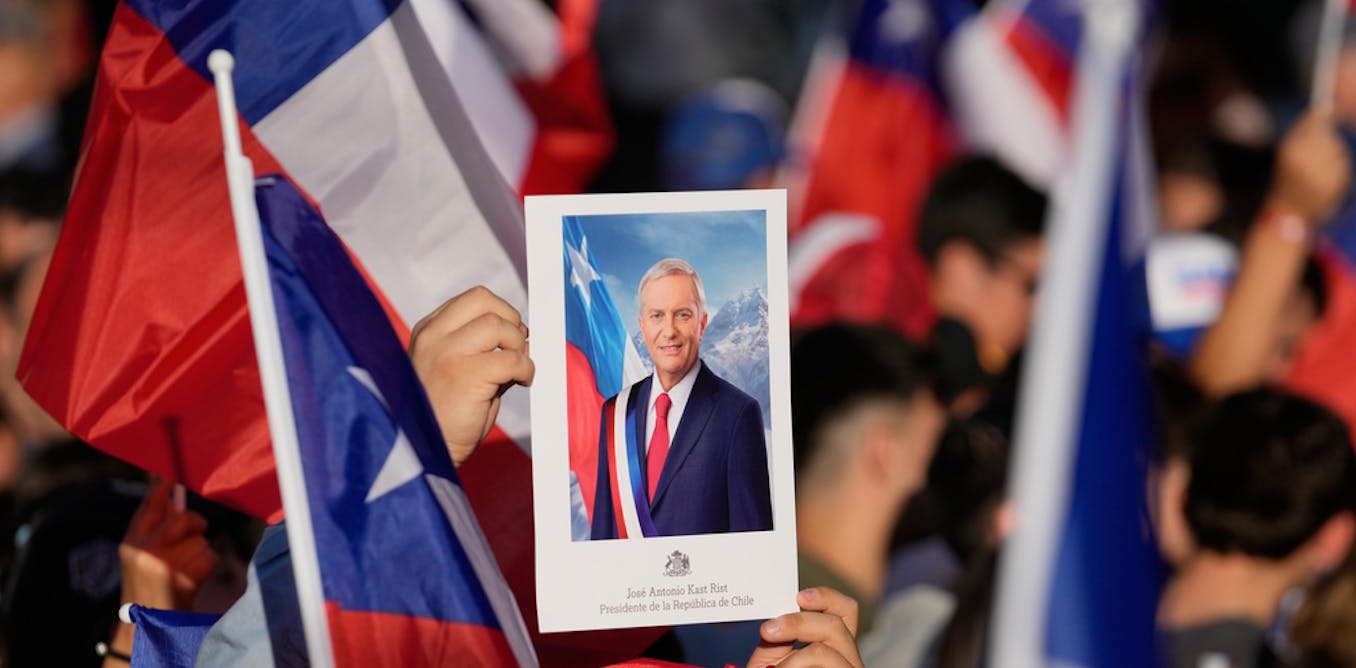
Far-right candidate José Antonio Kast of the Republican Party won Chile’s 2025 presidential election in a run-off contest on December 14, marking the country’s sharpest turn to the right since the end of military rule in 1990.
On November 16, 2026, general elections were held in Chile to elect the 38th president of Chile, all 155 members of the Chamber of Deputies, and 23 senators out of the 50 in the Senate. Because no candidate won an outright majority, the contest went to a runoff on December 14, Kast defeated Jeannette Jara of the Communist Party 58.17% to 41.83%.
The presidency was decided in a two-round race after no candidate cleared 50% in the first round. Jara led the first round with 26.85%, followed by Kast with 23.93%, but Kast swept the runoff on Dec. 14 with 58.17% of the vote, or about 7.2million ballots.
The vote also delivered a new legislature, with all 155 seats in the Chamber of Deputies and 23 of the 50 Senate seats contested.
The election was Chile’s first general vote under the reintroduction of compulsory voting, a change that helped push turnout above 85% and brought millions of politically unaffiliated voters into the process. Analysts said that shift amplified frustration with the political establishment and the Boric administration
Kast is set to be sworn in on March 11, 2026.
What drove voters
Crime and immigration dominated the campaign. Chile has remained comparatively safer than much of the region, but violent crime, kidnappings and the growth of transnational gangs such as Tren de Aragua pushed insecurity to the center of the race.
Kast campaigned on a hardline “mano dura” (“iron fist”) approach, including maximum-security prisons and tougher self-defense laws. Jara argued for prevention, tighter gun control and striking the “financial roots” of organized crime through increased banking transparency.
Migration became a flashpoint as the number of undocumented immigrants in Chile rose significantly, largely due to the Venezuelan humanitarian crisis.
Kast famously proposed building barriers and ditches along the northern border with Peru and Bolivia to deter illegal crossings. He issued a 90-day “self-deportation” warning for irregular migrants, while Jara proposed a “limited regularization” for those who entered legally but had lapsed status.
Economic pressure
The election also reflected frustration over jobs, prices and slow recovery. Despite a 2.5% projected growth rate, high unemployment (9%) and inflation left many Chileans feeling economically vulnerable.
As Kast promised deep spending cuts and lower corporate taxes to spur growth, while Jara focused on wage support, subsidies and a larger safety net.
Kast campaigned on a platform of slashing $6billion in public spending and reducing corporate taxes (from 27% to 23%) to stimulate the free market. Jara proposed a “living wage” of approximately $800/month and state subsidies for electricity and basic goods to help families “make ends meet”.
Compulsory voting, reintroduced in 2022, brought millions of new voters into the process and appears to have amplified anti-establishment sentiment. Analysts said the result fit a broader regional shift to the right across Latin America.
Political reaction
Jara conceded quickly and said democracy had spoken. Outgoing President Gabriel Boric also called Kast to congratulate him, though tensions lingered after Kast criticized Boric’s final decision to send aid to Cuba.
Kast’s supporters hailed the result as a mandate for tougher government and tighter borders. Some rallies also featured Pinochet imagery, though Kast said those symbols represented only a small minority of his backers.
To appeal to moderate and independent voters, Kast resigned from his Republican Party shortly after the win to position himself as a “president for all Chileans”.
Market reaction
Chile’s financial markets had already priced in a pro-market outcome. The IPSA posted its best year since 2003 ahead of the vote, logging more than 50 record closes in 2025 as investors bet on deregulation, tax cuts and spending restraint.
That rally cooled slightly after the result. The index slipped 0.94% as traders shifted from anticipation to concern over whether Kast could actually pass reforms through a divided Congress.
The peso also strengthened in the run-up to the election, rising to about 915 per dollar by mid-December as investors favored Kast’s economic agenda.
Social concerns
Kast’s victory triggered alarm among rights groups and LGBTQ+ activists, who warned his social conservatism could roll back gains on women’s rights and anti-discrimination protections.
It also fueled anxiety in immigrant communities in northern Chile. In the days around the vote, some migrants rushed to move in or out of the country before Kast’s inauguration, fearing a harder line on migration enforcement.
Regional impact
The result has been read as part of a wider ideological turn in the region, alongside right-wing leaders in Argentina, Ecuador and Bolivia. Analysts viewed the result as the “death of the Pink Tide” in the region, aligning Chile with other right-wing victories in Argentina (Milei), Ecuador (Noboa), and Bolivia (Paz).
The Trump administration welcomed Kast’s victory, while other regional leaders, including Brazil’s Luiz Inácio Lula da Silva, signaled they would work with him despite political differences.
Chile’s financial markets had already priced in a pro-market shift, and investors were watching closely to see whether Kast could translate the result into legislation in a divided Congress. Rights groups, meanwhile, warned that his social conservatism could roll back gains on women’s rights and anti-discrimination protections.


Read also: 11 pivotal elections that altered the global outlook in 2025