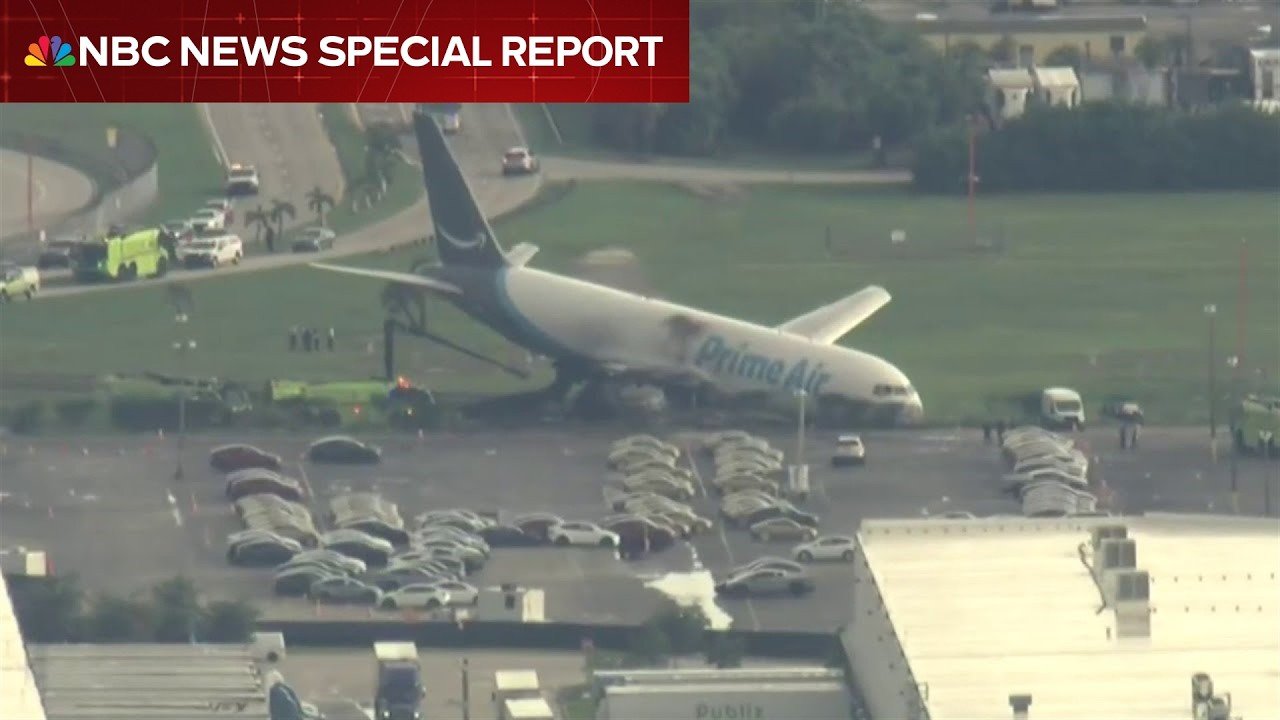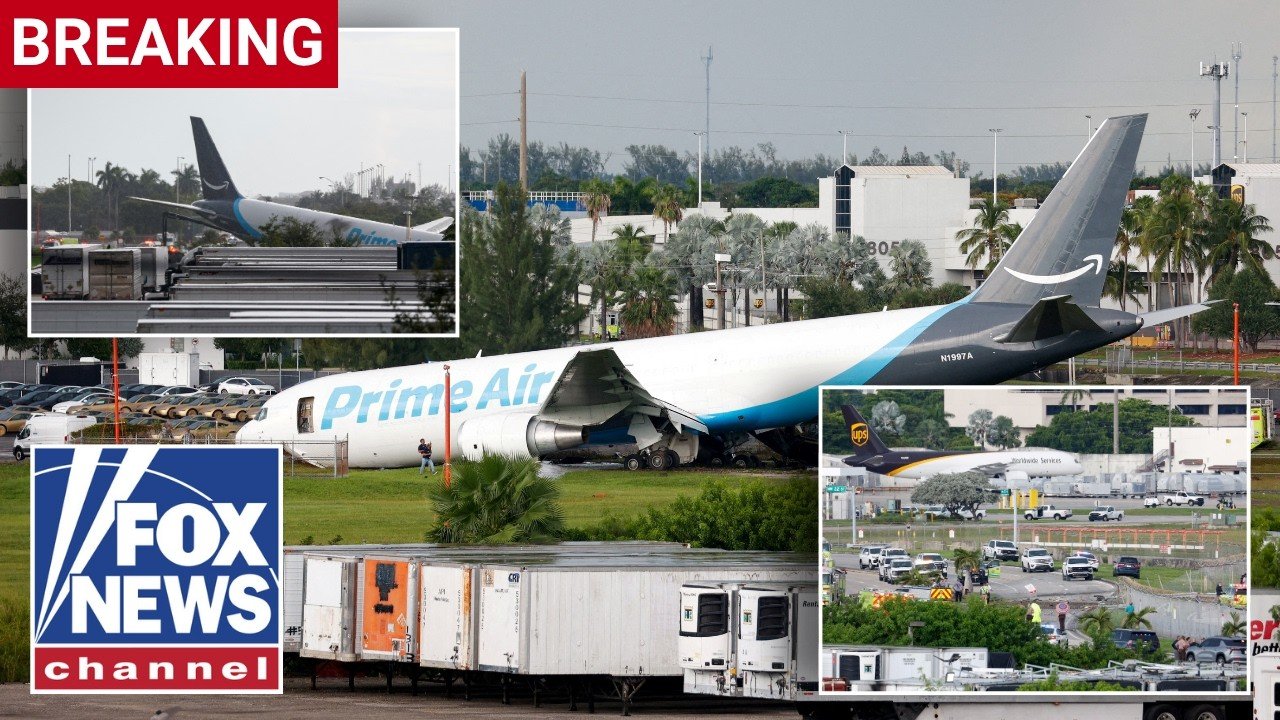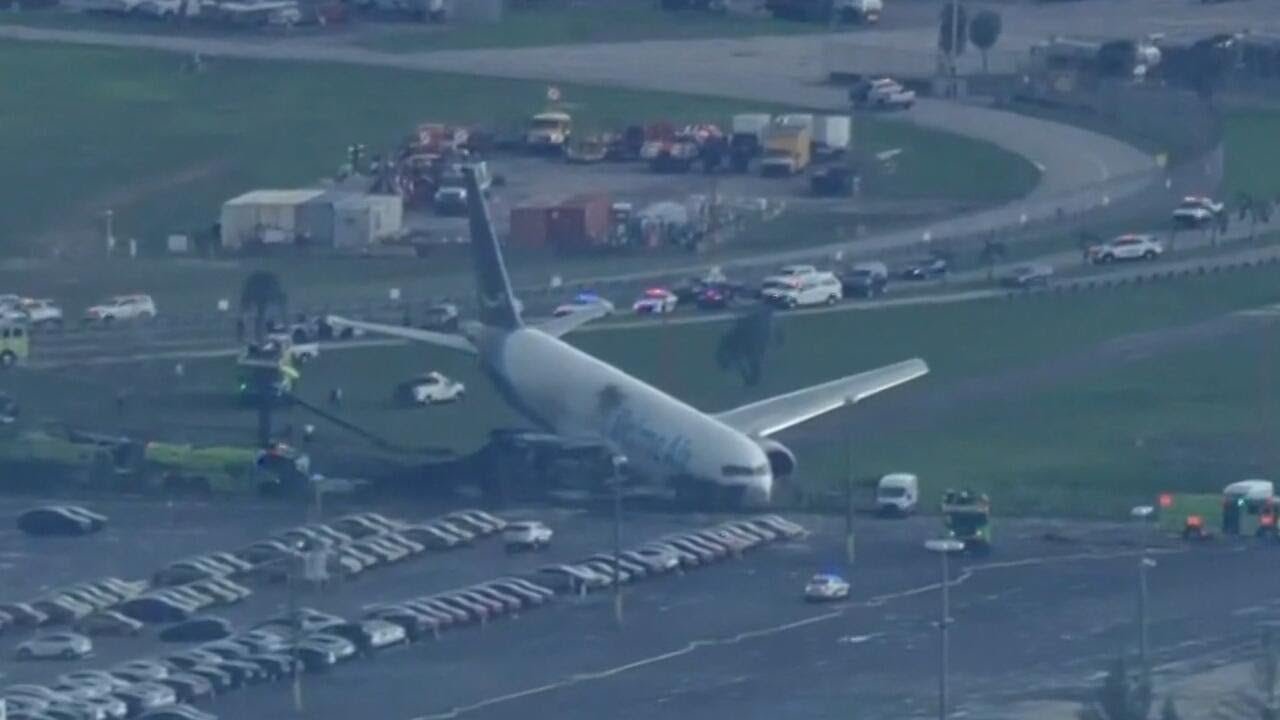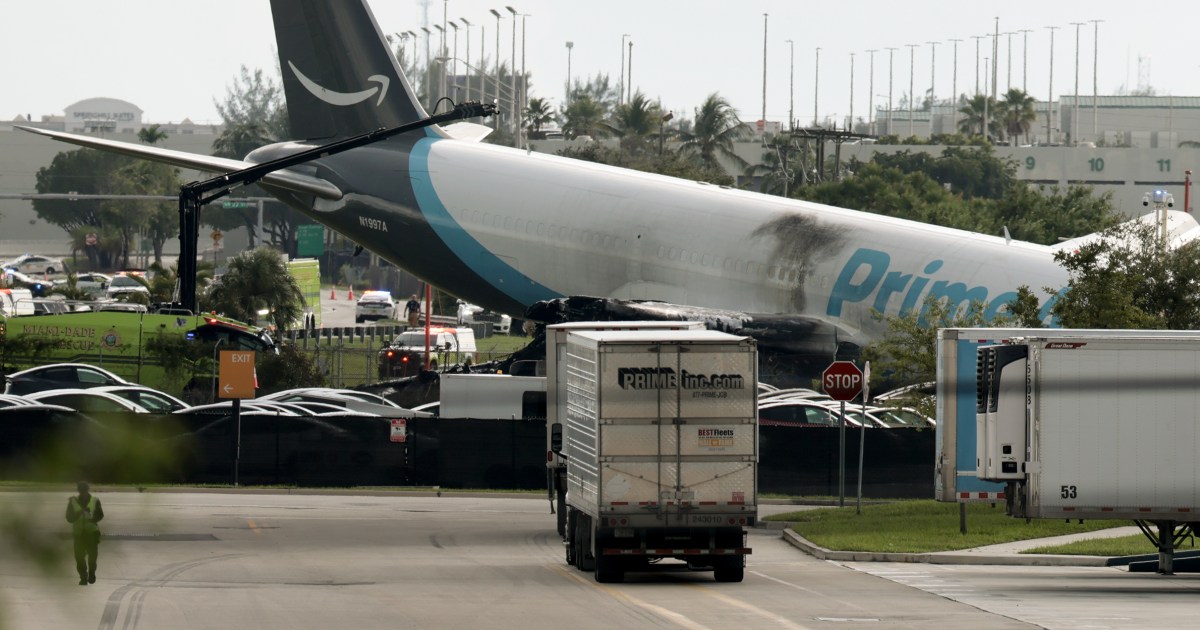

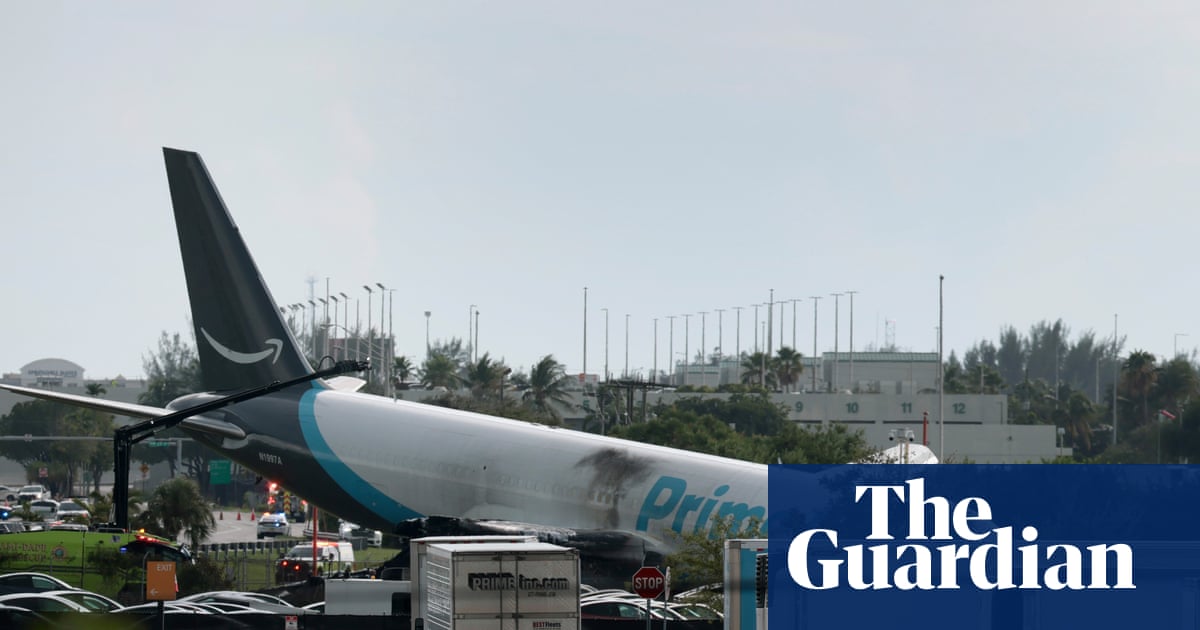


Five people were killed and five others injured when an Amazon Air cargo plane overran a runway at Miami International Airport (MIA) on September 6, 2026, ploughing into ground vehicles and bursting into flames just outside the airport perimeter.
The crash triggered a full ground stop, shut multiple runways for hours, and prompted a major federal investigation into what caused the Boeing 767 freighter to leave the paved surface during landing.
What happened on the ground
Prime Air Flight 7598—a Boeing 767‑300 operated for Amazon by charter carrier 21 Air—was landing at MIA at about 2:00 p.m. local time after departing San Juan, Puerto Rico, when it overshot the airport’s diagonal runway.
According to flight‑tracking data cited by multiple outlets, the aircraft was travelling at roughly 112 knots (about 129 mph / 207 km/h) as it exited the usable runway, then careened off the northwest end, crossed a road and struck several vehicles before coming to rest near an Amazon‑related parking area and catching fire.
Video and photos from the scene showed the jet resting on its belly with its nose low and tail high, surrounded by thick black smoke as more than 60 Miami‑Dade Fire Rescue units—around 200 personnel—battled the blaze and began triaging victims.
Casualties and rescue efforts
Miami‑Dade officials confirmed five fatalities at the scene; all were people in vehicles hit by the aircraft. Five others were injured, including three who were in critical condition at a local trauma center, while two were hospitalized with unspecified injuries.
Rescue crews had to extricate at least two people trapped in damaged vehicles, as well as the pilot and co‑pilot, who were pinned inside the cockpit after the impact. The two‑person flight crew survived; their current condition has not been publicly detailed beyond being removed from the aircraft by firefighters.
Airport disruption and road closures
The crash forced an immediate full ground stop and temporary closure of all runways at one of the busiest airports in the United States, leading to hundreds of delays and cancellations across multiple airlines. One runway reopened around 4:15 p.m., with a second following about 30 minutes later, but departure restrictions remained in place into the evening while investigators secured the site.
The Miami‑Dade Sheriff’s Office closed NW 67th Avenue between NW 25th and NW 36th streets due to the heavy emergency presence, urging drivers to seek alternate routes. Travelers were advised to check with their airlines before heading to the airport and to expect Metrorail detours near the airport station.
Investigation launched
The National Transportation Safety Board (NTSB) is leading the federal investigation into the accident, with the Federal Aviation Administration (FAA) also examining the circumstances of the runway overrun.
As of Sunday evening, officials had not announced a cause. Investigators are expected to review the aircraft’s approach and landing profile, weather and wind conditions at the time, runway surface conditions and braking performance, aircraft systems and maintenance records, and crew actions and communications.
The aircraft involved has been identified as a 32‑year‑old Boeing 767‑33AER(BDSF), registration N1997A, previously operated on Amazon services by other partners including Atlas Air. Amazon and 21 Air have both said they are cooperating fully with authorities and prioritising support for those affected.
Context: Amazon’s cargo network and prior 767 incidents
The accident underscores the scale and risk profile of Amazon Air’s U.S. cargo network, which relies on partner airlines such as 21 Air and Atlas Air to operate a growing fleet of converted 767 freighters.
Aviation observers have noted the grim echo of the February 2019 crash of Atlas Air Flight 3591, another Boeing 767 freighter flying for Amazon, which went down near Houston while en route from Miami, killing all three crew members on board. That earlier accident intensified scrutiny of cargo pilot training, fatigue rules, and automation reliance—issues likely to resurface as the NTSB pieces together this latest sequence of events.
Key questions remain unanswered as the investigation moves from emergency response to technical analysis.
NTSB dockets, preliminary findings, and eventual probable‑cause determinations will likely unfold over weeks and months, with early factual reports expected in the coming days.