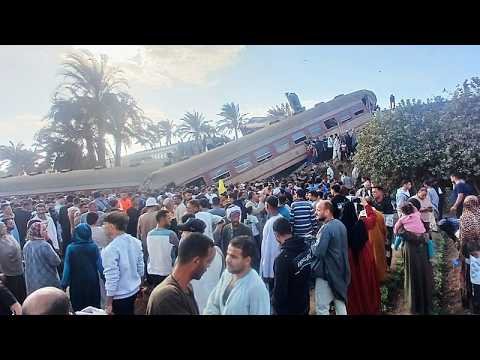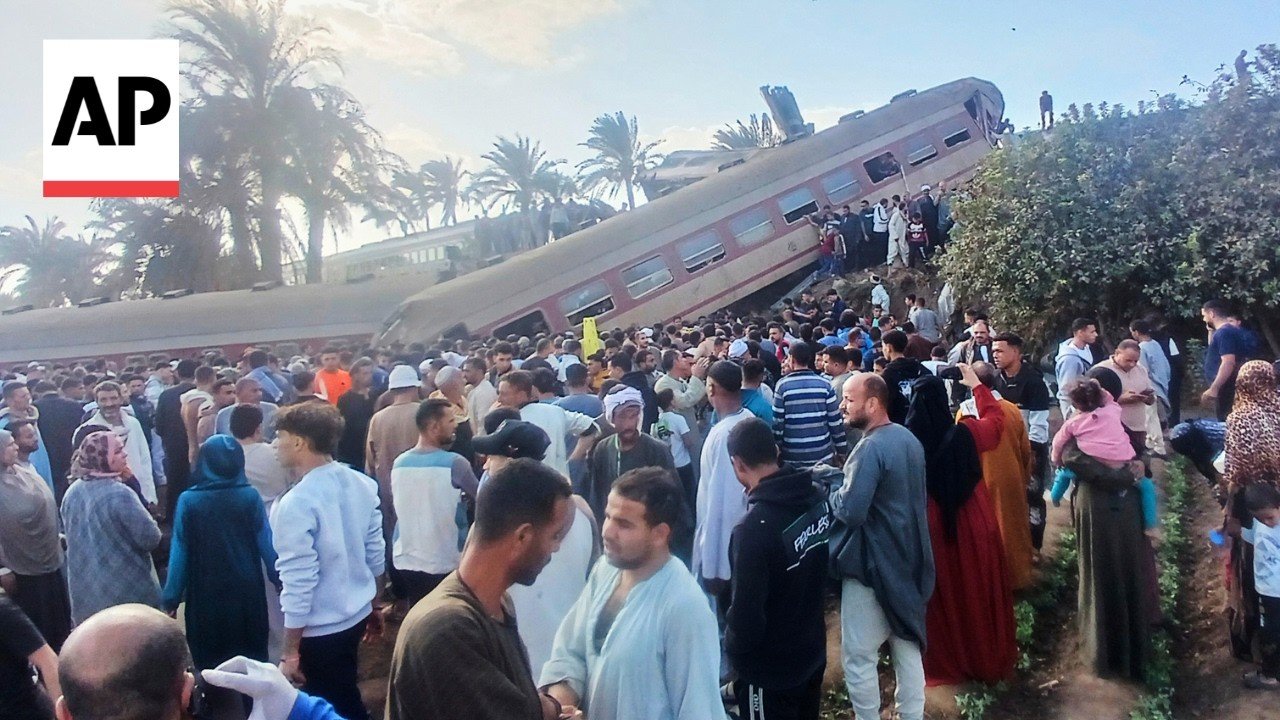


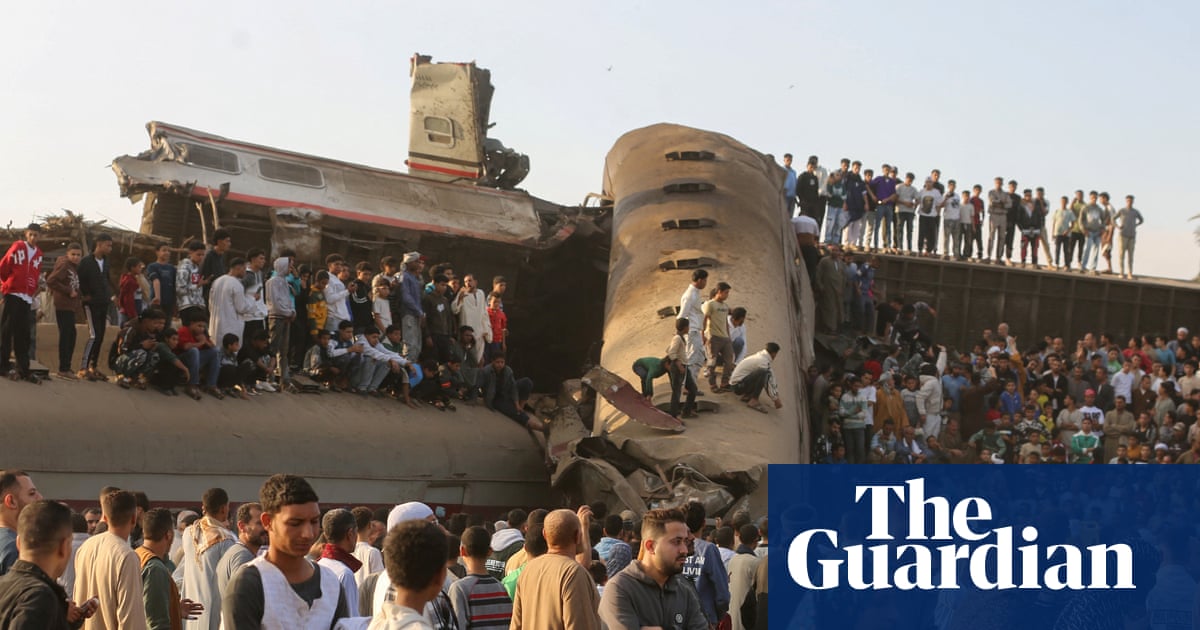
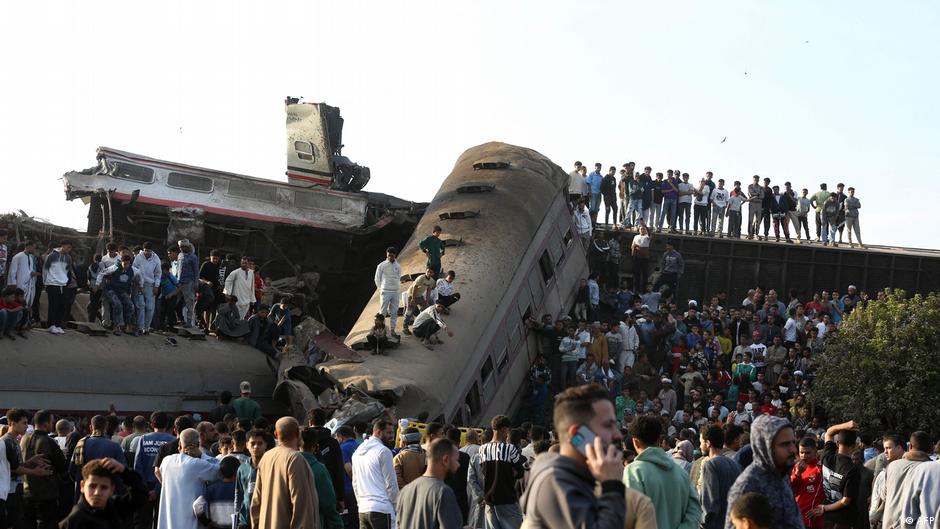

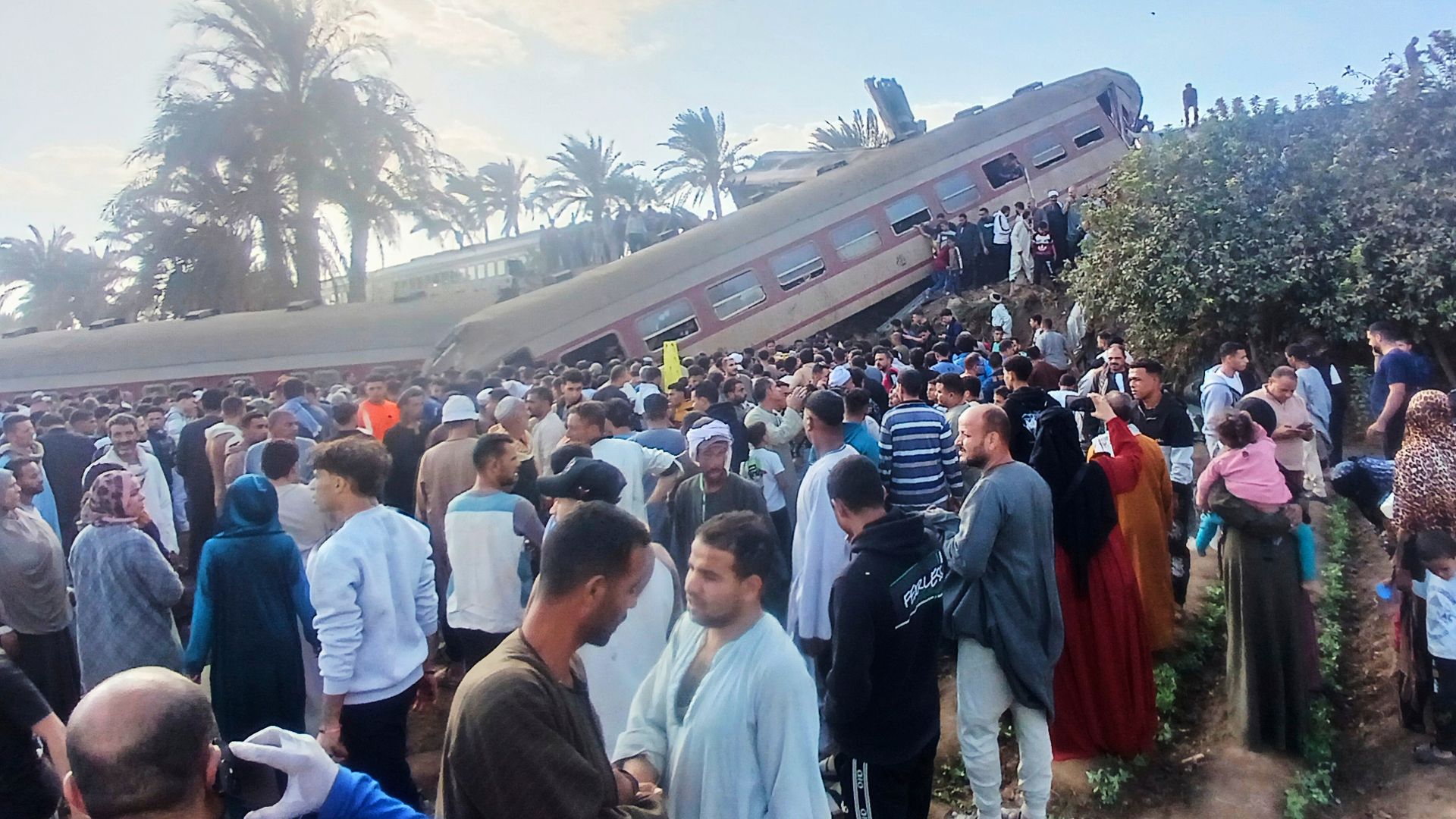


CAIRO, EGYPT — A passenger train struck the rear of a stationary service in Egypt’s al-Ayyat district on Sunday, November 8, killing at least seven people and injuring 125, authorities said, prompting an investigation into the latest deadly accident on the country’s railway network.
The collision occurred between Kafr Ammar and al-Riqqa in Giza province. A train travelling from Giza to Fayoum hit a Cairo-to-Aswan service that had stopped on the same track, according to Egypt’s Public Prosecution Office. Both trains were travelling in the same direction.
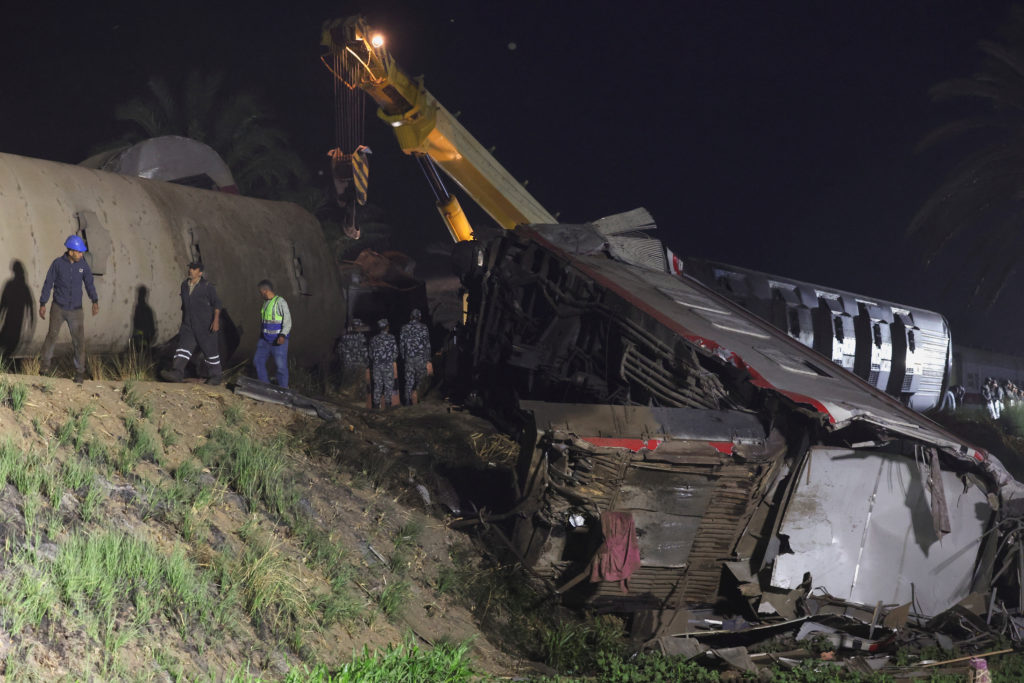
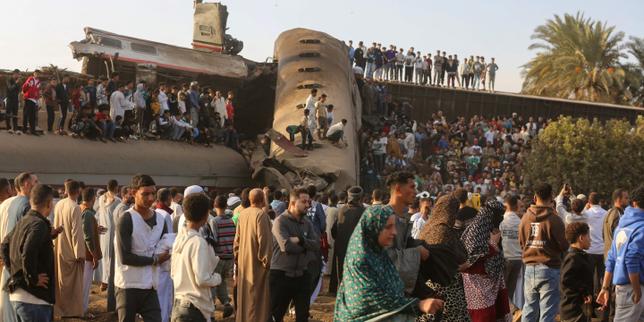
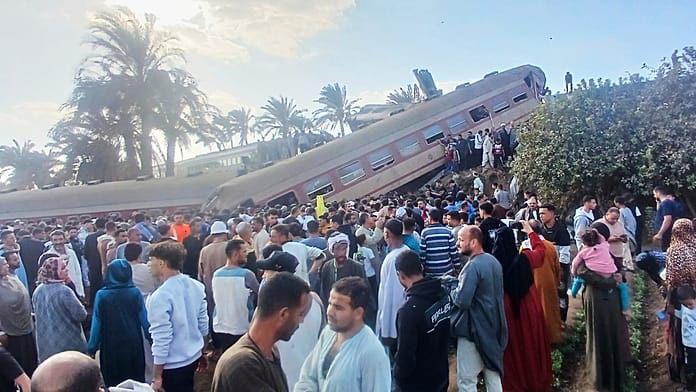
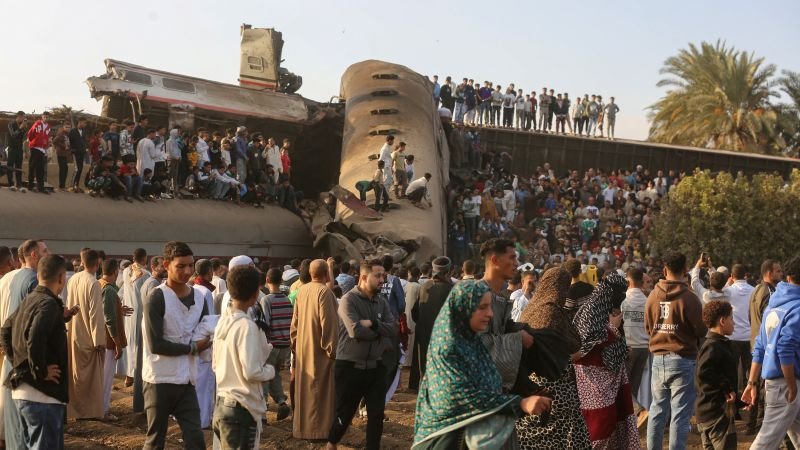
The driver of the Giza-to-Fayoum train was among those killed, prosecutors said. Several passenger carriages derailed and overturned, with some tumbling down an embankment. Images published by the BBC showed rescuers searching the wreckage and at least one carriage that appeared to have split in half.
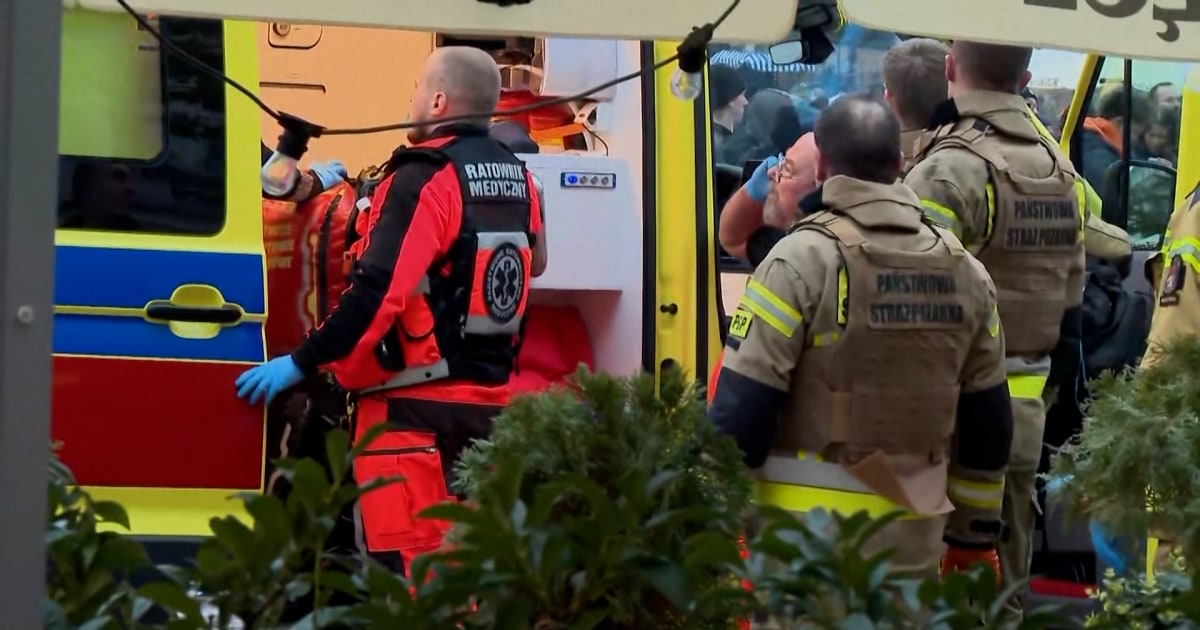
Emergency crews evacuate passengers
More than 70 ambulances were dispatched to the scene, and casualties were taken to three nearby hospitals. Health Minister Khaled Abdel Ghaffar ordered medical facilities in Giza and neighbouring Beni Suef province to increase their readiness to receive patients.
Reported injuries included broken limbs, pelvic and spinal fractures, and wounds to the head and face. More than 70 of those injured had subsequently been discharged, according to a Health Ministry statement reported by The New York Times.
The Egyptian Red Crescent also sent teams to provide emergency assistance and psychological support to victims and their families.
Early official updates put the number of injured at 112, while prosecutors separately reported 114. Subsequent reporting, citing authorities, put the toll at seven dead and 125 injured.
Train services between Giza and Upper Egypt were suspended as crews brought in cranes and heavy lifting equipment to remove damaged carriages. The railway authority initially gave no estimate for when services would resume.
Investigators examine railway operations and safety
President Abdel Fattah el-Sisi said he had instructed officials to investigate the circumstances of the collision and hold anyone found negligent accountable. He also offered condolences to the victims’ families and directed authorities to ensure the injured received medical care.
The Public Prosecution Office said its inquiry would examine the damaged carriages, railway tracks and surrounding area, as well as possible deficiencies in operating procedures and safety practices. The cause of the collision had not been officially established in the reports reviewed.
Transport Minister Kamel al-Wazir visited the scene as recovery work continued. The accident prompted calls in Egypt for his resignation over repeated fatal rail incidents, according to the BBC.
A district marked by repeated rail disasters
Al-Ayyat was the site of Egypt’s deadliest railway disaster in February 2002, when fire swept through a passenger train travelling from Cairo to Luxor. More than 370 people were officially reported killed, although some estimates put the toll higher.
In 2009, a train struck the rear of a stalled service in the district, killing at least 25 people. Another five people died in a derailment there in 2016, according to The New York Times.
The latest collision has renewed scrutiny of the safety of Egypt’s conventional railway network, an essential and relatively inexpensive means of transport. State figures cited by The New York Times put daily passenger numbers at between 1.1 million and 1.2 million.
Railway officials say the government has invested about 366 billion Egyptian pounds—approximately $6.5billion—in rehabilitation efforts in recent years. Yet much of the existing network still requires modernisation, even as Egypt has invested heavily in highways and new high-speed rail projects.