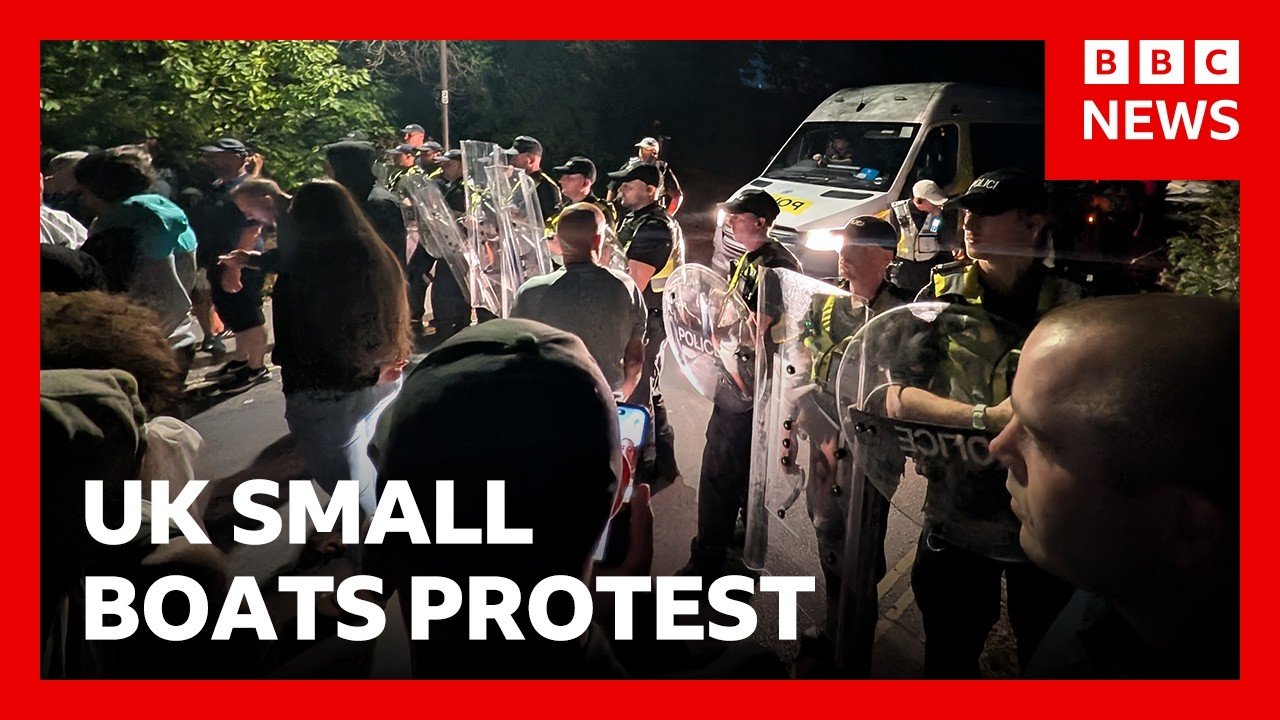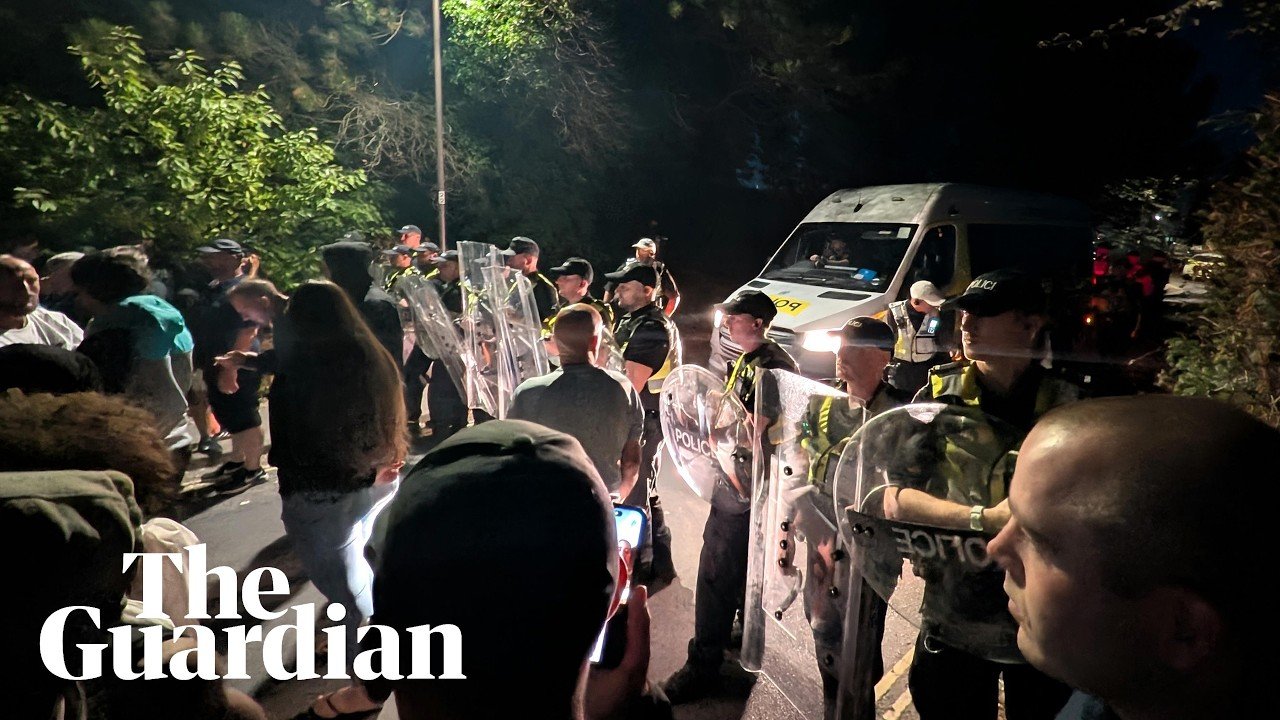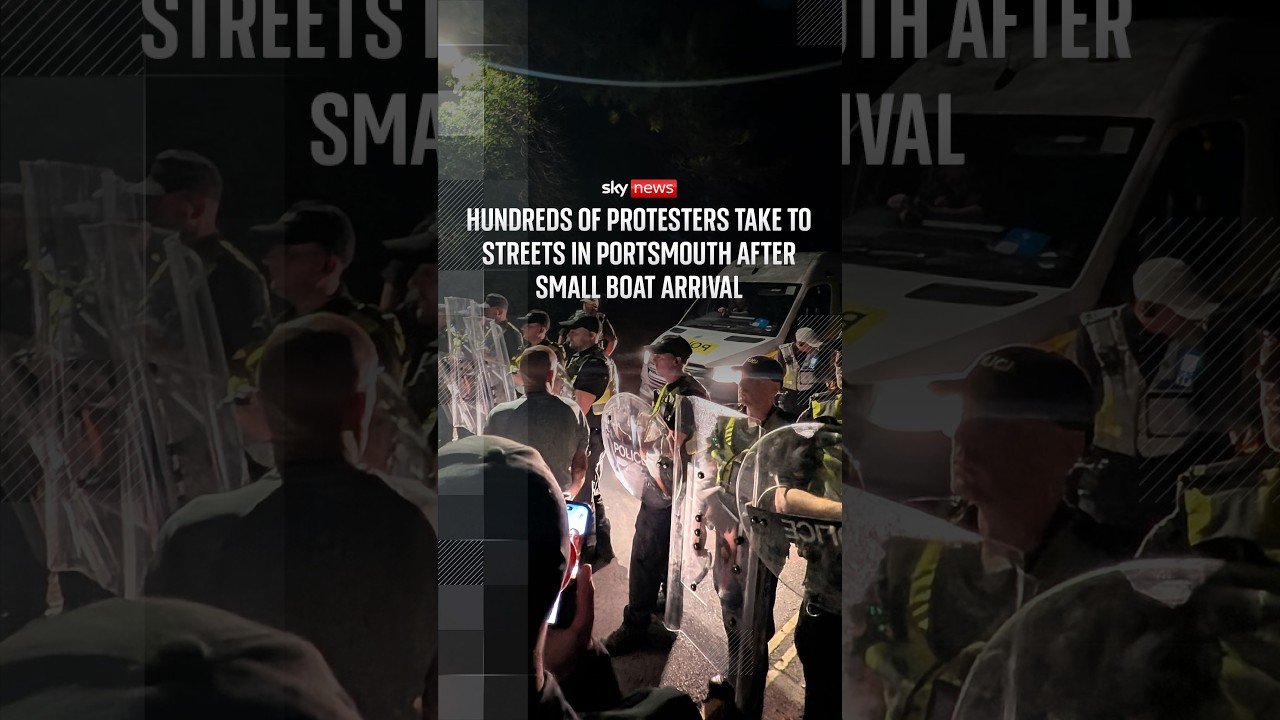


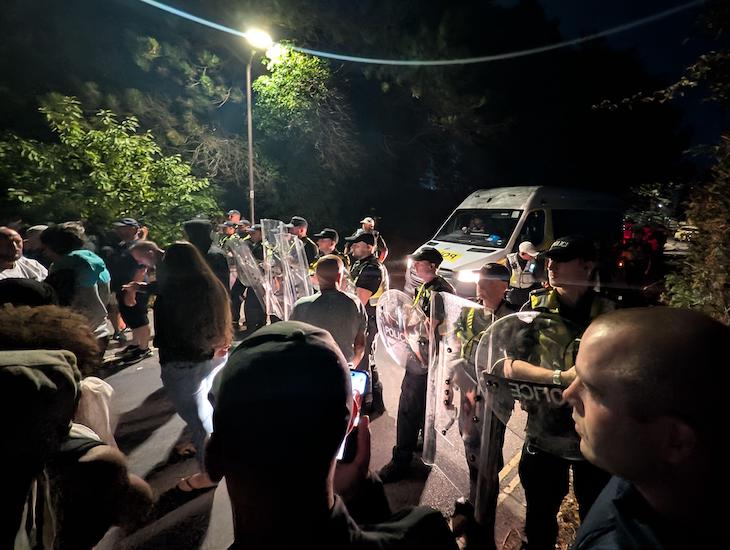

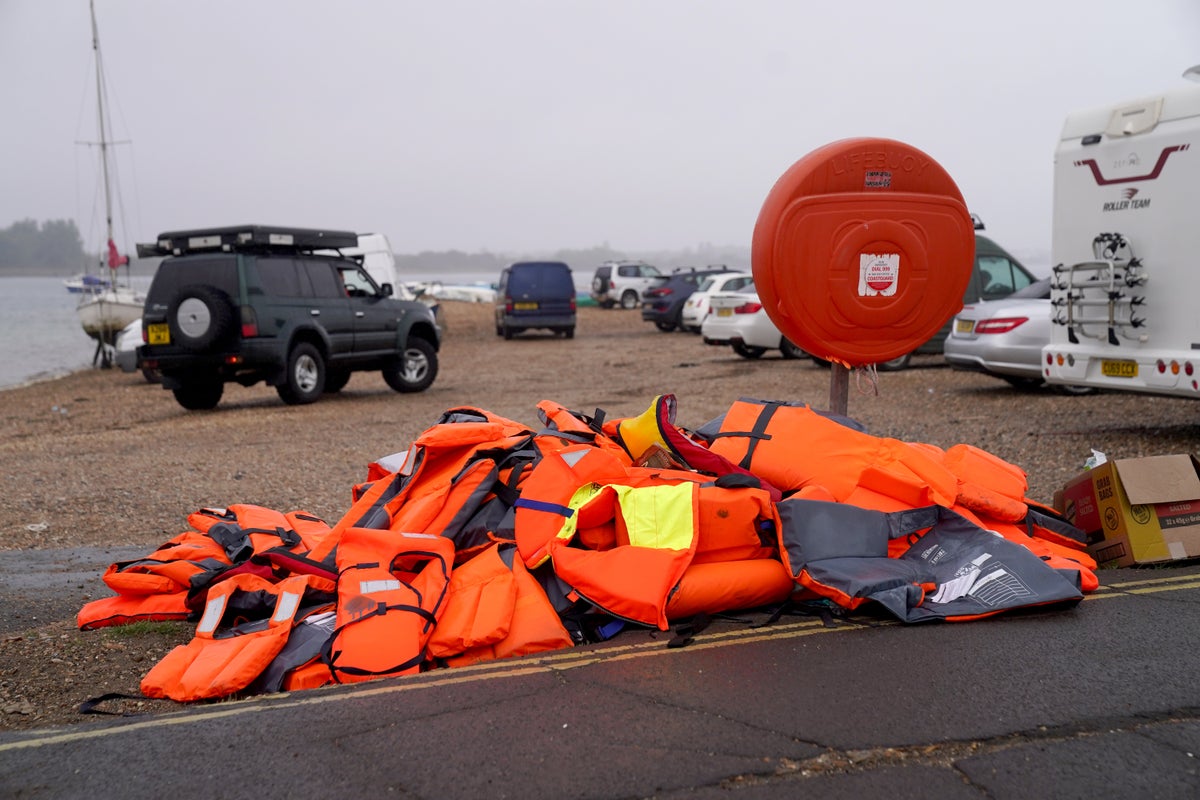


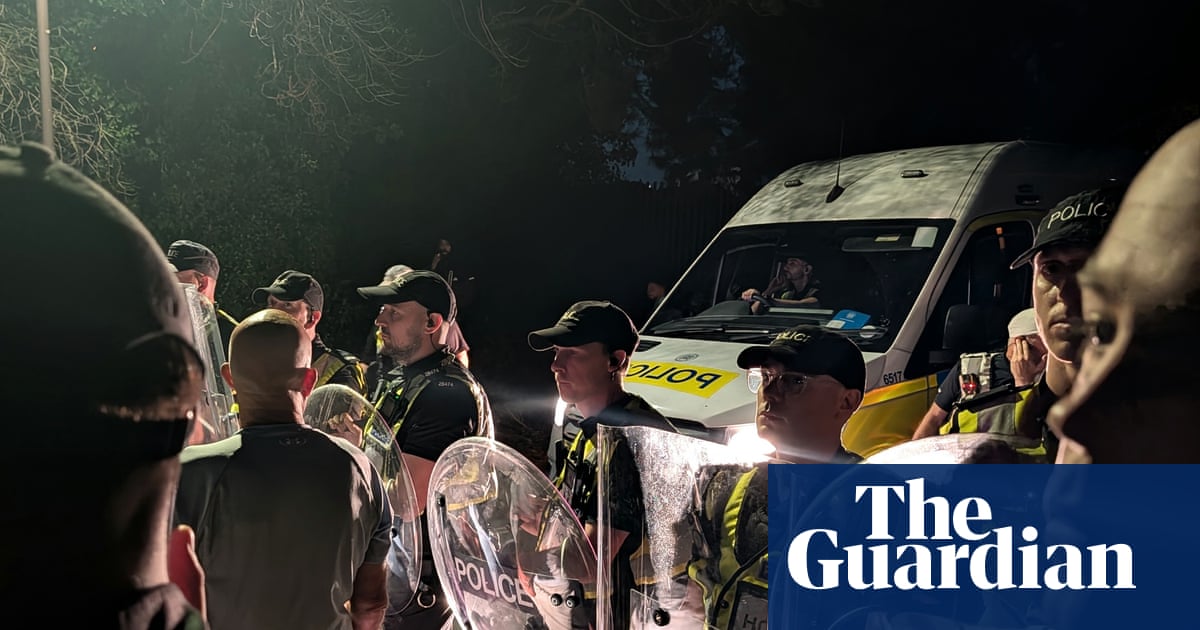


Hundreds of protesters confronted police in Portsmouth after about 140 migrants rescued from an overcrowded Channel dinghy were brought ashore at Eastney Landing on Sunday night. The disorder, which lasted into the early hours of September 7, followed a rare westward crossing from France and renewed questions over the government’s preparedness for arrivals outside the usual Dover route.
Hampshire and Isle of Wight Constabulary said several officers sustained minor injuries and vehicles belonging to police, the Coastguard and Border Force were damaged during the confrontation. No arrests had been announced initially, but the force opened an investigation into alleged assaults, criminal damage and other offences.
Police eventually dispersed the crowd under a dispersal order. The coaches carrying the newly arrived migrants left Portsmouth in the early hours of Monday, and Border Force said those on board were transported outside Hampshire for processing.
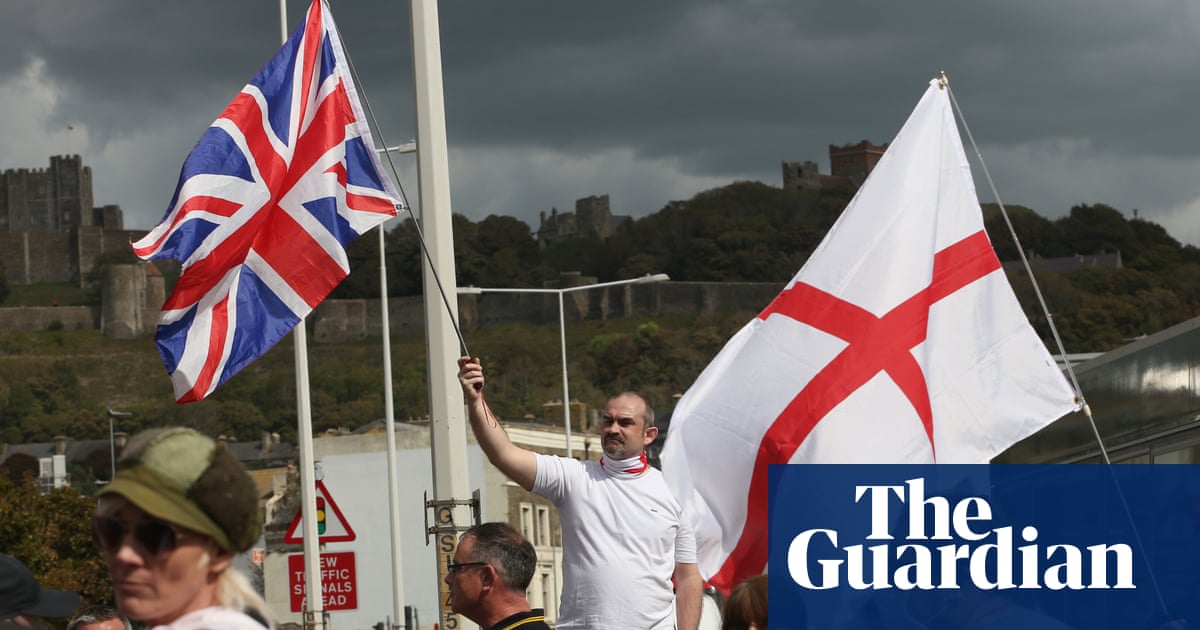
The protest was the second major anti-migrant demonstration in southern England that weekend. The previous day, masked demonstrators had blocked roads around the Port of Dover, disrupting traffic near one of Britain’s busiest passenger and freight terminals.
A rare arrival on the Hampshire coast
The boat involved in Sunday’s incident had reportedly departed from the Baie de Seine area near Cherbourg, about 170 miles west of the beaches commonly used by smugglers near Calais and Dunkirk.
Most small boats intercepted in the Channel are brought ashore around Dover, where the authorities have established facilities for initial checks and processing. The longer route towards Hampshire meant the crossing lasted roughly 10 hours, according to reports. French rescue authorities monitored the vessel but judged that intervening at sea was unsafe because of the number of people packed on board.
The crossing reached British waters near the Nab Tower, off the Isle of Wight. HM Coastguard responded with lifeboats, a helicopter, a fixed-wing aircraft and rescue teams. Border Force, Border Security Command, Hampshire Police and ambulance services were also deployed.
The incident was notable not only because of the landing site but also because of the number of people carried by a single inflatable boat. Officials and migration analysts have warned that smuggling networks appear to be using fewer but substantially larger vessels as enforcement around northern France increases.
In August, a single dinghy reportedly carried 230 people across the Channel. The average number of passengers per boat reached 77 last month, more than twice the average recorded five years ago, according to BBC analysis cited in the reporting.
Lifeboats diverted after port refusals
The two RNLI lifeboats involved in the rescue were operated by crews from Bembridge and Yarmouth on the Isle of Wight. Because the vessels were heavily loaded, they were travelling slowly and required a suitable place to land the passengers.
Requests to enter Southampton Port and Portsmouth Harbour were declined. Associated British Ports, which operates Southampton, said the port was not the closest location and did not have suitable reception facilities available. It added that Southampton would have played a role if it had been the nearest port in a safety-of-life-at-sea emergency or had received a formal direction from the relevant authority.
The BBC reported that the King’s Harbour Master at Portsmouth also declined a request to allow the boats to enter. Reports based on marine radio transmissions said the lifeboat crews were warned that entering the port or its approaches could lead to legal action, although the operational decisions remain subject to further scrutiny.
The lifeboats ultimately headed for Eastney Landing in Langstone Harbour. Billy Johnson, the Langstone Harbour Master, said there was “no reason not to accept” the boats as part of a search-and-rescue operation. He acknowledged, however, that the site’s geography created serious difficulties once protesters gathered.
Eastney is located on a narrow peninsula with limited road access. That meant the same location used to bring the passengers ashore also became a bottleneck for police and transport vehicles.
The RNLI said it was working with the relevant parties to understand why access to the larger ports had been refused and expressed disappointment over the communication received by its volunteer crews.
Protesters block route from landing site
As news of the landing spread, demonstrators gathered near Eastney Landing and attempted to prevent coaches from taking the migrants to the Manston processing centre in Kent.
Many protesters wore black clothing and face coverings. Chants included “stop the boats” and “send them back”. Police in riot gear formed a cordon around the coaches, while demonstrators blocked roads and confronted officers. Some footage appeared to show protesters breaking through police lines and damaging vehicles.
Police later estimated that about 200 people remained in the area, while other reports put the wider gathering at several hundred. The protest was associated with activist Daniel Thomas, known online as Danny Tommo, who livestreamed from the scene and urged supporters to travel to Eastney. Thomas has previously been linked to actions targeting small-boat crossings and to the far-right activist Tommy Robinson, according to reporting by The Guardian.
The coaches were eventually able to leave after the dispersal order was imposed. Some protesters reportedly followed the convoy after it departed, although the authorities did not initially announce arrests.
Hampshire police said the injuries to officers were not serious. Spencer Wragg, chair of the Hampshire Police Federation, said officers had been pushed from motorcycles and that police vehicles had been damaged.
Government condemns disorder
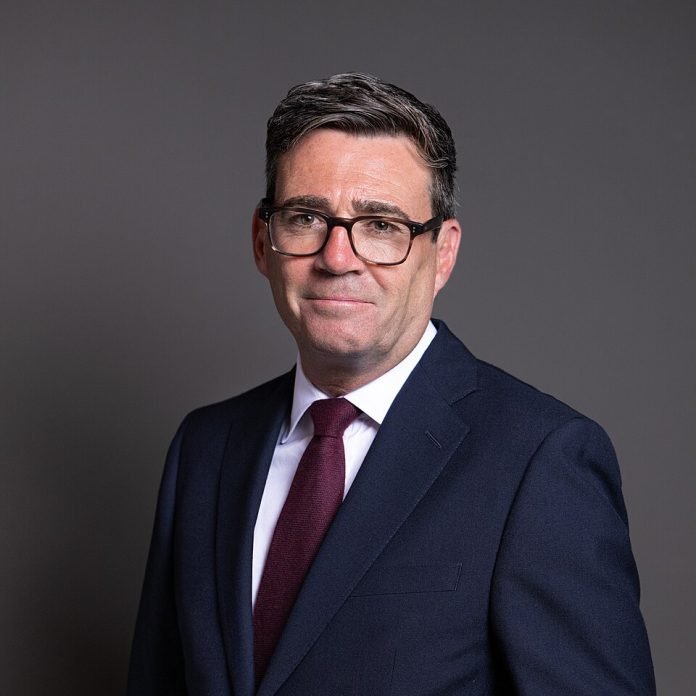
Prime Minister Andy Burnham condemned the disorder through his official spokesperson and warned Labour MPs against allowing what he described as the “politics of poison” to spread through British communities. Speaking at a private meeting on Monday, Burnham urged the party to respond to public anxiety with “positivity and hope”, while insisting that Britain would not tolerate racism.
Policing minister Sarah Jones told the House of Commons that the scenes were “intimidating and thuggish” and warned that anyone crossing from lawful protest into criminal conduct would face prosecution. Chief Secretary to the Treasury Emma Reynolds said the scale of the Portsmouth protest was unusual but that police had brought the situation under control.
The government spokesperson said peaceful protest was fundamental to democracy but “must never cross a line into disorder”. The response drew criticism from both sides of the political debate: ministers condemned the disorder, while opposition politicians argued that the arrival demonstrated a failure to control the Channel crossings.
Reform UK leader Nigel Farage called for protests to remain peaceful, saying that masks and uniforms were unacceptable and that voting was the route to political change. Shadow home secretary Chris Philp condemned the violence but said the events reflected widespread anger about illegal immigration.
Local officials also questioned the decision-making behind the landing. Portsmouth City Council leader Steve Pitt said the council had not been consulted and described Eastney as a “completely unsuitable location”. He said the Home Office faced questions over planning, communication and the decision to bring the migrants ashore there.
Conservative MP Dame Caroline Dinenage said local MPs had struggled to obtain reliable information while the incident was unfolding, making it harder to calm public concern. Portsmouth North MP Amanda Martin described the emergence of the western crossing route as deeply worrying for the city.
A changing Channel route
Home Office figures showed that 625 migrants arrived in the United Kingdom on eight boats on Sunday, with landings in both Dover and Portsmouth. Despite the weekend’s unusually large arrivals, the total number of small-boat arrivals remained lower than in the previous year: 16,513 people had crossed in the year to 1 September, down 43% compared with the same period.
The fall has coincided with increased cooperation between the United Kingdom and France. The government says joint operations have prevented more than 48,000 crossing attempts and led to the seizure of 1,100 boats and engines since the election. It has also agreed a payment-by-results arrangement with France intended to increase patrols on French beaches.
But the Portsmouth incident suggests that pressure on the traditional Calais-Dover route may be pushing smugglers to take greater risks. Departing from farther west can avoid heavily monitored beaches, but it produces a longer and more dangerous voyage. Packing more people onto a single boat may also allow criminal networks to maintain passenger numbers despite the seizure of smaller vessels.
The shift creates a new challenge for authorities. Ports such as Dover have dedicated facilities and established procedures for receiving Channel arrivals; coastal communities farther west may lack both the infrastructure and the public-order planning needed to manage a large-scale landing.
The Portsmouth operation also exposed unresolved questions about coordination between the Coastguard, Border Force, harbour authorities, local councils and emergency services. The Langstone Harbour Master praised the response of the emergency agencies but said protesters hindered their work.
For Portsmouth residents, the immediate disruption ended when the coaches left and the crowd dispersed at about 4am. The broader issue—whether the Channel route is spreading beyond Dover and whether local authorities are prepared—remains unresolved.