On May 4, 2026, Singapore and New Zealand signed a legally binding supply chain resilience pact, reported by the Financial Times as a “world-first” treaty to protect the bilateral flow of essential goods during global crises.
Known as the Agreement on Trade in Essential Supplies (AOTES), it incorporates strict guarantees into their existing free trade architecture to prevent pandemic- or wartime-style export bans. It is the world’s first legally binding bilateral agreement designed specifically to safeguard supply chains during global crises, a move that could signal a new phase in how countries manage economic resilience.
A crisis-focused trade pact
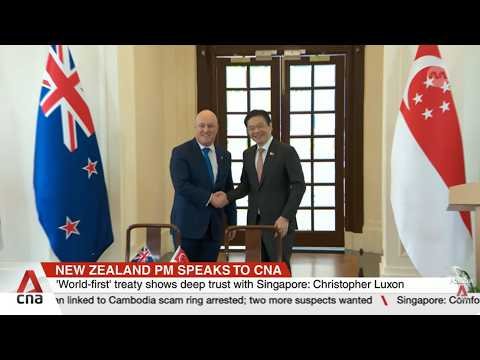
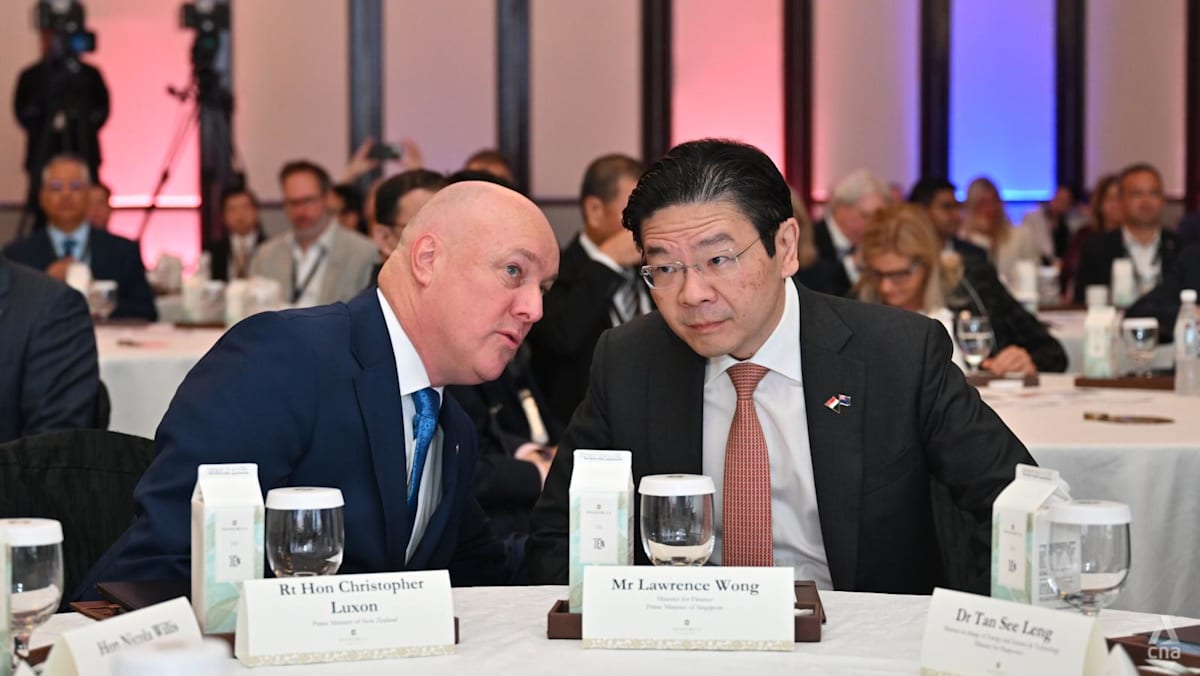
The Agreement on Trade in Essential Supplies (AOTES), inked on May 4, 2026, formalises a mutual commitment to keep critical goods flowing between the two countries even during periods of geopolitical disruption or market shock. The signing was witnessed by Singapore Prime Minister Lawrence Wong and New Zealand Prime Minister Christopher Luxon, underscoring its strategic importance beyond routine trade cooperation.
Unlike traditional trade agreements that focus on tariffs or market access, AOTES is narrowly targeted at crisis conditions. Its core provision legally restricts both governments from imposing export bans or restrictions on a pre-agreed list of essential goods — effectively locking in supply commitments at the very moment countries are most tempted to turn inward.
The agreement will be integrated into the existing Singapore–New Zealand Closer Economic Partnership (ANZSCEP), giving it legal enforceability within an established trade framework.
Mutual dependencies, formalised
At the heart of the deal is a clear alignment of mutual vulnerabilities. Singapore, which imports the vast majority of its food, sources around 14% of its food supply from New Zealand. In return, New Zealand depends heavily on Singapore for refined fuel and petrochemicals, which account for roughly one-third of its supply.
By formalising these dependencies, both sides are effectively converting interdependence into a stabilising mechanism rather than a risk.
Beyond food and energy, the agreement also covers pharmaceuticals, medical equipment, personal protective gear, and key industrial inputs such as chemicals and construction materials —categories that proved highly vulnerable during the COVID-19 pandemic and subsequent global supply shocks.
Real-time coordination mechanisms
AOTES introduces a rapid consultation and information-sharing framework, enabling both countries to exchange logistics data and coordinate responses in real time during disruptions.
This mechanism is designed to address one of the biggest weaknesses exposed in recent crises: the lack of timely, transparent communication between trading partners when supply chains come under stress.
A push against protectionism
Strategically, the agreement is a direct response to a more fragmented global trade environment. In recent years, export controls, shipping disruptions, and geopolitical tensions — particularly around key energy routes — have raised concerns about the reliability of international supply chains.
By embedding anti-protectionist commitments into law, Singapore and New Zealand are attempting to shift trust from political goodwill to enforceable obligation.
An open framework for expansion
Importantly, both countries have framed AOTES as an “open architecture” agreement, inviting other like-minded economies to join over time.
If expanded, the framework could evolve into a broader coalition of countries committed to keeping essential goods moving during crises — potentially serving as a counterweight to the growing trend of economic nationalism.
While still bilateral for now, AOTES represents a notable experiment: a rules-based approach to crisis resilience that prioritises continuity over control. Its success — or failure — may determine whether similar agreements become a new layer in the global trade system.