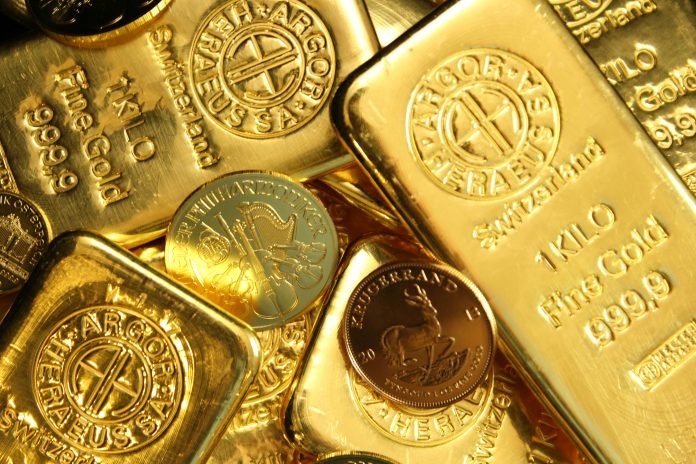
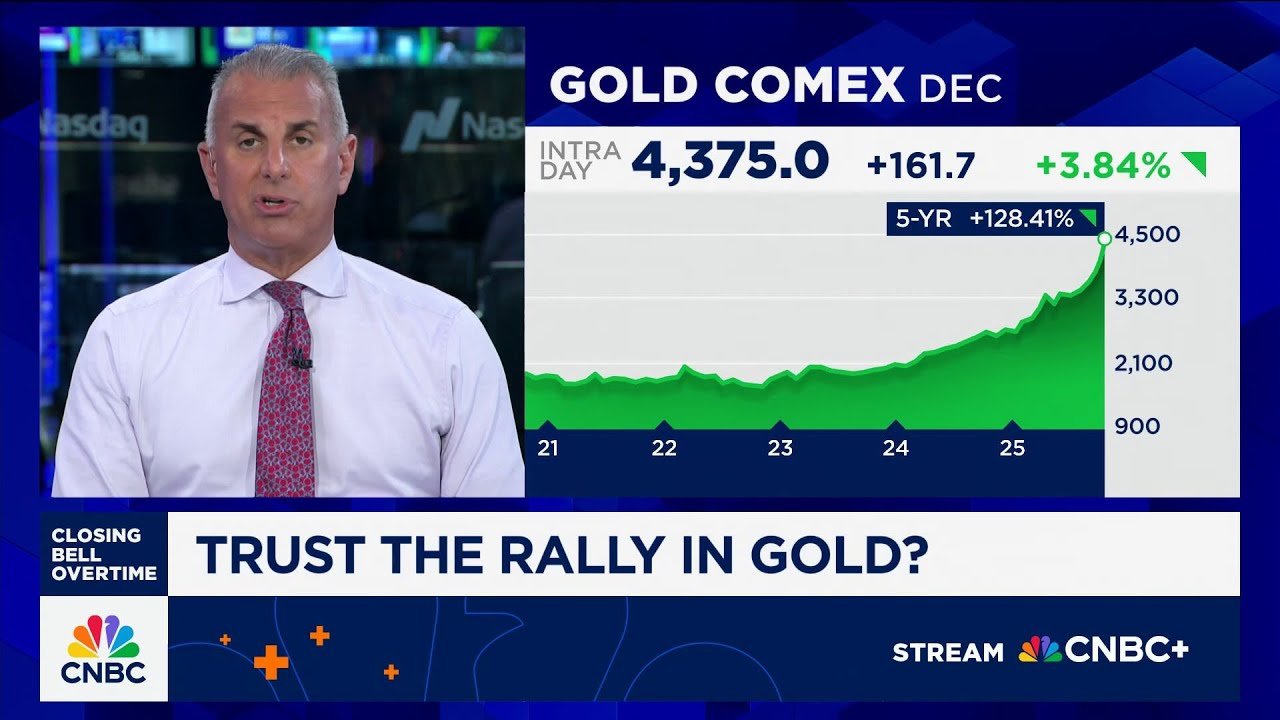
Gold surpassed the $4,000 per ounce mark for the first time on October 8, extending its record-setting rally. Mounting geopolitical tensions, economic uncertainty, and growing expectations of US interest rate cuts are believed to have driven investors toward the safe-haven metal.
Traditionally viewed as a store of value during instability, gold has surged 54% year-to-date, following a 27% gain in 2024, making it one of 2025’s top-performing assets. Its rise has outpaced global equity markets and Bitcoin, while the US dollar and crude oil have declined.
A safe haven asset
A broad range of investors, from retail buyers to hedge funds, have sought gold this year to hedge against inflation, geopolitical risk, and a weaker dollar. Central banks have collectively purchased over 1,000 tonnes of gold annually since 2022, a sharp increase from the average of 481 tonnes per year recorded between 2010 and 2021. Poland, Turkey, India, Azerbaijan, and China were among the largest buyers last year.
Meanwhile, the World Gold Council reports that a record $64billion has flowed into gold exchange-traded funds, or ETFs, so far this year.
What we are seeing is that gold has in many respects become an ‘asset for all occasions’ with the precious metal showing an ability to rise during times of both risk aversion and risk appetite… It now has a much broader reach as an investment asset given the prevailing market dynamic.
Tim Waterer, Chief Market Analyst at KCM Trade, Australia
According to the Financial Times, China’s unreported gold purchases may exceed its official figures by more than tenfold, as the country quietly diversifies away from the US dollar. Analysts noted that officially disclosed purchases by the People’s Bank of China, just 1.9 tonnes in August, 1.9 tonnes in July, and 2.2 tonnes in June, are widely viewed as understated.
What happens next
Surveys by Goldman Sachs and JPMorgan indicate that investors expect gold prices to reach $5,000 by the end of 2026, citing central bank demand and fiscal concerns as key factors behind the momentum. Global central banks have also increased their holdings, attracted by gold’s liquidity, absence of default risk, and neutral status as a reserve asset.
Gold’s breakthrough above $4,000 per ounce marks a historic milestone for the precious metal, reflecting widespread anxiety about geopolitical instability, inflation, and the long-term sustainability of US fiscal policy. The surge has been driven not just by retail investors and hedge funds, but by central banks globally seeking to diversify their reserves away from the US dollar.
With major banks predicting gold could reach $5,000 by end of 2026 and record ETF inflows continuing, gold has established itself as a core holding in diversified portfolios. The metal’s ability to rise during both risk-averse and risk-on market conditions signals a fundamental shift in how investors view gold, transforming it from a traditional crisis hedge into a versatile asset for all market environments.

Read more:
Trump declares Liberation Day in 2025
The US-UK’s Economic Prosperity Deal
The EU reaches deal with US, averting tariffs