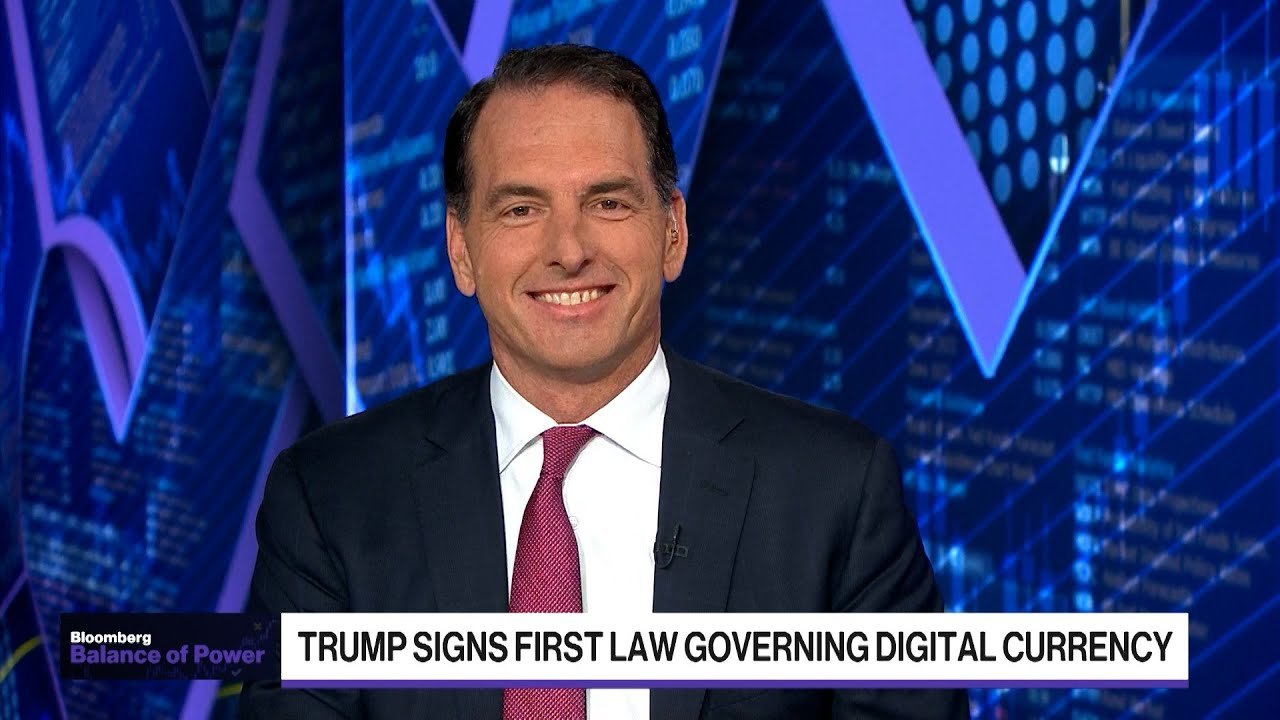
The GENIUS Act established the first comprehensive federal framework for stablecoins in the United States, transforming them from experimental digital tools into regulated financial products and triggering a historic rally in crypto markets.
On 18 June 2025, President Trump signed the GENIUS Act into law, creating the first federal regulatory framework for stablecoins in the United States. Stablecoins are digital assets designed for payments and redeemable for a fixed amount of fiat currency.
The signing on 18 July 2025 triggered an immediate historic rally across the digital asset ecosystem, pushing total cryptocurrency market capitalisation past $4trillion for the first time ever. The stablecoin market cap surged to over $280billion by August 2025 and continued growing to $306billion by November. Bitcoin propelled to a new all-time high above $122,000 in July, later peaking at $126,000 in October 2025.
Key provisions
Issuers must maintain a 1:1 reserve of high-quality liquid assets such as US dollars or short-term Treasuries to back all outstanding stablecoins. Only specific entities are allowed to issue payment stablecoins, including subsidiaries of insured depository institutions, federal nonbank issuers regulated by the Office of the Comptroller of the Currency, and state-qualified issuers provided the state’s regulatory regime is substantially similar to federal standards.
A $10billion threshold determines oversight, with issuers above this limit submitting to federal regulation while smaller issuers may opt for state regulation. Compliant payment stablecoins are explicitly excluded from the definition of a security or commodity, removing them from the jurisdiction of the SEC and CFTC.
In the event of an issuer’s bankruptcy, stablecoin holders are granted first-priority claims on the reserves. Public companies not predominantly engaged in financial activities must receive unanimous approval from a three-member federal committee to issue stablecoins. Issuers are classified as financial institutions under the Bank Secrecy Act, requiring strict KYC and transaction monitoring.
Market reactions
Major Wall Street banks and financial institutions are now exploring proprietary stablecoin issuances for cross-border payments and trade settlements. The Act’s clarification that compliant stablecoins are not securities or commodities removes a decade-long barrier to mainstream integration.
By requiring stablecoins to be backed 1:1 by high-quality liquid assets like US Treasuries, the Act is expected to generate massive new demand for US debt, cementing the dollar’s status as the global reserve currency in the digital age. Regulation is driving capital rotation from offshore, less-transparent stablecoins like Tether toward fully compliant, audited rails like Circle’s USDC or bank-issued digital settlement coins.
By late July 2025, Tether reached a market cap of $161billion while USD Coin stood at approximately $64billion. The act’s establishment of a federal regulatory framework sparked an immediate institutional rush into dollar-pegged assets. Major financial institutions including Charles Schwab, J.P. Morgan and Citibank immediately began evaluating or launching their own dollar-pegged stablecoins under the new permitted issuer status.
Global regulatory convergence
The GENIUS Act served as a trigger for other major economies to accelerate their own digital asset frameworks. The US framework aligns closely with the EU’s Markets in Crypto-Assets regulation, prompting other jurisdictions like the UK, Canada and South Korea to accelerate their own digital asset agendas.
The Act’s 1:1 reserve requirement and narrow bank model are now global standards shared by the EU’s MiCA regulation, Singapore’s Money Authority of Singapore framework, and emerging rules in the UK, UAE and Japan. The US framework has prompted European and British regulators to fast-track legislation to avoid migration of issuance and payment volumes to US-compliant jurisdictions.
Broader implications
The GENIUS Act represents a watershed moment for crypto regulation, providing long-awaited legal clarity that has significantly boosted institutional confidence. It also positions the United States to lead in shaping global digital asset standards while reinforcing the US dollar’s dominance in the emerging digital economy.