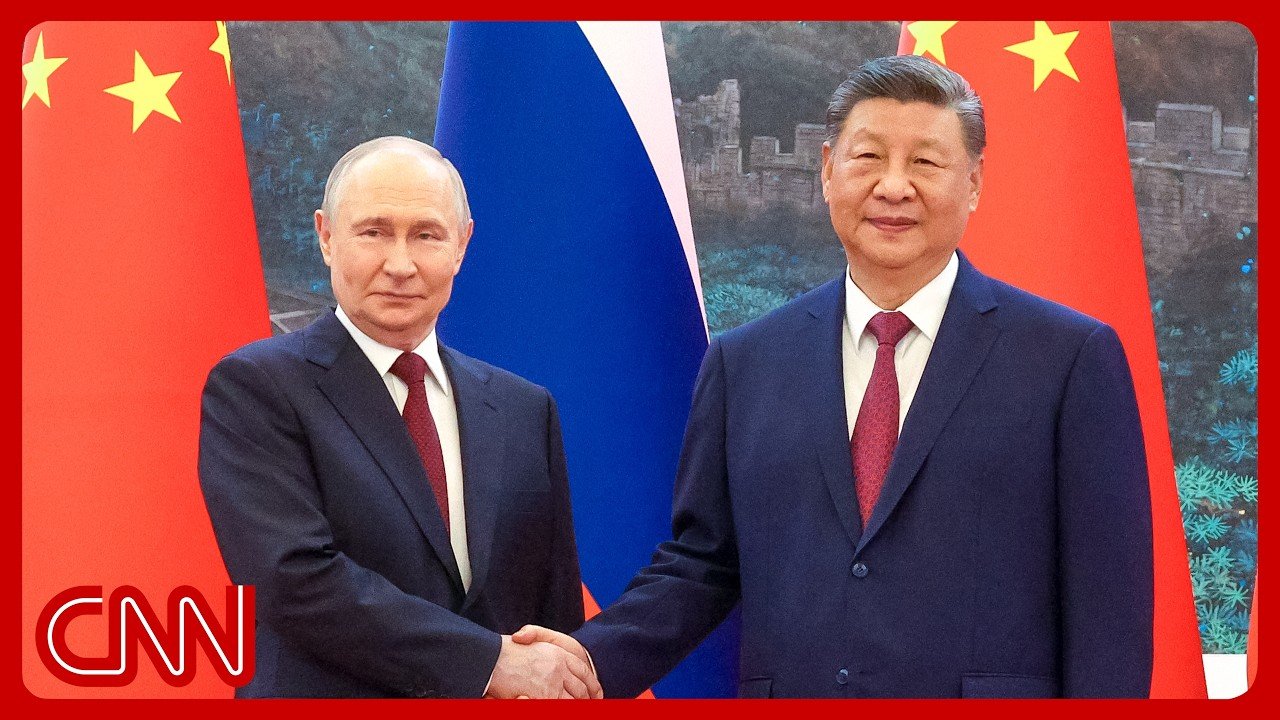
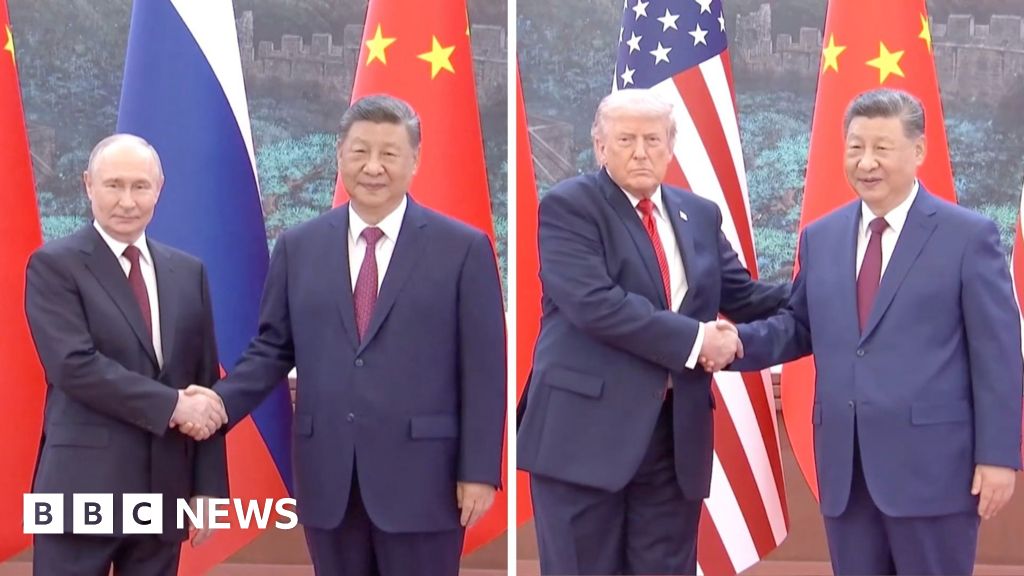
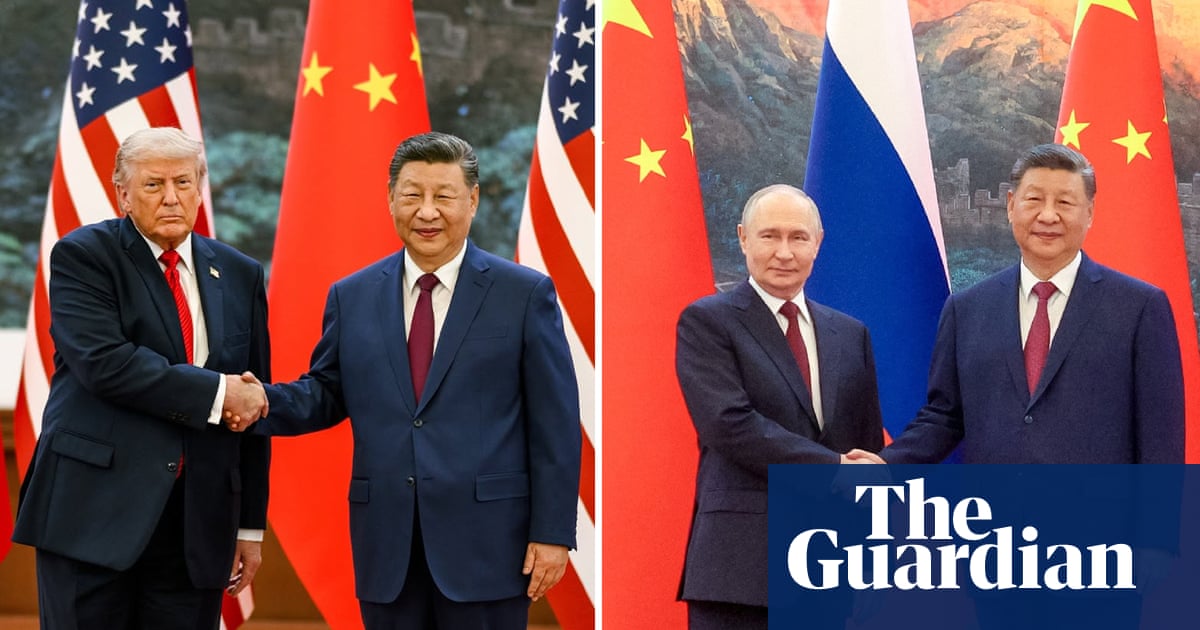
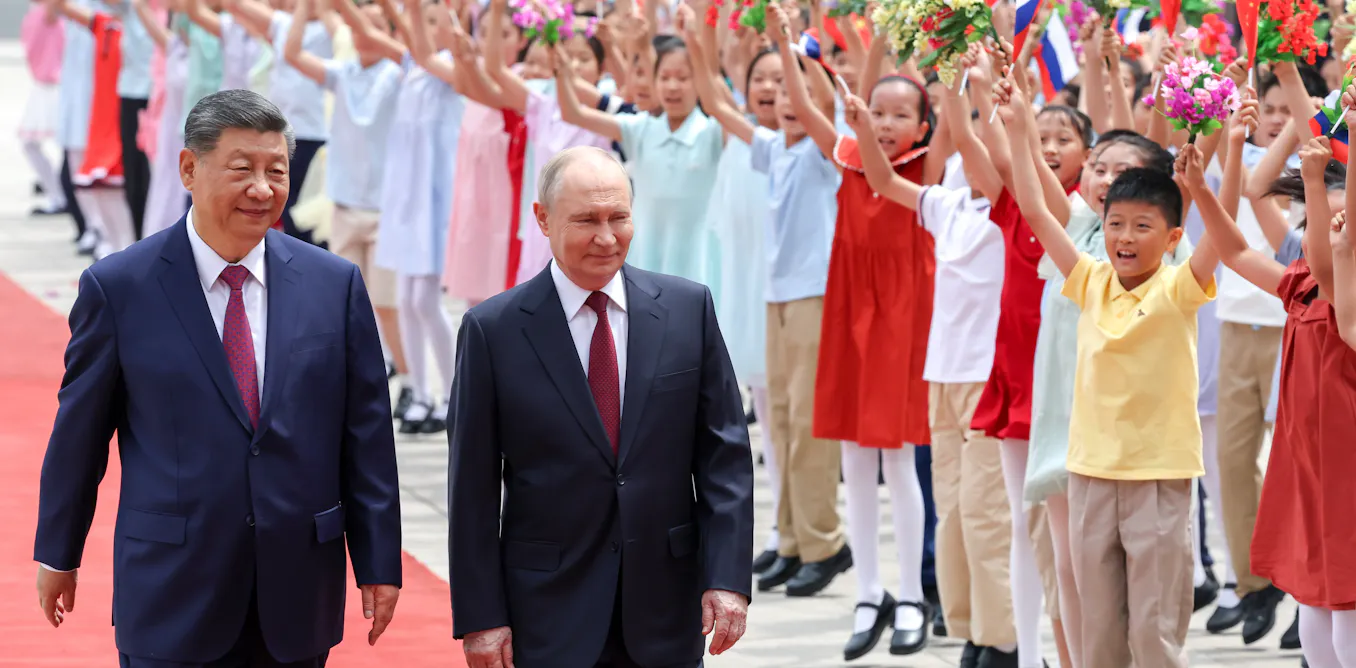
Russian President Vladimir Putin’s state visit to Beijing from May 19 to 20 has reinforced the deepening alignment between Russia and China, while underscoring Beijing’s emergence as a central hub of global diplomacy, just days after hosting US President Donald Trump.
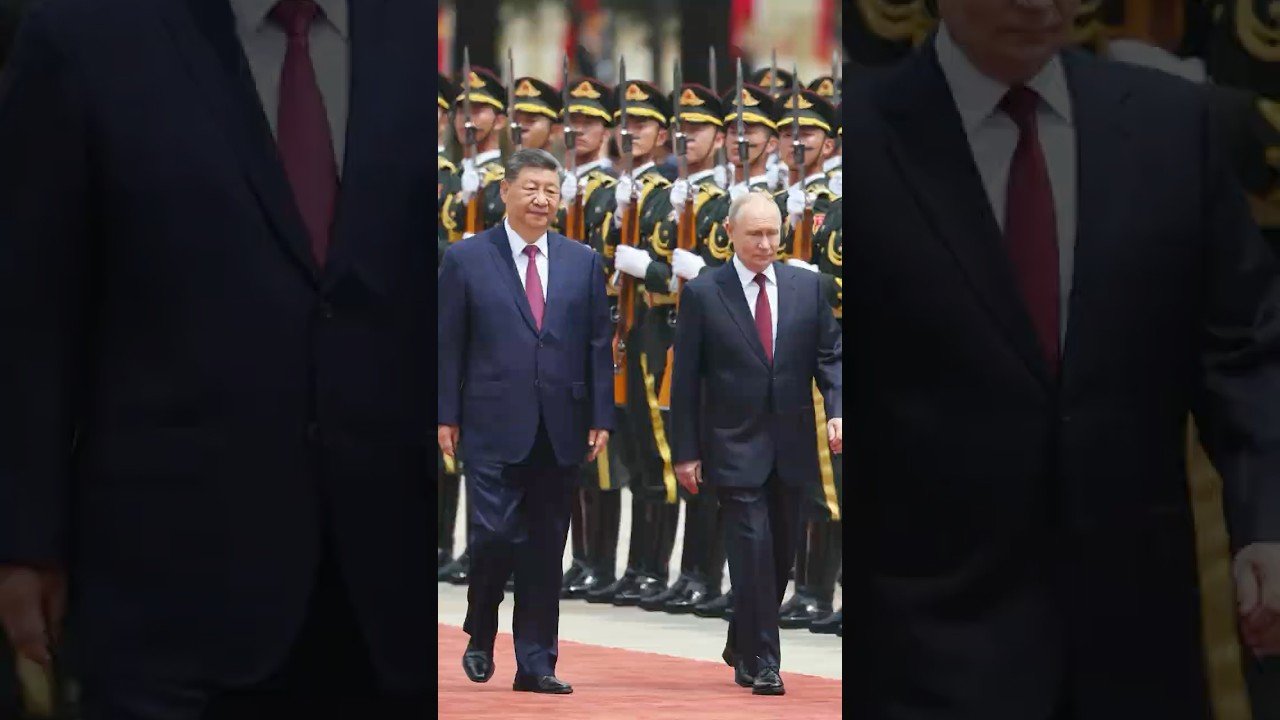
Welcomed with full state honors, including a 21-gun salute and ceremonial displays, Putin’s visit culminated in a sweeping joint declaration with Chinese President Xi Jinping calling for a “more just and reasonable” multipolar world order. The visit was as much about optics as outcomes: a coordinated signal of strategic alignment at a time of intensifying global rivalry.
A partnership framed against the US
At the core of the visit was a reaffirmation of the China-Russia “no limits” partnership, increasingly defined by shared opposition to US policies and influence.
Both leaders used the summit to criticize Washington’s global posture, including its planned “Golden Dome” missile defense system and broader nuclear strategy. Xi warned that rising unilateralism risks pushing the world toward a “law of the jungle,” while Putin echoed concerns about Western dominance in global governance.
The messaging reflects a coordinated effort to challenge existing international structures and promote an alternative vision of global order. Officially titled the “Joint Declaration of the Russian Federation and the People’s Republic of China on the Establishment of a Multipolar World and a New Type of International Relations,” the document serves as a combined critique against Western-dominated frameworks and unilateral trade actions. Both leaders also formally agreed to extend the long-standing Treaty of Good-Neighborly Relations and Friendly Cooperation to cement their partnership for another decade.
Expanded trade and financial cooperation
The agreements include a currency settlement protection pact to transition bilateral trade away from Western payment rails, with commerce now conducted overwhelmingly in rubles and yuan to shield transactions from outside sanctions. A sustainable trade and urban cooperation framework maps out eco-friendly supply chains and localized municipal partnerships between the two nations.
Infrastructure cooperation was strengthened through a cross-border railway development agreement dedicated to expanding physical transport corridors, including a specific pact to establish a joint Railway Institute for logistics training. An anti-monopoly framework agreement will initiate an Anti-Monopoly Cadre Training program to harmonize regulatory and fair-trade standards between both markets.
Science, technology and energy alignment
On the technology front, a trade-linked Technology Cooperation Agreement establishes research sharing frameworks in artificial intelligence and automation. An Innovation Institute Partnership memorandum will establish joint scientific research, talent cultivation, and shared patents within a unified innovation institute.
In energy, agreements were signed to optimize existing oil and gas trade structures, alongside collaborative frameworks for fast neutron reactor nuclear energy. However, a major priority for Moscow remained unresolved.
Power of Siberia 2 still stalled
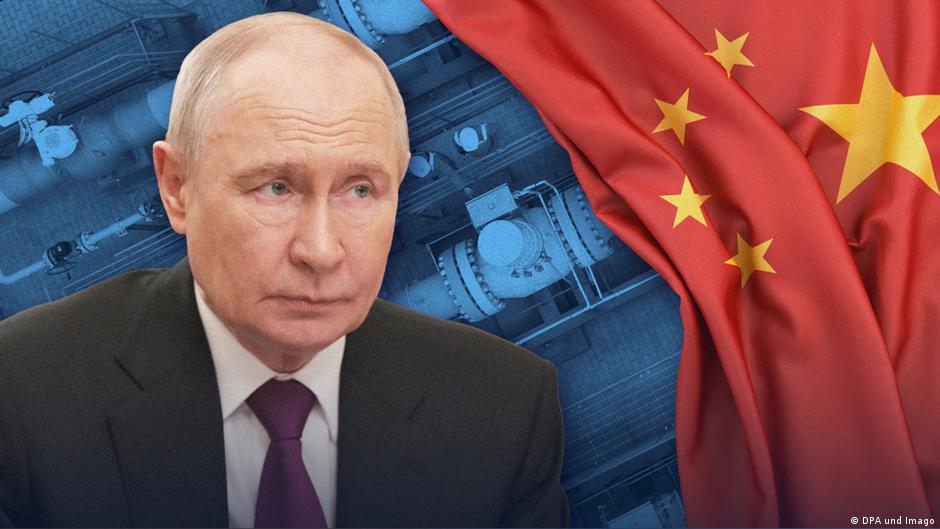
Talks over the Power of Siberia II gas pipeline, seen as critical to Russia’s long-term energy pivot to Asia, did not result in a final agreement. The highly anticipated 2,600-kilometer mega-pipeline is designed to transport 50 billion cubic meters of natural gas annually from Russia’s Arctic Yamal fields to China via Mongolia. While a legally binding framework memorandum was signed back in September 2025, three persistent obstacles continue to stall its construction.
China is leveraging its position as Russia’s primary remaining gas buyer, requesting gas priced close to Russian domestic rates at roughly 12 to 13 cents per cubic meter. This heavy discount is being resisted by Russia’s state-owned Gazprom. The two nations have also not agreed on who will foot the bill for the massive upfront construction costs across challenging terrain and through Mongolia. Meanwhile, Beijing is hedging its energy supply by ramping up alternative land routes, including the Central Asia-China pipeline network, while aggressively scaling its domestic renewable energy infrastructure.
Instead of a Power of Siberia 2 breakthrough, the two nations opted to maximize existing architecture. They agreed to expand the capacity of the original Power of Siberia 1 pipeline by an additional 6 billion cubic meters per year and advanced their timelines for the Far Eastern Route from Sakhalin, which is on track to deliver 12 billion cubic meters per year by 2027.
Media and cultural cooperation
The summit also produced a formal pact between Russian and Chinese state media bodies to share news exchanges and run coordinated global information campaigns. A specialized Film Intellectual Property Agreement establishes a copyright framework enabling joint cinematic productions and safeguarding media IP across both nations.
Agriculture, education and environment
Food security expansion pacts ease customs restrictions to scale up cross-border agricultural trade, combined with mutual ecological protocols protecting cross-border rivers and flood-control data. Multiple educational agreements link major Russian and Chinese higher-education institutes to track and exchange top-tier academic talent.
China’s diplomatic balancing act
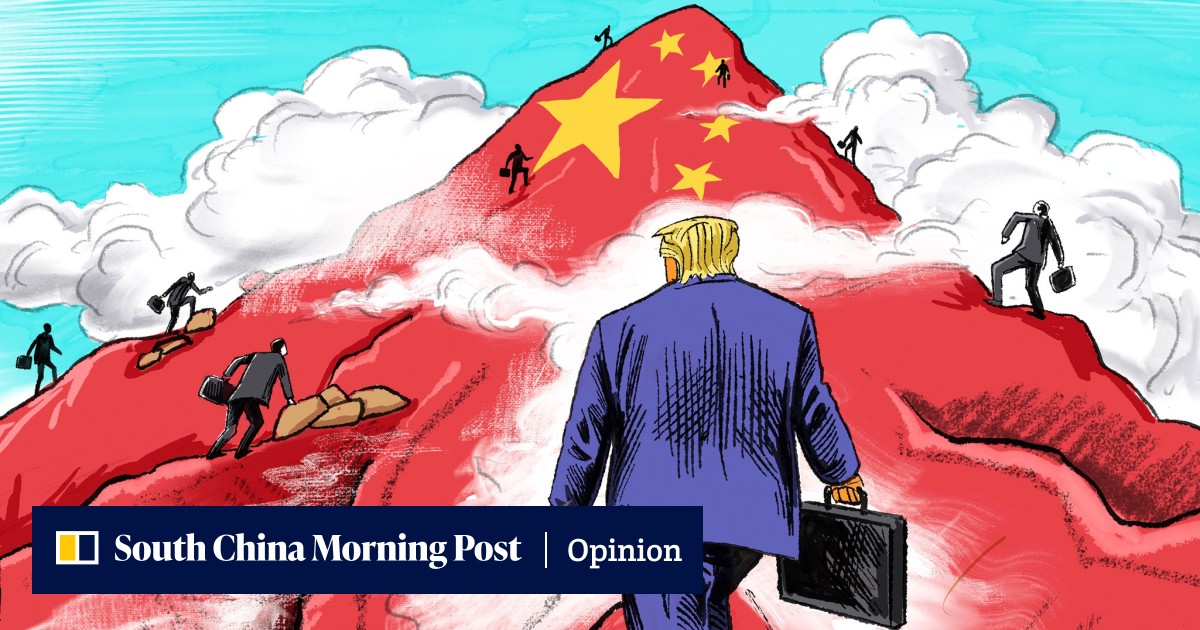
The timing of Putin’s visit, just five days after Trump’s trip, highlighted China’s evolving role as a global power broker.
While Trump’s visit focused on managing economic tensions and technology competition, Putin’s trip emphasized political alignment and strategic coordination. Xi extended similar ceremonial treatment to both leaders, but the outcomes differed: Trump’s visit yielded cautious engagement, while Putin’s produced structured agreements and unified messaging.
The contrast reflects Beijing’s ability to engage competing powers while advancing its own geopolitical agenda.
A relationship shaped by necessity
For Russia, ties with China have become increasingly essential. As the war in Ukraine enters its fifth year, Beijing remains a critical economic partner, particularly for energy exports. Putin emphasized Russia’s role as a stable supplier amid ongoing volatility in global energy markets linked to tensions in the Middle East.
At the same time, the relationship is becoming more asymmetrical. China’s economic strength and strategic patience give it greater leverage, shaping the terms of cooperation.
The bigger picture
Putin’s visit underscores a broader shift in global power dynamics. With Beijing hosting both Washington and Moscow in quick succession, China is positioning itself not just as a participant in international affairs, but as a central convening power.
As major powers increasingly converge on Beijing to negotiate and compete, the balance of diplomatic gravity is shifting with China firmly at its center.