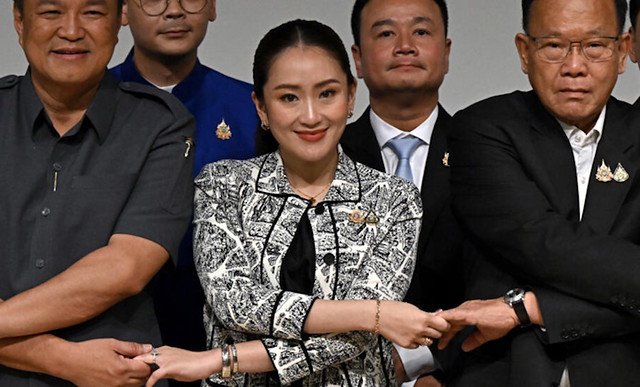
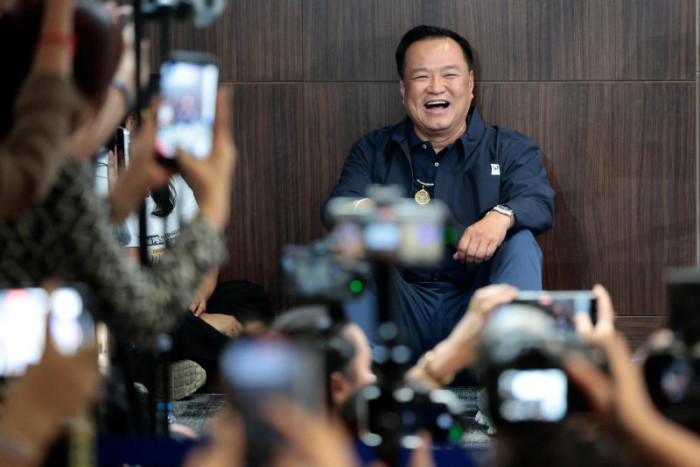
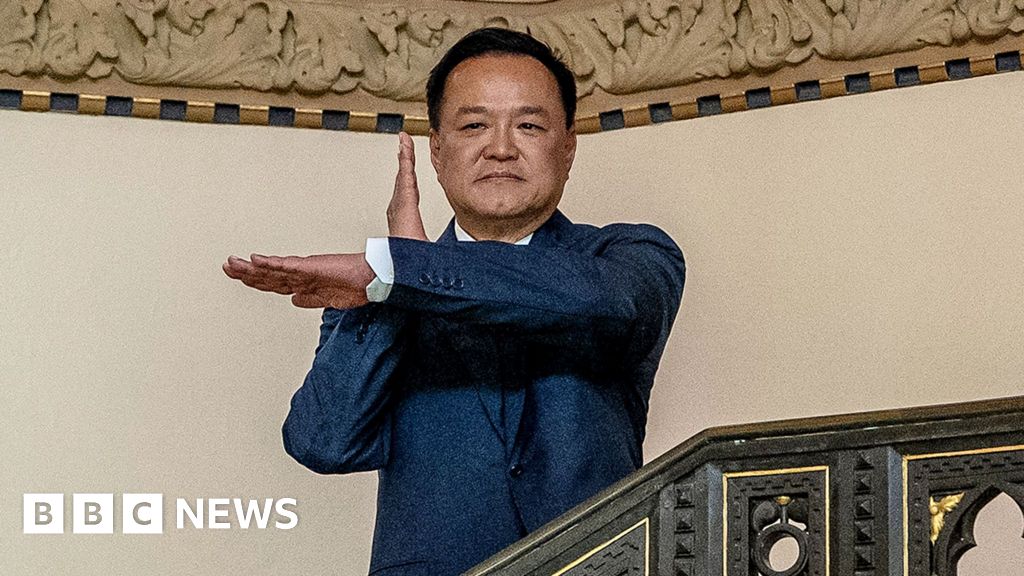
Thailand’s snap election has delivered a political shock: Prime Minister Anutin Charnvirakul’s conservative Bhumjaithai Party won a decisive victory, defying pre-election polls that had favored the progressive People’s Party. Preliminary results put Bhumjaithai on 193 to 194 seats in the 500-member House, with the People’s Party on 116 to 118 and Pheu Thai a distant third on 74 to 76 seats.
The result marks a rare win for conservative and nationalist forces in modern Thai politics, and it gives Anutin a strong mandate to build a governing coalition.
A vote shaped by crisis
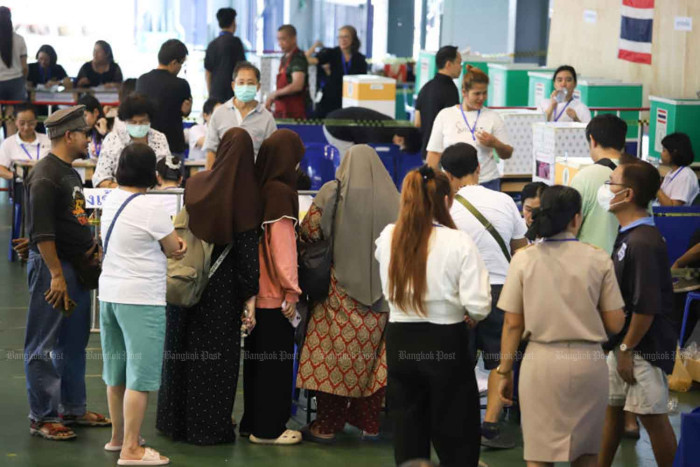
The election was held on Feb. 8, 2026, alongside a referendum on whether Thailand should draft a new constitution to replace the military-era 2017 charter. The referendum received around 60% to 65% support in preliminary counts, signaling a broad public appetite for constitutional change even as the political system itself remains intact for now.
Campaigning was dominated by three issues: economic stagnation, border tensions with Cambodia, and institutional reform. Thailand’s sluggish growth outlook and high household debt made cost-of-living relief a central promise across parties, while the border conflict gave Bhumjaithai a potent nationalism message.
Why Bhumjaithai won
Anutin’s campaign leaned heavily on stability, security, and nationalism, and that message appears to have resonated after the Cambodia clashes and the ouster of former prime minister Paetongtarn Shinawatra over her handling of the crisis. The party also benefited from what analysts described as a split among opposition voters, with the centrist and progressive camps dividing the anti-establishment vote.
Pheu Thai, once the dominant force in Thai politics, suffered its worst performance in years, underscoring the erosion of the Shinawatra brand and the continuing appeal of local patronage networks.
Coalition math
By February 13, Anutin said Bhumjaithai had reached a deal for Pheu Thai to join a new coalition government, alongside smaller parties. That alliance would give the conservative bloc a workable majority in the House, strengthening the prospect of a more stable government after months of political uncertainty. Reuters also noted the coalition could grow to roughly 300 seats once additional support was locked in.
Under current rules, the appointed Senate no longer takes part in choosing the prime minister, meaning the next government will be decided in the lower house once results are certified.
Market reaction and scrutiny
Markets initially welcomed the result, with Thai equities rising as investors bet that continuity under Anutin would reduce the risk of post-election upheaval. Construction and energy names also rallied on expectations of heavier infrastructure spending and border-security investment.
Still, the election was not free of criticism. Rights groups and observers flagged reported irregularities, including complaints about covered CCTV cameras at some polling stations, while the Election Commission faced renewed questions over trust and transparency.
What comes next
The Election Commission must certify the official results before the new House can convene and vote for the next prime minister. The constitutional referendum, meanwhile, opens a longer and more complicated process that could take years and require additional votes before a new charter is finalised.


Read also: