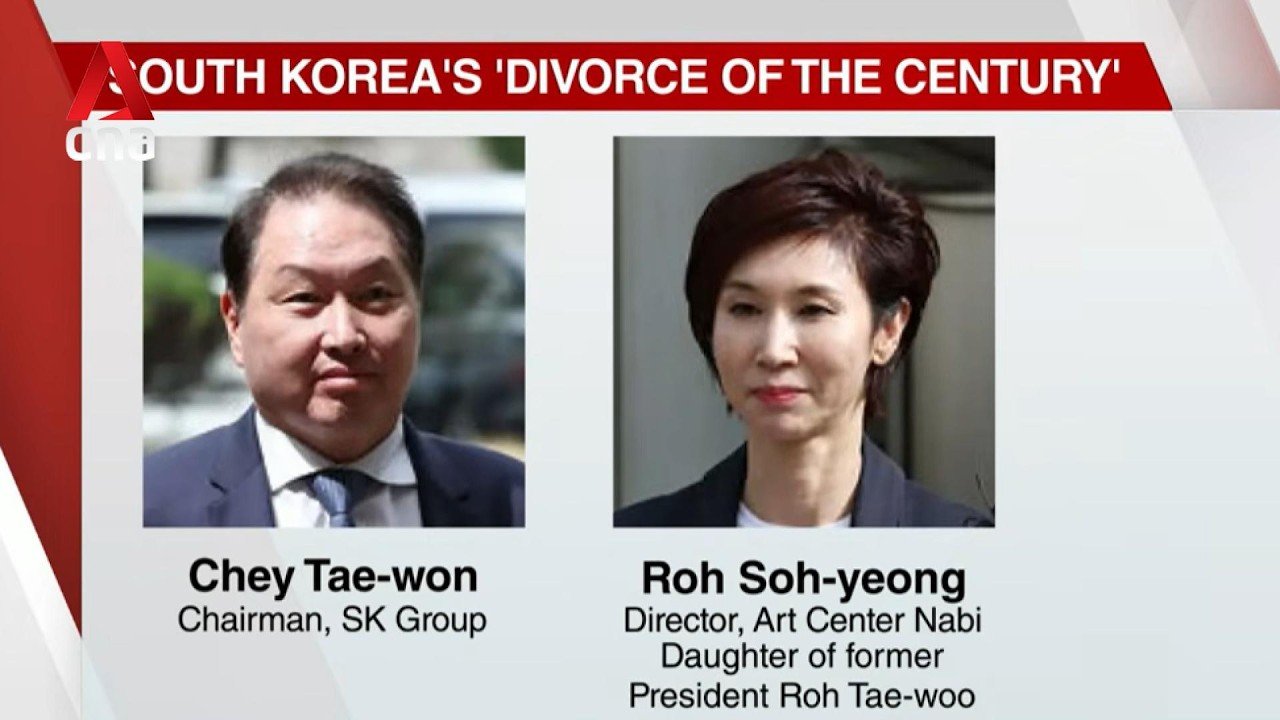





South Korean conglomerate chairman Chey Tae-won has been ordered to pay his ex-wife Roh Soh-yeong 944 billion won, or about $640million, in one of the country’s largest divorce settlements. The ruling is the latest turn in a decade-long legal saga that has also drawn scrutiny because of Chey’s control of SK Group and SK Hynix.
The Seoul High Court ordered the payment as a cash settlement, rather than forcing a transfer of shares in SK Group’s holding company. Reuters and The Korea Herald both reported that the court specifically kept Chey’s shares intact, citing their role in preserving management control of the conglomerate.
The court also set the property split at one-third for Roh and two-thirds for Chey, trimming the earlier award while still leaving Roh with the record-setting payout. Either side can still appeal, so the ruling is not yet fully final.
How this changed
This ruling reduced the earlier 2024 appellate award of 1.38trillion won, which had been one of the largest divorce settlements ever ordered in South Korea. In October 2025, South Korea’s Supreme Court sent that earlier ruling back for reconsideration after finding that illegally obtained slush-fund money could not be counted as marital property.
The latest decision therefore narrows the dispute to assets the court still recognizes as divisible, rather than the broader valuation that had inflated the earlier award. That distinction is central to understanding why the amount dropped so sharply.
Background to the dispute
Chey and Roh’s marriage became public business in 2015, when Chey acknowledged an extramarital affair and a child outside the marriage, triggering the long legal fight that followed. Roh is the daughter of former South Korean president Roh Tae-woo, and her side has argued that family connections and financial support helped shape the rise of SK Group.
South Korean media has long called the case the “divorce of the century,” both because of the money involved and because it touches one of the country’s most powerful family-controlled conglomerates. The divorce itself and a separate 2billion won damages award were already finalized, leaving the property division as the last major issue.