


South Korea has launched one of the most ambitious industrial strategies in modern tech history, committing approximately 1,350trillion won (about $880billion) to a sweeping national initiative aimed at securing leadership in artificial intelligence infrastructure and semiconductor manufacturing.
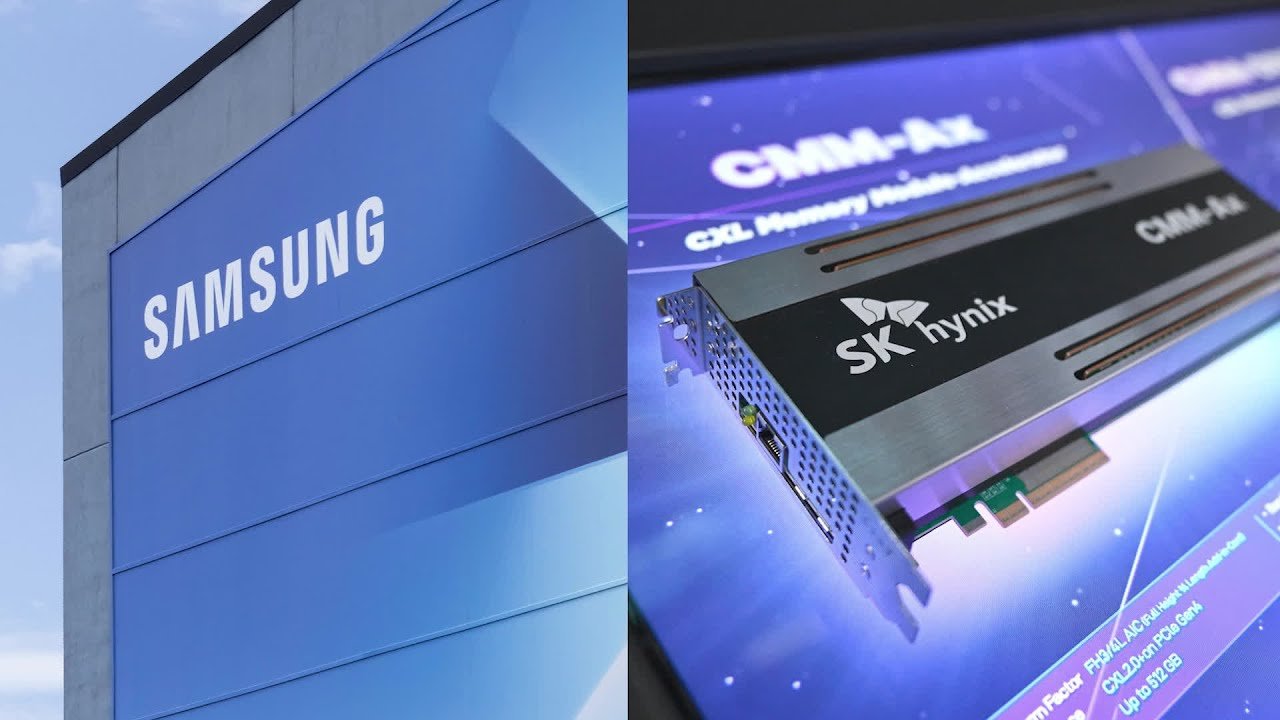
Announced by President Lee Jae Myung alongside executives from Samsung Electronics and SK Hynix, the plan—branded the “Three Mega Projects”—positions South Korea at the center of an intensifying global race for compute power, advanced chips, and AI dominance.
A triple-axis industrial strategy
At the core of the initiative is a three-pronged investment model spanning semiconductor fabrication, advanced packaging, and AI data infrastructure.
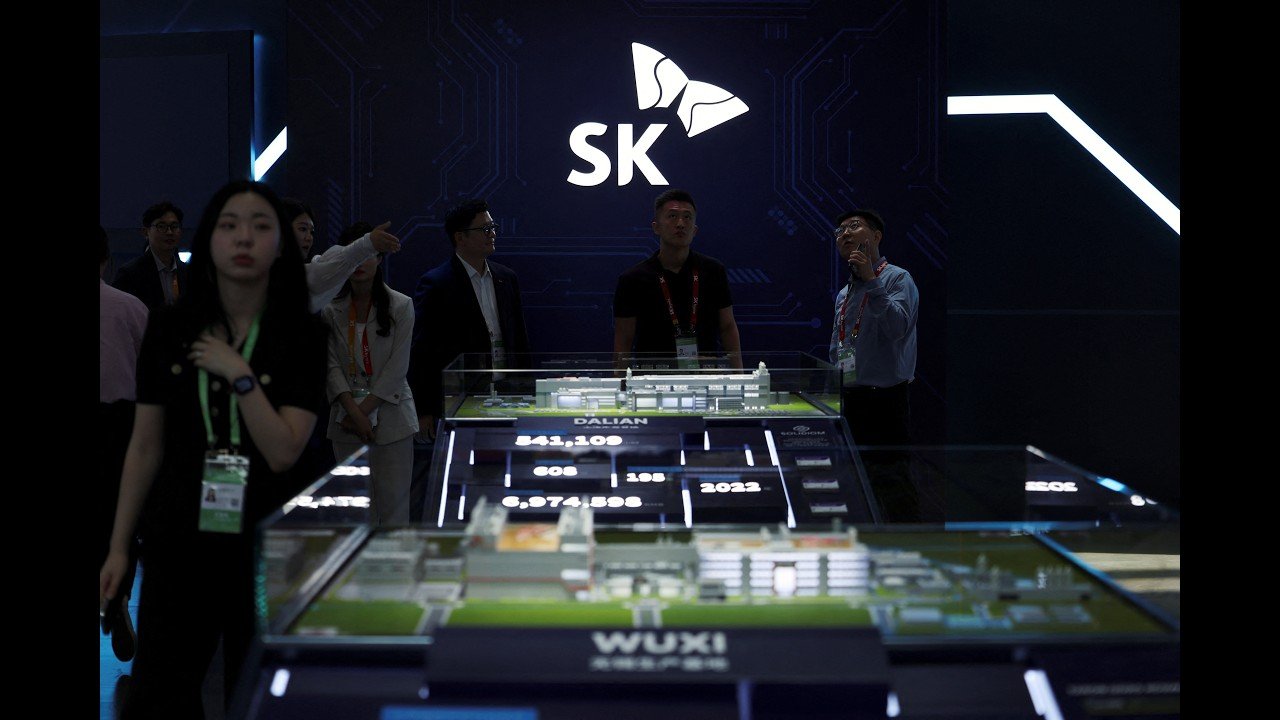
The largest allocation — roughly 800trillion won ($518billion) — will go toward building out a next-generation semiconductor manufacturing hub. Samsung and SK Hynix will lead the construction of four new fabrication plants in the Honam region, a less industrialized area in the country’s southwest.
The goal is to double South Korea’s DRAM output within five years, reinforcing its existing dominance in memory chips while preparing for surging demand driven by AI workloads.
A second pillar focuses on advanced chip packaging, with 81trillion won ($52billion) earmarked for high-bandwidth memory (HBM) and next-generation integration technologies. These facilities will be concentrated in the Chungcheong region, strategically located near Seoul to leverage existing logistics and research ecosystems. This segment is increasingly critical as AI performance gains shift from pure chip fabrication to how chips are interconnected and optimized at the system level.
The third and most forward-looking component involves building a massive AI data center network. Backed by companies including Naver, SK Group, and GS, the plan calls for between 8.4 and 10 gigawatts of data center capacity by 2029–2035.
For context, this would place South Korea among the largest AI compute hubs globally, rivaling hyperscale deployments in the United States and China.
Strategic context: Chips as national security
The scale of the investment reflects a broader geopolitical reality: semiconductors and AI infrastructure are now treated as strategic assets, not just commercial industries.
South Korea is already a global leader in memory chips, but it faces increasing competition and pressure on multiple fronts. The United States has expanded domestic chip subsidies through the CHIPS Act, while China continues to invest heavily in semiconductor self-sufficiency amid ongoing export controls. Taiwan remains dominant in advanced logic chip manufacturing via TSMC.
Against this backdrop, Seoul’s strategy appears designed to secure control over the full AI stack—from memory and packaging to compute infrastructure — while reducing reliance on external supply chains.
President Lee has framed the initiative as a “national survival strategy,” signaling that the government views technological leadership as directly tied to long-term economic resilience and geopolitical positioning.
Domestic rebalancing and industrial geography
Beyond global competition, the plan also has a strong domestic dimension.
By placing major fabrication facilities in the Honam region, the government aims to address long-standing economic imbalances between the Seoul metropolitan area and the rest of the country. Historically, South Korea’s tech industry has been heavily concentrated around Seoul and Gyeonggi Province, contributing to regional inequality and infrastructure strain.
If executed successfully, the project could trigger the emergence of new industrial corridors, similar to how semiconductor clusters reshaped regions like Taiwan’s Hsinchu Science Park or the US Southwest.
However, decentralization introduces significant execution risks. Semiconductor fabs require stable access to ultra-high-capacity power grids, large volumes of ultra-pure water, and tightly integrated supply chains. Experts have warned that building this infrastructure from scratch in less-developed regions could create bottlenecks, delays, or cost overruns.
Global supply chain ripple effects
Financial markets have already reacted to the announcement. Shares of major semiconductor equipment suppliers — including ASML, Applied Materials, and KLA — rose on expectations of increased demand for lithography systems, etching tools, and inspection technologies.
The plan could also reshape supplier dynamics across Asia, particularly in materials, chemicals, and precision manufacturing. Countries and firms tied into the semiconductor ecosystem may see downstream benefits as South Korea scales capacity.
At the same time, the initiative may intensify competition for critical inputs such as energy, water, and skilled labor — resources that are already under pressure globally due to the rapid expansion of AI infrastructure.
The AI infrastructure race accelerates
What distinguishes South Korea’s approach is its integration of semiconductor manufacturing with large-scale AI compute deployment.
While many countries are investing in chips or data centers separately, Seoul’s strategy links the two into a single national system. This could allow tighter optimization between hardware production and AI workloads, potentially improving efficiency and reducing dependency on foreign cloud providers.
For companies like Samsung and SK Hynix, the initiative also creates a vertically aligned ecosystem in which memory, packaging, and compute demand reinforce each other—especially as AI models become more memory-intensive.
Outlook
The success of the “Three Mega Projects” will depend on execution across multiple fronts: infrastructure buildout, private-sector coordination, and the ability to manage resource constraints.
If realized, the plan could cement South Korea’s position as a central node in the global AI and semiconductor landscape. If not, it risks becoming an example of the growing complexity — and cost — of competing in the era of industrial-scale AI.
Either way, the announcement underscores a clear trend: the race for AI dominance is no longer confined to software. It is being fought at the level of power grids, fabrication plants, and national industrial policy.