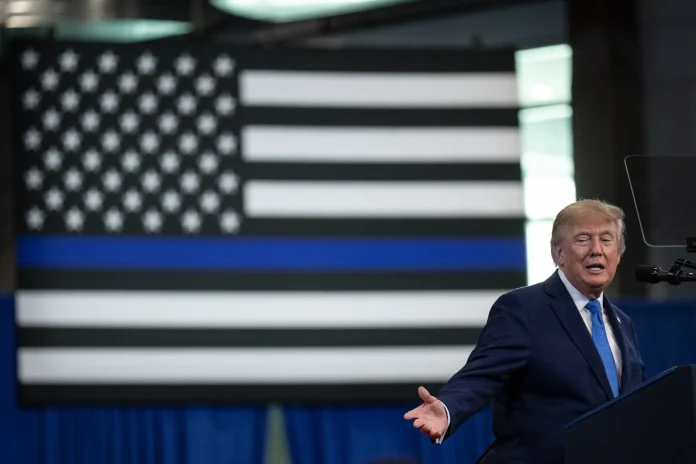
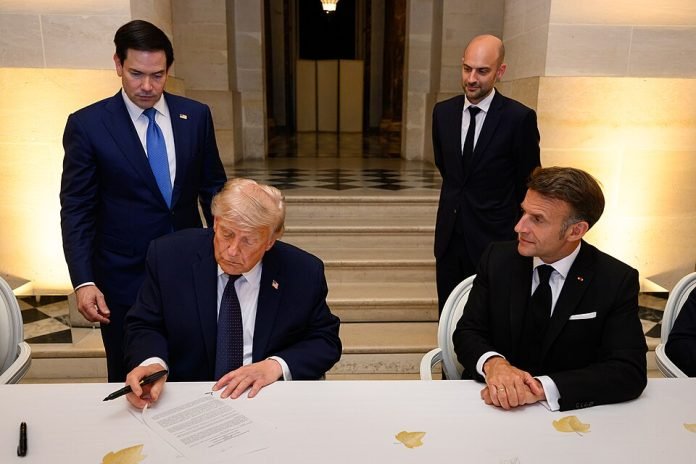
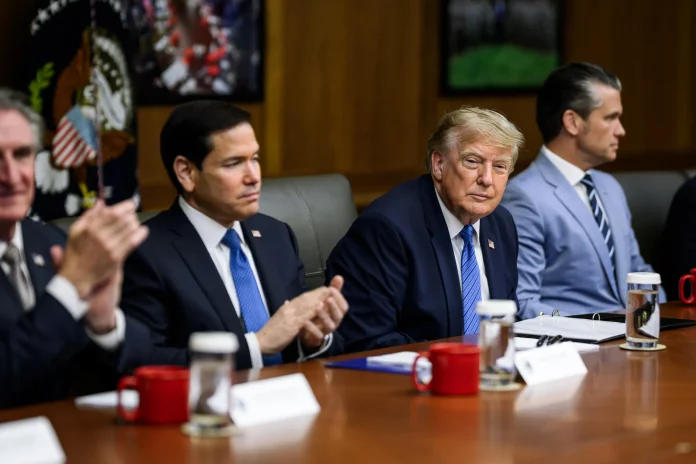
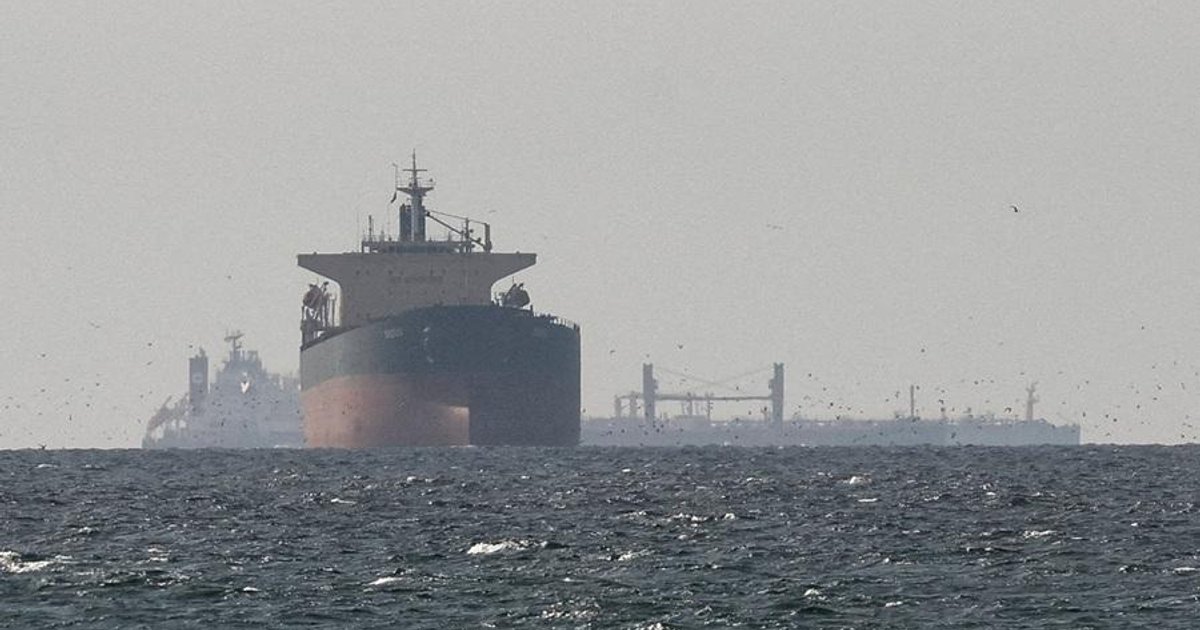
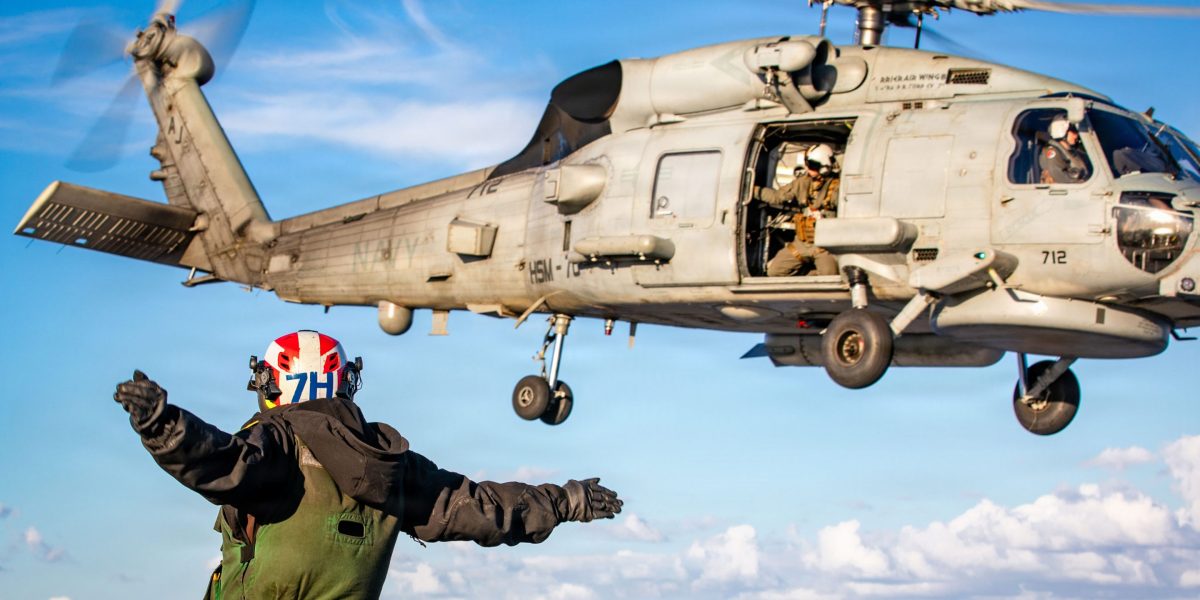
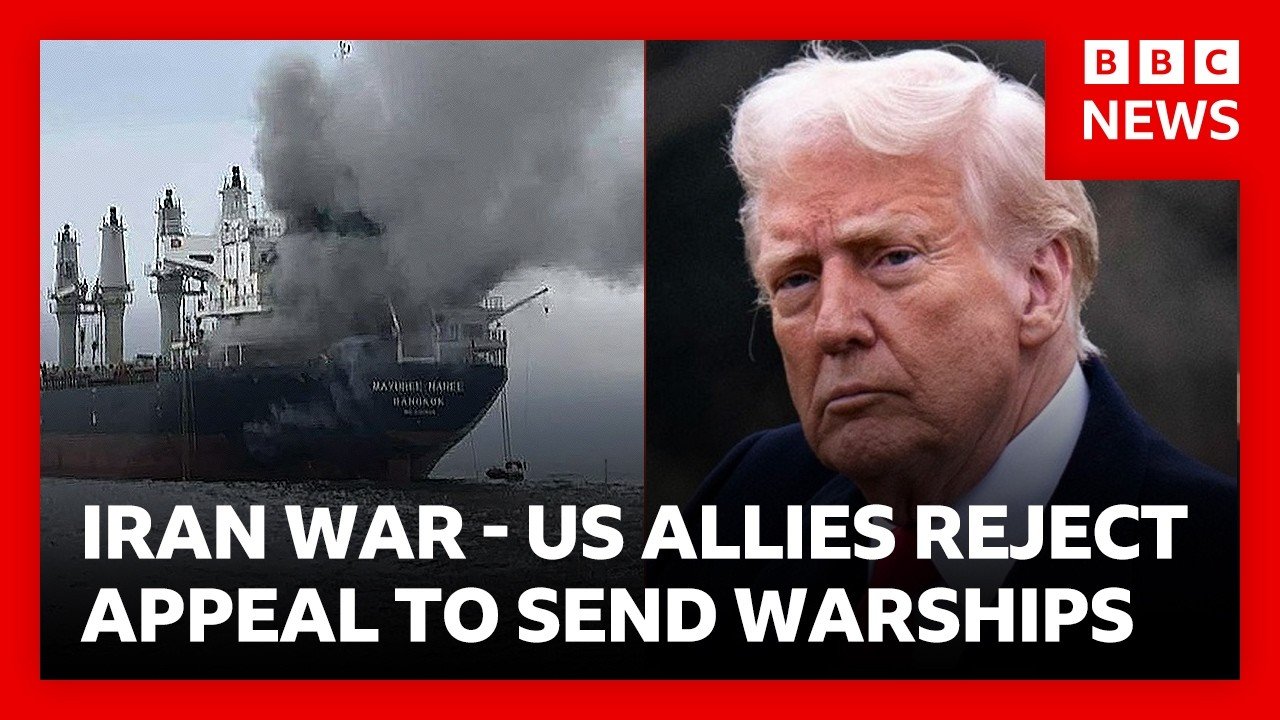
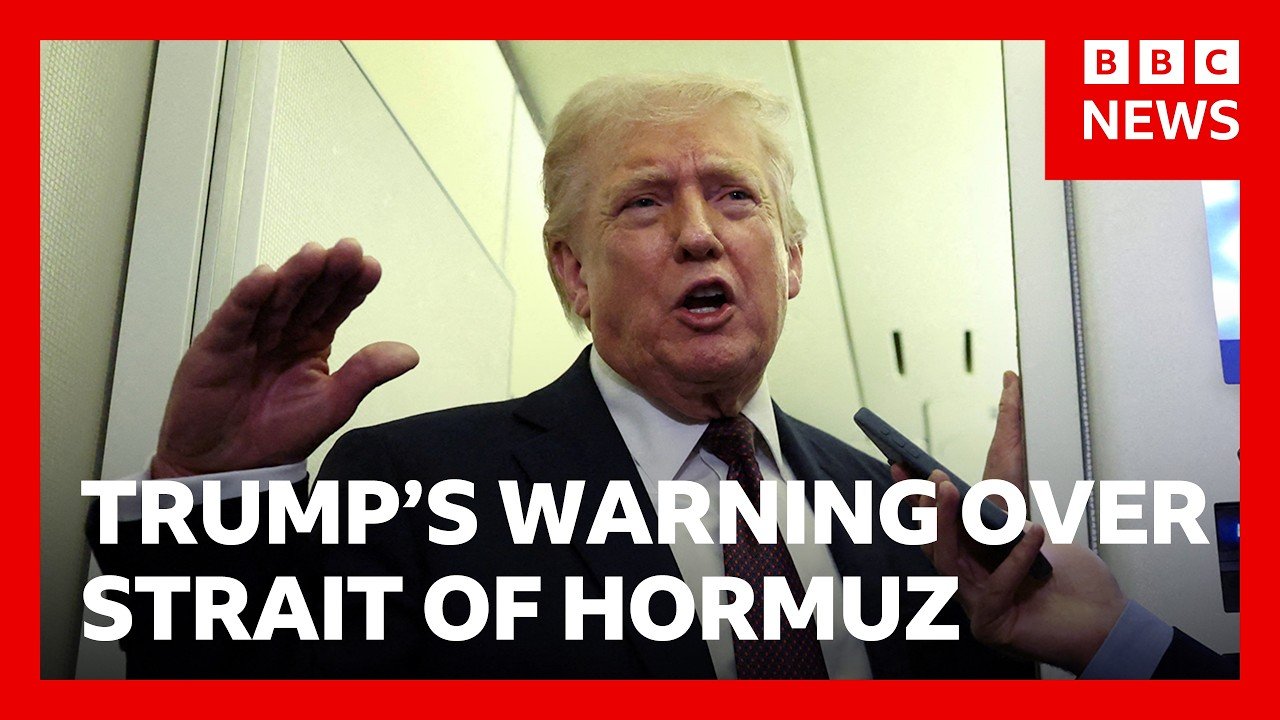
President Donald Trump has escalated pressure on NATO and other global partners to deploy warships to the Strait of Hormuz to reopen the waterway, which has been effectively closed by Iran during the ongoing US-Israeli war with Tehran.
He specifically called out the UK, France, Japan, South Korea, and China, arguing that since they are the primary beneficiaries of Gulf oil, they should “protect their own territory” and energy supplies.
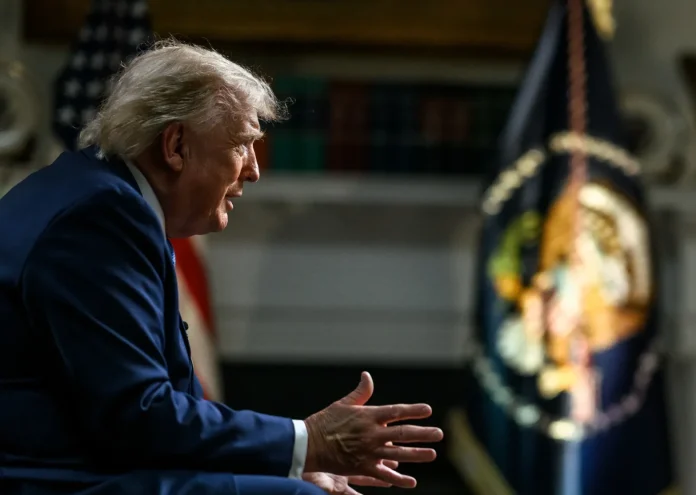
In an interview with the Financial Times, Trump warned that NATO faces a “very bad” future if member states fail to assist the US in reopening the shipping route.
Trump later characterized the request as a loyalty test, stating that while the US doesn’t strictly need the help because it has the world’s strongest military, he wanted to see which allies would stand by Washington.
NATO: “Not our war“
Alliance leadership and member states have stated that reopening the strait is not a NATO mission.
UK Prime Minister Keir Starmer ruled out a NATO-led operation, though he mentioned working with allies on a “viable” plan to restore shipping.
Chancellor Friedrich Merz and Defence Minister Boris Pistorius explicitly rejected military participation, stating, “This is not our war”.
Poland, Spain, Greece, and Sweden have distanced themselves from military involvement.
Outside of NATO, Australia and Japan also confirmed they will not be sending naval vessels to the area.
President Macron stated France will not send warships until the security situation stabilizes. He proposed a “purely defensive” escort mission only once the “most intense phase” of the war ends.
Beijing has ignored the direct request for warships, instead calling on all parties to “immediately cease military actions” and emphasizing that the strait is under Iranian sovereignty.
South Korea’s Presidential Office stated the request requires “sufficient deliberation” and close consultation with Washington. Officials noted that any deployment would likely require parliamentary approval.
Iran FM: We did not ask for a ceasefire
Additional sources: Iran International, NPR, TIME
Iran has flatly denied President Donald Trump’s claims that it is seeking a ceasefire or is “desperate” for a deal.
Iranian Foreign Minister Abbas Araghchi called the President’s characterisation of the situation “delusional”.
Araghchi stated that Iran has “neither sought a ceasefire nor negotiations with the United States” and sees no reason to talk to Washington after being attacked.
Iran maintains that while it does not want to continue the war, any end to hostilities must provide guarantees that such attacks will never be repeated.
Officials rejected the assessment that the conflict is a “war of survival,” asserting that the country remains “stable and strong enough” to defend itself for as long as necessary.
While rejecting a general ceasefire, Araghchi mentioned Iran is open to talking with countries interested in negotiating passage for specific oil tankers through the Strait of Hormuz.
Intensified Iranian Retaliation
Additional sources: Bloomberg, CNBC, BBC, Al Jazeera, France 24, The Guardian
Iran launched its heaviest waves of missile and drone strikes since the war began on 28 February. This included the first wartime use of the Sejjil ballistic missile, a solid-fueled weapon with a 2,000 km range, targeting Israel.
Iran fired 14 ballistic missiles and multiple drones at Qatar on March 16. 13 were intercepted, but one landed in an uninhabited area.
Iran has significantly escalated its attacks on major energy hubs in the United Arab Emirates, specifically targeting the Fujairah Oil Industry Zone and infrastructure near Dubai International Airport. A drone strike caused a fire at the Port of Fujairah and forced a temporary suspension of flights at Dubai International Airport.
The US and Israel have continued “precise strikes” on military and economic targets in Tehran and across Iran. US Central Command reported that the military has struck approximately 6,000 targets inside Iran since the start of the conflict.
A drone strike hit a residential building in Manama, Bahrain, killing a 29-year-old woman. In Abu Dhabi, a missile strike on a vehicle killed one person.
Total US casualties have reached 13 deaths, with over 200 service members injured across seven countries.
Israel strikes Iran’s space station
The IDF began a massive bombardment of Iranian government infrastructure in Tehran.
Recent strikes successfully destroyed an Iranian space complex housing the Iranian Space Agency (ISA) and the Iranian Space Research Center (ISRC) used for developing offensive satellite capabilities.
The military claims to have now hit close to 8,000 targets, disabling roughly 85% of Iran’s air defenses.
On the morning of March 17, sirens sounded across central Israel as the IDF intercepted a barrage of Iranian ballistic missiles over Tel Aviv and Jerusalem.
Intercepted missile debris fell in Jerusalem’s Old City, hitting the rooftop of the Greek Orthodox Patriarchate near the Church of the Holy Sepulchre and falling near the Western Wall.
The Israeli Civil Aviation Authority briefly implemented a complete closure of national airspace and airports in response to the incoming fir
Israel’s Netanyahu shows “proof of life”
Israeli Prime Minister Benjamin Netanyahu released a viral “proof of life” video on his social media accounts to debunk widespread rumors of his death in an Iranian missile strike. When asked about the rumors of his death, he used a Hebrew pun, stating he was “dying… for coffee” and “crazy about my people”.
In a direct jab at online conspiracy theorists who claimed a previous video showed him with six fingers, Netanyahu held both hands up to the camera and asked the videographer to “count the fingers”. He told viewers that Israel is striking Iran “very hard” and alluded to secret ongoing operations that he could not yet share.
Reuters verified the video’s location by matching it with file imagery of the café. The café itself also shared photos and videos of the visit on social media.
Despite official verification, some social media users and Iranian state media continue to allege the footage is a sophisticated deepfake, citing perceived anomalies like “static flags” or blurry teeth in subsequent addresses.
Following the coffee shop clip, Netanyahu released a second video message wishing the “brave people of Iran” a happy Nowruz (Persian New Year), expressing hope that “light will triumph over darkness”.

Read also:
US bombs Kharg Island; threatens to target oil infrastructure if Strait is blocked
Axios: Trump Claims Iran Nearing Surrender in G7 Call; Pezeshkian Proposes War Off-Ramp
IEA to release record oil reserves amid Iran’s $200-per-barrel threats