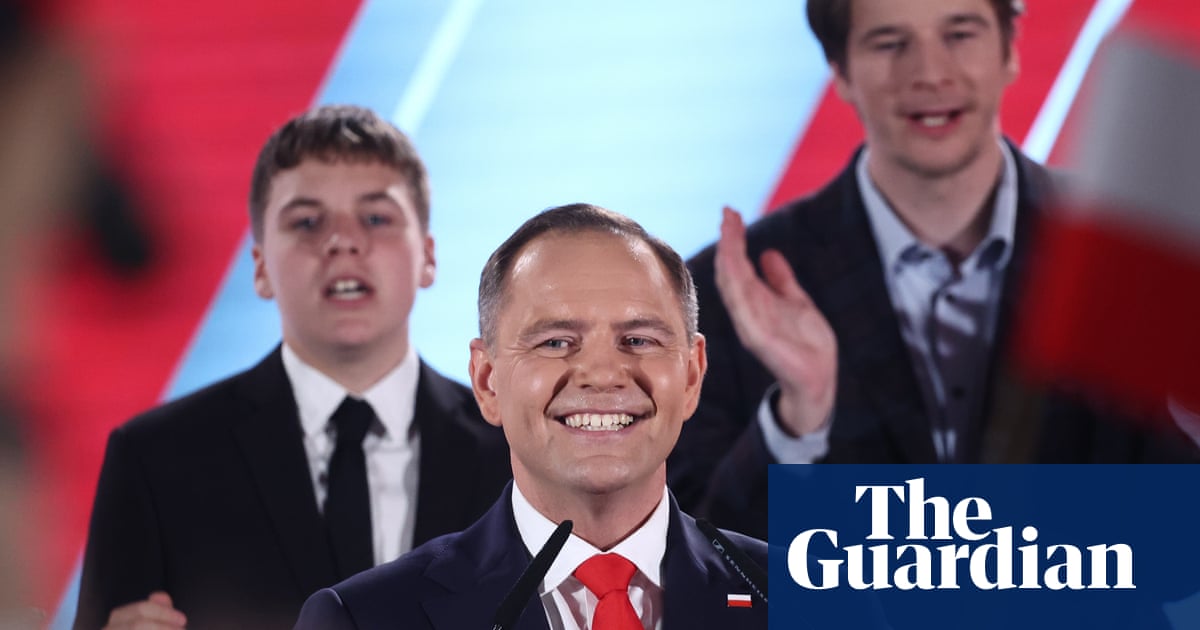
Karol Nawrocki won Poland’s 2025 presidential runoff on 1 June by a razor-thin 1.78 percentage point margin, defeating liberal-centrist Rafał Trzaskowski despite trailing in the first round and early exit polls, and was sworn in as Poland’s 7th President on 6 August 2025.
On 18 May 2025, the first round of voting for the Presidential Election took place with 13 candidates. No candidate achieved the required 50 percent majority, triggering a runoff on 1 June 2025. During the runoff, Nawrocki secured victory after consolidating support from conservative and far-right voters despite Trzaskowski leading in the first round.
Karol Nawrocki was sworn in as the 7th President of the Republic of Poland on 6 August 2025, , succeeding Andrzej Duda.
Key candidates
In the 2025 Polish presidential election, Karol Nawrocki and Rafał Trzaskowski represented two fundamentally different visions for Poland’s future. The race ended in a narrow victory for Nawrocki.
Nawrocki, former director of the Institute of National Remembrance, was an Independent candidate backed by the conservative opposition Law and Justice (PiS) party. He was endorsed by US President Donald Trump and other right-wing European leaders like Viktor Orbán. He campaigned on a nationalist and eurosceptic Poles First platform, advocating for restrictive migration policies and opposing EU climate initiatives like the Green Deal.
Trzaskowski, the Mayor of Warsaw since 2018 and a former Minister of European Affairs, was a member of the Civic Coalition (KO), the main party in Prime Minister Donald Tusk’s government. Liberal-centrist and staunchly pro-European, he advocated for liberalizing abortion laws, strengthening the rule of law, and integrating more deeply with the EU.
His campaign focus was on unblocking the political system by promising to sign judicial reforms that the previous president had vetoed. Despite leading in the first round and in early exit polls, he lost the runoff by a razor’s edge margin of 1.78 percentage points.
Key campaign issues
The 2025 Polish presidential campaign was characterized by a sharp ideological divide, with candidates clashing over the country’s relationship with the European Union, national security, and social reforms.
Security was the most dominant issue, though both major candidates agreed on maintaining record-high defence spending at 4.1 percent of GDP. Migration Crisis was a central theme, particularly the situation at the Belarusian border. Nawrocki campaigned on a hardline Poles First platform, advocating for a total withdrawal from the EU Pact on Migration and Asylum. While overall support for Ukraine remained, Nawrocki successfully tapped into refugee fatigue, questioning the extent of social benefits for Ukrainians not employed in Poland.
The election was widely seen as a choice between further EU integration and national sovereignty. Nawrocki attacked what he called European elites and German imperialism, opposing the adoption of the Euro and the European Green Deal. Trzaskowski emphasized Poland’s role as a leader within a strong, united Europe and sought to unlock EU funds by restoring the rule of law.
A critical point of contention was how to resolve the long-standing constitutional crisis. Nawrocki characterized the current judicial state as chaos caused by the Tusk government and vowed to veto any reforms he deemed apolitical or partisan. Trzaskowski promised to sign legislation that would reverse the controversial changes made by the previous PiS administration, aiming to end the legal disputes with Brussels.
Economic dissatisfaction played a significant role in the narrow result. The Tusk government faced criticism for failing to deliver on promised economic deregulation and tax cuts for small businesses. Nawrocki positioned himself as a defender of social transfers like the 800 plus child benefit and warned that a Trzaskowski victory would lead to the unraveling of the welfare state.
Reproductive Rights debate over liberalizing abortion laws was a major driver for female voters. Nawrocki remained a staunch opponent of any changes to current restrictions, while Trzaskowski supported liberalisation. Candidates clashed over the legal recognition of civil partnerships, with Nawrocki framing it as leftist ideology.
Reactions
Donald Tusk, Poland’s Prime Minister, initially questioned the results and later requested a vote of confidence in his coalition government to demonstrate stability. Tusk has since focused on preparing for a confrontational cohabitation, warning that Nawrocki’s veto power could lead to legislative gridlock.
Rafał Trzaskowski conceded defeat while emphasizing that the narrow margin of less than 2 percent gives Nawrocki an obligation to represent all Poles, not just his conservative base.
Jarosław Kaczyński, PiS Leader, hailed the victory as a referendum against the Tusk government and a vindication of his strategy to run a fresh, non-establishment candidate.
US President Donald Trump exulted in the win, congratulating Poland in “picking a winner”. He later hosted Nawrocki at the White House to discuss deepening military ties.
European Commission President Ursula von der Leyen offered measured congratulations, stressing the need for cooperation based on democracy and values. Viktor Orbán of Hungary celebrated a fantastic victory and expressed hope for a revived, eurosceptic Visegrad Group. France and Germany leaders like Emmanuel Macron and Frank-Walter Steinmeier called for continued respect for the rule of law and European unity.
Ukraine President Volodymyr Zelenskyy expressed hope for fruitful cooperation, despite Nawrocki’s campaign rhetoric questioning refugee benefits and his opposition to Ukraine’s immediate NATO membership.
Liberal Critics including public figures like Adam Michnik compared the result to Germany in 1933, while Lech Wałęsa briefly threatened internal political exile in protest. Conservative Media portrayed the win as a return to normality and a successful defense of national sovereignty against Brussels overreach.
Broader implications
Nawrocki’s victory sets up a confrontational cohabitation with Prime Minister Donald Tusk’s government, with the president’s veto power likely to create legislative gridlock. The result signals continued conservative resistance to EU integration and marks a shift toward euroscepticism in Poland despite the country’s strategic importance to NATO and EU security policy.
Read also:
10 Major Events That Shaped Geopolitics in 2025
2025 German Federal Elections
Portuguese Presidential Election: Seguro wins by landslide