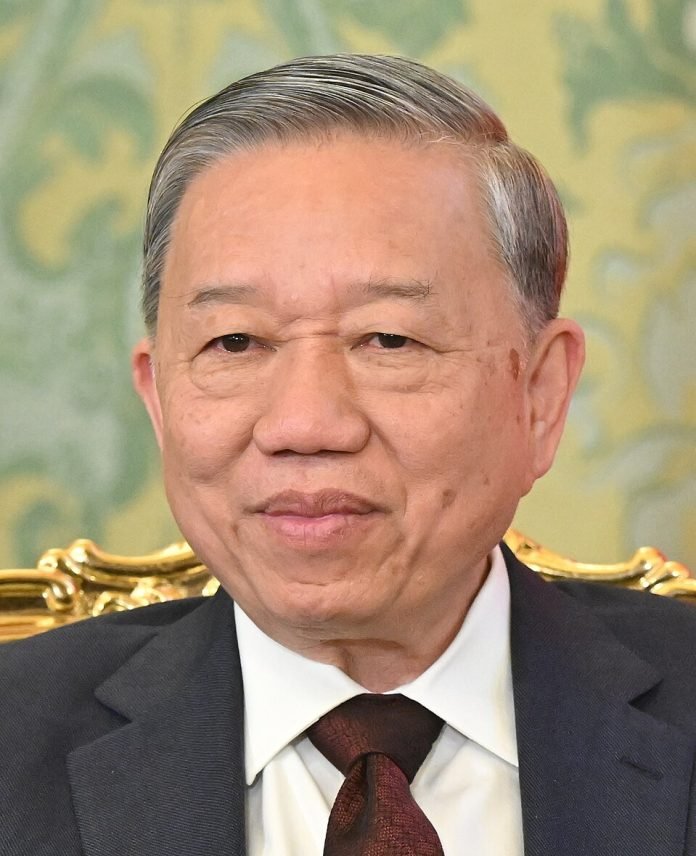
Communist Party General Secretary Tô Lâm was unanimously elected as Vietnam’s state president on 7 April 2026, marking a sweeping consolidation of power at the top of the country’s political system. The National Assembly voted en bloc in his favor, with 100 percent of attending deputies supporting him, cementing his position as both party chief and head of state.
Immediately following his election, Chinese President Xi Jinping sent a congratulatory message, emphasizing that the two nations are a “community with a shared future of strategic significance”. Beijing is said to view Vietnam’s transition toward a more centralized power structure as a stabilization of their shared socialist model.
At President Xi’s invitation, Tô Lâm will conduct a four-day state visit to China from 14 to 17 April 2026. This marks his first overseas trip since being elected state president on 7 April 2026.
The US government has also responded positively to Lâm’s pragmatism, with President Trump praising Vietnam’s role in global peace initiatives and indicating plans to remove Vietnam from strategic export control lists.
Power consolidation and background
Tô Lâm had previously been elected president in May 2024, before ascending to the party’s top job as general secretary in August of the same year. Over the past decade he rose through the ranks as Minister of Public Security, where he oversaw an aggressive anti‑corruption drive that sidelined many of his rivals. His formal assumption of the presidency in 2026 follows a period of leadership reshuffling after the death of former Party chief Nguyễn Phú Trọng in 2024.
By holding both the General Secretary and Presidential roles, Tô Lâm now unifies the two most powerful positions in Vietnamese politics, a structure closely resembling China’s model under Xi Jinping. Party‑dominated presidential elections in Vietnam typically feature a single candidate handpicked by the Communist Party of Vietnam, and this year’s vote came shortly after the 15 March 2026 legislative elections, in which CPV‑backed or Fatherland Front–affiliated candidates swept nearly all 500 National Assembly seats.
New leadership lineup
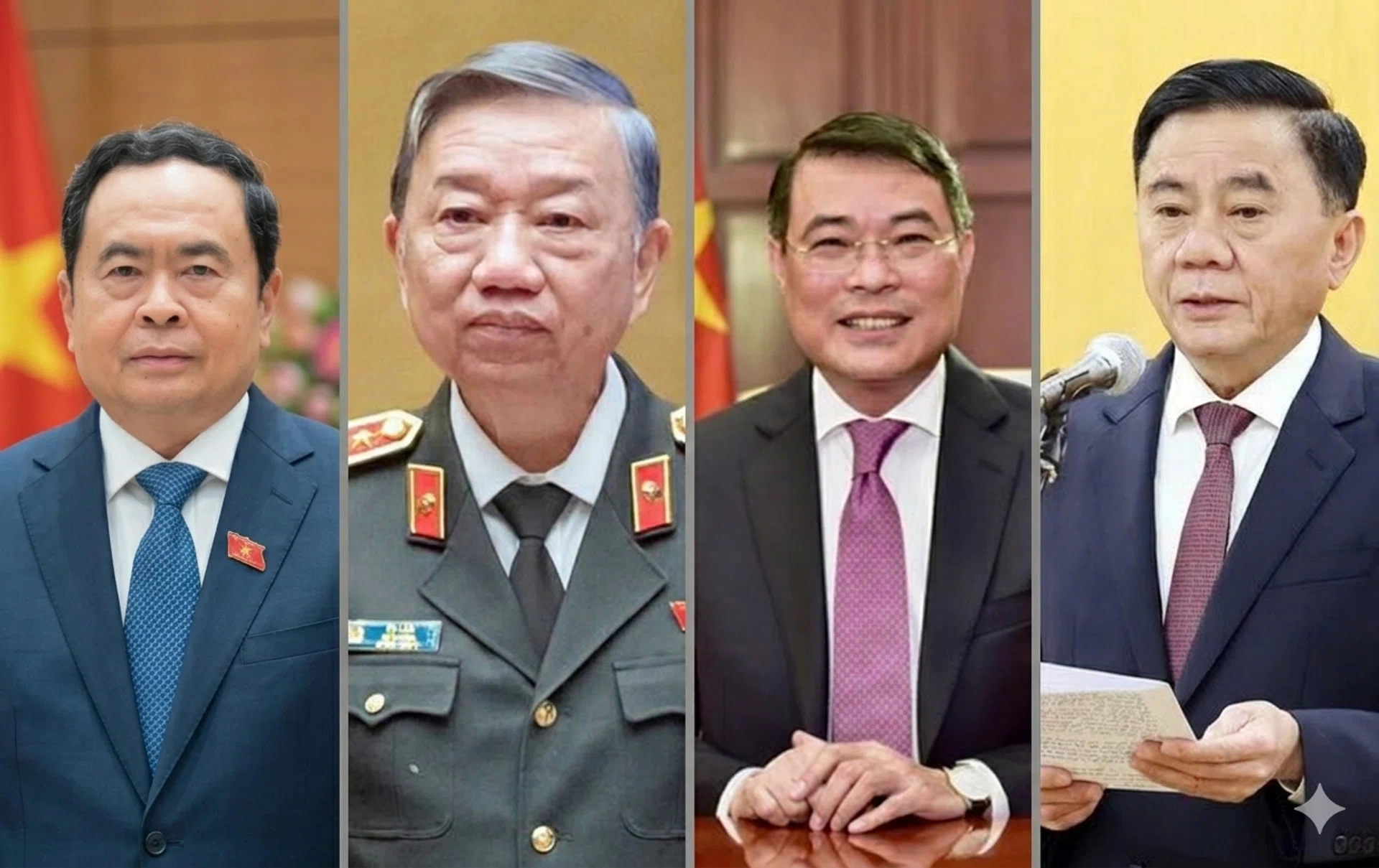
Alongside Tô Lâm’s election, the April 2026 session confirmed several other key state figures:
- Prime Minister: Lê Minh Hưng
- Vice President: Võ Thị Ánh Xuân (re‑elected)
- National Assembly Chairman: Trần Thanh Mẫn
Traditionally, the Communist Party of Vietnam has preferred collective leadership across what are now five top posts—the “five pillars.” However, Tô Lâm’s dual hold on the party and state leadership suggests a shift toward a more centralized model, with parallels to Xi Jinping’s consolidation of authority in China.
Reform agenda and “Era of National Rise”
Since his unanimous election, Tô Lâm has accelerated a far‑reaching reform agenda aimed at transforming Vietnam into a high‑income nation by 2045. His “Era of National Rise” centers on administrative streamlining and a market‑oriented pivot, with an explicit target of maintaining annual economic growth above 10 percent while intensifying efforts to contain corruption. Building on the “Blazing Furnace” campaign launched by his predecessor, his administration has disciplined or dismissed tens of thousands of officials.
A major bureaucratic overhaul is underway, the most extensive since the Đổi Mới reforms decades ago, with the goal of creating a “lean, compact, and efficient” state apparatus:
- Provincial mergers: reducing Vietnam’s 63 provincial‑level units to 34 to optimize resources and regional connectivity.
- Ministry consolidations: cutting the number of ministry‑level agencies from 22 to 17.
- Staffing reductions: eliminating roughly 150,000 state payroll positions and abolishing nearly 86 percent of directorate‑level units.
- Legislative efficiency: streamlining National Assembly committees from 10 down to six.
Economic and industrial transformation
Tô Lâm is steering Vietnam away from its long‑standing dependence on low‑cost manufacturing toward a high‑tech, innovation‑driven economy. For the first time, the Communist Party has formally recognized the private sector as the “most important force” in the economy, a significant doctrinal shift. Under Resolution 68, the government aims to nurture at least 20 globally competitive private conglomerates—such as Vingroup and FPT—as anchor firms in domestic supply chains.
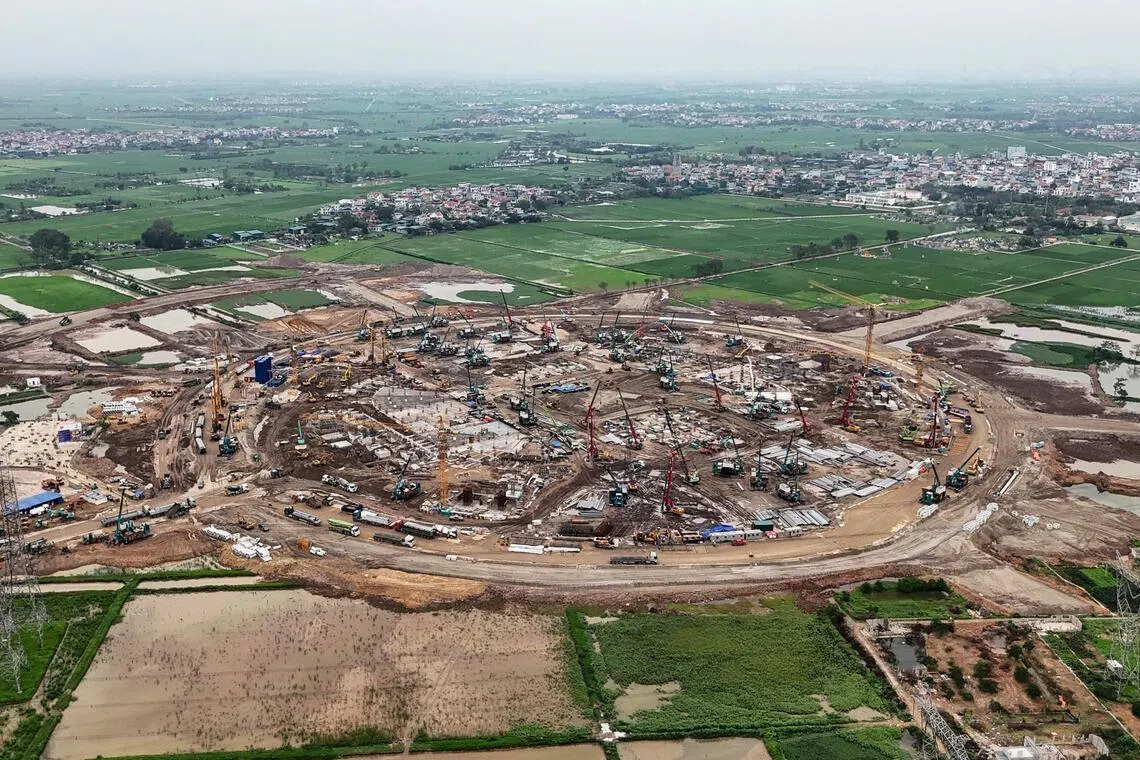
The reform‑driven growth strategy is backed by an infrastructure blitz, including a US$200 billion investment program that features South‑east Asia’s largest exhibition hall and progress on the US$67 billion North–South High‑speed Rail project, underscoring the push to modernize logistics and connectivity.
Market and Investor Sentiment
The international business community has largely welcomed the reforms, viewing the consolidation of power as a signal of policy consistency and reduced red tape.
In April 2026, FTSE Russell confirmed Vietnam’s upgrade to Secondary Emerging Market status, effective September 2026, citing improved access and reform momentum.
Analysts at institutions like the ISEAS – Yusof Ishak Institute have dubbed the model “Market Leninism”—where the state uses private conglomerates to drive growth while maintaining absolute political control.
The US$200 billion building spree has won plaudits for seeking to resolve long-standing logistical bottlenecks, though some experts warn of potential “macroeconomic instability” if projects are mismanaged.
Governance, anti‑corruption, and legal reform
Tô Lâm continues and refines the “Blazing Furnace” anti‑corruption campaign, broadening its focus beyond bribery to include bureaucratic inertia and fiscal “wastefulness.” The emphasis is on improving efficiency and accountability in public spending rather than purely punitive measures.
At the same time, his administration is pushing legal reforms designed to create “ownership‑neutral” incentives, ensuring that private firms enjoy more equitable access to land, credit, and public procurement. If implemented consistently, these changes could significantly reshape Vietnam’s business environment and reduce long‑standing state‑enterprise advantages.
Foreign policy and “Bamboo Diplomacy”
Despite the domestic concentration of power, often compared to China’s model, Tô Lâm has maintained Vietnam’s “Bamboo Diplomacy,” which emphasizes flexibility and strategic balance. He has sought to deepen Vietnam’s integration into global networks, underscored by a 2026 visit to the United States to meet President Donald Trump and secure a role on a US‑led “Board of Peace.”
At the same time, Vietnam is pursuing high‑tech partnerships that would ease restrictions on its access to advanced US technology, while continuing to cultivate deep strategic ties with Russia and China. The result is a dual‑track approach: a more centralized, reform‑oriented domestic system paired with an outward‑looking, pragmatic foreign policy aimed at maximizing Vietnam’s room for maneuver among great powers.