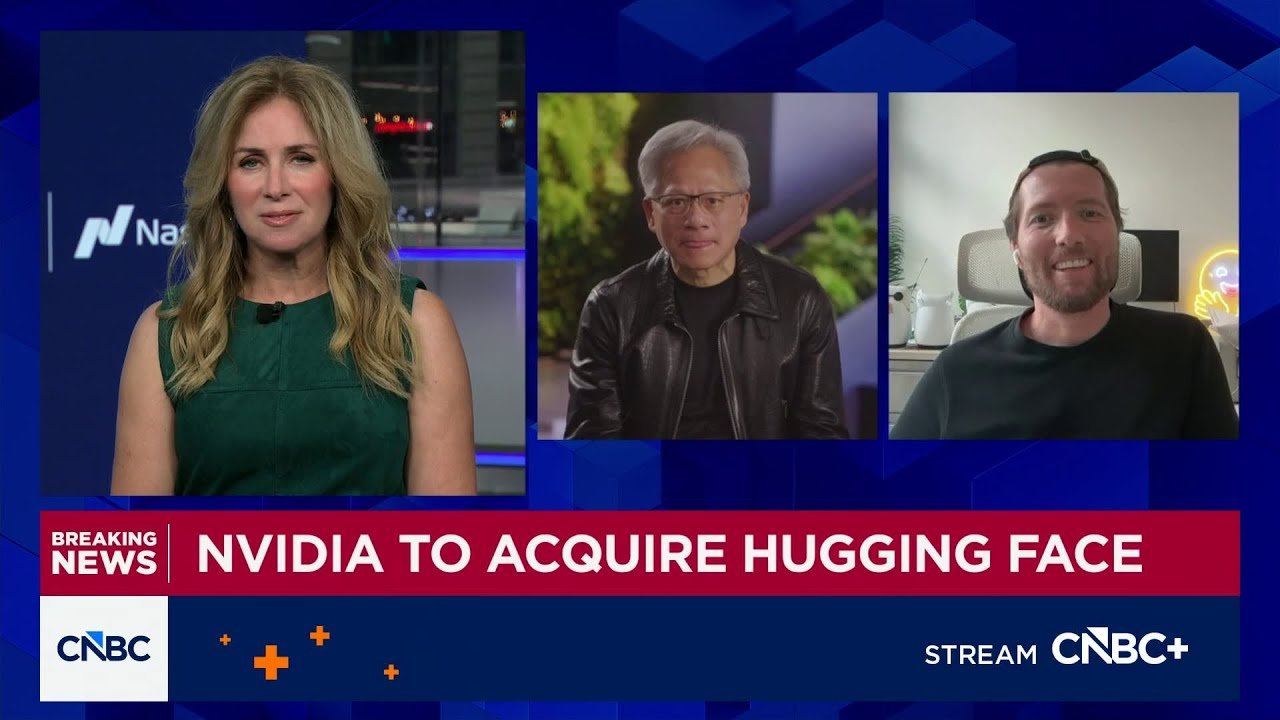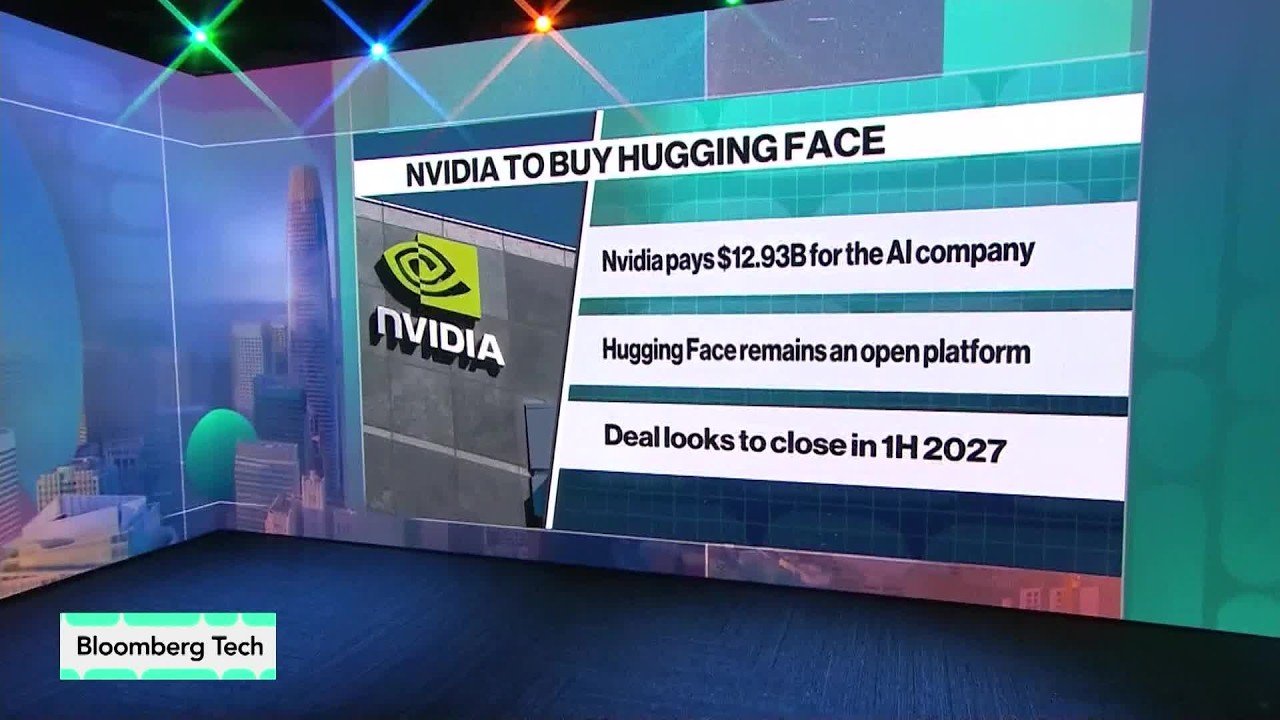





NVIDIA has agreed to acquire Hugging Face, the New York–based platform widely described as the “GitHub for AI,” for $12.93billion, marking the chipmaker’s largest single acquisition and a decisive move up the artificial intelligence stack from silicon into software and developer ecosystems.
The deal, announced on September 3, 2026, values Hugging Face at nearly three times its $4.5billion post‑money valuation in 2023 and positions NVIDIA at the centre of the open‑weight model ecosystem used by millions of developers and hundreds of thousands of enterprises.
Deal terms and timeline
- Purchase price: $12.93billion in total.
- Cash to investors: About $11.9 billion will be paid to Hugging Face shareholders
- Employee retention: Up to $1 billion in equity‑based awards for Hugging Face staff who join NVIDIA, designed to keep key engineering and community teams in place.
- Expected closing: First half of 2027, subject to customary closing conditions and regulatory approvals; specific jurisdictions or agencies were not detailed in the initial announcements.
The definitive agreement was signed on September 2, 2026, with the public announcement following on September 3 (U.S. Eastern time).
Why NVIDIA is buying Hugging Face
Industry analysts and NVIDIA executives frame the acquisition as a strategic push to:
Move up the AI stack
NVIDIA has long dominated AI training and inference through its GPUs, networking, and data‑centre systems. Owning Hugging Face gives it a direct foothold in the software layer where models are discovered, evaluated, fine‑tuned, and deployed.
- Hugging Face hosts more than 18 million developers, over 3 million models, 500,000 datasets, and around 1 million applications, used by 200,000+ organisations.
- By integrating this hub, NVIDIA can better align its hardware roadmaps, developer tools (such as CUDA, TensorRT, and NGC), and cloud services with real‑world model workloads.
Anchor the open‑source and open‑weight AI movement
Hugging Face has become the de facto home for open‑weight models from labs including Meta, Mistral, Stability AI, and countless academic and independent teams.
- NVIDIA itself already publishes more than 500 models and 250 open datasets on Hugging Face, and has participated in the company’s funding rounds, including its 2023 Series D.
- Controlling the platform allows NVIDIA to present itself as the primary patron of open‑weight AI, countering narratives that only closed, proprietary labs can deliver frontier capabilities.
Accelerate “physical AI” and scientific domains
Hugging Face’s repositories extend beyond language models into robotics, biology, chemistry, physics, and other scientific domains, which dovetail with NVIDIA’s pushes in simulation, digital twins, and embodied AI.
NVIDIA’s hardware and simulation stack (including Omniverse and Isaac platforms for robotics) can be more tightly coupled with open models for perception, control, and planning hosted on Hugging Face.
This supports NVIDIA’s broader vision of AI that interacts with the physical world—factories, labs, warehouses, and autonomous systems—rather than only generating text or images.
What happens to Hugging Face’s openness?
A central concern in the AI community is whether NVIDIA will turn Hugging Face into a walled garden that favours its own chips and clouds.
Hugging Face will remain an open platform for the entire AI ecosystem.
CEO Jensen Huang explicitly pledged in the announcement blog post and subsequent interviews.
CEO Jensen Huang has pledged that developers will continue to choose their models, frameworks, clouds, inference providers, and computing platforms and NVIDIA compute will not be required to build on or deploy through Hugging Face.
NVIDIA Enterprise general manager Justin Boitano reinforced that the platform will maintain hardware and cloud optionality, even as NVIDIA naturally expects to benefit from the compute workloads generated by its users.
Hugging Face CEO Clément “Clem” Delangue told CNBC that the company approached NVIDIA about a deal weeks before the announcement, seeking the compute, infrastructure support, and global scale needed to compete with closed‑source AI offerings.
Founders and investors: a windfall for the “nerdy trio”
The transaction instantly makes Hugging Face’s three French co‑founders billionaires:
- Clément Delangue, 38 (CEO)
- Julien Chaumond, 42 (CTO)
- Thomas Wolf, 41 (Chief Science Officer)
According to the Bloomberg Billionaires Index, each is now worth roughly $1.8billion, based on their equity stakes in the ~$13 billion deal.
Hugging Face had raised around $400million in venture capital prior to the sale, with backers including Lux Capital, Addition, Sequoia Capital, Coatue, Menlo Ventures, Salesforce Ventures, Betaworks, and NVIDIA itself. The acquisition thus delivers a substantial return to early investors and validates the open‑source AI thesis at scale.
Regulatory and competitive context
The deal is NVIDIA’s largest single acquisition to date, surpassing previous major moves in AI and networking. It arrives amid:
- Intensifying scrutiny of big‑tech and chip‑giant acquisitions by regulators in the U.S., EU, UK, and China, particularly where control over critical AI infrastructure or developer ecosystems is at stake.
- Growing competition from custom AI accelerators developed by large cloud providers and frontier labs seeking to reduce dependence on NVIDIA GPUs.
By owning the primary venue where models are shared and evaluated, NVIDIA can better ensure its hardware remains the default target for new architectures—even as rivals design their own chips.
What developers and enterprises should watch
Over the next 6–12 months, key questions will include:
- Governance: How Hugging Face’s open‑source licensing, model cards, and community moderation evolve under NVIDIA ownership.
- Integration: Whether NVIDIA deep‑links its developer tools (e.g., NGC, TensorRT‑LLM, Omniverse) more tightly into Hugging Face workflows, and whether those integrations remain optional and multi‑vendor.
- Pricing and access: Any changes to enterprise plans, inference offerings, or dataset licensing that could affect startups and research groups reliant on the platform.
For now, NVIDIA’s public stance is one of continuity plus scale: keep Hugging Face open and multi‑cloud, but invest heavily in infrastructure, reliability, and global reach.