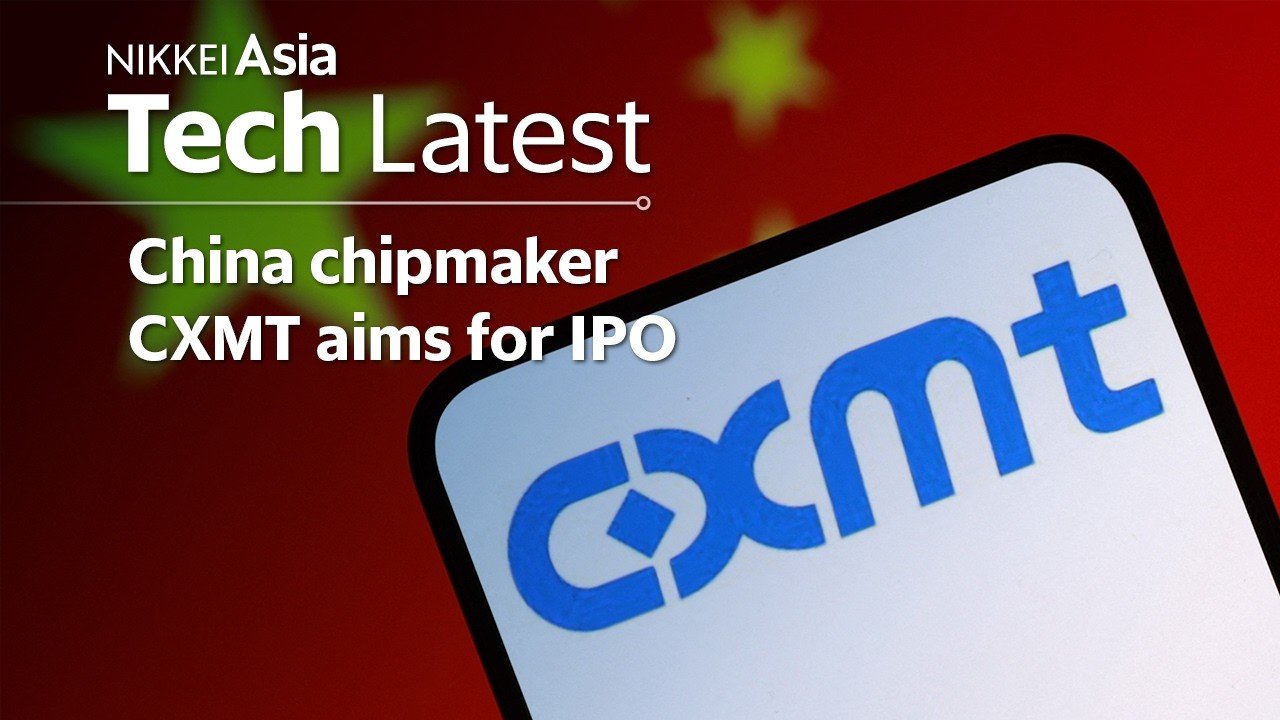



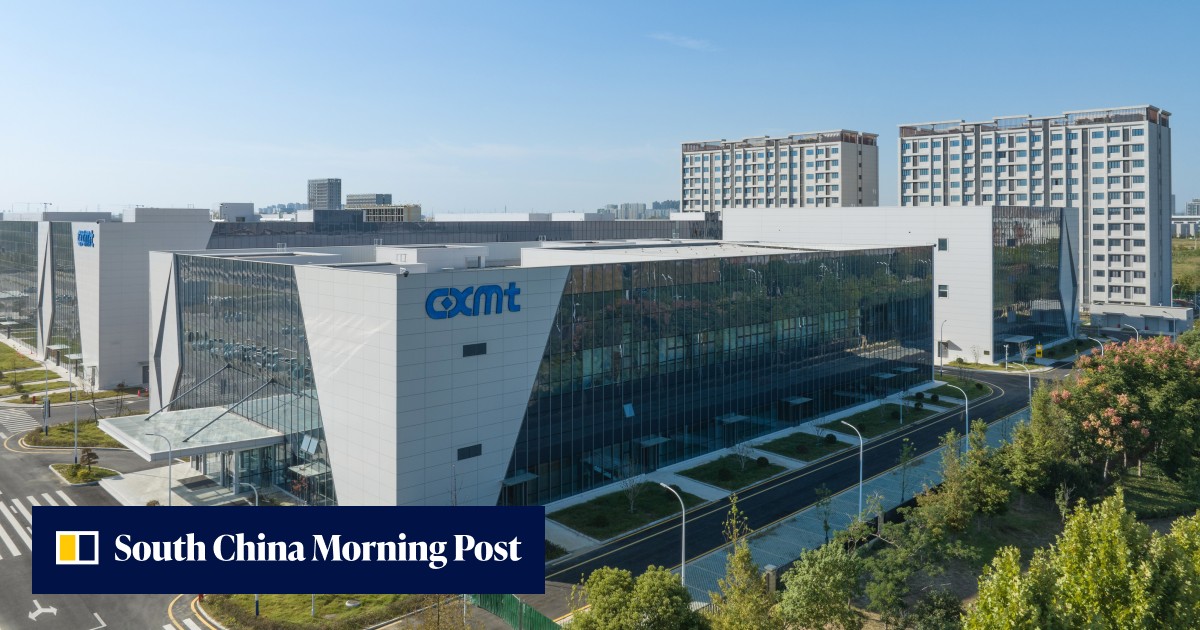



CXMT has now priced its IPO at RMB8.66 per share, significantly increasing the scale of the deal from earlier expectations. At this pricing, the company is set to raise approximately RMB 57.9billion (around $8.6billion), making it not only the largest mainland Chinese IPO this year, but the biggest semiconductor listing in China in years and one of the largest globally in 2026.
This marks a sharp upgrade from the initially guided $4.3billion fundraising target, underscoring strong investor demand and improved sentiment around memory markets.
Backed by China’s state-supported semiconductor investment vehicle — commonly known as the “Big Fund” — CXMT has emerged as a central pillar in Beijing’s push for chip self-sufficiency. The company now holds roughly 7% to 8% of the global DRAM market, ranking fourth behind Samsung, SK Hynix, and Micron.
Notably, Alibaba holds about a 5% stake, underscoring alignment between China’s platform giants and domestic semiconductor ambitions.
Proceeds from the IPO are expected to fund advanced fabrication capacity, next-generation DRAM development, and process node improvements — areas where Chinese firms have historically lagged global leaders.
AI boom reshapes memory economics
The timing of the IPO coincides with a dramatic shift in global memory markets. Demand for high-bandwidth memory (HBM), critical for AI workloads, has surged as hyperscalers and cloud providers scale up data center infrastructure.
This has created a supply squeeze in conventional DRAM used in consumer electronics. Industry estimates suggest prices for standard memory components have increased multiple-fold within a year as capacity is redirected toward AI applications.
China’s domestic memory market alone has reportedly expanded more than 250% in 2026, driven by AI infrastructure buildout and localization policies.
This tightening supply environment is now forcing major hardware companies to rethink sourcing strategies.
Apple’s strategic China bet
Against this backdrop, the Financial Times reports that Apple has begun testing CXMT’s LPDDR5X memory chips for devices sold within China. While not yet a confirmed supply agreement, the move signals a potential shift in Apple’s procurement strategy.
The motivation appears less about cost-cutting and more about supply resilience. With memory shortages pushing up component prices, Apple has already implemented price increases on certain Macs and iPads. Integrating a domestic Chinese supplier could help stabilize costs and ensure production continuity in one of its most critical markets.
There is also a regulatory logic: sourcing locally for China-bound devices could reduce exposure to cross-border trade restrictions and improve alignment with Beijing’s industrial policy.
Equally important, Apple’s validation carries symbolic weight. If adopted, CXMT would gain instant credibility as a supplier capable of meeting the performance and reliability standards of premium global devices.
Political risk and Washington backlash
However, Apple’s interest in CXMT is unfolding within an increasingly fraught political environment.
The US Department of Defense has already placed CXMT on its Section 1260H list of companies linked to China’s military-industrial complex. While this designation does not automatically prohibit commercial transactions, it raises reputational risks and increases the likelihood of future restrictions.
Apple is reportedly lobbying US officials to avoid stricter measures—particularly placement on the Commerce Department’s Entity List, which would effectively bar American firms from doing business with CXMT.
Lawmakers in Washington have begun criticizing the potential partnership, framing it as a national security concern. The situation echoes Apple’s abandoned 2022 deal with Chinese memory maker YMTC, which collapsed under political pressure.
A fragmenting semiconductor order
The CXMT-Apple dynamic reflects a broader structural shift in the semiconductor industry.
On one side, China is accelerating efforts to build a fully domestic chip ecosystem, backed by state capital and protected demand. On the other, US firms remain deeply dependent on global supply chains, even as political pressure pushes toward decoupling.
Memory chips — once a commoditized segment — are now becoming strategic assets due to their central role in AI systems.
If Apple proceeds with CXMT, it would mark a notable breach in the emerging technological divide, showing that commercial necessity can still override geopolitical friction—at least temporarily.
At the same time, the risks are asymmetric. A single policy decision in Washington could abruptly sever ties, leaving companies scrambling to reconfigure supply chains once again.
What comes next
Investors will be watching CXMT’s IPO not just as a financial event, but as a barometer of China’s progress in closing the semiconductor gap. Meanwhile, Apple’s next move will signal how far major US tech firms are willing to go in balancing geopolitical constraints with operational realities.
In an era defined by AI demand and strategic competition, the global memory market is no longer just about supply and price — it has become a frontline in the tech cold war.