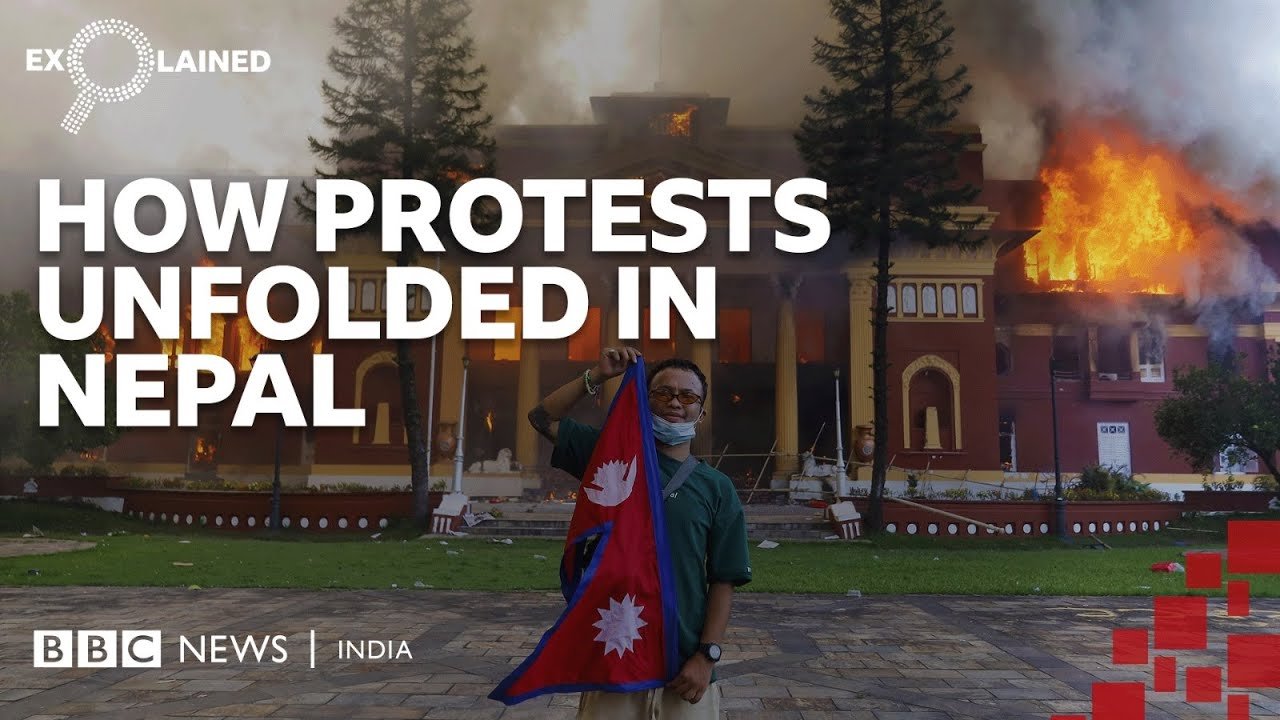
Nepal was plunged into political crisis in September 2025 after violent, youth-led protests culminated in the storming and burning of the federal parliament, forcing Prime Minister K.P. Sharma Oli from power.
The unrest escalated rapidly over several days in early September, driven by mass protests led largely by younger Nepalese demanding an end to entrenched corruption and political nepotism.
On 8 September, thousands gathered at Kathmandu’s Maitighar Mandala and attempted to march toward parliament. Security forces responded with live fire, killing at least 19 people, including a child, triggering nationwide outrage.
The following day, protesters breached the Nepalese Federal Parliament building and set it ablaze, marking the most dramatic moment of the uprising. The violence spread across the রাজধানী, with key state institutions including Singha Durbar, the Supreme Court, and the presidential residence also attacked.
Amid the chaos, Prime Minister Oli resigned under pressure and was reportedly evacuated by military helicopter.
Political transition
In the aftermath, Nepal entered an unprecedented political transition. Former Chief Justice Sushila Karki was elevated to lead an interim government, following a combination of grassroots mobilisation and negotiations with state institutions.
Karki, aged 73, was sworn in as Nepal’s first female prime minister on 12 September, tasked with stabilising the البلاد and overseeing a transition. Parliament was subsequently dissolved, with fresh elections scheduled for March 2026.
Casualties and damage
The five-day upheaval left at least 76 people dead and more than 2,100 injured nationwide.
Significant damage was reported across central government infrastructure, while widespread looting accompanied the destruction of parliament. Authorities later issued appeals for stolen items to be returned.
What drove the protests
The immediate trigger was a government decision to ban 26 social media platforms, including Facebook, WhatsApp, and TikTok, a move widely seen as an attempt to curb dissent.
More broadly, the protests reflected deep frustration among younger Nepalese over corruption, economic inequality, and limited opportunities. Youth unemployment remained above 20%, while political elites were accused of nepotism and entrenched privilege.
The movement adopted potent symbolic imagery, including the “Jolly Roger” flag from the anime One Piece, representing resistance against perceived authoritarian rule.
Current situation
While large-scale violence has subsided, the situation remains fragile.
Youth-led groups continue to exert pressure on the interim government, staging further demonstrations over the pace of reform and concerns about continued patronage within the political system.
The country’s long-term stability remains uncertain, with political tensions persisting and public trust in institutions still under strain.
Read also:
2025 Madagascar’s coup d’état
Ex-jihadist leader Ahmed al-Sharaa becomes Syria’s president