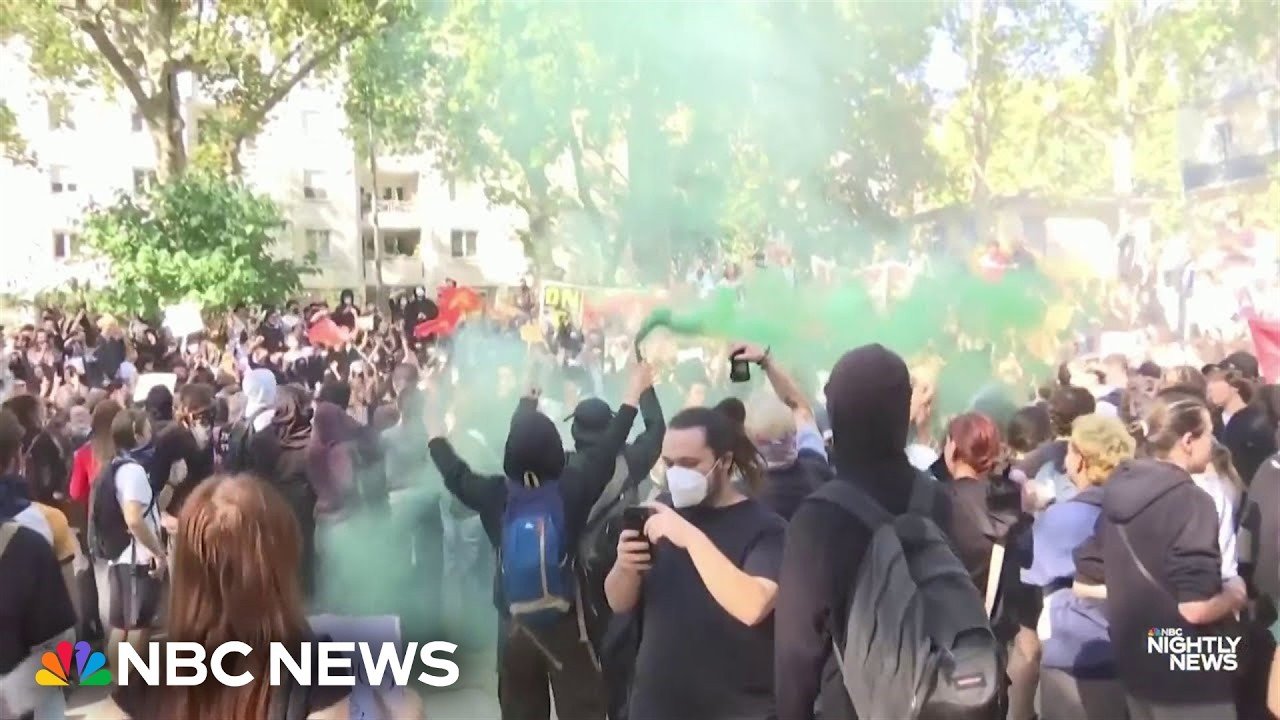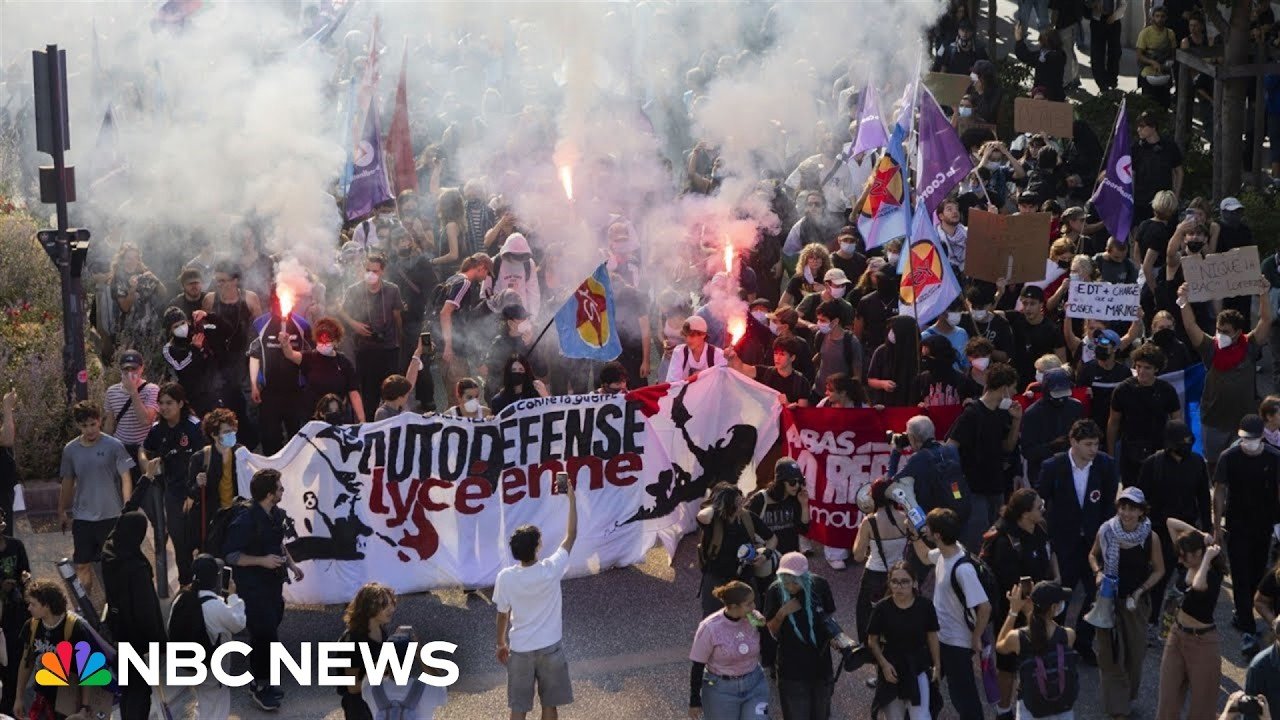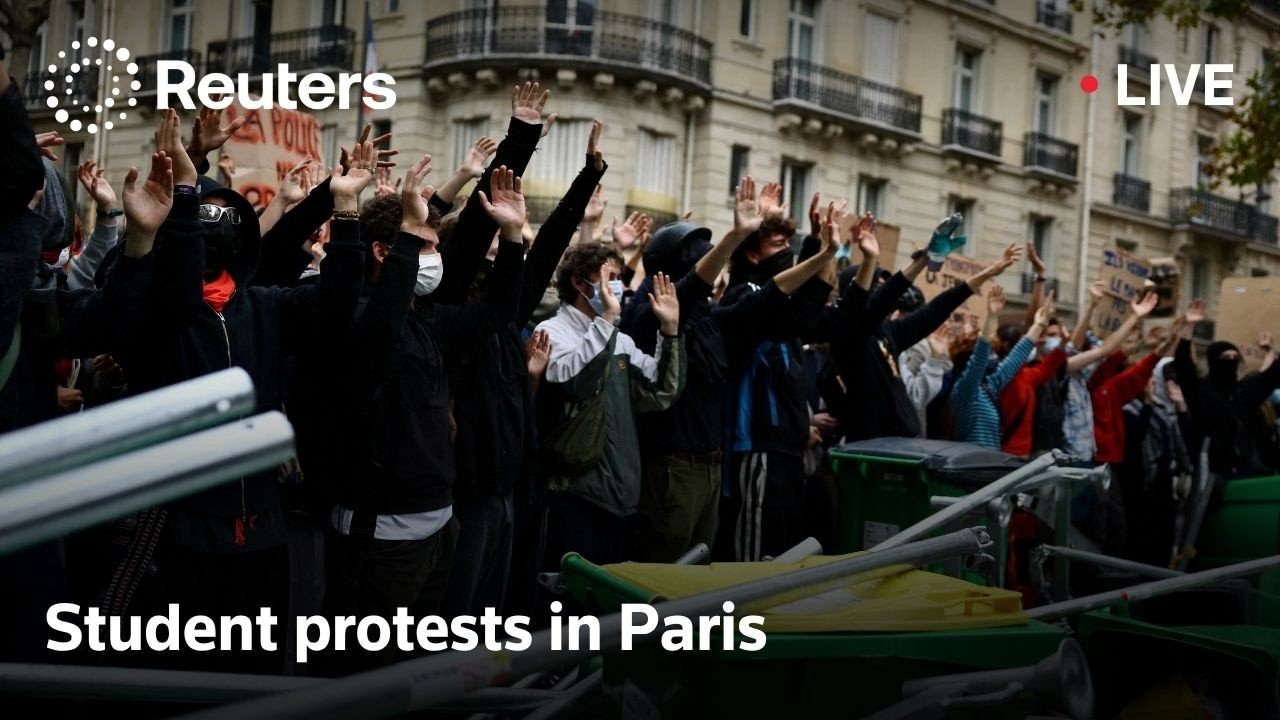

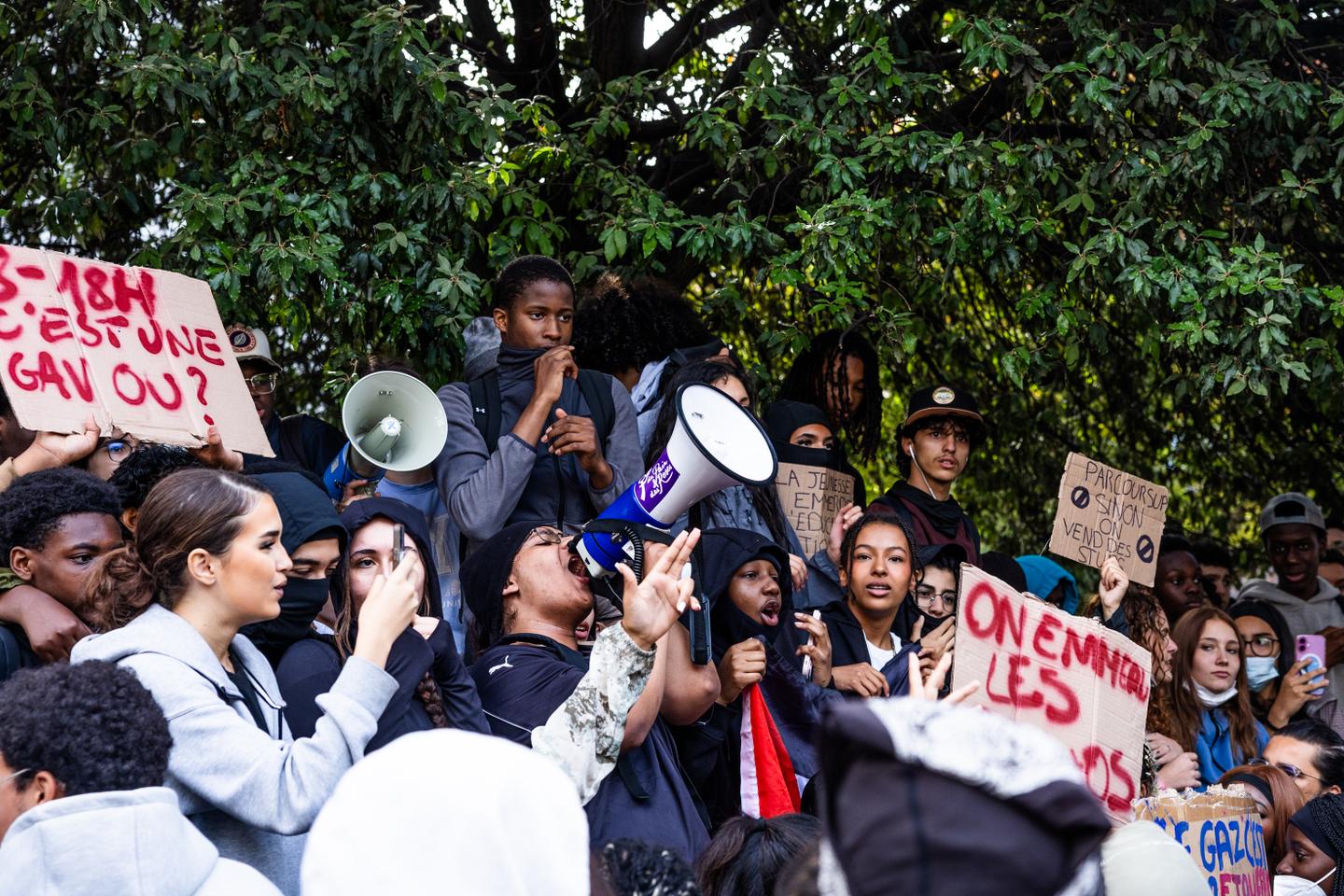




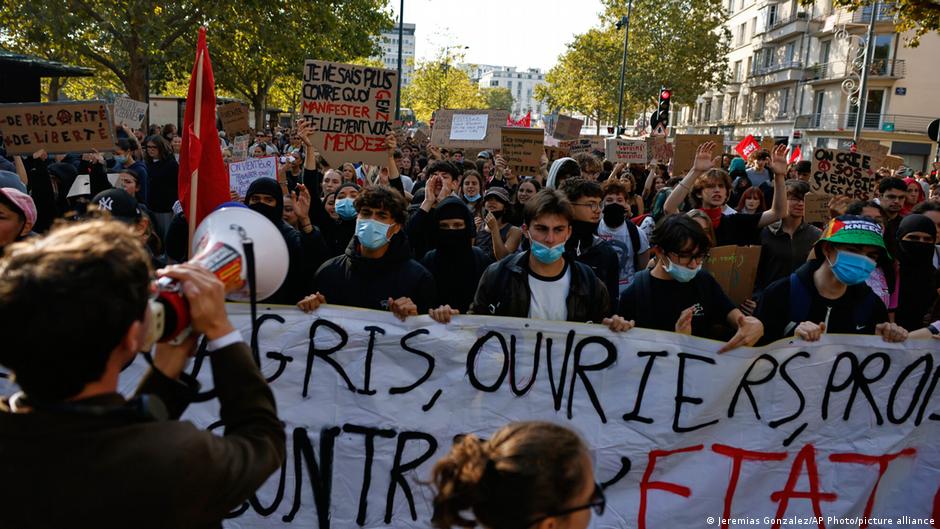



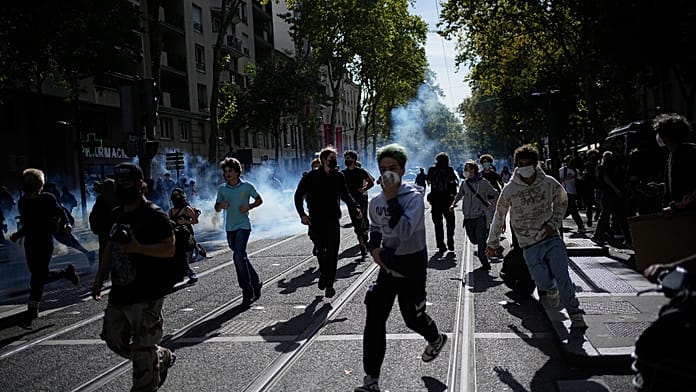
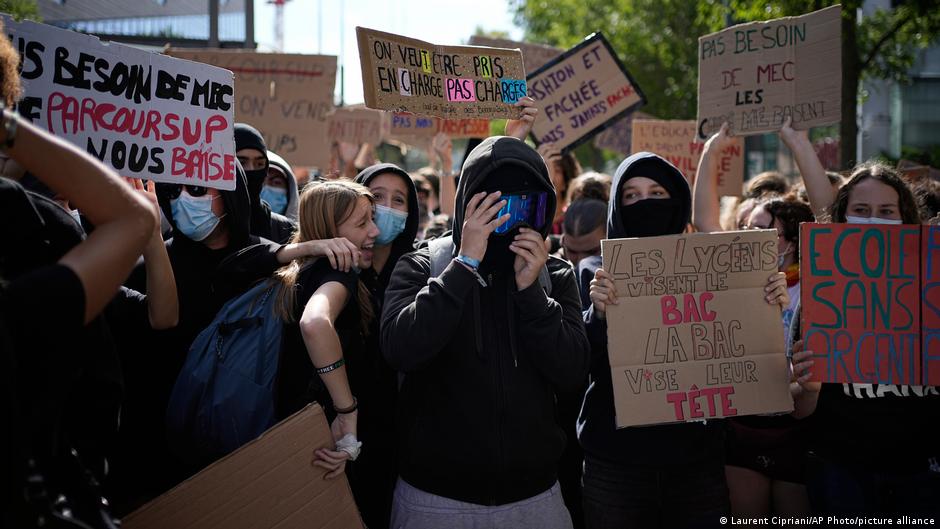





More than a quarter of a million people marched across France on October 6, 2026, in what has become the largest single day of demonstrations in a widening student-led uprising over chronic underfunding of the country’s public education system.
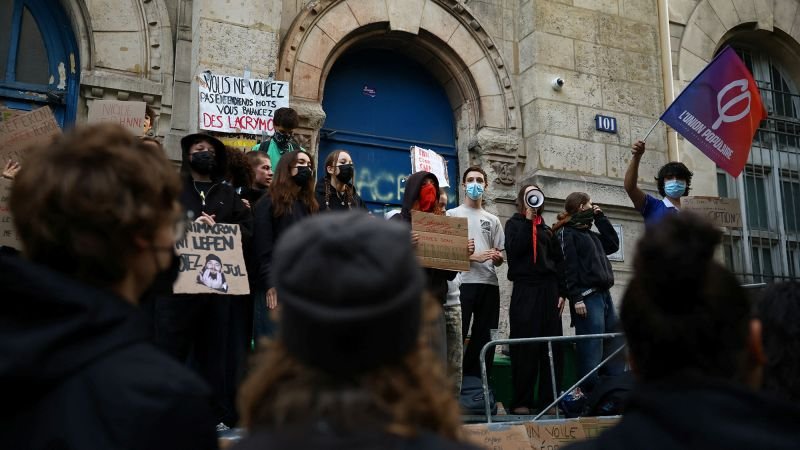
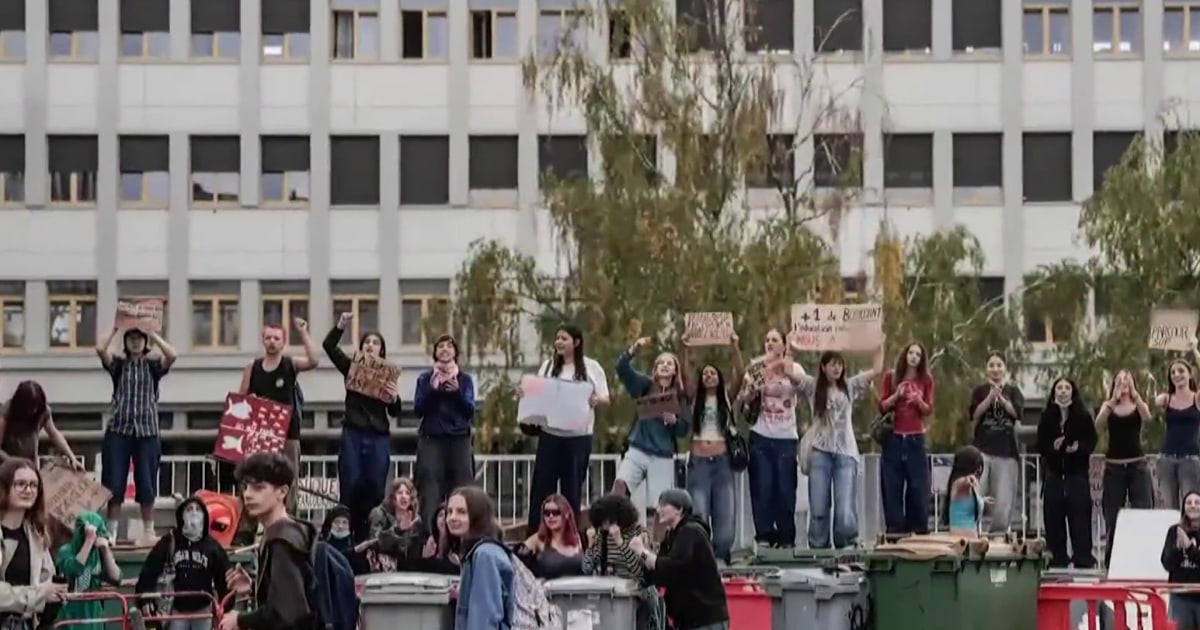
What began in mid-September as localized high school blockades in the Paris suburbs over unfilled teaching posts has snowballed into a nationwide movement drawing high schoolers, university students, parents, teachers, and major trade unions into coordinated protests across more than 40 cities.
Scale of the mobilization
The French Interior Ministry estimated that 256,000 to 266,000 demonstrators took part in Tuesday’s marches, including 56,000 in Paris alone. Organizers and unions put the figures significantly higher, with the CGT union counting 550,000 nationwide and protest coordinators claiming 450,000, including 100,000 in the capital.
By midday on October 6, the Ministry of National Education reported that 564 schools had been disrupted by blockades or protests, while the High School Students Union (Union Syndicale Lycéenne, USL) said around 1,800 lycées were either blockaded or closed for the day.
Protests have now been recorded in roughly 1,020 of France’s 3,700 lycées, with blockades spreading to at least ten universities. Major turnouts were reported in Marseille, Lyon, Rennes, Toulouse, Bordeaux, Nantes, Lille, Nice, Rouen, and Strasbourg, alongside the Paris march.
Parents, teachers and unions join the ranks
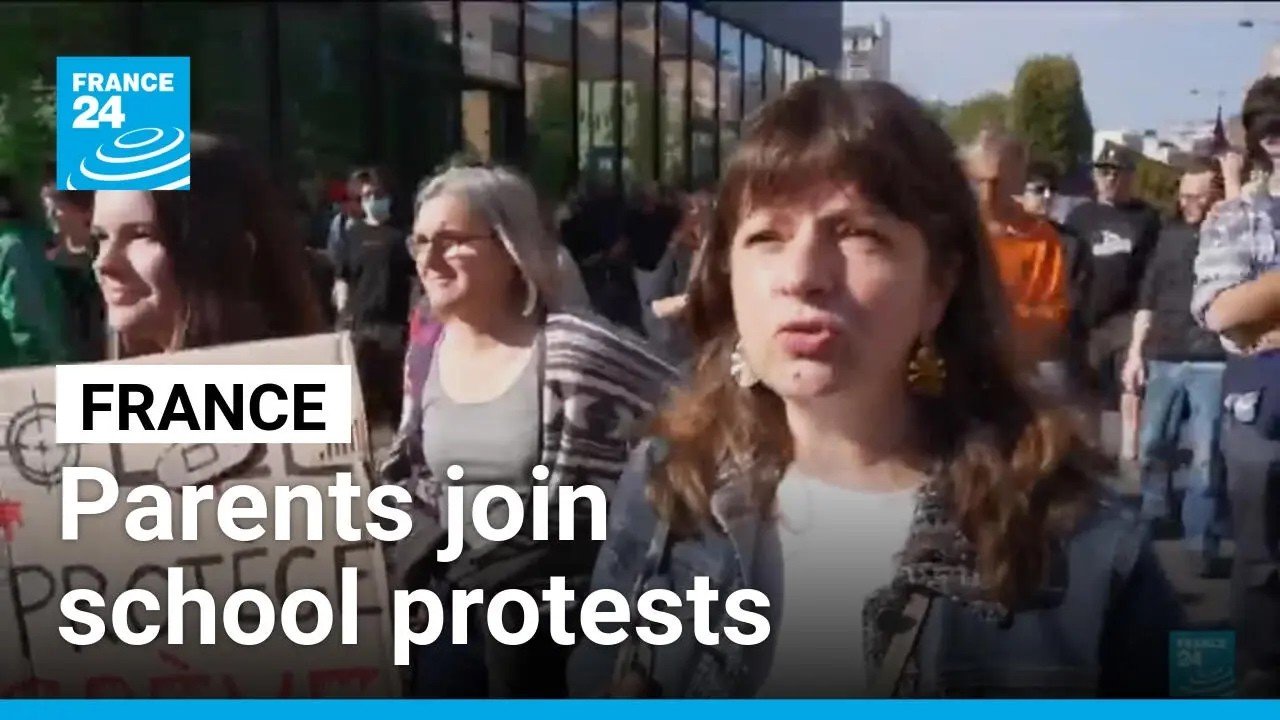
The movement has expanded beyond students. Union members, parents, and teachers took part in mass demonstrations around the country, backing student demands that the government fix learning conditions and invest in crumbling schools.
In Lyon, parents organized local support for the youngsters, and teacher unions and parents’ federations coordinated with high school students for the nationwide day of action. Reporting from the October 6 marches notes that parents walked alongside their children in multiple cities, some explicitly to support the students’ demands and others to help keep protests peaceful amid accusations of police brutality.
Core grievances: A system at breaking point
The movement, organized heavily by the USL and the Union Étudiante (UE), centers on what protesters describe as years of disinvestment in public education. Key demands include:
- Severe staff shortages: Dozens of teaching and support positions remain unfilled across academies, leading to canceled lessons, exploding class sizes, and heavy timetables. The Créteil rectorat told Agence France-Presse that complaints varied by school but consistently cited missing teachers, classes of 32 to 35 pupils, shortages of education assistants, nurses, social workers, and managers, and incidents between pupils and teachers left without follow-up.
- Dilapidated infrastructure: Students point to rodent infestations, broken toilets, and classrooms lacking air conditioning or insulation that regularly exceed 40°C (104°F) during heatwaves.
- Resource deficits and admissions stress: Protesters are calling for greater investment, more higher-education slots, emergency funds to reconstruct crumbling buildings, and fixes to the overloaded undergraduate admissions portal Parcoursup.
Teacher unions had already staged strikes earlier in 2026 against plans to cut roughly 4,000 teaching positions, with unions estimating that up to 25 percent of teachers participated.
Police crackdown and mounting injuries
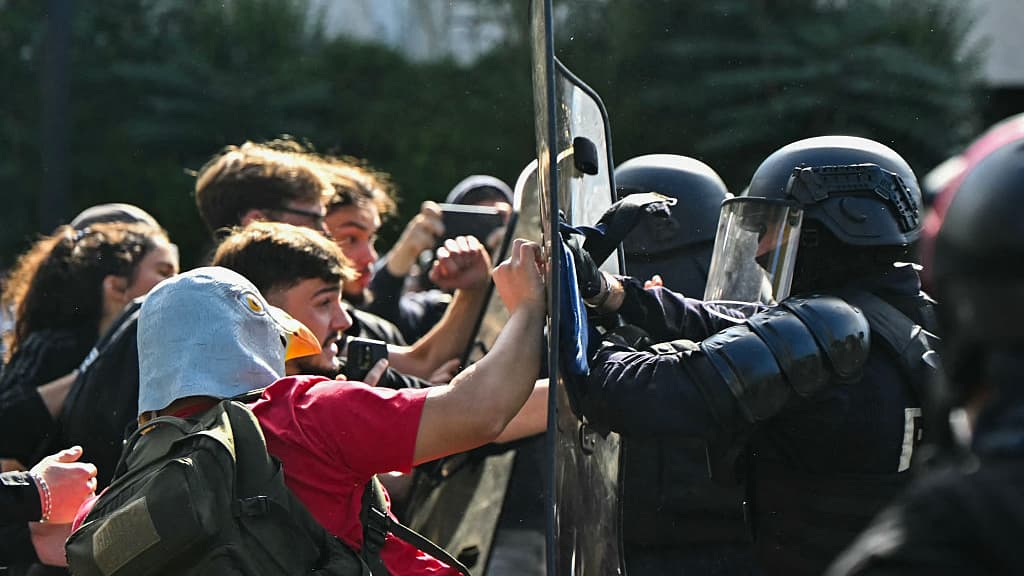
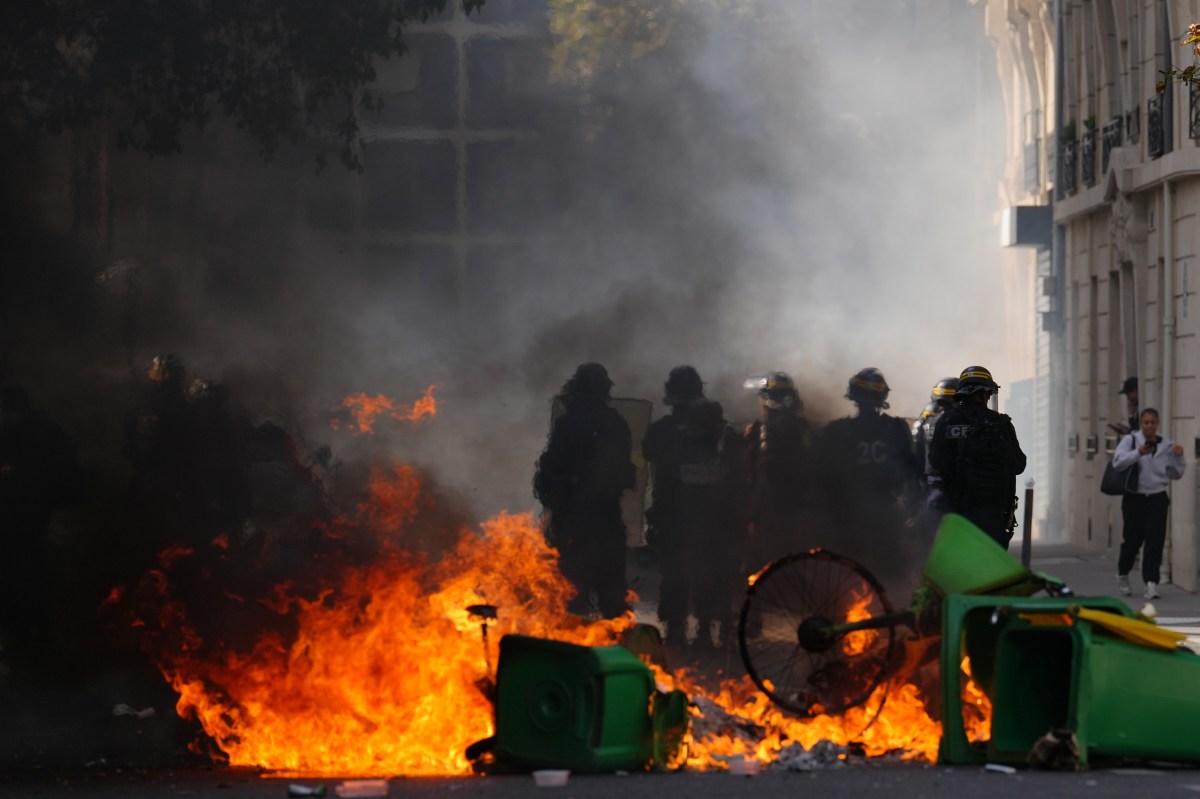
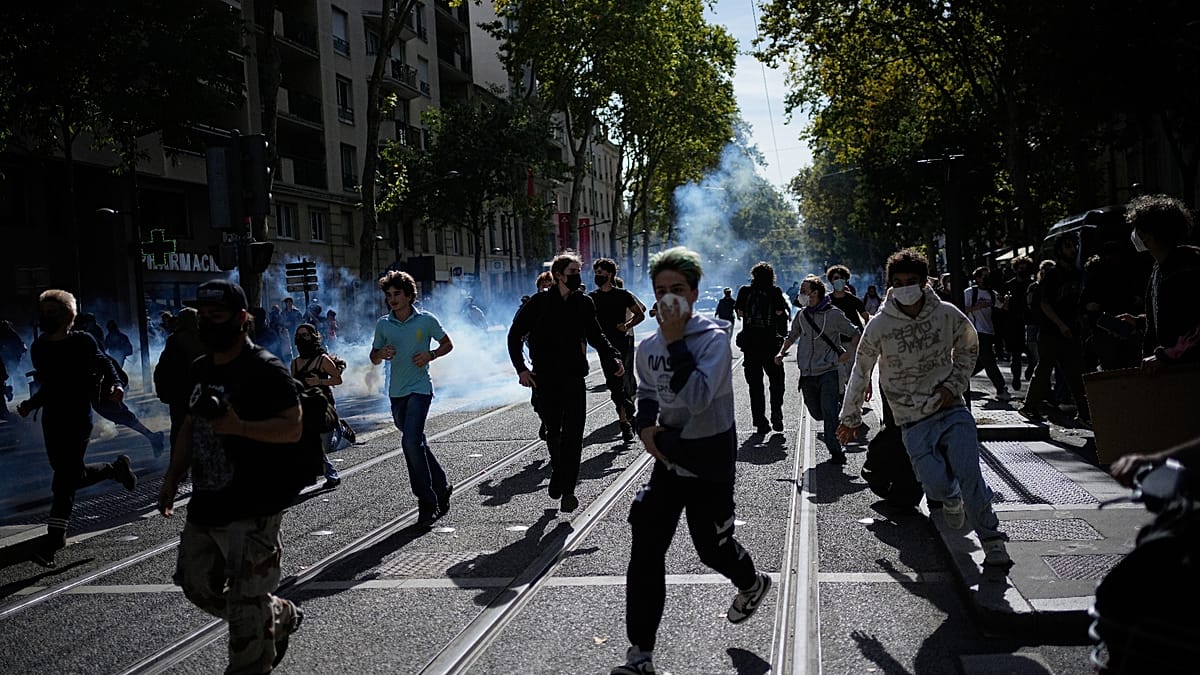
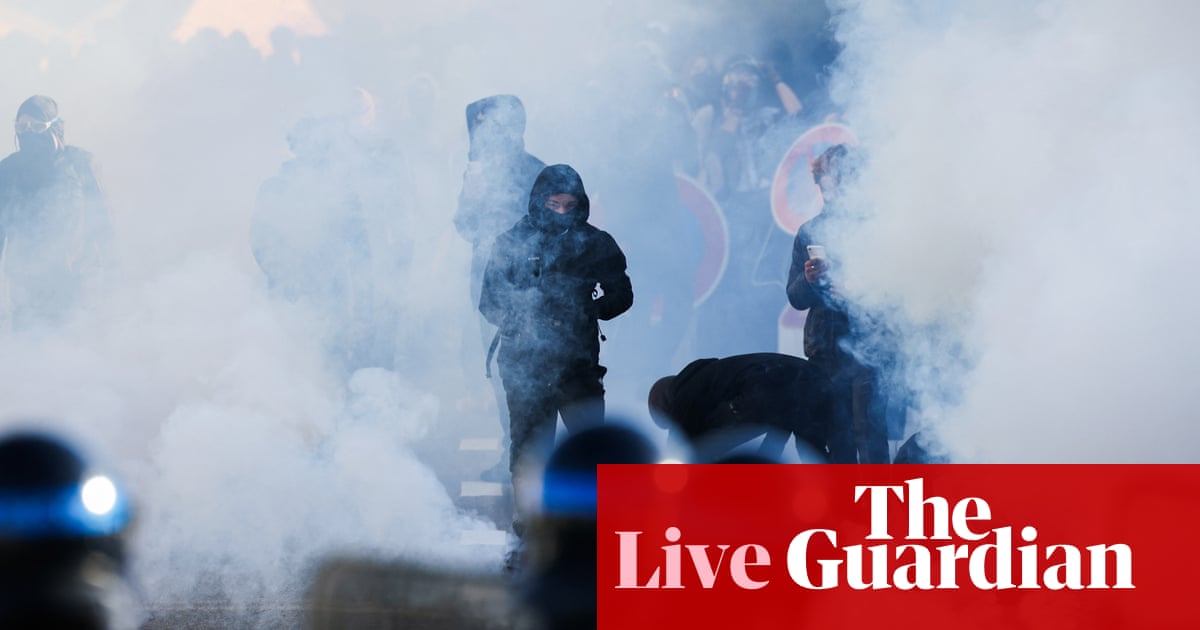
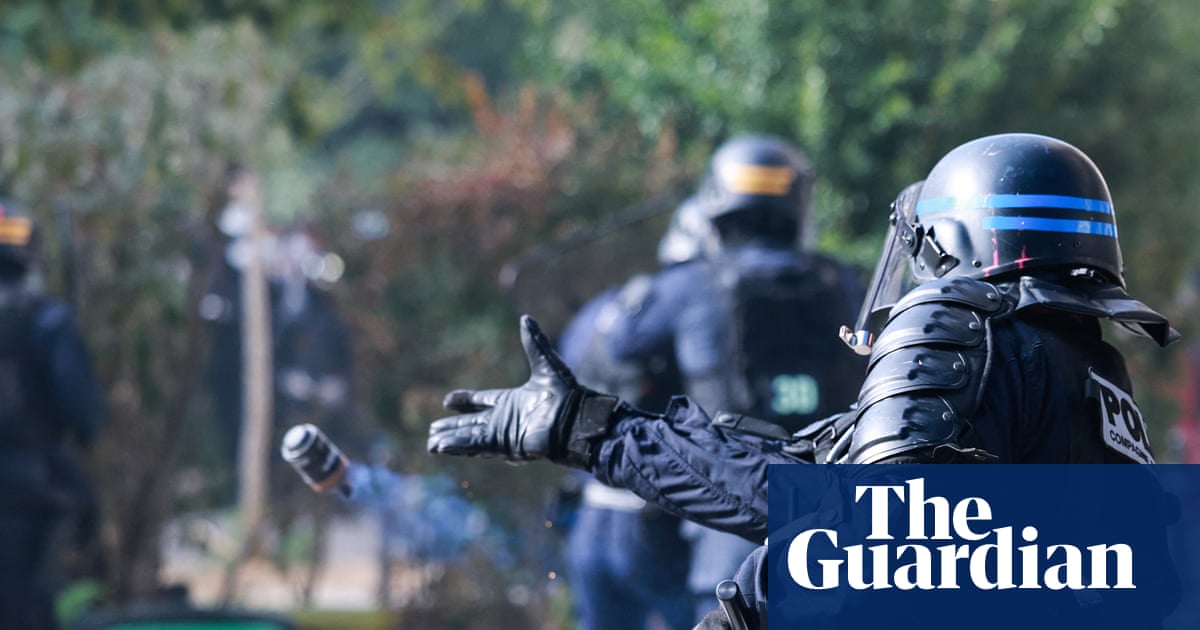
As the protests intensified, clashes with authorities escalated in Paris, Marseille, Lyon, Rennes, Lille, Toulouse, and other cities. Police deployed tear gas, water cannons, batons, and stun grenades against crowds, while some protesters threw projectiles and set fires.
The Interior Ministry reported that more than 6,100 people have been arrested since late September, with 85 percent of those detained identified as minors. At least 715 police officers and 215 teenagers have been injured, according to figures from Prime Minister Sébastien Lecornu’s office.
Several high-profile injuries have drawn sharp criticism from human rights groups:
- A 15-year-old student in Lens lost a hand after a stun grenade exploded when he reportedly picked it up in an attempt to throw it back.
- A 14-year-old in northwest Paris was hit in the face by a tear gas grenade at close range, losing several teeth; a police officer was subsequently charged over the incident.
- Amnesty International France condemned the “disproportionate use of force,” citing reckless discharge of tear gas grenades, rubber bullets (LBDs), and baton strikes against minors.
School closures and the “Internal Democracy” pause
The scale of disruption has forced repeated, nationwide suspensions of classes. On October 6 alone, the Education Ministry said lessons were suspended, fully or partially, in 891 of France’s 3,700 high schools, with 250 of those in the Paris region. Earlier in the week, up to 500 schools had been closed or partially closed on October 5 as security conditions “have not been fulfilled,” and 24 schools had been “burned or ransacked” since the start of the protests, according to Education Minister Édouard Geffray.
In response, Prime Minister Sébastien Lecornu announced that regular high school classes would be suspended toward the end of the week to create what the government called a “period of internal democracy” in each school.
The suspension, ordered on the advice of Geffray, was intended to run at least until the weekend, giving head teachers time to host structured dialogue sessions with students and staff. A half-day of class time was set aside on October 7 for these “internal democratic” dialogues, designed to let students and staff voice their issues in a calmer setting.
Alongside the in-school consultations, the Ministry of National Education launched a nationwide online consultation on the Agora platform, open to all high school students until October 23, where they can anonymously share difficulties, expectations, and proposals to improve their schooling. Geffray said he was addressing protesters’ demands, including on replacement teachers, and would deliver a response by the following week.
Government response and temporary concessions
Facing a deepening political crisis, President Emmanuel Macron convened an emergency meeting with Prime Minister Sébastien Lecornu and key ministers to address the unrest. On October 7, Interior Minister Laurent Nunez announced a temporary suspension of police use of stun grenades at student-led demonstrations as allegations of police brutality mounted.
In parliament and in a televised address, Lecornu described the unrest as the most violent student demonstrations in decades while acknowledging the legitimacy of many grievances. He denied that police had orders to “confront” or crack down on teenage protesters, saying police action is triggered by urban violence and that “accidents happen.” He said the country could not be “indifferent” to students’ concerns and that “the anger of young people does not come from nowhere.”
He promised a government plan to address the crisis by the end of October, covering issues such as substitute teachers, building repairs, school timetables, guidance, and changes to the Parcoursup admissions platform. He called for dialogue “without giving in to politicized manipulations,” and ordered ministers to prepare proposals on replacing missing teachers, improving buildings, and adjusting school-day organization by late October. He also announced a temporary suspension of police use of stun grenades at student-led demonstrations as allegations of police brutality mounted.
La parole lycéenne est précieuse et doit être entendue. Après les manifestations d’hier, place aujourd’hui à un temps de dialogue « Temps Lycéens » dans chaque lycée pour permettre aux élèves d’exprimer leurs difficultés et leurs propositions pour améliorer leur temps à l’école. Ce dialogue se poursuit à l’échelle nationale avec la consultation « Lycéennes, lycéens : vous avez la parole ». En moins de 24h, elle a déjà réuni 30 000 contributions anonymes qui nourriront un plan d’action concret : https://t.co/EWPHQgszAU Le retour en classe et le dialogue doivent aller de pair.
— Sébastien Lecornu (@SebLecornu) October 7, 2026
Student unions, however, have warned that protests will continue until their core structural funding demands are met, with further national days of mobilization planned. The movement has also begun to ripple across borders, with reports of solidarity actions and related student protests in neighboring Belgium.
What’s next
With hundreds of schools still affected by blockades, thousands of arrests, and growing public scrutiny of police tactics, the French government faces pressure to move beyond temporary policing adjustments to substantive investment in staffing, infrastructure, and resources. For now, the students who ignited the movement in the Paris suburbs have succeeded in placing the condition of France’s public education system at the center of national debate.