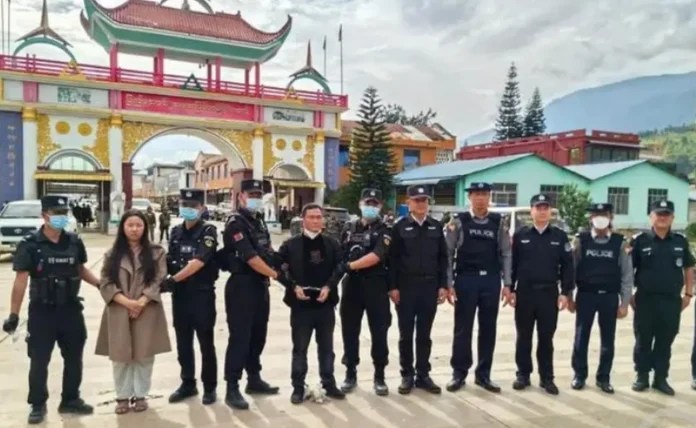
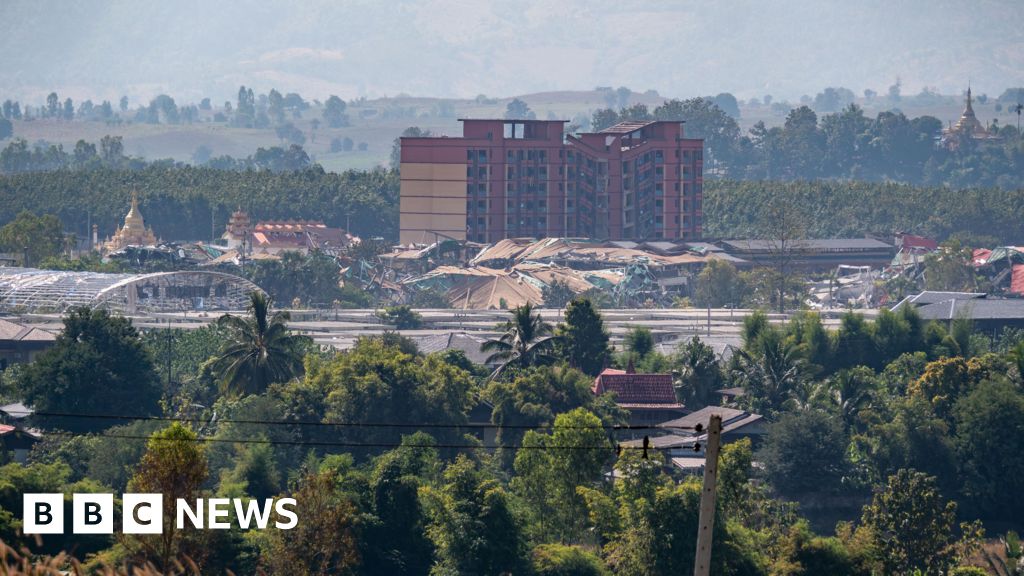
In mid-October 2025, the Myanmar military junta launched a high-profile raid on KK Park, a notorious scam compound located in Myawaddy, Kayin State, along the Thai border.
On October 19, 2025, security forces cleared the complex, identifying over 2,000 workers and roughly 150 buildings. Beginning on October 23, 2025, the military deployed explosives to dismantle the park’s infrastructure. The military demolished 101 buildings within the compound using excavators and controlled explosions. State media broadcast footage of computers being crushed by steamrollers to demonstrate a zero tolerance policy.
By mid-January 2026, state media claimed all 635 buildings across the compound’s three zones had been leveled using controlled explosions and heavy machinery. The military specifically dynamited larger, high-value buildings, including dormitories, a four-storey hospital, and a karaoke complex.
Beyond the buildings, authorities systematically incinerated seized materials, including thousands of computers and mobile phones, to prevent their reuse. Authorities seized approximately 30 Starlink satellite internet devices, thousands of mobile phones, and computers. More than 1,500 people fled across the Moei River into Thailand following the raid. Thai authorities tightened border controls and set up temporary shelters to process the fleeing workers, many of whom were victims of human trafficking.
In 2025, Chinese courts handed down severe sentences to members of the powerful criminal families that controlled northern Myanmar’s scam hubs. These verdicts preceded the high-profile executions that took place in early 2026.
Mass arrests and repatriations
The crackdown led to the detention of over 10,000 foreigners within the broader region by the end of 2025. The October raid at KK Park specifically resulted in over 2,000 arrests.
Detainees included nationals from over two dozen countries, including roughly 645 men, 455 women, and nearly 100 security guards. Large contingents of Chinese, Indian, and Ethiopian nationals were identified.
By late October, the Ministry of Information reported that 9,340 individuals had already been repatriated. For example, 240 Indian suspects were declared persona non grata and flown home on an Indian military transport plane.
Skepticism and criticisms
Despite the military’s claims of success, many experts and local residents viewed the operation as a public relations stunt for several reasons.
Reports indicated that senior scam center staff were evacuated before the raid, and the military allegedly only took control of parts of the sprawling complex. Analysts suggest the raid was a response to mounting pressure from China, the junta’s key ally, to curb cybercrime affecting its citizens. It was also timed ahead of planned elections to bolster the regime’s international image.
Opposition groups, such as the Karen National Union, accused the military of destroying evidence including phones and computers to hide their own long-standing links to and profits from these syndicates.
Ongoing activity
As of late 2025, many scam operations reportedly continued in more remote or less visible parts of the border, or even within undamaged sections of KK Park where Starlink dishes were still visible on rooftops.
Independent monitors and Myanmar Witness provided evidence that the destruction was less comprehensive than the junta claimed. Satellite imagery analyzed in late November showed that many core structures remained standing, and critics argue the detonations were a publicity stunt to appease China while scam leaders had already relocated to other hubs like Shwe Kokko.
Why it matters
The KK Park raid represents the most visible crackdown on Southeast Asia’s sprawling cyber-scam industry, which has trapped thousands of workers in forced labor and fraud operations. While the Myanmar junta portrayed the operation as a decisive victory, skepticism about its completeness raises questions about whether scam networks have been truly dismantled or simply displaced.
The timing, coinciding with Chinese pressure and upcoming elections, suggests the raid serves political purposes beyond genuine anti-crime efforts. With scam operations continuing in less visible locations and evidence of destruction being less comprehensive than claimed, the fight against cyber-scam compounds in Myanmar remains far from over.


Read also:
2025-26 Myanmar General Elections
2025 Myanmar Earthquake