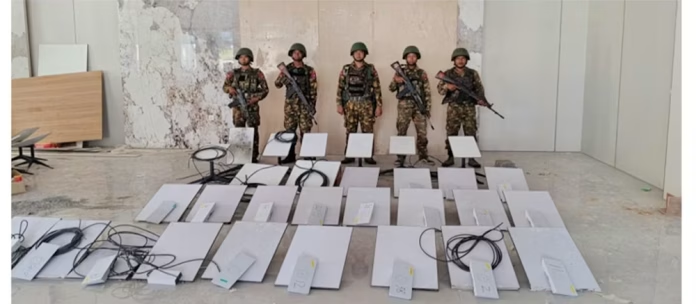
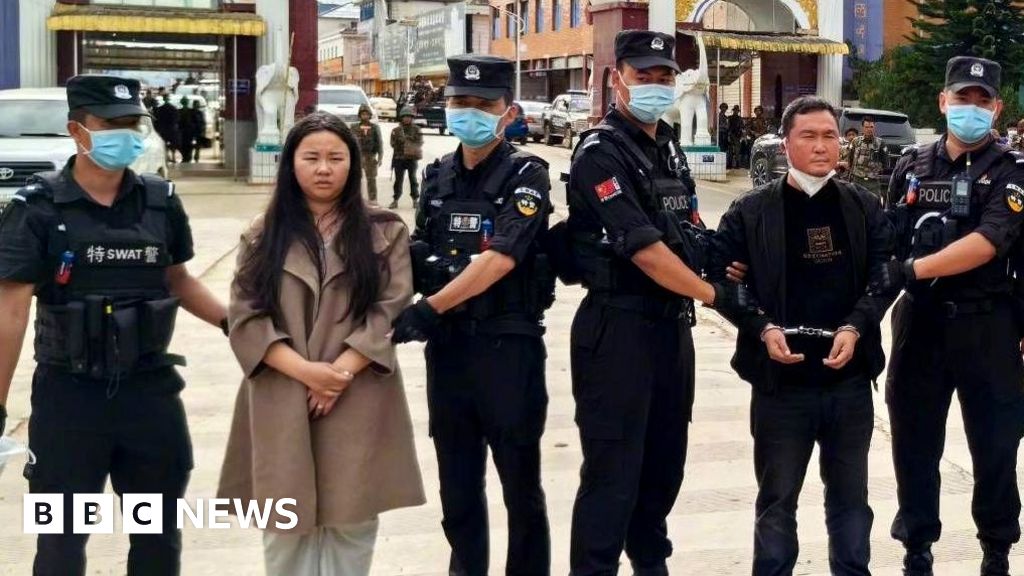
In early 2026, China carried out high-profile executions of core members of two powerful Myanmar-based crime families, the Ming and Bai clans, in a move that marked what Beijing presented as a decisive blow against multibillion-dollar cyberscam networks operating along the border.
The crackdown
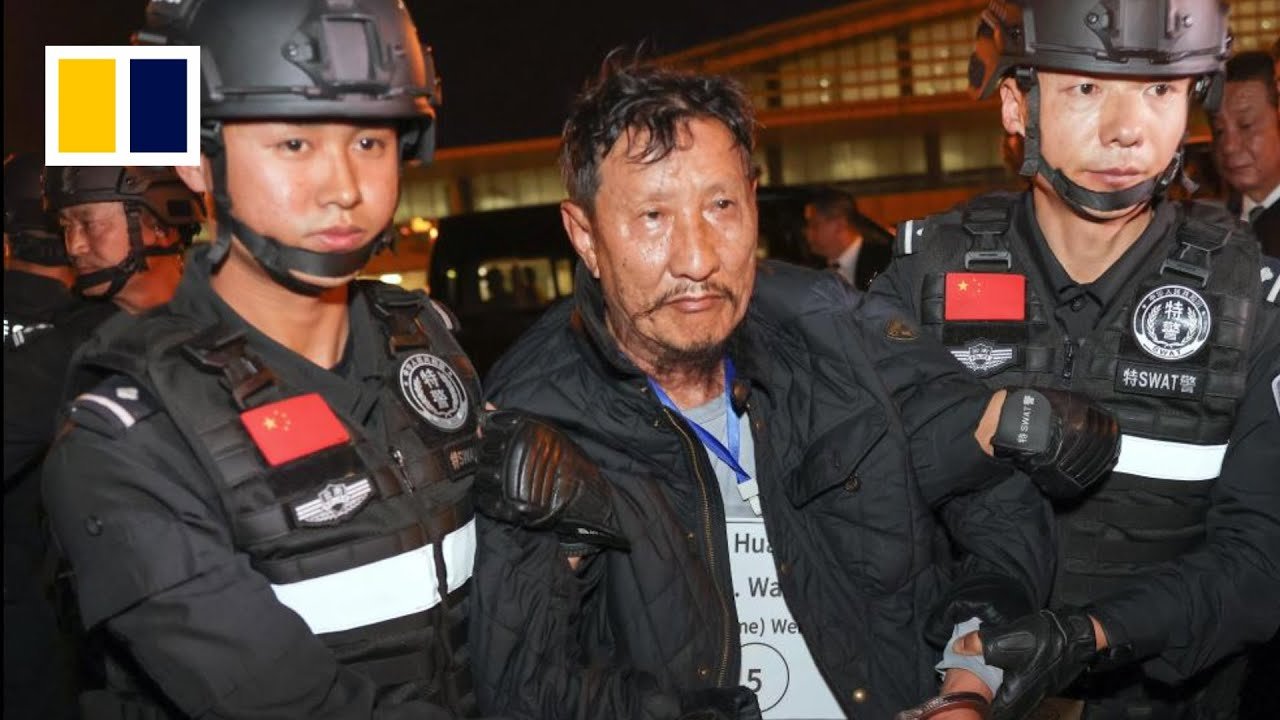
Chinese authorities executed 11 members of the Ming syndicate on January 29 and four more members of the Bai family on February 2, according to widely reported accounts. The Ming family had been convicted of murder, illegal detention and fraud tied to more than 10billion yuan, or about $1.4billion, while the Bai family was accused of running 41 scam compounds that allegedly defrauded victims of 29billion yuan, or about $4.2billion.
Among those executed were Ming Guoping, a son of the family patriarch, and Ming Zhenzhen, his granddaughter. The Ming family’s patriarch, Ming Xuechang, died by suicide in custody in 2023 before he could be extradited. On the Bai side, Bai Yingcang was among those put to death, while patriarch Bai Suocheng had already been sentenced to death in late 2025 and later reportedly died of illness before the sentence could be carried out.
Scam empires
The families were part of a wider network of Chinese-descended criminal syndicates that had turned Myanmar’s northern borderlands into a hub for telecom fraud, trafficking and other criminal activity. The so-called four families of Kokang — the Mings, Bais, Lius and Weis — controlled scam centers in and around Laukkaing, using private militias to protect thousands of trafficked workers forced into “pig-butchering” scams.
Their operations blended online fraud, gambling, drugs and intimidation, and flourished in lawless territory where local militias and Myanmar’s junta offered protection or looked the other way. The industry generated enormous profits and became one of the region’s most notorious criminal economies.
How it unraveled
The collapse of these networks accelerated in late 2023, when Beijing, frustrated by the Myanmar military’s inaction, quietly backed an offensive by the Three Brotherhood Alliance. The insurgent coalition overran the area and later handed key crime figures over to Chinese police.
Since then, China has pursued an aggressive campaign to dismantle the scam economy, repatriating thousands of suspects and using the executions as both punishment and warning. Chinese officials have framed the crackdown as a signal that anyone who harms Chinese citizens abroad will pay the price, regardless of where they are.
Domestic reaction
Inside China, the executions were presented as a major victory. State media and the Ministry of Public Security described the syndicates as a social cancer and praised the punishment as a firm response to crimes that had ruined countless lives.
Public reaction on Chinese social media was also largely supportive, with many users welcoming the crackdown on scams that had targeted Chinese victims. Authorities amplified that message through televised confessions and official documentaries designed to underscore the severity of the crimes and the reach of the state.
Myanmar reaction
In Myanmar, reactions were more mixed. Some ethnic resistance groups saw the downfall of the syndicates as a setback for the junta’s financial networks, since the crime families had long benefited from protection tied to military power.
At the same time, some civilians expressed skepticism, including doubts about whether the executions had actually taken place. Others viewed the situation cynically, as one predatory power punishing another after the families became too much of a liability. Longstanding resentment also persists over the Myanmar military’s years of protection for the syndicates before Chinese pressure made that arrangement untenable.
Human rights concerns
Outside the region, human-rights groups criticized the use of capital punishment and pointed to the lack of transparency in China’s judicial process. They argued that the speed and secrecy of the executions raised serious due-process concerns.
Regional security analysts noted that while the Ming and Bai networks may have been dismantled, the broader scam economy remains highly profitable and adaptable. As pressure increases in one location, operations can shift to other parts of Myanmar, Laos or Cambodia.
What comes next
The crackdown has continued, with trials involving members of the Wei and Liu families still under way. Analysts expect those cases to end with similar death sentences, reinforcing Beijing’s zero-tolerance message.
In early February, a joint operation involving China, Myanmar and Thailand also helped dismantle the KK Park complex in Myawaddy. More than 630 buildings inside the compound were demolished with controlled explosions and heavy machinery, and on February 10 China announced the repatriation of more than 1,500 additional suspects from the site.
The raids were carried out through a ministerial-level mechanism created in early 2025 to bypass local corruption and target border zones controlled by the Karen State Border Guard Force. Even so, reports suggest that tens of thousands of workers remain in other compounds along the border, while some syndicates have simply moved operations elsewhere, including Cambodia.


Read also:
Myanmar’s military destroys cyber scam compound linked to Chinese mafia