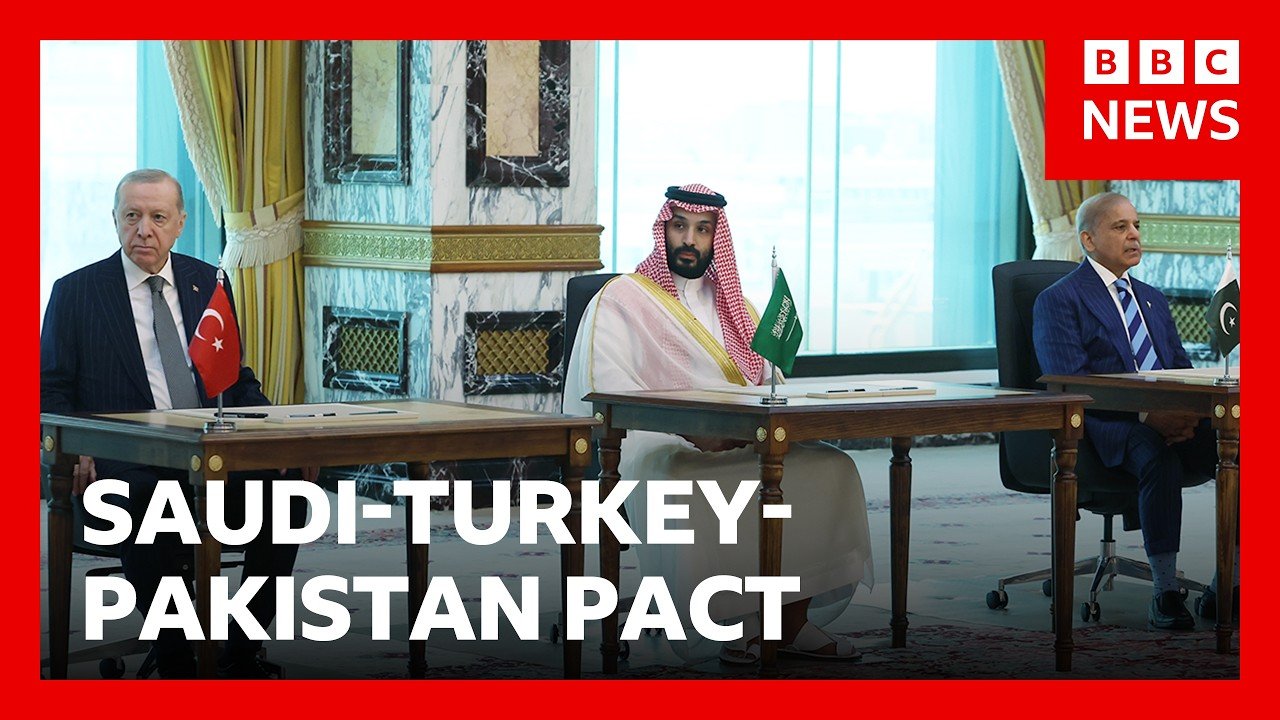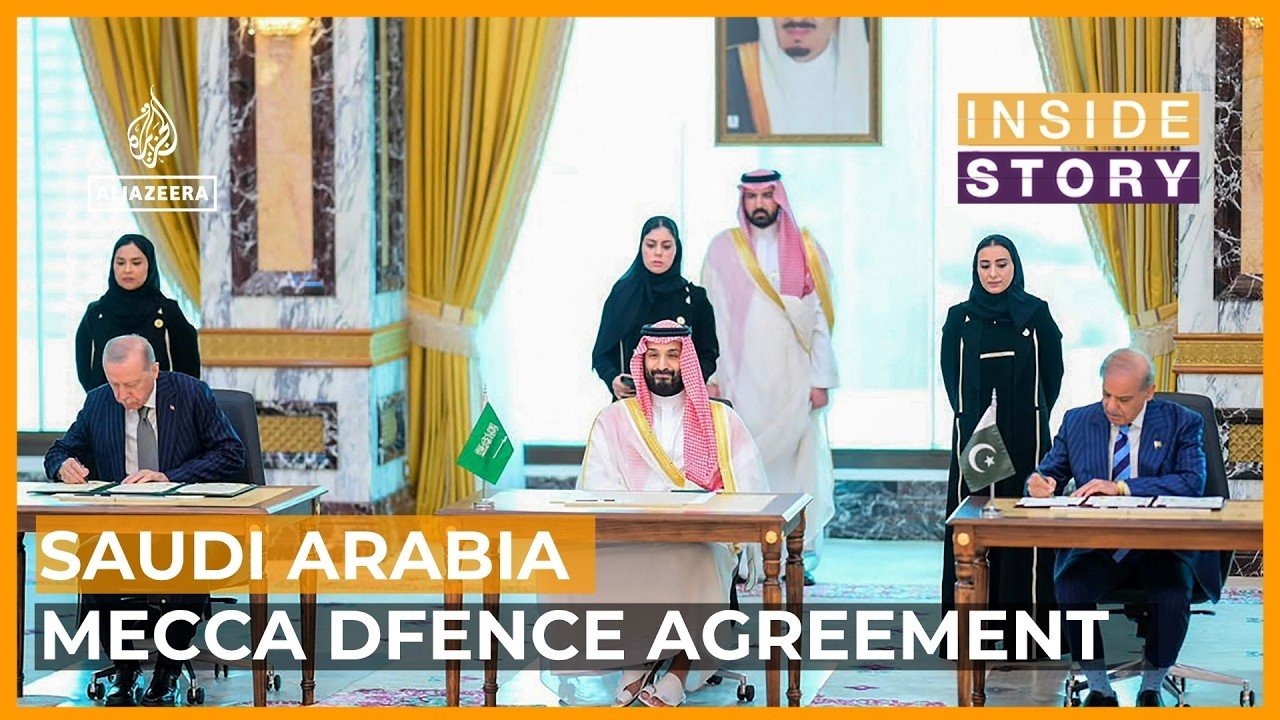






Saudi Arabia, Türkiye and Pakistan have signed a trilateral defence agreement that could reshape security cooperation across the Middle East, the eastern Mediterranean and South Asia.
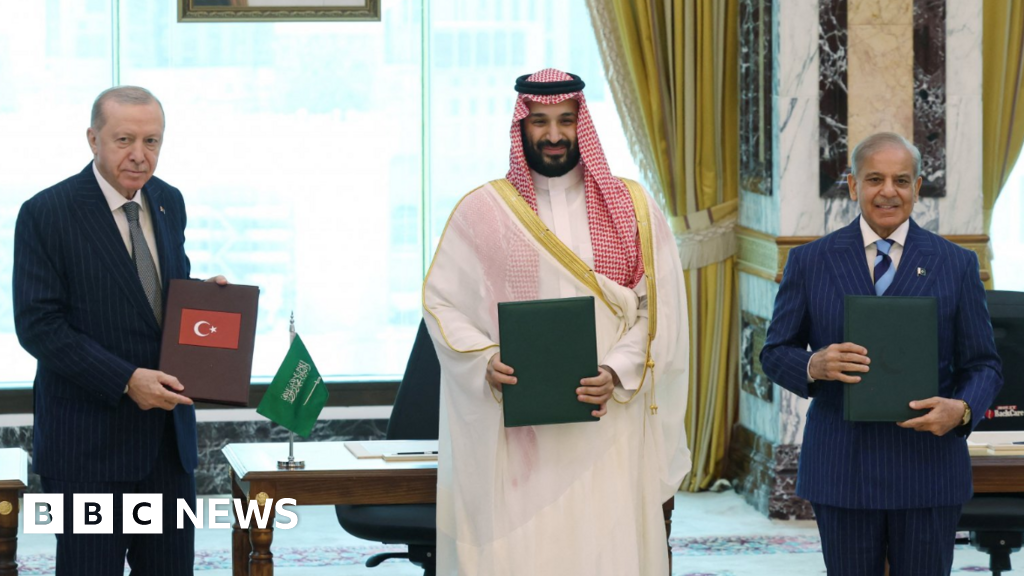
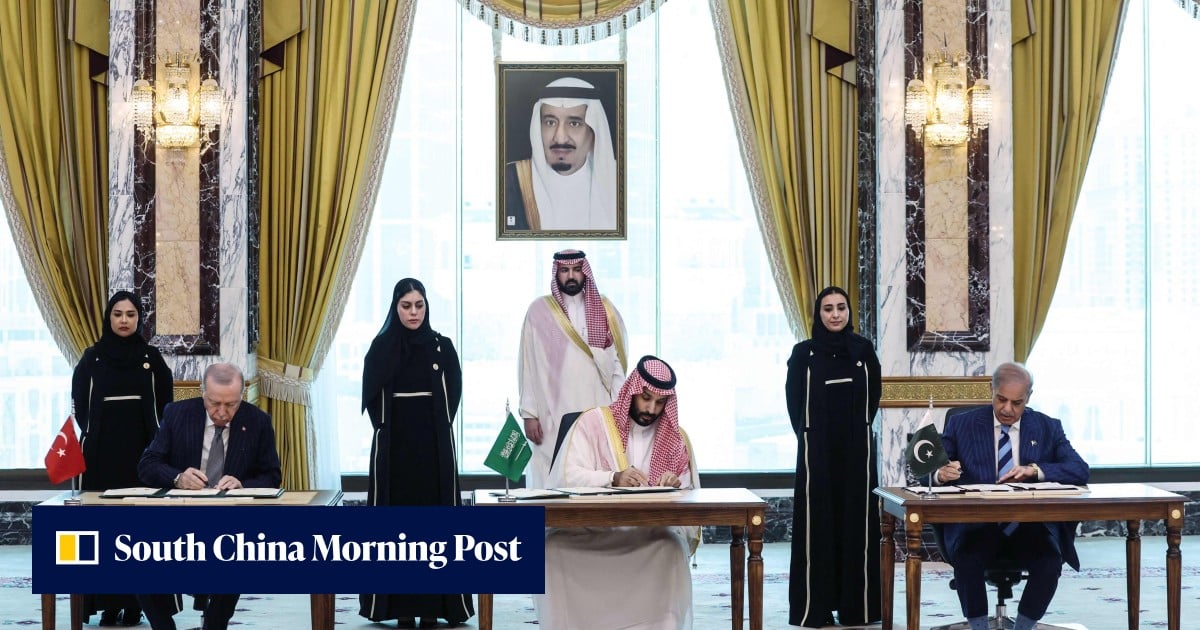
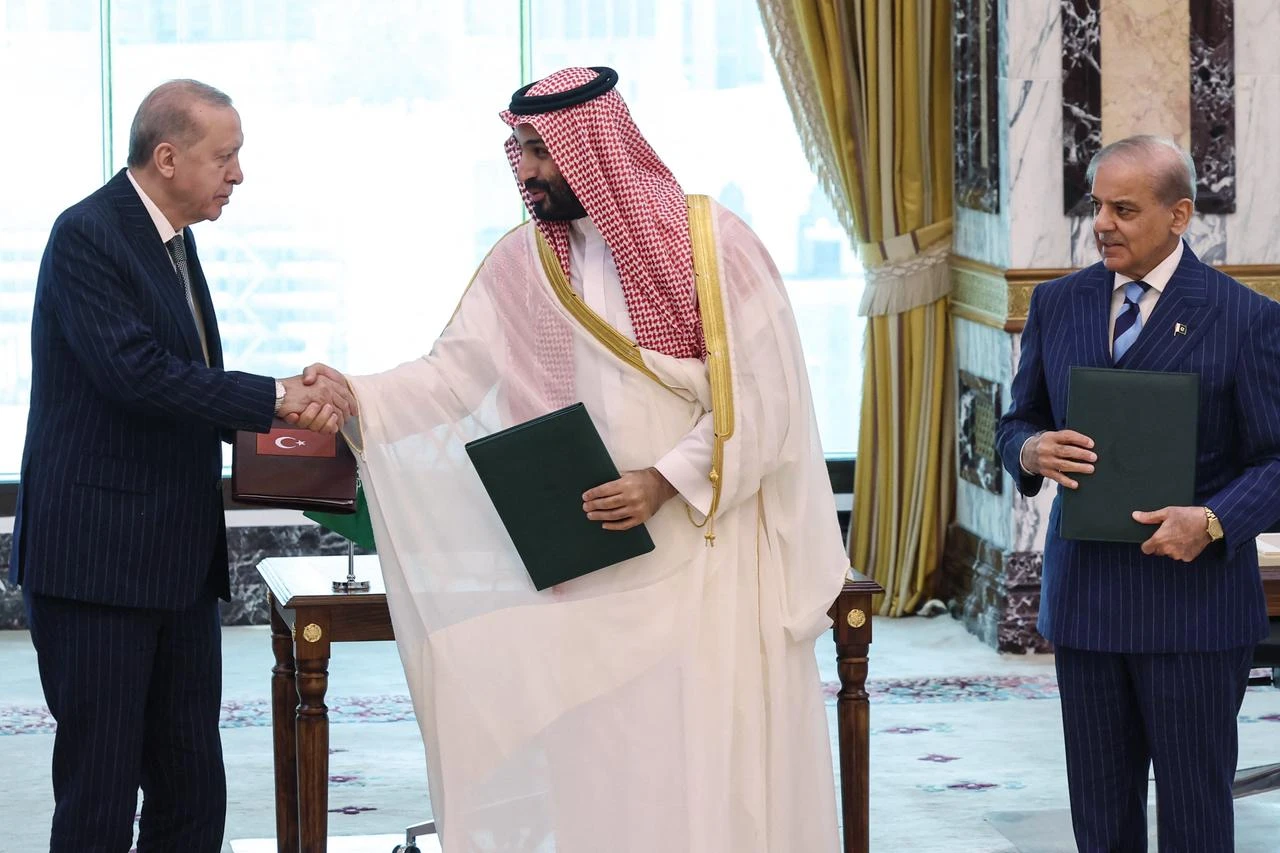
The Mecca Joint Defence Agreement, signed in Mecca on August 7 by Saudi Crown Prince Mohammed bin Salman, Turkish President Recep Tayyip Erdoğan and Pakistani Prime Minister Shehbaz Sharif, states that an armed attack against any one of the three countries will be regarded as an attack against all three. The agreement is intended to strengthen collective deterrence and deepen defence cooperation among the signatories.
The pact does not name an adversary. Turkish officials have repeatedly described it as defensive and said it is not directed against Iran or any other specific country. Nevertheless, its signing comes amid a major regional conflict involving Iran, Israel and the United States, as well as missile and drone attacks that have exposed the vulnerability of Gulf cities, energy infrastructure and shipping routes.
A three-country security framework
The agreement establishes a framework for regular political and military coordination. According to Turkish Foreign Minister Hakan Fidan, the arrangement will include meetings of the three countries’ foreign and defence ministers, consultations among military chiefs, political and military committees, and a permanent secretariat based in Saudi Arabia.
The publicly reported areas of cooperation include:
- Intelligence-sharing and joint threat assessments.
- Military training and exercises.
- Logistical coordination.
- Greater interoperability among the three armed forces.
- Cooperation between defence industries.
- Potential joint development and production of military technologies.
The pact’s collective-defence language has been compared with Article 5 of the North Atlantic Treaty, under which an attack on one NATO member is treated as an attack on all. However, the comparison has limits. The Mecca agreement does not publicly establish an integrated military command, automatic troop deployments or a common defence budget.
Fidan has said that a country under attack would need to formally request assistance. The response could range from intelligence and logistical support to the deployment of military forces, depending on the nature and severity of the threat.
That distinction is central to understanding the agreement. It creates a political commitment to mutual defence, but the public text does not yet specify precisely what each country would be required to do in a crisis.
Complementary strategic assets
The pact brings together three countries with different but potentially complementary capabilities.
Saudi Arabia contributes financial resources, energy influence and strategic geography. Its territory borders critical Gulf waterways and lies close to the Red Sea, while its oil facilities and major development projects have become increasingly important targets in regional security calculations.
Türkiye provides a large, experienced military, NATO-standard planning practices and a rapidly expanding defence industry. Turkish drones, missiles, naval systems and electronic-warfare technologies have become important components of Ankara’s foreign policy and defence exports.
Pakistan brings a large standing military, extensive operational experience and deep defence ties with Saudi Arabia. It is also the only nuclear-armed Muslim-majority state, although there is no public evidence that the agreement extends a Pakistani nuclear guarantee or “nuclear umbrella” to Saudi Arabia or Türkiye.
The three countries are not starting from zero. Saudi Arabia and Pakistan signed a bilateral mutual-defence agreement in September 2025, while Riyadh and Ankara have expanded defence-industrial cooperation. The new pact adds Türkiye’s military and technological weight to an already established Saudi-Pakistani security relationship.
Pakistan’s defence relationship with China also adds another layer of strategic complexity. Pakistani military equipment and infrastructure are closely connected to Chinese technology, meaning that future cooperation under the Mecca framework could have implications beyond the three signatories.
Regional turmoil and strategic autonomy
The agreement was accelerated by a broader reassessment of regional security. Saudi Arabia and other Gulf states have long relied heavily on the United States for air defence, intelligence, maritime security and military support. Recent attacks and uncertainty over Washington’s willingness to act as the region’s principal security guarantor have encouraged Gulf governments to seek additional partnerships.
The Mecca pact appears designed to provide a layer of strategic insurance rather than replace existing alliances. All three signatories maintain important relationships with Washington, while Türkiye remains a NATO member. Turkish officials have also stressed that the new arrangement does not cancel the countries’ existing international agreements.
For Riyadh, the agreement offers a way to strengthen deterrence while protecting its economic transformation programme and critical energy infrastructure. For Ankara, it creates a larger role in Gulf security and may open new markets for Turkish defence companies. For Islamabad, it converts its longstanding military relationship with Saudi Arabia into a wider diplomatic and strategic partnership.
The pact therefore reflects a common desire for greater regional self-reliance, but not necessarily a complete break with the United States or other external powers.
Iran, Israel and the limits of ambiguity
Although Iran is not named in the agreement, analysts widely view the Iranian military threat and the broader network of regional armed groups as part of the strategic context surrounding the pact. Saudi Arabia has been exposed to missile and drone threats, while the conflict has also affected shipping, energy markets and access through regional waterways.
Turkish officials have sought to prevent the pact from being interpreted as an anti-Iran alliance. Fidan said the three countries do not regard a specific state as an adversary unless it takes hostile action against them. This position allows Türkiye to preserve room for diplomacy with Tehran while giving Saudi Arabia and Pakistan a stronger collective deterrent.
The agreement’s ambiguity may be deliberate. It allows the three governments to cooperate without publicly committing to a confrontation with Iran, Israel or any other power. But ambiguity can also create uncertainty during a crisis, particularly if one member believes it has been attacked indirectly.
The public terms do not clearly explain how the pact would apply to:
- Attacks by non-state groups such as Houthi forces.
- Cyberattacks or sabotage against critical infrastructure.
- Proxy attacks conducted by a state through an allied militia.
- Border clashes or limited military incidents.
- Internal unrest or attacks that do not clearly qualify as external aggression.
Those questions could determine whether the agreement develops into a functioning alliance or remains primarily a political declaration.
Implications for India, the United States and China
The pact also extends the security map linking the Gulf with South Asia. For India, Pakistan’s new framework with Saudi Arabia and Türkiye could complicate future India–Pakistan crises. New Delhi may be concerned that uncertainty over the meaning of an “attack” on Pakistan could affect the calculations of Riyadh and Ankara.
At the same time, Saudi Arabia has strong energy, investment and diplomatic ties with India. Riyadh has an incentive to avoid importing South Asian rivalry into the Gulf, meaning that India’s response is likely to combine vigilance with continued engagement rather than open confrontation.
For the United States, the pact could offer both an opportunity and a warning. Better coordination among the three countries could improve regional air defence, maritime surveillance and burden-sharing. But a more capable regional security network could also reduce Washington’s influence if Riyadh, Ankara and Islamabad begin coordinating policies on Iran, Israel, China or the use of force without American leadership.
China is not a signatory, but its presence is difficult to ignore. Pakistan’s military relationship with Beijing, combined with Türkiye’s defence-technology ambitions and Saudi Arabia’s financial capacity, could eventually create opportunities for Chinese-origin systems to interact with Turkish and Saudi technologies. Whether that happens will depend on the pact’s future procurement, intelligence and industrial arrangements.
The agreement may also matter to countries beyond the immediate region. Conflict in the Gulf affects fuel prices, insurance costs, commercial shipping and access through the Strait of Hormuz, the Bab al-Mandab and the Red Sea. In that sense, the pact is not only a Middle Eastern development; it could influence the wider Indian Ocean security environment.
A pact still waiting for implementation
The Mecca agreement is more institutionalised than a symbolic joint statement, but it remains less developed than NATO or other mature military alliances. Its significance will depend on what happens next.
A permanent secretariat, regular exercises, shared contingency plans, logistics agreements and integrated surveillance would indicate that the three countries intend to build a durable security organisation. By contrast, occasional ministerial meetings and defence-industry deals would suggest a looser political partnership.
The agreement also reportedly leaves the door open to additional members. Expansion could increase its military and diplomatic weight, but it could also make decision-making more difficult and expose disagreements among countries with different relationships with Iran, Israel, China and the United States.
For now, the pact is best understood as a strategic bridge between three theatres that have traditionally been analysed separately. It links Gulf energy security, Turkish military technology and Pakistani manpower and strategic depth under a shared political framework.
The Mecca Joint Defence Agreement does not yet create an automatic military response, a common command structure or a nuclear umbrella. But it sends a clear message: Saudi Arabia, Türkiye and Pakistan are seeking greater control over their security environment at a time when regional governments are less willing to rely on a single outside power.
Its ultimate importance will be measured not by the ceremony in Mecca, but by whether the three signatories can turn mutual assurances into operational military cooperation.