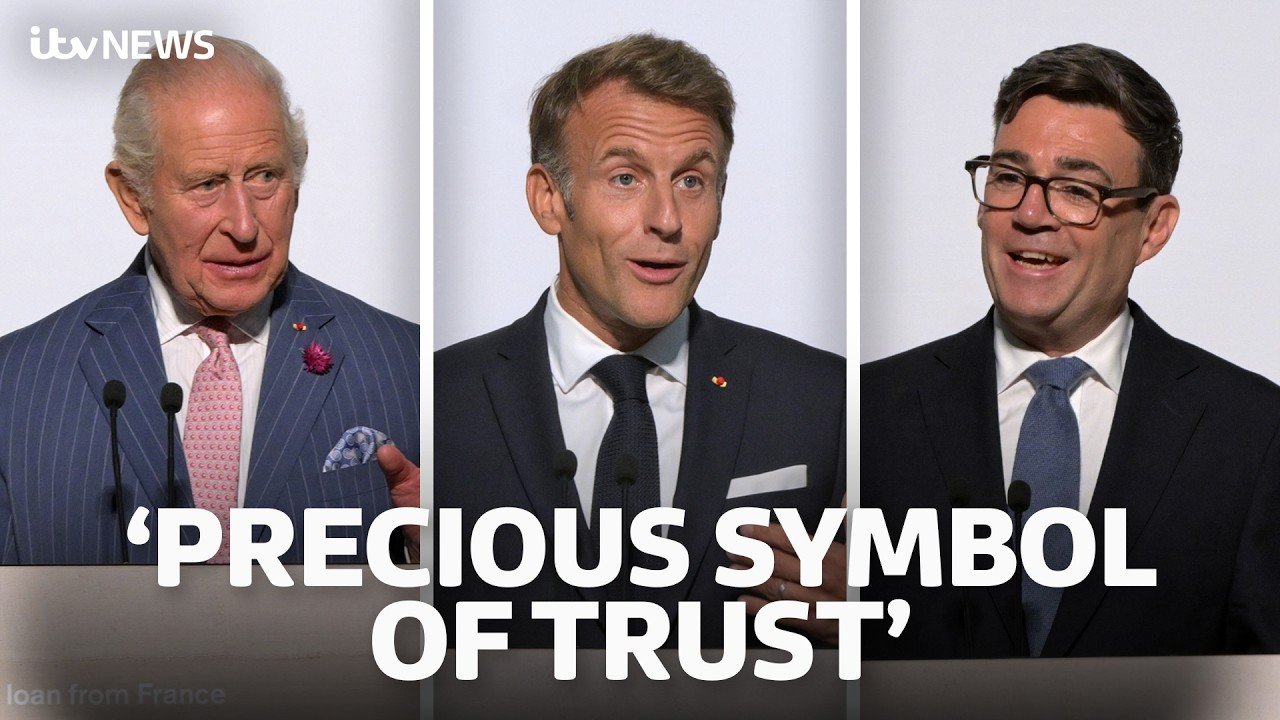


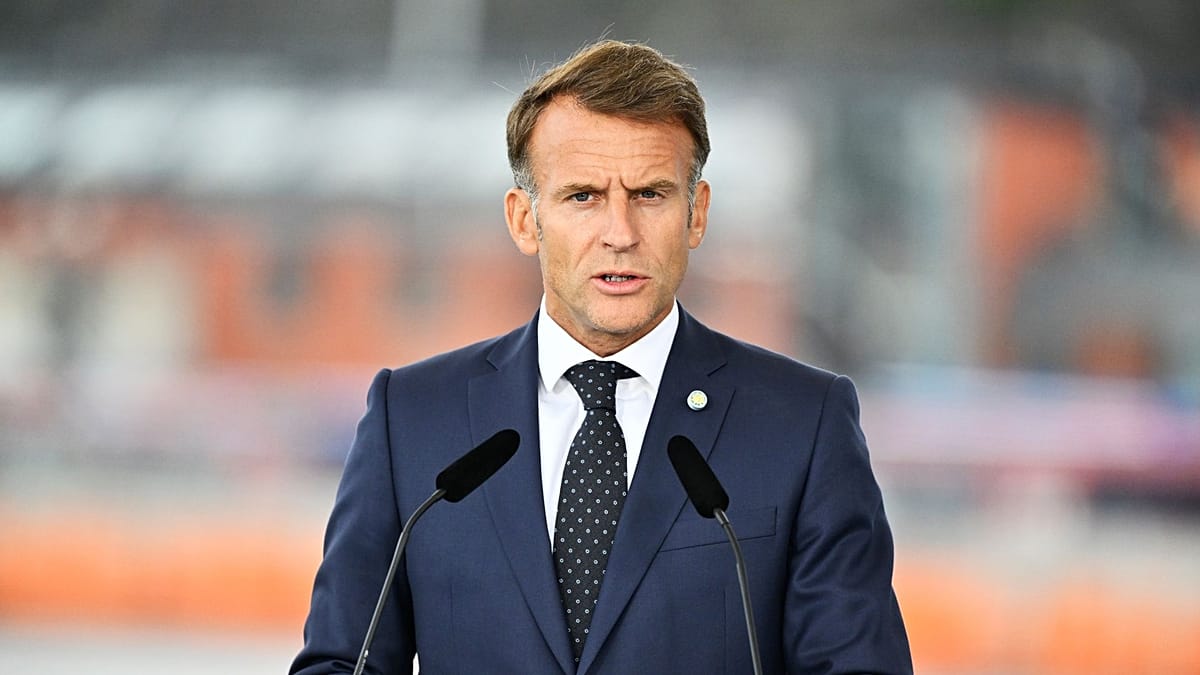

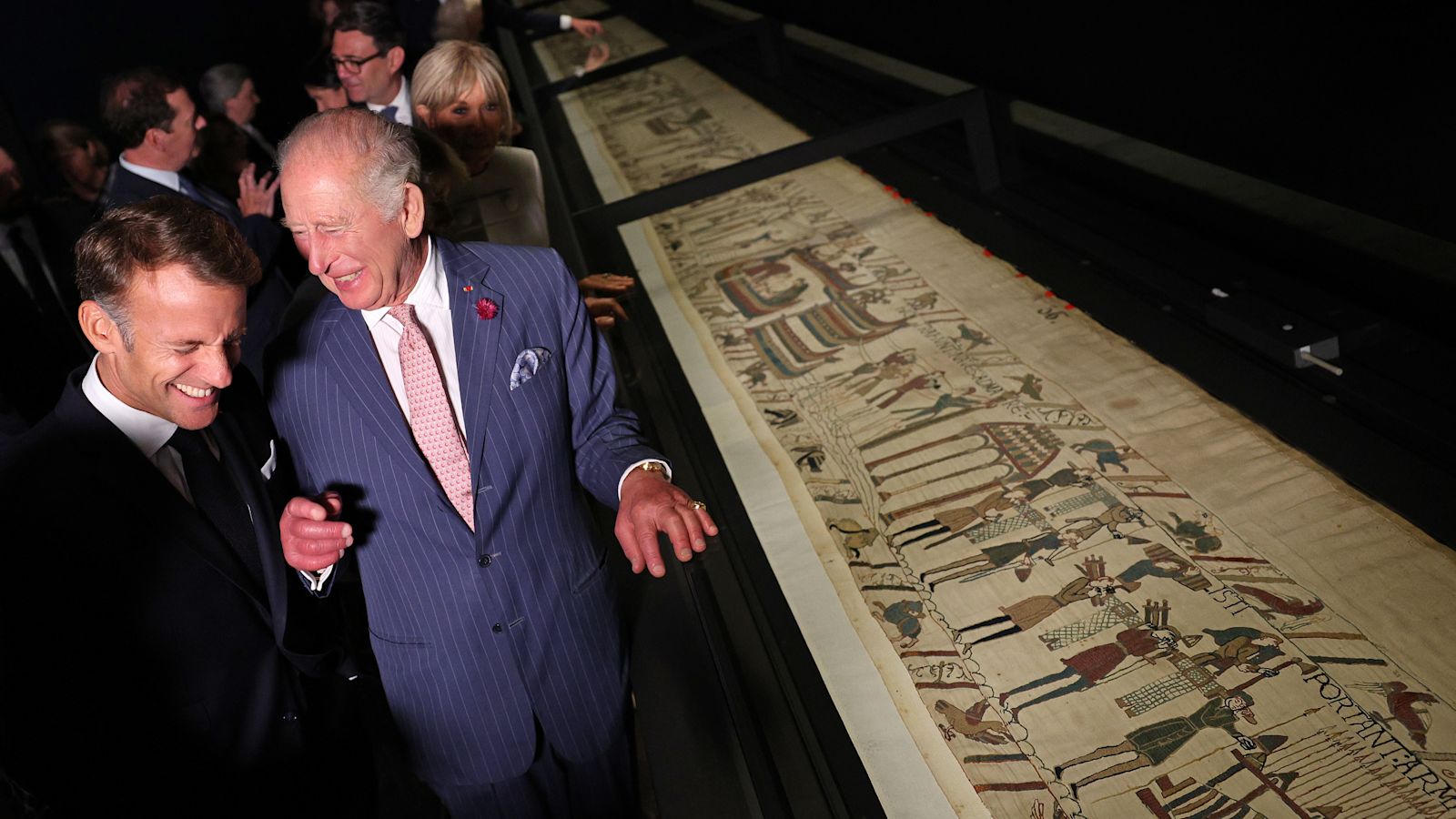

French President Emmanuel Macron, King Charles III and Britain’s newly appointed Prime Minister Andy Burnham used the return of the Bayeux Tapestry to England to highlight a relationship shaped by conquest, rivalry and centuries of cultural exchange.
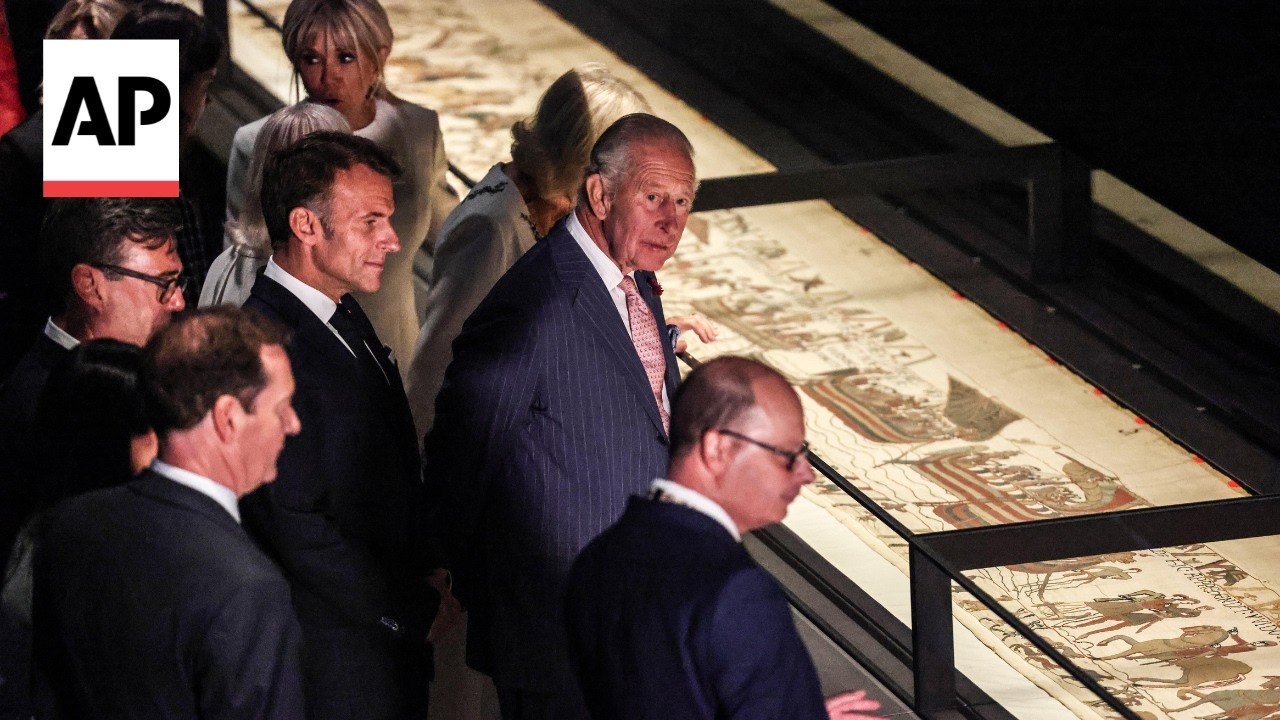
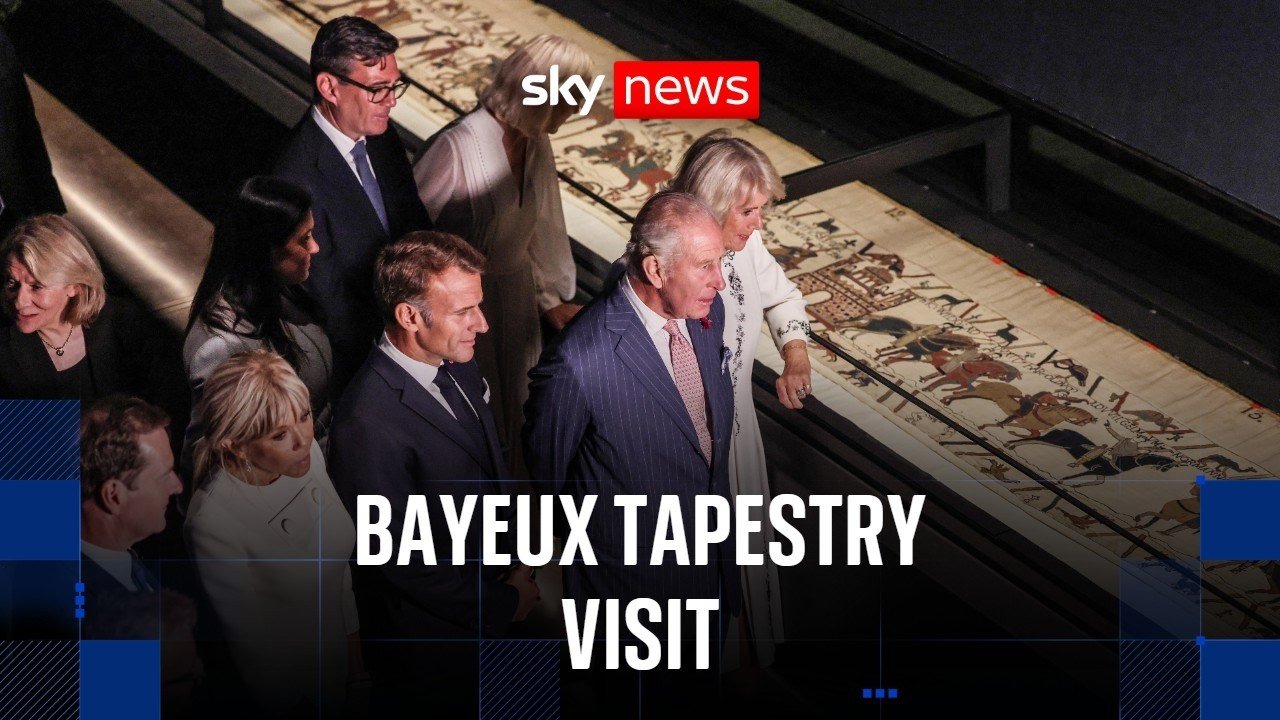
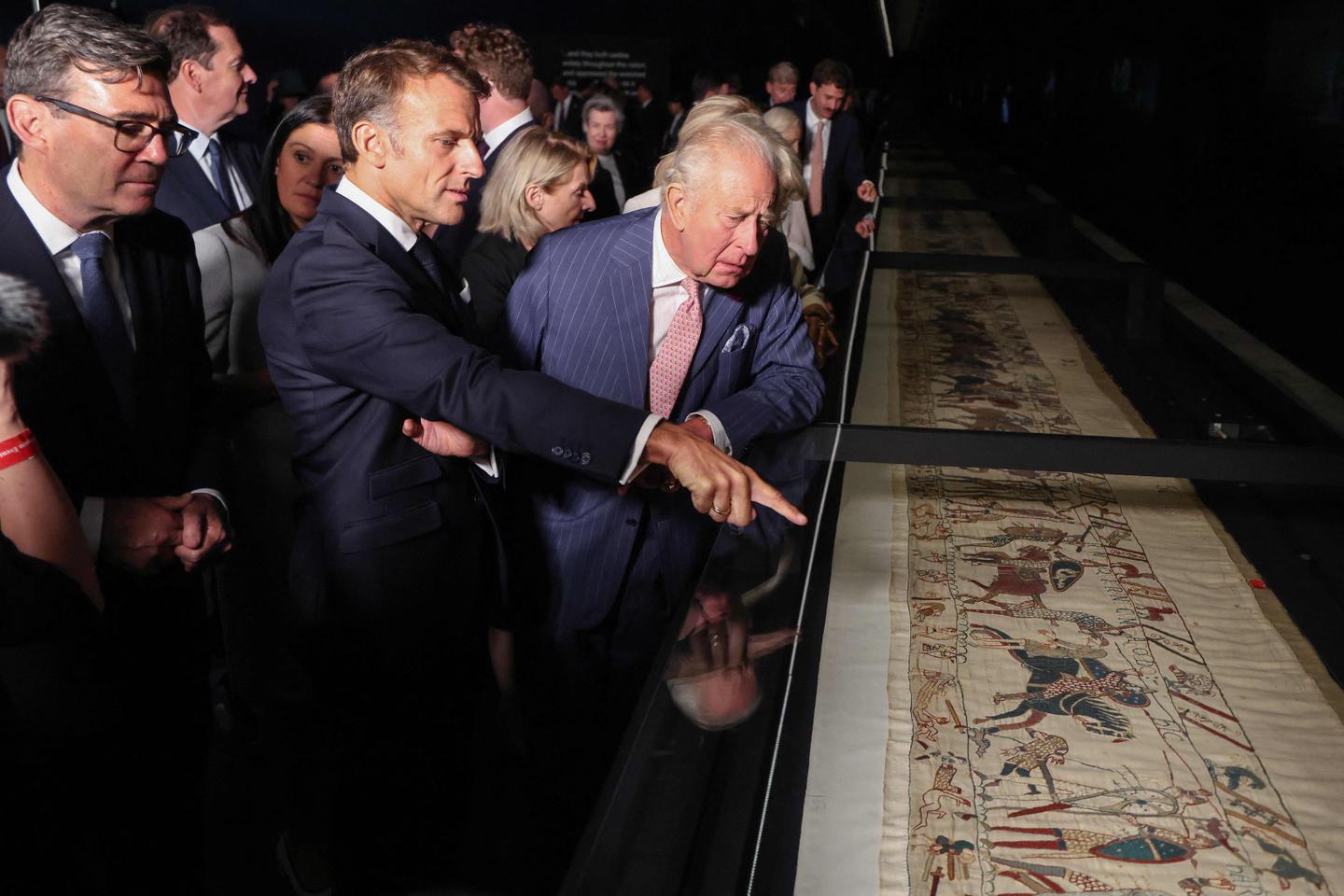
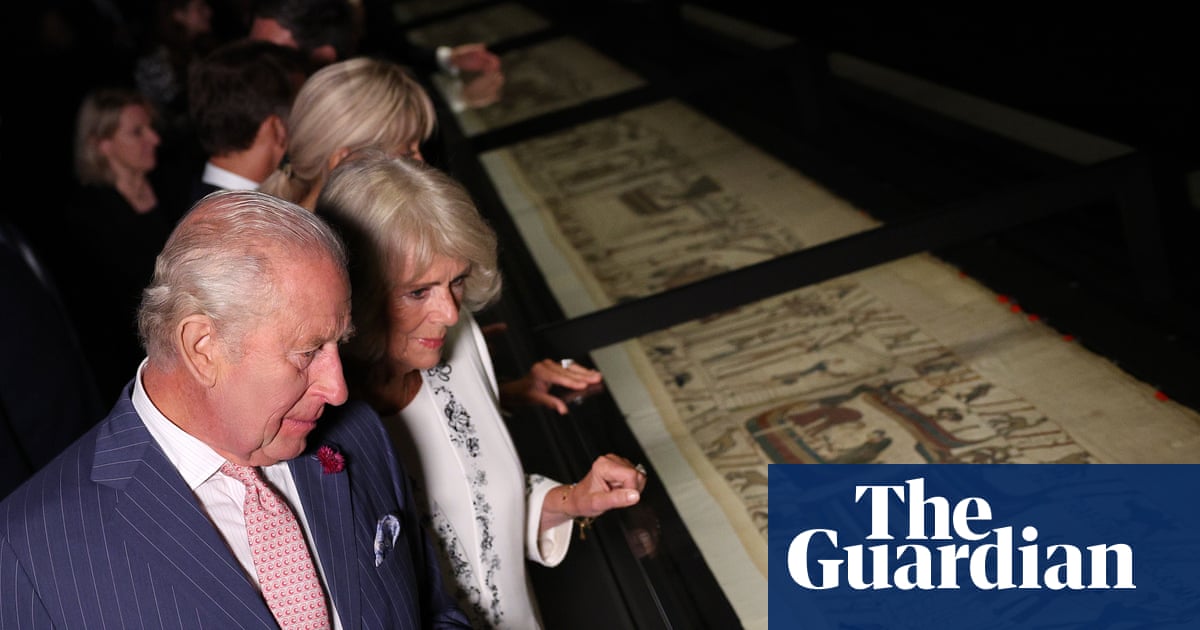
The three leaders, accompanied by Queen Camilla, Brigitte Macron and Burnham’s wife, Marie-France van Heel, viewed the nearly 1,000-year-old embroidery during a private event at the British Museum on September 2. The tapestry is being displayed in London under an unprecedented French loan and will open to the public on September 10.
The visit formed the centrepiece of Macron’s two-day trip to Britain and marked his first in-person meeting with Burnham since the latter became prime minister in July. It was also the first joint official engagement involving King Charles and Burnham since the new government took office.
A historic return
Stretching approximately 70 metres, or 230 feet, the Bayeux Tapestry portrays the events leading to the Norman conquest of England in 1066. Its embroidered scenes include the coronation of Harold Godwinson, the Norman invasion and Harold’s death at the Battle of Hastings. William, Duke of Normandy, subsequently became William the Conqueror.
The work has been housed in France for most of its history and had not returned to English soil since it was created nearly a millennium ago. Its loan to the British Museum therefore carries significance beyond the exhibition itself: it is both a major cultural event and a carefully staged diplomatic gesture between two countries whose histories have been closely connected, often uneasily, for centuries.
King Charles described the loan as a symbol of the countries’ shared bonds and of unity at a time of growing international division. He called the tapestry a “precious symbol of trust” and the “best possible symbol” of the friendly relationship between Britain and France.
Macron likewise framed the artefact as more than a medieval record of war. He said it represented “a whole chapter of French, British and European history”, arguing that the story it tells had bound the two countries’ cultures, histories and destinies together.
The exhibition is scheduled to run for 10 months, with the tapestry remaining in London until July 2027, according to reporting on the exhibition timetable.
Beyond cultural diplomacy
The symbolism of the visit was set against practical negotiations over migration, security, trade and Britain’s relationship with Europe.
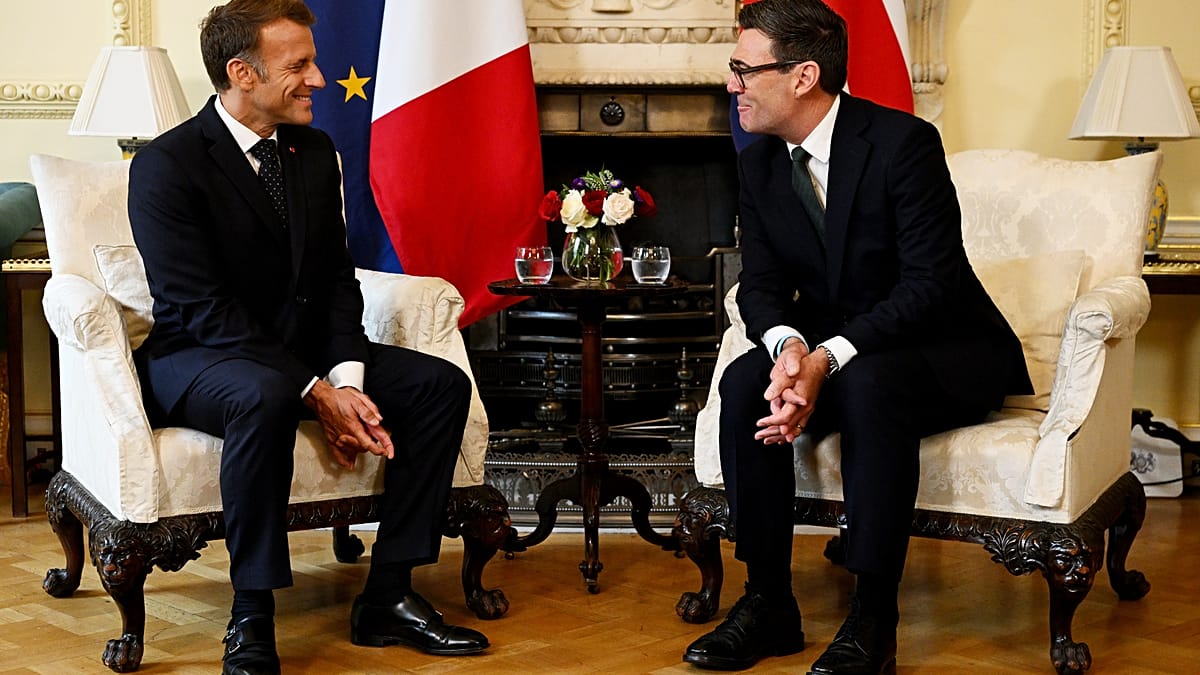
On September 3, Macron travelled to Downing Street for talks with Burnham, who described the French president as Britain’s “nearest neighbour and close friend”. Macron said he had come to London with a commitment to bring the two countries closer together.
Illegal crossings of the English Channel were high on the agenda. British and French officials said cooperation was producing progress in reducing small-boat arrivals, but agreed that efforts needed to be expanded across Europe. The discussions came as smuggling networks increasingly used larger vessels capable of carrying more people, including so-called “mega-dinghies”.
The United Kingdom has also deployed additional police officers to French beaches as part of a wider effort to disrupt departures. The British government said the initiative was intended to strengthen operational cooperation with French authorities, although opposition politicians have questioned whether the measures are sufficient to stop crossings.
The issue highlights the practical reality behind the renewed diplomatic language: Britain’s ability to reduce Channel crossings depends heavily on cooperation with France, which controls the main departure coastline used by many migrant boats.
A closer relationship with Europe
Burnham and Macron also discussed Britain’s effort to improve ties with the European Union after years of tension following Brexit.
The British government has sought closer practical cooperation with European partners while remaining outside the EU. That approach includes coordination on security, migration, trade and energy, but it also exposes disagreements over procurement and industrial policy.
During the Downing Street meeting, Burnham raised concerns about the potential impact of the EU’s proposed “Made in Europe” agenda on British industries. The leaders agreed that London and Paris should work together to protect shared interests while navigating the changing relationship between Britain and the bloc.
The conversation reflects a broader attempt to move beyond the political rancour that followed the 2016 Brexit referendum. The Bayeux Tapestry, with its depiction of a conquest that permanently reshaped England’s political and cultural identity, offered an unusually potent backdrop for that effort.
Ukraine and wider security
The talks also covered European security and the war in Ukraine.
According to the British government, the leaders discussed plans to establish local assembly lines in Ukraine for the SCALP long-range missile. The French SCALP and Britain’s Storm Shadow are closely related cruise missiles and use British technology. The proposal is part of wider efforts to strengthen Ukraine’s defence capacity and sustain European support for Kyiv.
Macron and Burnham also discussed the situation in the Middle East, including the need to prevent escalation in the Strait of Hormuz. Burnham raised Israel’s plans relating to settlement construction in the E1 area of the occupied West Bank, describing the move as unacceptable and warning that it could undermine the possibility of a two-state solution.
Those issues demonstrate that the UK-France relationship is no longer confined to bilateral concerns. London and Paris increasingly coordinate on Ukraine, Middle Eastern security and efforts to influence the wider international response to regional crises.
Taking the tapestry beyond London
The British Museum is presenting the exhibition as a national cultural project rather than a London-only event.
The museum’s “Bayeux Around Britain” programme involves more than 70 partner organisations across the United Kingdom. Digital versions of the tapestry’s story are expected to be shown in museums, galleries, castles, cathedrals and heritage sites. A national history lesson scheduled for October 14 will allow thousands of schoolchildren to explore the tapestry and its place in British and French history.
Institutions including the Museum of Cornish Life, Knutsford Heritage Centre, the East Riding Museum and the Great Tapestry of Scotland are expected to host digital displays. Hastings, whose history is inseparable from the 1066 battle, is also being developed as a major centre for related learning.
The Stothard Cast, described by the government as the earliest known replica of the Bayeux Tapestry, is due to begin a tour across England, Scotland and Wales later in September. The programme is intended to broaden access to the exhibition and ensure that the historic loan benefits audiences beyond London.
History as a diplomatic language
The Bayeux Tapestry does not present a neutral account of 1066. It was produced from the perspective of the Norman victors, and its scenes have been studied for their political messaging as well as their artistic and historical value.
That complexity makes its appearance in London especially resonant. The tapestry records a moment when Normandy crossed the Channel and transformed England; nearly a thousand years later, its return is being used to emphasise how deeply the two societies remain connected.
For Macron and Burnham, the exhibition provided an opportunity to signal a warmer political relationship. For King Charles, whose family lineage is linked to William the Conqueror, it also offered a personal and dynastic connection to the story.
The leaders’ appearance together did not erase disagreements over migration, trade or Europe. But it demonstrated how cultural diplomacy can create a shared setting in which those disputes are discussed alongside a broader narrative of common history and future cooperation.