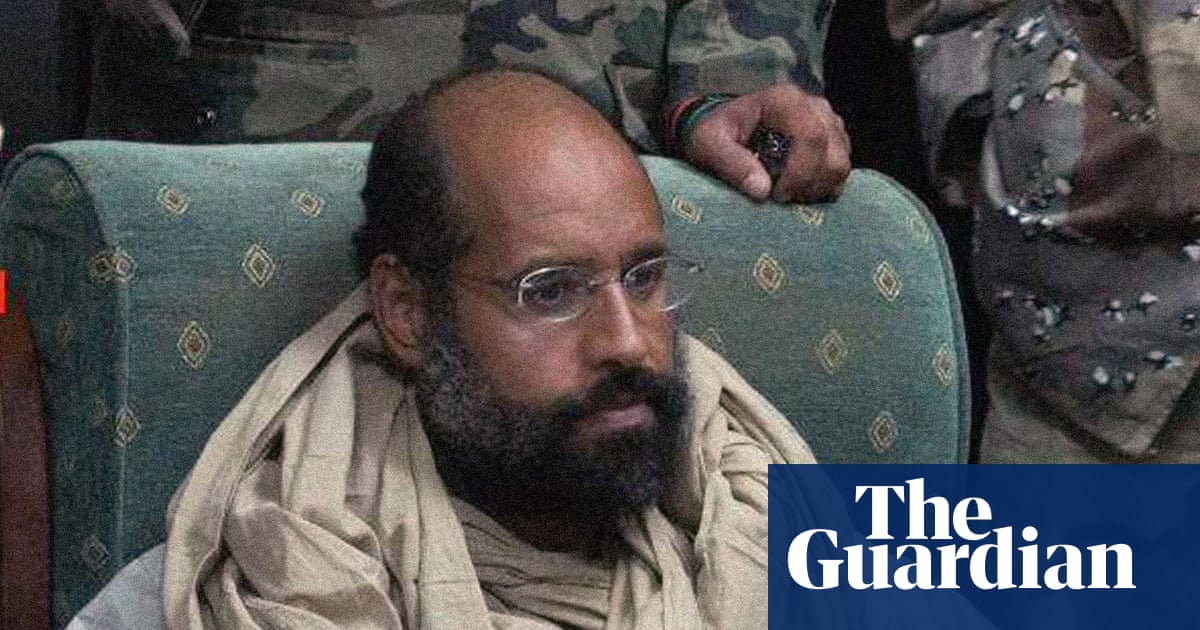
Saif al-Islam Gaddafi, the son of former Libyan leader Muammar Gaddafi and once one of the most recognisable figures of the old regime, was killed in Zintan on February 3, 2026, according to reports from Libyan officials and investigators. He was 53.
The killing has jolted Libya’s already fragile political landscape, reviving long-running fears about impunity, factional violence and the unresolved legacy of the 2011 uprising.
What happened
Reports said four masked gunmen stormed Gaddafi’s home in Zintan, a northwestern city where he had lived for more than a decade. The attackers reportedly disabled surveillance cameras before opening fire.
Forensic teams later confirmed that he died from multiple gunshot wounds, with investigators reportedly finding 19 bullets lodged in his body, likely fired from a Kalashnikov-style rifle. No group has claimed responsibility, and no arrests have been publicly confirmed.
Why it matters
Saif al-Islam was not just a political name from Libya’s past. He was also a candidate in the country’s long-delayed presidential election, now scheduled for mid-April 2026, and for years remained a symbol of both continuity and controversy.
Once seen by some as a reformer and his father’s heir apparent, he later became a polarising figure wanted by the International Criminal Court for crimes against humanity tied to the 2011 uprising. His death removes one of the few figures still capable of complicating Libya’s current power divide.
Funeral and reaction
His funeral on February 6 in Bani Walid drew thousands of mourners and loyalists, turning the burial into a highly political show of force. Supporters in strongholds such as Bani Walid and Sirte reacted with grief and anger, while critics of the former regime saw the killing as the removal of a major obstacle to elections.
Libya’s Attorney General’s Office in Tripoli opened an investigation, describing the killing as a heinous crime. Analysts said the assassination amounted to a political shock and symbolically closed another chapter of the Gaddafi era, even as it deepened uncertainty about whether Libya can move toward reconciliation.
International alarm
The African Union condemned the killing and warned that it could plunge Libya into a new abyss of chaos. The United Nations Support Mission in Libya expressed deep concern and urged restraint, while Amnesty International said the killing underscored a deeply entrenched climate of impunity and denied victims the chance for truth and justice through a legal trial.
Some observers also pointed to the silence from Western capitals, while others speculated about possible foreign involvement. For now, the only certainty is that the killing has removed a politically charged and deeply divisive figure from Libya’s already unstable equation.
Read also:
Burkina Faso’s former president accused of assassination plot