








Ethiopian Prime Minister Abiy Ahmed has begun another five-year term in office, using his inauguration to reaffirm his government’s demand for a maritime gateway as fighting in Tigray and tensions with neighbouring states raise fears of a wider Horn of Africa crisis.
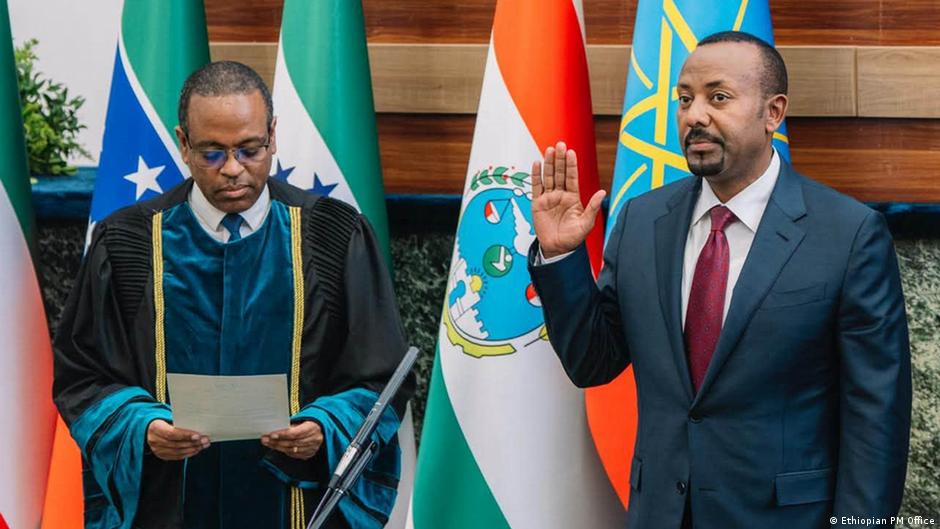
Abiy took the oath of office at Parliament in Addis Ababa on October 5, 2026, after being appointed by the newly constituted House of Peoples’ Representatives. President Taye Atske Selassie and senior government officials attended the ceremony. Ethiopia’s ruling Prosperity Party won 438 of Parliament’s 547 seats in the latest election, clearing the way for Abiy’s return to office.
The ceremony marked the beginning of Abiy’s second full five-year term under Ethiopia’s current parliamentary system. Regional leaders, including Kenyan President William Ruto and Somali President Hassan Sheikh Mohamud, sent messages of congratulations, while African Union Commission Chairperson Mahmoud Ali Youssouf also welcomed the renewed mandate.
But the inauguration took place against a backdrop of renewed conflict inside Ethiopia and rapidly deteriorating relations with several of its neighbours.
‘An outlet to the sea’
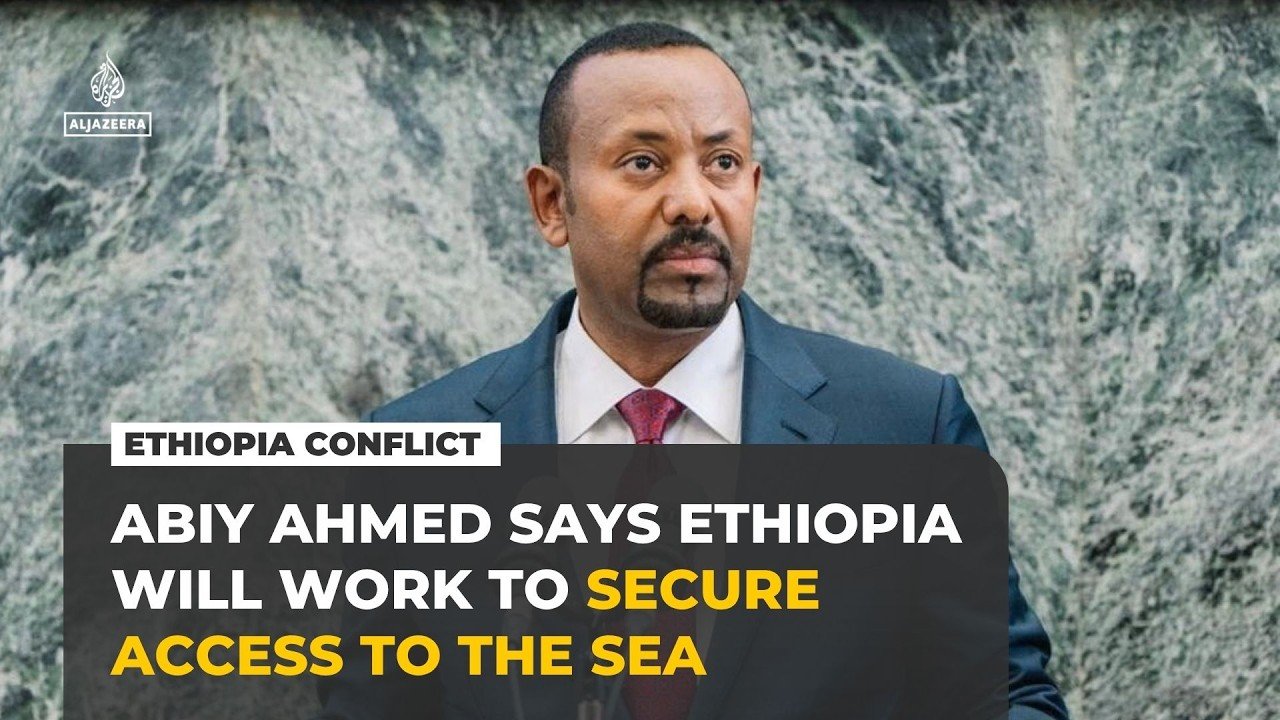
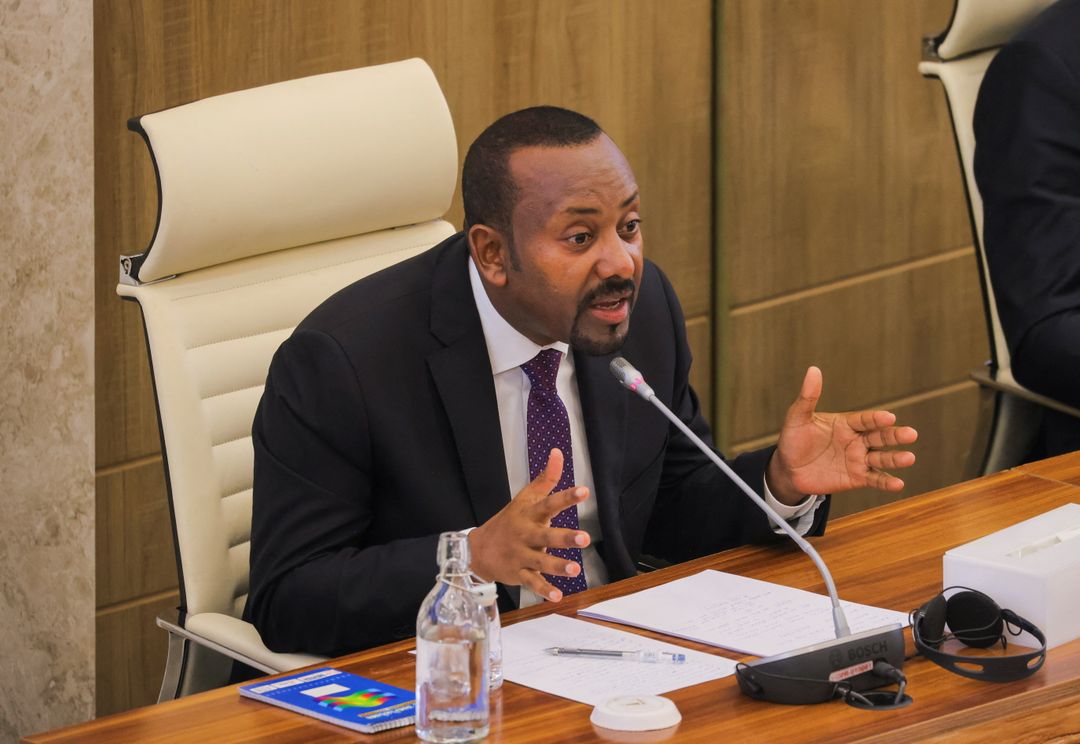
In his address to lawmakers, Abiy again described access to the Red Sea as a strategic necessity for Ethiopia, one of Africa’s largest and most populous countries.
“Based on the principle of give and take, we will work diligently to ensure that Ethiopia has an outlet to the sea,” he said, presenting the objective as one to be pursued through negotiation, mutual benefit and economic cooperation rather than military action.
Abiy has previously described maritime access as essential to Ethiopia’s development and “civilisation”. The country lost its coastline in 1993, when Eritrea became independent after a long struggle against Ethiopian rule. Since then, Ethiopia has depended heavily on neighbouring countries—especially Djibouti—for access to international shipping routes.
The prime minister did not identify a specific port in his latest speech. However, Eritrea’s port of Assab has frequently been cited in regional reporting and analysis as a possible focus of Ethiopia’s ambitions. The port sits near the Bab el-Mandeb Strait, a vital maritime passage linking the Red Sea with the Gulf of Aden.
Ethiopia’s government has framed the issue as a matter of national economic security. Reliable access to a port could reduce the country’s dependence on a single trade corridor, strengthen its bargaining position in regional commerce and support its ambitions to become a major manufacturing and logistics hub.
For Eritrea, however, any arrangement that gives Ethiopia control over, or a military presence near, an Eritrean port could pose a direct threat to its sovereignty.
Neighbours reject Ethiopia’s claim
Abiy’s remarks came one day after the leaders of Egypt, Eritrea, Sudan and Somalia met in New Alamein, Egypt. The four countries said governance of the Red Sea was the “exclusive responsibility” of states along its shores and warned against actions that could destabilise the region.
The joint position was a clear response to Ethiopia’s repeated calls for access, although coastal states have not ruled out every form of commercial cooperation. Somalia’s President Hassan Sheikh Mohamud has previously indicated that Ethiopia could potentially obtain access through Somali territory, but only through a formal agreement negotiated between the two governments.
Ethiopia’s Foreign Ministry responded that any discussion of the Red Sea must take account of the country’s “legitimate interests and enduring connection” to the waterway. It also said Addis Ababa remained committed to dialogue and peaceful engagement while defending its sovereignty and national interests.
The dispute is closely linked to a second regional flashpoint: the Grand Ethiopian Renaissance Dam on the Blue Nile. Egypt and Sudan rely heavily on the Nile, while Ethiopia regards the dam as central to its electricity generation and economic development. Negotiations over the filling and operation of the dam have repeatedly stalled, adding another layer of mistrust between Addis Ababa, Cairo and Khartoum.
Tigray conflict raises wider fears
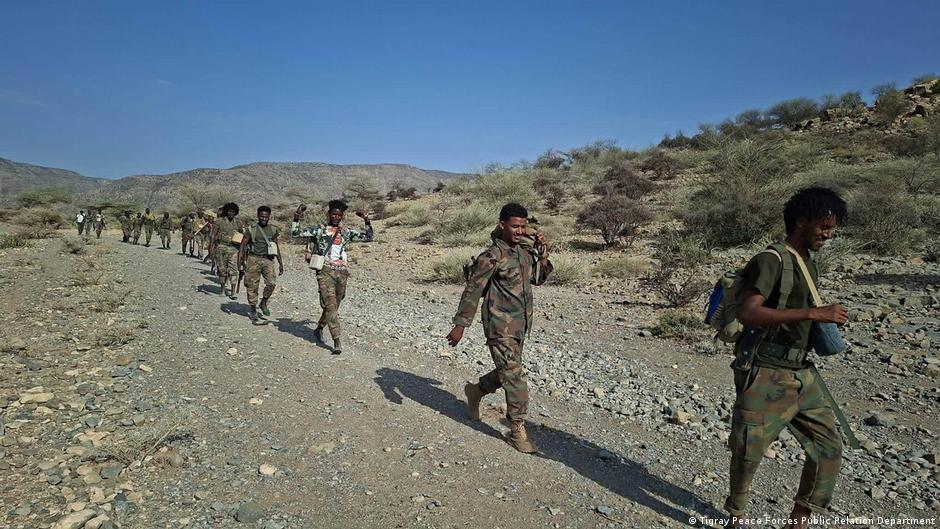
Abiy’s renewed maritime push also coincides with the return of large-scale fighting in northern Ethiopia.
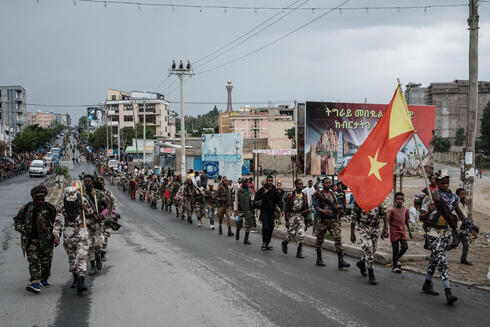
Federal forces and fighters aligned with the Tigray People’s Liberation Front have clashed again in Tigray, reviving memories of the devastating 2020–2022 war. Ethiopian government forces reportedly moved into Mekelle, the regional capital, as airstrikes and artillery attacks intensified. The fighting threatens to undermine the Pretoria agreement that ended the earlier conflict.
The previous war created a severe humanitarian crisis. Researchers at Ghent University estimated that approximately 500,000 civilians died through violence, famine and the collapse of health services.
The latest conflict has also revived concerns about Eritrean involvement. Eritrean troops fought alongside Ethiopian federal forces during the earlier Tigray war, although both Eritrea and Ethiopia initially denied reports of Eritrean participation. Ethiopia now accuses Eritrea of supporting forces opposed to Abiy’s government and of helping mobilise backing from Egypt and Sudan. Those countries reject the allegations.
Eritrea, in turn, accuses Ethiopia of seeking access to the sea through Eritrean territory. The dispute has become more dangerous as military activity in Tigray approaches areas near the Eritrean border.
Relations between Addis Ababa and Asmara have deteriorated sharply in recent months. Ethiopia closed its embassy in Asmara and expelled Eritrean diplomats, while Eritrea later severed diplomatic ties with Ethiopia, according to regional reporting.
A pledge of peace—and a warning
Abiy has attempted to reassure neighbouring states that Ethiopia does not seek war. His government says it wants to secure port access through commercial agreements, infrastructure investment, long-term leases or other forms of negotiated cooperation.
At the same time, Abiy has warned that Ethiopia has the capacity to defend itself if threatened. That combination of diplomatic language and military signalling has done little to ease concerns in Eritrea, Egypt, Sudan and Somalia.
The Horn of Africa is already facing overlapping crises: Sudan’s civil war, instability around the Red Sea and Gulf of Aden, disputes over Nile waters, and unresolved political and ethnic tensions within Ethiopia. The United Nations and African Union have urged the parties to exercise restraint and resolve their differences peacefully.
The immediate question is whether Abiy’s new government can separate its maritime ambitions from the fighting in Tigray. A negotiated commercial arrangement with a coastal neighbour could give Ethiopia the access it says it needs. But any attempt to secure territory, military control or a unilateral advantage at an Eritrean port could transform an economic dispute into a regional confrontation.
For now, Abiy’s second full term begins with Ethiopia pursuing a larger role in Red Sea affairs while facing renewed conflict at home. His promise to obtain an “outlet to the sea” may become one of the defining strategic issues of his administration—and one of the most consequential tests of stability in the Horn of Africa.