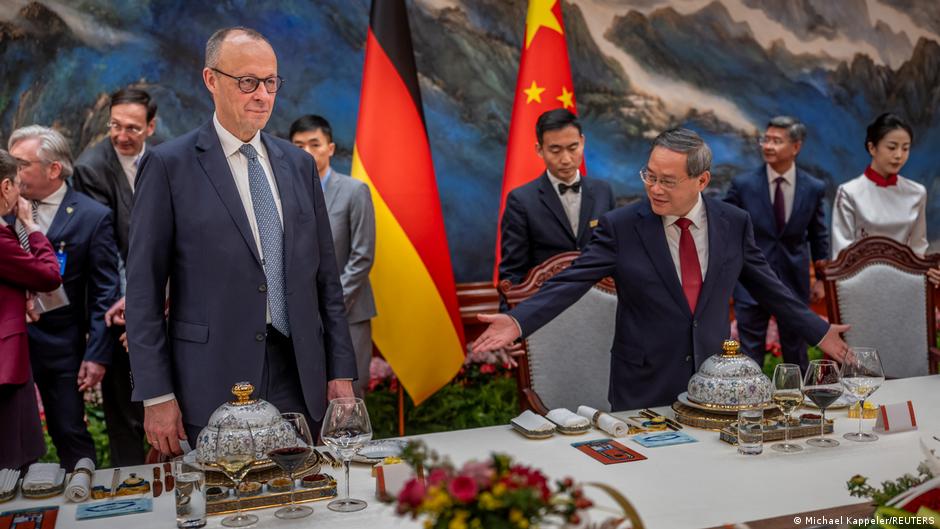
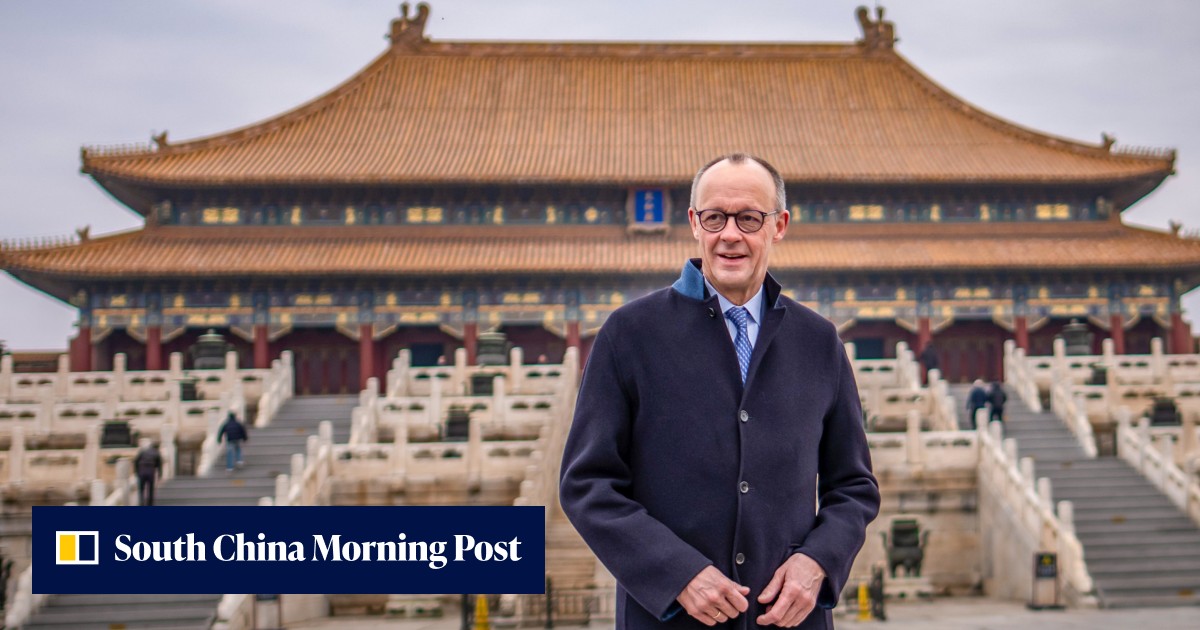
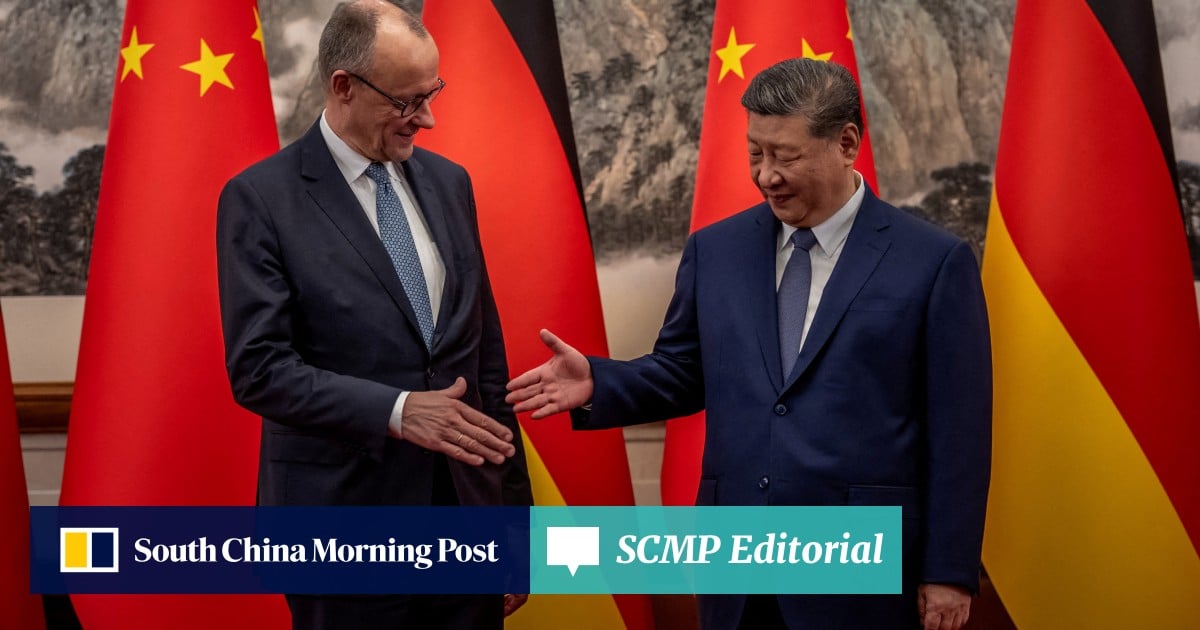
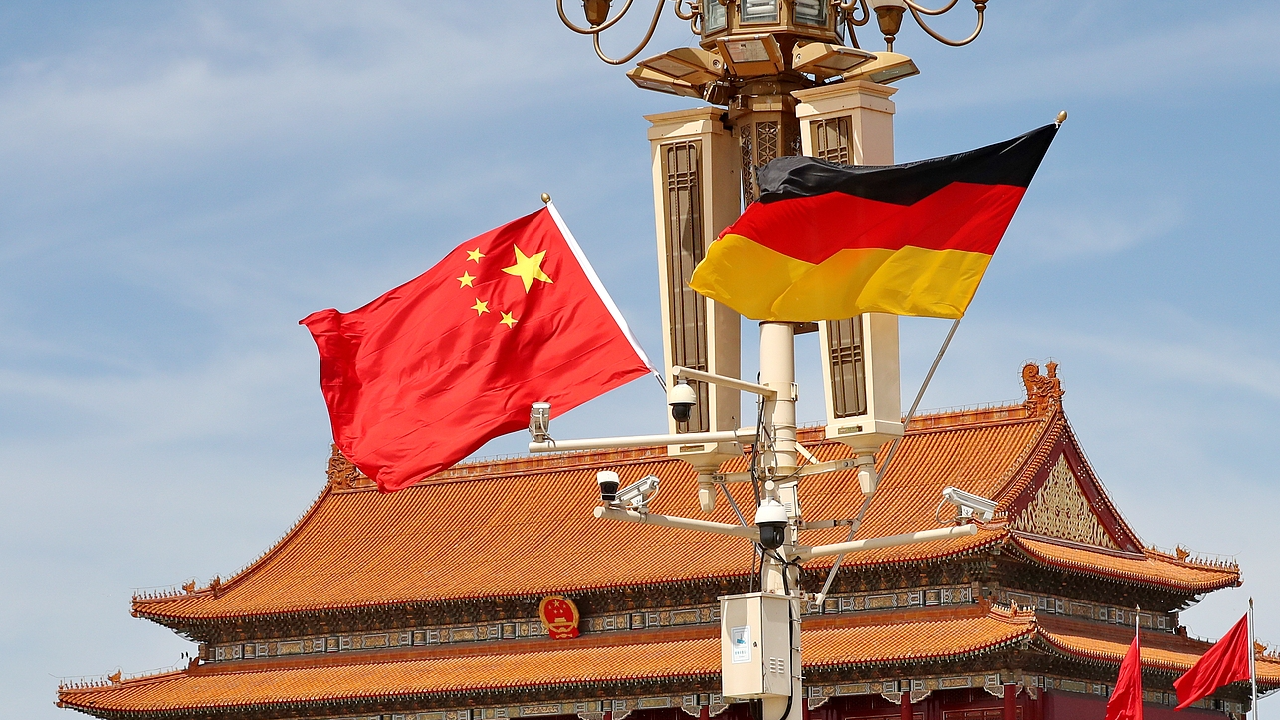
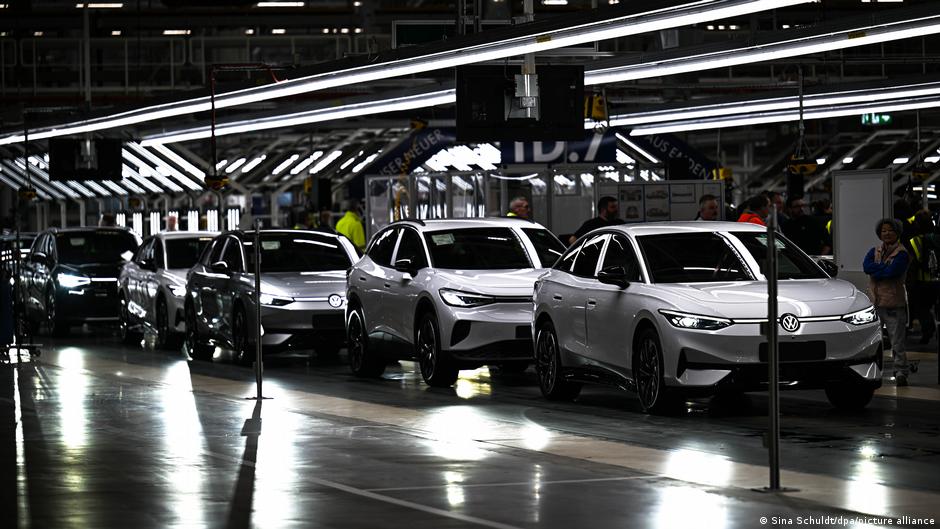
German Chancellor Friedrich Merz made his first official visit to China from 25 to 26 February 2026 at the invitation of Premier Li Qiang. Merz met with Chinese President Xi Jinping and Premier Li Qiang in Beijing.
The trip focused on resetting economic ties and navigating a “balancing act” between trade cooperation and addressing structural imbalances.
The visit was marked by China’s agreement to purchase up to 120 Airbus aircraft from the European manufacturer.
Merz was accompanied by a group of 30 German business leaders, including executives from companies like BMW and Siemens. The itinerary included visits to Mercedes-Benz and Siemens Energy sites, as well as the Chinese robotics firm Unitree in Hangzhou.

Merz directly addressed the “yawning” trade deficit and warned about Chinese industrial overcapacity, particularly in sectors like electric vehicles, which he argued exceeds market demand and threatens European industry.
He urged President Xi to use China’s influence to help end the war in Ukraine and explicitly stated Germany’s opposition to any military force against Taiwan.
Both leaders expressed a desire to remain “reliable partners” and “defenders of free trade” amidst rising global protectionism.
China overtakes US as germany’s top trading partner
The visit took place on the back of figures released by Germany’s Federal Statistical Office (Destatis) on March 20, which showed that China officially reclaimed its position as Germany’s top trading partner in 2025 overtaking the United States after a brief one-year shift.
China was Germany’s most important trading partner from 2016 to 2023. Bilateral trade between Germany and China reached €251.8billion ($296.6billion), a 2.1% increase from 2024.
Trade with the United States fell by 5.0% to €240.5billion, primarily due to the impact of protectionist US tariff policies.
Despite the German government’s “de-risking” strategy to reduce reliance on Beijing, the 2025 data underscores the continued structural entanglement of the two economies.
Despite being the No. 2 overall trading partner, the United States remains the most important destination for German exports (€146.2billion), while China ranks only sixth as a buyer of German goods.
Economic and business outcomes
China agreed to purchase up to 120 additional Airbus aircraft, a significant win for the European aerospace sector.
Over 10 commercial agreements were signed across the automotive, energy, finance, and logistics industries. The joint venture between SAIC and Volkswagen was extended until 2040, with plans to jointly develop three plug-in hybrid and two all-electric models.
Specific memorandums were signed regarding the green transition, customs facilitation, sports broadcasting (including the German Football League), and media. No immediate concessions were made regarding Chinese industrial overcapacity or the perceived undervaluation of the yuan, which Germany blames for the trade gap.
Despite the “thaw,” Germany continues to pursue strategies to reduce critical dependencies on Chinese rare earths and semiconductors.
Diplomatic and strategic shifts
Merz announced the restart of regular intergovernmental consultations beginning in 2027 to address long-term economic concerns.
Merz avoided using the term “systemic rival,” a label previously used by the German government that had strained relations, opting for a more pragmatic “partnership with differences”.
A joint statement was issued reaffirming a commitment to multilateralism and free trade, specifically as a counter-signal to rising global protectionism.
Merz formally urged Beijing to exert influence on Russia to end the war in Ukraine and reiterated that any reunification with Taiwan must be peaceful.
We know that signals from Beijing are taken very seriously in Moscow. That goes for words as well as deeds.
German Chancellor Friedrich Merz
China and Germany, as two of the world’s largest economies and major countries with important influence, should strengthen our confidence in cooperation, jointly safeguard multilateralism and free trade, and strive to build a more just and fair global governance system.
Chinese Premier Li Qiang
Read also:
2026 South Korea-China Presidential Summit
South Korea and China reset ties at 2025 APEC Summit
US-China trade war reaches one-year truce
2025 ASEAN Summit: China signs trade pact with ASEAN