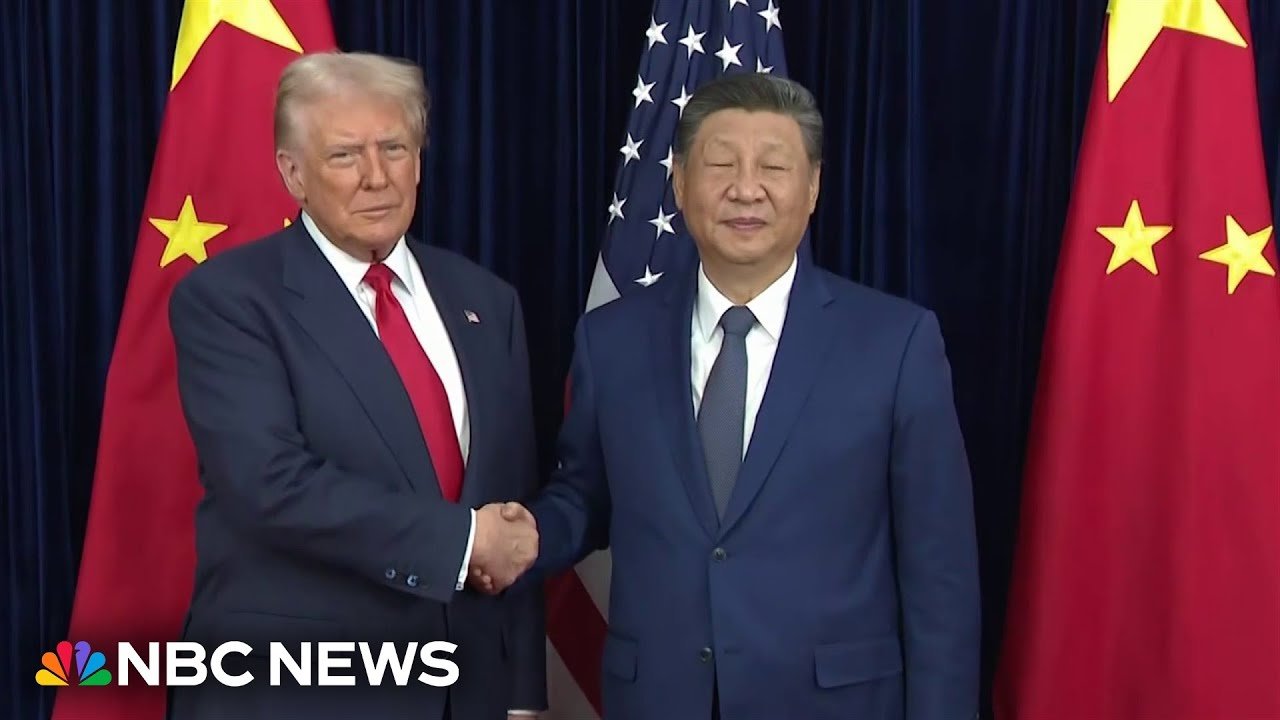
On October 30, 2025, President Donald Trump and Chinese leader Xi Jinping agreed to a one-year trade truce during a meeting in South Korea. The US reduced its overall tariff on Chinese goods to about 47% by removing the March 2025 increase and suspended further hikes.
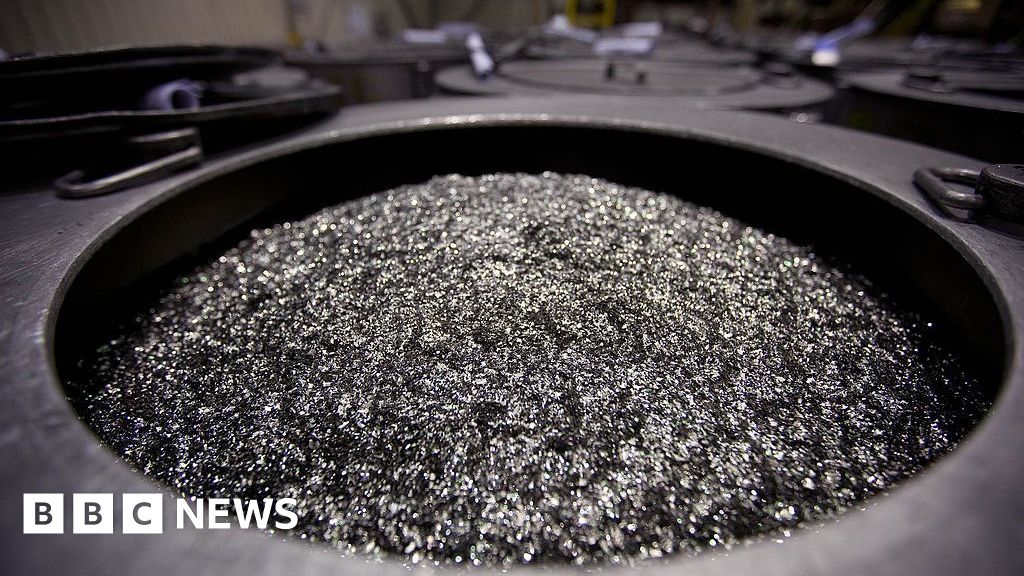
China agreed to remove its retaliatory tariffs on US agricultural goods including soybeans, pork, and beef and suspended rare earth export restrictions. Both sides also committed to cooperating on fentanyl controls and suspended port fees on each other’s vessels.
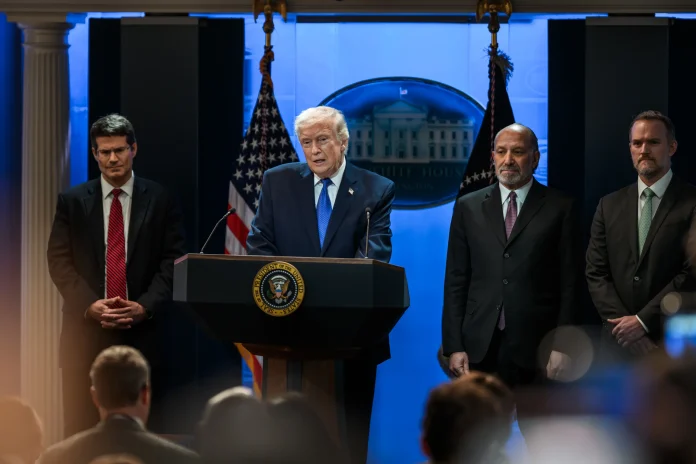
We have a deal. Now, every year we’ll renegotiate the deal, but I think the deal will go on for a long time, long beyond the year”… All of the rare earth has been settled, and that’s for the world.
US President Trump post South Korea meeting with Chinese President Xi Jinping in Oct
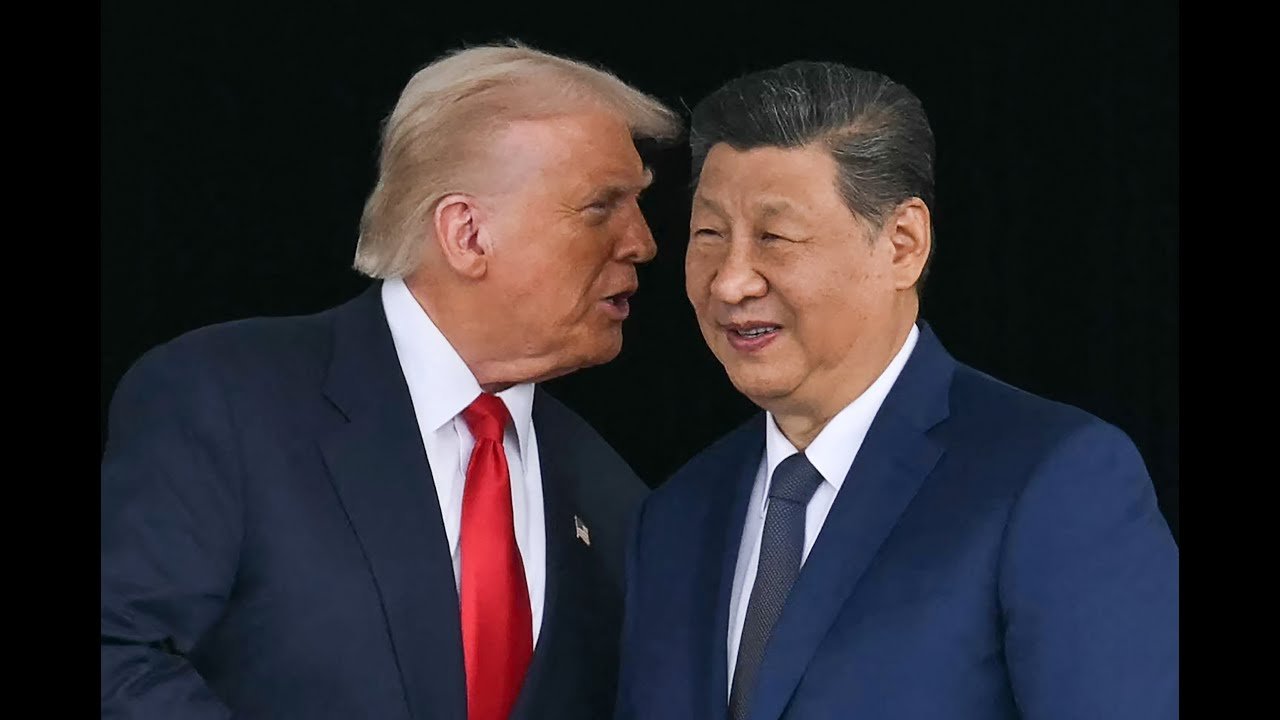
Given our different national conditions, we do not always see eye to eye with each other and it is normal for the two leading economies of the world to have frictions now and then… I always say China’s development goes hand in hand with your vision to make America great again.
Chinese President Xi Jinping at the Asia-Pacific Economic Cooperation (APEC) Summit in Busan
Our two countries are fully able to help each other succeed and prosper together. I have stated in public many times that China and the US should be partners and friends. This is what history taught us and reality demands.
What led up to this
In February and March 2025, the US imposed a series of escalating tariffs on Chinese goods, citing concerns over fentanyl trafficking. China retaliated with matching tariffs on US agricultural and energy products.
On April 2, President Trump announced sweeping Liberation Day tariffs, including an additional 34% duty on Chinese goods, bringing the cumulative US tariff rate to approximately 54%. China responded with its own 34% tariff on all US imports and announced export restrictions on critical rare earth minerals.
This led to further rounds of US tariff increases, reaching a peak cumulative rate of 145% on Chinese goods in April, while China’s retaliatory tariffs peaked around 125%. Beyond tariffs, the US revoked duty-free access for low-value shipments from China, while China added several US companies to an unreliable entities list and initiated investigations into US tech firms like Google and Nvidia.
Following talks in Geneva, both sides agreed to a 90-day ceasefire in May, reducing the US tariff rate on Chinese goods to 30% and China’s rate on US goods to 10%.
Tensions flared again in the autumn after China tightened export controls on rare earth magnets. President Trump threatened an additional 100% tariff on all Chinese imports in retaliation.
Background: The trade war since 2018
The Trump-initiated trade war with China began in 2018, escalating into a cycle of tit-for-tat tariffs based on US concerns over unfair trade practices, intellectual property theft, and national security. The conflict has continued and evolved through both the first and second Trump administrations, intensifying in 2025 and marked by periods of intense escalation and temporary truces.
In 2018 to 2019, the US imposed tariffs on hundreds of billions of dollars worth of Chinese goods, and China retaliated with its own duties on American products, particularly agricultural goods like soybeans. A partial truce was reached in January 2020 when China agreed to increase purchases of US goods and services and enhance intellectual property protections.
However, China largely failed to meet the purchase targets, a failure attributed partly to the COVID-19 pandemic and the targets being unrealistic. The Biden administration maintained the existing tariffs but introduced its own targeted measures, focusing on national security concerns, especially in advanced technology sectors like semiconductors, AI chips, and electric vehicles.
Why it matters
The one-year truce marks the most significant de-escalation in US-China trade relations since the conflict began. It offers relief to global markets and exporters on both sides, though the agreement’s structure of annual renegotiation leaves open the possibility of future disputes. The truce also reflects both leaders’ recognition that prolonged economic conflict carries risks for global stability and their own domestic priorities.
Read more:
Trump declares Liberation Day in 2025
The EU reaches deal with US, averting tariffs
The US-UK’s Economic Prosperity Deal