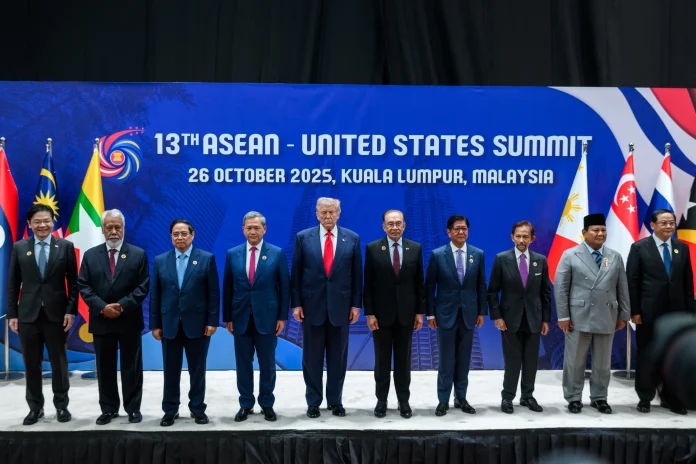
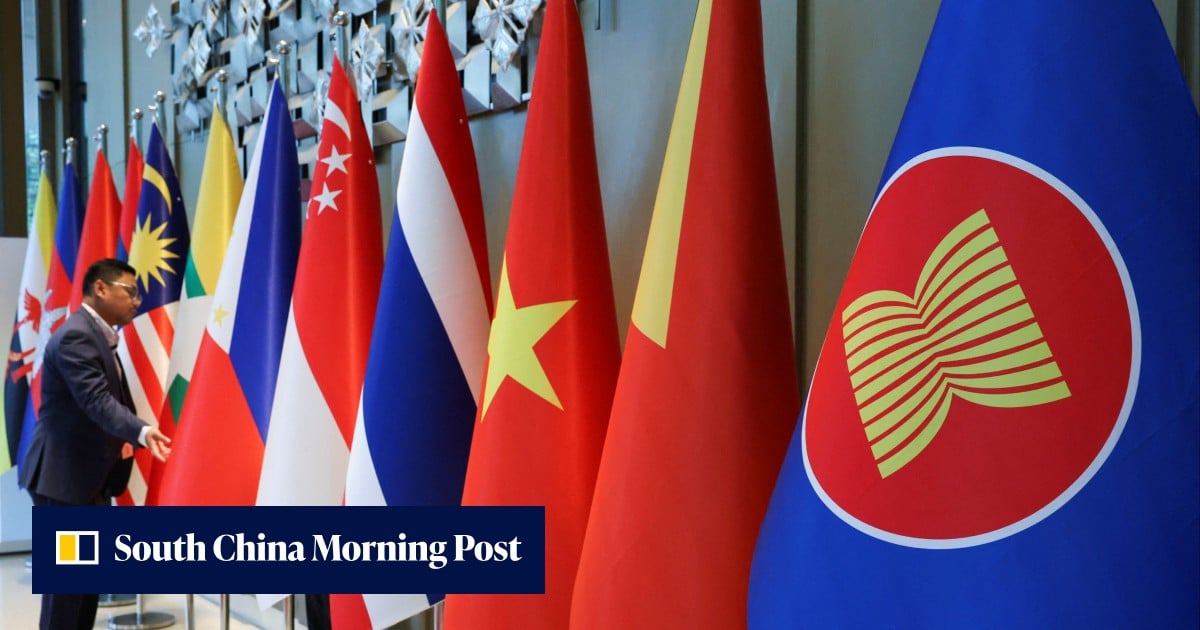
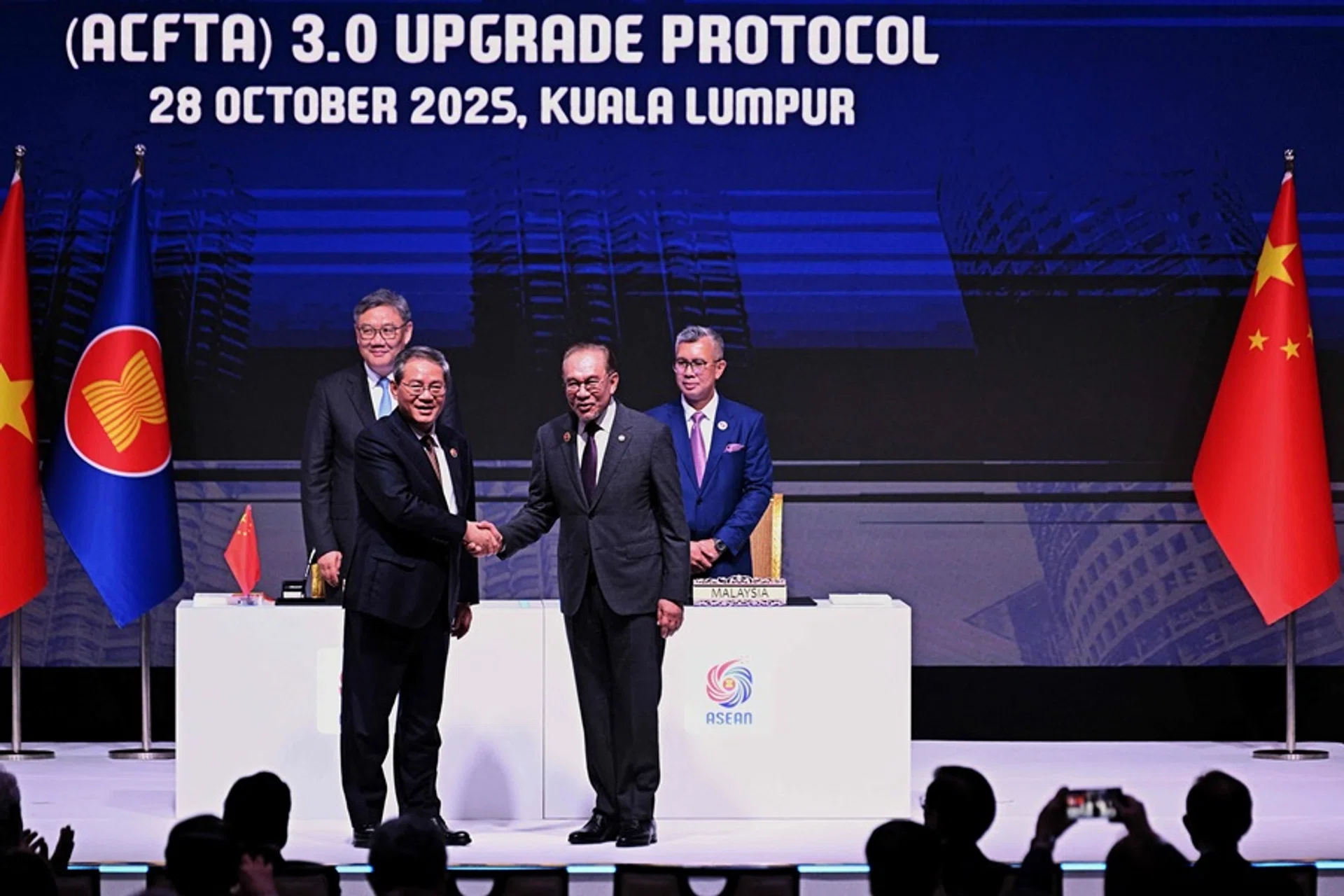
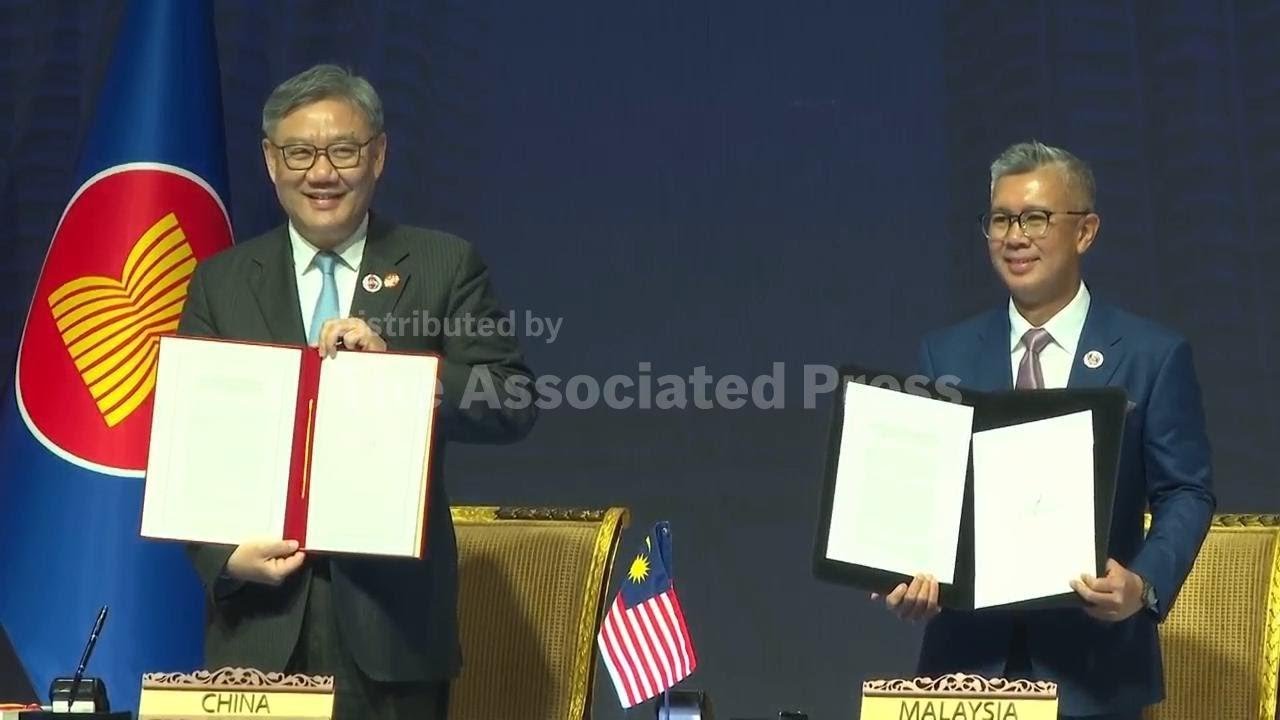
On October 28, 2025, China and the Association of Southeast Asian Nations signed the ASEAN-China Free Trade Area 3.0 Upgrade Protocol. The signing took place during the 47th ASEAN Summit in Kuala Lumpur, Malaysia, and represents a significant modernization of the original free trade agreement first established in 2010.
The 3.0 version introduces nine new or enhanced chapters designed to align the trade relationship with modern economic realities. Chinese Premier Li Qiang pitched the deal as a commitment to multilateralism and a buffer against rising global protectionism, specifically referencing recent tariff offensives from the United States.
ASEAN is currently China’s largest trading partner, with bilateral trade reaching a record US$771billion in 2024. Both parties are also members of the Regional Comprehensive Economic Partnership, the world’s largest trading bloc.
While the protocol has been formally signed, leaders from member nations, including Singapore’s Prime Minister Lawrence Wong, have called for swift domestic ratification so businesses can begin utilizing the new framework. A new ASEAN-China Comprehensive Strategic Partnership Action Plan for 2026 to 2030 is also being aligned with this upgrade.
Key features of the ACFTA 3.0 upgrade
New commitments cover digital trade, artificial intelligence, fintech, and green technology. Provisions strengthen regional supply chain resilience and deepen industrial integration.
Simplified customs procedures and increased transparency in health and safety regulations for food and agricultural products aim to reduce costs for businesses. Targeted measures help micro, small, and medium-sized enterprises access and benefit from the agreement.
New protections cover online and cross-border consumers, along with rules against anti-competitive business practices.
What led up to this
The ASEAN-China Free Trade Area 3.0 Upgrade Protocol is the most comprehensive modernization of the trade relationship since its inception in 2010. This 3.0 version was negotiated between November 2022 and May 2025 as a strategic response to global economic shifts, including rising protectionism and supply chain disruptions.
The 2025 agreement builds on a multi-decade framework. The original ACFTA fully entered into force in 2010, creating the world’s largest free trade area by population at the time and focusing primarily on eliminating tariffs for over 90% of goods. An initial upgrade protocol was signed in 2015 to improve rules of origin, customs procedures, and investment protections.
The current upgrade shifts focus from simple tariff reduction to structural integration in modern sectors like the digital and green economies. The signing took place against a backdrop of heightened trade tensions. Leaders, including Chinese Premier Li Qiang and Singapore’s Prime Minister Lawrence Wong, framed the deal as a vital buffer against global power politics and the tariff offensives seen in the mid-2020s.
For ASEAN, it deepens access to its largest trading partner, which saw bilateral trade approach US$1trillion by 2024. While the US has moved toward selective bilateralism and higher tariffs, China has used this pact to structurally integrate itself into Southeast Asia’s economic future.
Shield against US tariffs
For China, the upgrade acts as a lifeline and a shield against US economic pressure. Facing renewed US tariffs, which reached up to 100% on some Chinese goods in late 2025, ACFTA 3.0 provides China with preferential access to a market of 680million people and a combined GDP of nearly US$4trillion.
The deal facilitates China Plus One strategies, allowing Chinese companies to move production or transship goods through ASEAN to mitigate the impact of US trade restrictions. For ASEAN, the pact cushions against external shocks from volatile US trade policies, which included reciprocal tariffs of roughly 19% to 20% on major Southeast Asian exporters like Vietnam and Thailand in 2025.
Filling the US economic void
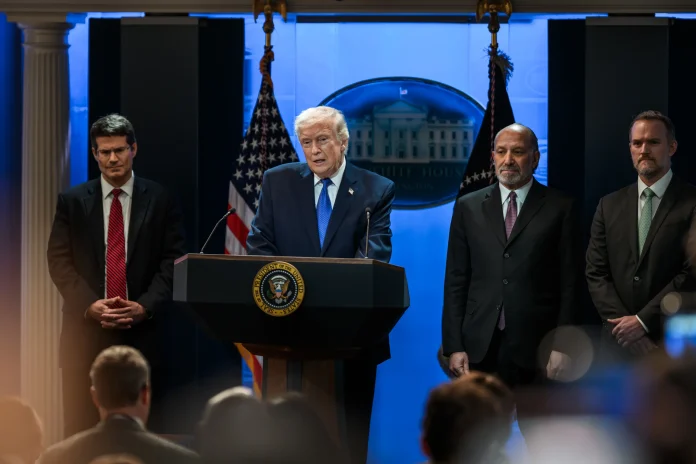
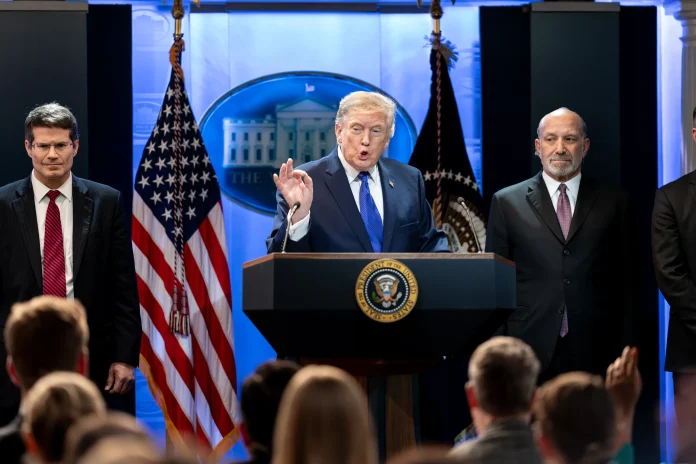
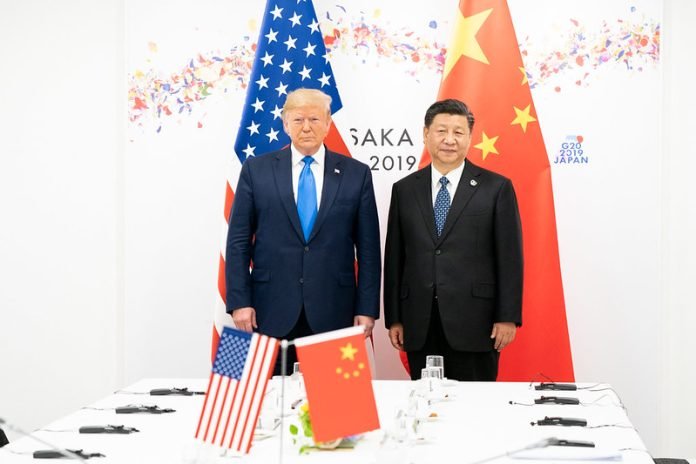
Analysts describe the pact as a quiet triumph for Beijing, highlighting a widening gap between US and Chinese regional strategies. In late 2025, US President Trump favored one-on-one reciprocal deals with countries like Cambodia and Malaysia, whereas China successfully negotiated a bloc-wide multilateral upgrade.
While the US focus remains on security and defense initiatives, China is leading trade-centered regional diplomacy. The US is seen as economically absent after withdrawing from the Trans-Pacific Partnership and offering only the Indo-Pacific Economic Framework, which lacks the market access and binding commitments found in ACFTA 3.0.
Setting regional standards
Beyond simple trade, Version 3.0 allows China to write the rules for the region’s emerging sectors. New chapters on digital trade, AI, and green technology ensure that Southeast Asia’s future infrastructure is built on Chinese standards and regulatory frameworks.
The agreement formalizes Supply Chain Connectivity, embedding Chinese capital and technology deeper into the regional value chain, making it harder for the US to decouple from China without also impacting ASEAN.
Why it matters
The ACFTA 3.0 Upgrade represents a strategic shift in Asia’s economic architecture, deepening China’s integration with Southeast America while providing a multilateral counterweight to US protectionism. For ASEAN, it secures access to its largest trading partner. For China, it creates a shield against US tariffs and establishes Beijing as the standard-setter for the region’s digital and green economic future.
Read also: 2025 ASEAN Summit: US signs trade pacts with four states