NextEra Energy agreed to acquire Dominion Energy in an all-stock transaction valued at $66.8billion, creating the world’s largest regulated electric utility and setting up a high-stakes regulatory battle over who will power America’s artificial intelligence boom.
The deal, announced on May 18, is the largest merger in the history of the power sector and gives NextEra control of Dominion’s massive footprint in Northern Virginia, home to the densest concentration of data centers on the planet. NextEra shareholders will own about 74.5% of the combined company, while Dominion shareholders will hold roughly 25.5%, with the entity continuing to operate under the NextEra name and ticker NEE.
A utility deal bigger than utilities
This is not just a utility merger. It is a strategic bet that electricity will be one of the defining bottlenecks of the AI economy. By combining NextEra’s scale in renewables and grid infrastructure with Dominion’s territory in the world’s most important data center hub, the companies are positioning themselves to capture what they describe as a once-in-a-generation surge in power demand driven by AI workloads, cloud computing, and large-load customers.
If approved, the combined company would become the world’s largest regulated electric utility business by market capitalization and serve about 10 million customer accounts across Florida, Virginia, North Carolina, and South Carolina. More than 80% of the company’s operations would be regulated, giving it unusual scale in the parts of the grid that directly benefit from rising demand.
Why AI is reshaping the power map
For years, U. electricity demand was relatively flat, which made utilities look like steady but unexciting businesses. That has changed quickly as hyperscale cloud computing and AI workloads drive a surge in demand for always-on power, transmission upgrades, and new generation capacity.
NextEra’s own case for the merger is built around that shift. In its announcement, the company said electricity demand is rising faster than it has in decades and argued that larger scale now matters because utilities must build, finance, and operate generation and grid infrastructure more efficiently.
The strategic prize: Virginia’s Data Center Alley
The most important geography in this deal may be Northern Virginia, especially the corridor often called “Data Center Alley.” Dominion’s territory includes the largest concentration of data centers in the world, a cluster built on dense fiber connectivity, available land, and established power infrastructure.
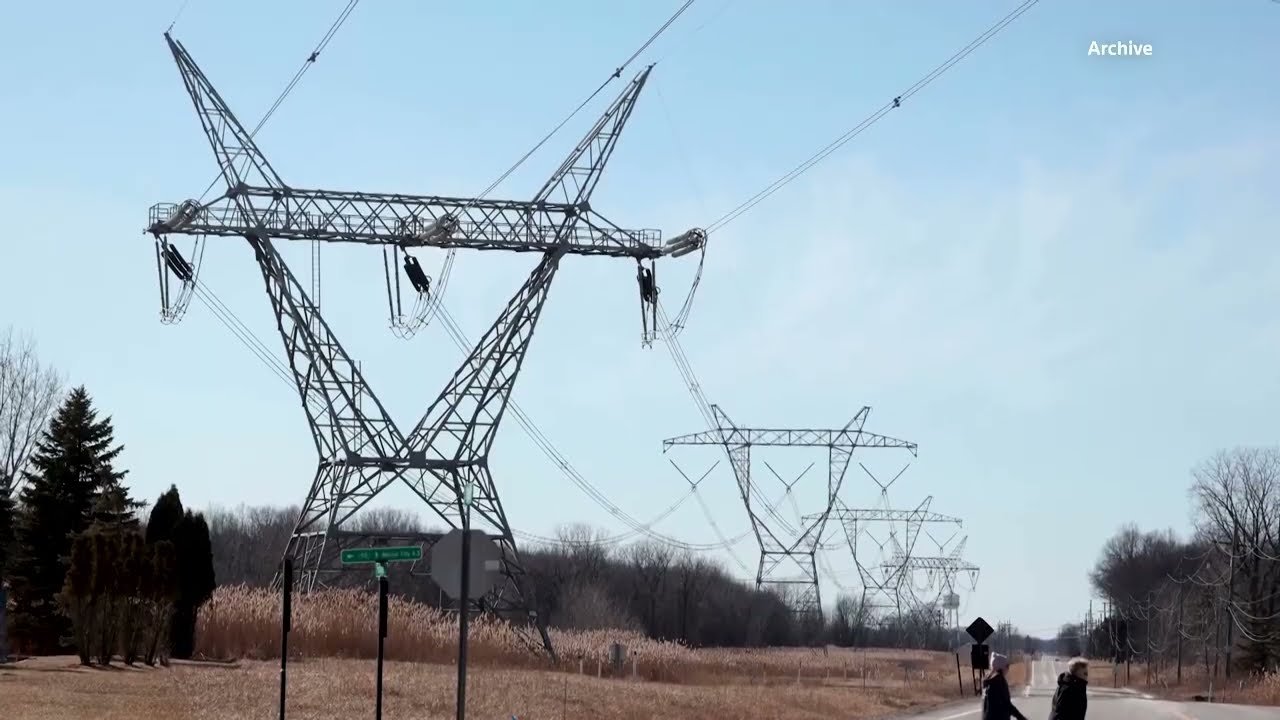
That matters because AI is not just a software story; it is a physical infrastructure story. The servers that train and run large AI models require enormous amounts of electricity, and PJM expects the Dominion zone to see the largest absolute increase in summer peak demand from 2026 through 2030, largely because of data center growth.
Virginia’s numbers show how dramatic this has become. Commercial electricity sales in the state rose by nearly 30million megawatt-hours between 2019 and 2025, and summer peak load in PJM’s Dominion zone reached 23,905 MW in 2025, up 23% from 2019; winter peak load hit 25,413 MW in the 2025–26 winter season, up 45% from 2019–20.
About 70% of global internet traffic flows through Northern Virginia, making the region one of the most critical pieces of digital infrastructure on the planet. Dominion’s franchise in that territory gives NextEra direct access to the grid that powers much of the internet and the AI buildout
What NextEra gets from Dominion
At a basic level, NextEra gets deeper access to one of the most valuable load-growth territories in the country. Dominion gives it a stronger foothold in Virginia at the exact moment when utilities with exposure to data center demand are becoming increasingly central to the buildout of the digital economy.
That combination is significant because AI-era demand does not only require more electricity; it requires different kinds of electricity systems. Utilities now need a mix of fast-build resources, firm power, transmission expansion, and financing capacity, and NextEra is arguing that its scale will let it deliver those assets faster and more cheaply.
Deal mechanics and leadership structure
The transaction is an all-stock deal with Dominion shareholders receiving 0.8138 NextEra shares per Dominion share, plus a share of a $360 million cash pool. The combined enterprise value exceeds $400 billion.
Juno Beach, Fla.-based NextEra will remain headquartered there, with Richmond, Va.-based Dominion serving as a second headquarters. John Ketchum, NextEra’s chairman and CEO, will lead the combined company, while Robert Blue, Dominion’s current president and CEO, will head the regulated utilities division. The board will include 10 directors from NextEra and 4 from Dominion.
NextEra and Dominion said the merger would create a platform with 110 GW of generation, a combined rate base of $138 billion, and a large-load pipeline of more than 130 GW, alongside leadership positions in renewables, battery storage, gas generation, and nuclear.
Why the deal will face scrutiny
NextEra is trying to smooth the path to approval by offering $2.25 billion in bill credits for Dominion customers in Virginia, North Carolina, and South Carolina over two years after closing. The companies also say the combination should improve financing flexibility and help hold down customer bills over time through procurement, operating, and capital efficiencies.
Still, affordability will be the political fault line. Consumer advocates cited by NPR warned that while near-term credits may be attractive, the long-run cost of grid upgrades and generation buildouts could still translate into higher customer rates.
The review process is also substantial. The merger will require shareholder approval, antitrust review, FERC approval, Nuclear Regulatory Commission approval, and state-level approval in Virginia, North Carolina, and South Carolina, with closing expected in roughly 12 to 18 months, targeting late 2027.
What this means for the AI economy
The significance of the merger is that it turns a regulated utility transaction into a bet on who will power the AI economy. In earlier eras, tech leadership depended on chips, software, and networks; increasingly, it also depends on who can secure enough electricity in the right places at the right time.
That is why Virginia matters so much in this story. Data Center Alley is not just a regional cluster of server farms; it is one of the critical physical bottlenecks of the internet and the AI buildout, which makes Dominion’s footprint strategically valuable in a way that traditional utility maps rarely are.
And that is why this deal may end up being remembered as more than a merger. It is an early sign that in the AI age, power companies are no longer just defensive infrastructure plays — they are becoming central architects of economic growth, digital capacity, and industrial policy.