Netflix retreats from Warner Brothers bidding war

Jump to Timeline

Netflix officially withdrew its $82.7billion bid for Warner Bros. Discovery (WBD) on February 26, 2026, effectively ending a months-long bidding war.

Netflix declined to match or exceed Paramount’s “superior” $31-per-share all-cash offer, which valued WBD at approximately $111billion including debt.

Co-CEOs Ted Sarandos and Greg Peters stated the deal was a “nice to have” at the right price, but was “no longer financially attractive” at the levels required to compete with Paramount.

As part of the exit, Paramount (on behalf of WBD) paid Netflix a $2.8billion termination fee to break the original merger agreement signed in December 2025.

Paramount now moves toward finalizing an agreement to acquire all of WBD, including CNN, HBO, and the Warner Bros. film studio. 

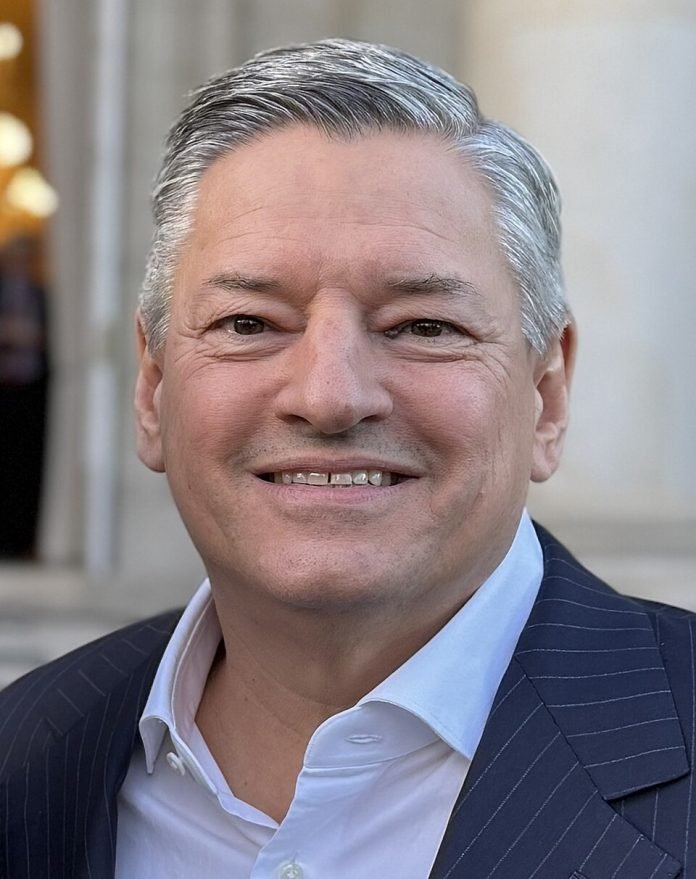
Netflix Co-CEO Ted Sarandos’ White House Visit

According to CNBC, Netflix co-CEO Ted Sarandos met with White House and Justice Department officials on February 26 prior to the company’s withdrawal of its bid for Warner Bros. Discovery.

The company has been under political pressure and warned of regulatory hurdles regarding the merger. 

While officially positioned as a pre-scheduled meeting, the White House told CNBC that Sarandos was not meeting with the President and that he was meeting with with staff members at the White House.

President Trump had recently demanded that Netflix fire Susan Rice (former Obama admin official) from its board “or pay the consequences”.

WBD issued a statement, just after Sarandos arrived at the White House, saying that Paramount Skydance’s latest bid was considered a “superior proposal” to Netflix’s offer and gave the latter four business days to improve its bid.

However, just after Sarandos’s White House visit, Netflix issued a statement to scuttle the deal altogether.

Final Deal Structure

The deal values WBD at $81billion in equity and $110billion in enterprise value, including debt.

Funded by $47billion in equity from the Ellison Family and RedBird Capital Partners, plus $54billion in debt commitments from Bank of America, Citigroup, and Apollo.

If the deal doesn’t close by 30 September 2026, shareholders receive $0.25 per share per quarter.

Paramount agreed to a $7billion regulatory termination fee if the deal is blocked.

The merged entity pledges to release at least 30 theatrical films annually (15 per studio) with a minimum 45-day exclusive theatrical window.

Combined Content Assets

The merger creates a media titan with a library of over 15,000 titles, unites Warner Bros. Pictures and Paramount Pictures, and adds HBO, CNN, TNT, TBS, Discovery, and DC Studios to Paramount’s existing portfolio (CBS, MTV, Nickelodeon).

Plans to merge Paramount+ with HBO Max (Max) into a single global platform, including Harry Potter, Game of Thrones, DC Universe, Star Trek, Mission: Impossible, and Lord of the Rings.

A massive portfolio including the NFL, Olympics, UFC, PGA Tour, NHL, and NCAA March Madness.

Market and Industry reaction

Netflix shares jumped over 10% following the announcement, as investors cheered the company’s fiscal discipline and the removal of a massive acquisition risk.

While some analysts believe Paramount has a “meaningfully easier” path than Netflix, significant obstacles remain.

The US Department of Justice (DOJ) and FTC are reviewing the “horizontal consolidation” of two major film studios and the impact on consumer pricing.

California Attorney General Rob Bonta has opened a “vigorous” investigation; the European Commission and UK’s CMA are also reviewing the merger.

The inclusion of Middle East equity in the financing may trigger a review by the Committee on Foreign Investment in the United States.

Critics, including Senator Elizabeth Warren, have labeled it an “antitrust disaster,” while others express concern over President Trump’s potential involvement given Larry Ellison’s ties to the administration.

Industry & Internal reactions

Staffers at CNN and CBS News have expressed fears of “disaster” due to potential consolidation and editorial changes under the new leadership.

Paramount anticipates $6billion in “synergies,” which is widely expected to result in thousands of layoffs across both companies.

The Writers Guild of America (WGA) has called for the merger to be blocked, citing a “loss of competition” that would harm creators.

Activist investor Ancora Holdings welcomed the deal as a “win-win” for shareholders compared to the previous Netflix offer.
youtube placeholder image

Read also:
Netflix ups Warner Brothers bid to all-cash offer
Paramount launches lawsuit and proxy fight against WBD
Netflix acquires Warner Brothers Discovery
Paramount ups final bid to $31/share for WBD

Key widely reported facts from verified sources including CNN, CNBC, Reuters, The Guardian, Variety, Deadline, NBC News, Fox Business, Al Jazeera

Paramount ups final bid to $31/share for Warner Brothers Discovery

The WBD board had set Feb 23 as the "best and final" deadline after rejecting Paramount's Feb 10 proposal for falling short of a "superior proposal".
Read more

Senate Hearing on Netflix-WBD merger

On Feb 3, 2026, the Senate Judiciary Subcommittee on Antitrust, Competition Policy, and Consumer Rights held a hearing to the Netflix-WBD proposed merger.
Read more

Netflix ups Warner Brothers bid to all-cash offer

Netflix amended its offer to an all-cash bid for WBD's studio and streaming assets, valued at approximately $27.75 per share.
Read more

Paramount launches lawsuit and proxy fight against Warners Brothers Discovery

Paramount Skydance is currently engaged in a high-stakes legal and corporate battle against WBD following a rejected hostile takeover attempt.
Read more

Paramount Skydance’s $108.4billion counter-bid for Warner Bros Discovery

The potential reshaping of Hollywood has sparked industry concern as theater groups warned a Netflix-led model could further sideline theatrical releases.
Read more

Netflix acquires Warner Brothers Discovery

Netflix agreed to acquire Warner Bros. Discovery‘s film, television studios, and streaming service (HBO Max) for $72 billion.
Read more
Timeline

Sep 14: Paramount CEO David Ellison proposes an unsolicited $19-per-share cash-and-stock bid at WBD CEO David Zaslav’s home.

Sep 22: WBD board unanimously rejects the offer as “inadequate”.

Sep 30: Paramount submits a second bid at $22 per share (67% cash).

Oct 8: WBD rejects the second bid. Concurrently, Netflix co-CEO Greg Peters downplays interest in mega-mergers.

Oct 13: Paramount’s third bid of $23.50 per share (80% cash) is approved by its own board but rejected by WBD.

Oct 21: WBD officially opens a formal auction, allowing bids for parts or the whole company.

Nov 20: First round of formal bids from Paramount and Netflix

Dec 1: Paramount increases bid to $26.50/share and reveals Middle Eastern financing.

Dec 4: Netflix issues an ultimatum and increases its bid to $27.75/share. Paramount boosts its offer to $30/share but loses board favor due to financing concerns.

WBD Board votes to accept the Netflix proposal.

Dec 5: Netflix and WBD officially announce their merger. Netflix agrees to acquire WBD’s Studios and Streaming assets for $27.75 per share in a cash-and-stock deal.

Dec 8: Paramount Skydance (PSKY) disrupts the agreement by launching a $108.4 billion hostile bid for the entirety of WBD at $30 per share in cash.

Dec 17: The WBD board formally rejects Paramount’s initial hostile bid, questioning its financing and labeling it “inferior” to the Netflix deal.

Dec 22: Paramount submits an amended bid that includes a $40.4 billion personal guarantee from tech billionaire Larry Ellison to address the board’s financing concerns.

Jan 7, 2026: WBD’s board unanimously rejects the amended Paramount offer, citing excessive debt risk.

Jan 8: Paramount reaffirms its $30-per-share offer despite the board’s rejection, taking the fight directly to shareholders.

Jan 12: Paramount sues WBD in Delaware, accusing the board of misleading shareholders about the Netflix deal.

Jan 15: A Delaware judge denies Paramount’s request to expedite the lawsuit.

Jan 20: Netflix amends its bid from cash-and-stock to all-cash.

Jan 21: Paramount extends its tender offer deadline to woo more shareholders.

Feb 2: CNBC reported that a WBD shareholder vote on the Netflix deal could happen as early as Mar or Apr 2026.

Feb 3: The Senate Antitrust Subcommittee held a high-stakes hearing.

Feb 6: Netflix hired veteran antitrust counsel Seth Bloom to navigate the deepening DOJ investigation.

Feb 9 to 10: Analysts warned of a potential $5.8 billion break-up fee if regulators block the deal. Meanwhile, Netflix executives claimed a Paramount-WBD merger would lead to “$6 billion in job cuts” compared to their own “pro-growth” plan.

Feb 10: Paramount sweetened its bid, offering to cover Netflix’s $2.8 billion termination fee and adding “ticking fees” for regulatory delays.

Feb 17: WBD reopened formal talks with Paramount after a one-week waiver from Netflix, setting a “best and final” deadline for February 23.

Feb 20: Paramount announced it satisfied the HSR waiting period, arguing there were no further U.S. statutory barriers to the deal.

Feb 22: Reports emerged that the DOJ was intensifying antitrust scrutiny of the Netflix-WBD merger due to potential monopoly concerns.

Feb 23: Paramount submitted its higher revised offer (reportedly ~$32/share) just before the board’s deadline.

Opinion & Analysis

You may also be interested in

LEAVE A REPLY

Please enter your comment!
Please enter your name here