Google, Meta and Nvidia are locked in a fast-moving race over the future of artificial intelligence, with the fight spanning chips, cloud infrastructure and frontier models. The contest is shaping how quickly AI develops, who can afford to deploy it at scale and which companies control the most valuable layer of the industry.
On November 6, Google announced Ironwood (TPUv7), its seventh-generation Tensor Processing Unit, and later unveiled Gemini 3 on November 18.
Ironwood is designed for both large-scale model training and real-time inference, and Google says it is its most powerful and energy-efficient AI chip yet. Google says Ironwood can connect up to 9,216 chips in a single pod, helping remove data bottlenecks for massive AI workloads.
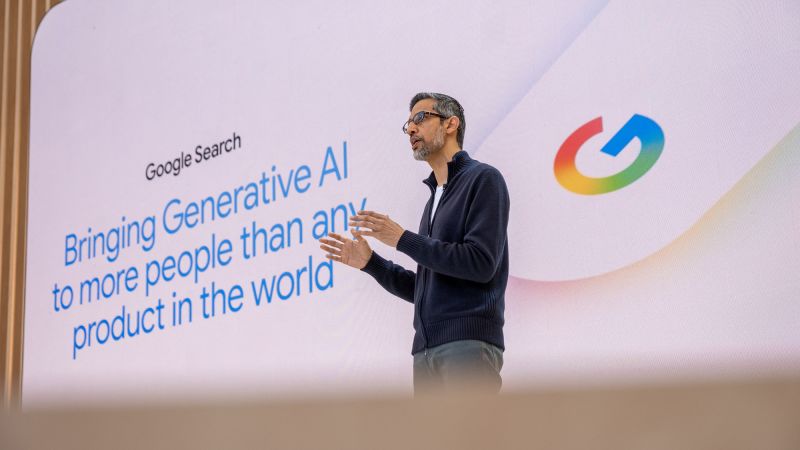
The company is also rolling out Gemini 3 across its search products and enterprise tools, starting with select users before expanding more broadly. Gemini 3 enables users to receive more accurate answers to complex questions with less need for detailed instructions. It will be embedded within Google’s AI search tools, AI Mode and AI Overviews, as well as its enterprise product lineup.
It’s amazing to think that in just two years, Al has evolved from simply reading text and images to reading the room. Starting today, we’re shipping Gemini at the scale of Google.
Alphabet CEO Sundar Pichai
Intense competition
The move puts Google in closer competition with Nvidia, Microsoft and Amazon over the infrastructure behind AI services. Google’s TPUs are custom chips rather than general-purpose GPUs, and the company says they can offer advantages in cost, performance and efficiency.
In addition to the new chip, Google is introducing a range of upgrades intended to make its cloud services cheaper, faster, and more flexible as it competes with other major cloud providers like Amazon Web Services and Microsoft Azure.
While many large language models and AI workloads have traditionally relied on Nvidia’s graphics processing units (GPUs), Google’s TPUs are a form of custom silicon that can offer advantages in cost, performance, and efficiency.
Initial response to Gemini 3
The response to Gemini 3 was widely positive. Tech executives and early adopters publicly raved about its massive leap in reasoning, speed, and multimodal capabilities.
Salesforce CEO Marc Benioff famously declared, “Holy shit. I’ve used ChatGPT every day for 3 years. Just spent 2 hours on Gemini 3. I’m not going back”. OpenAI’s Sam Altman even congratulated the Google team on the breakthrough.
Holy shit. I’ve used ChatGPT every day for 3 years. Just spent 2 hours on Gemini 3. I’m not going back. The leap is insane — reasoning, speed, images, video… everything is sharper and faster. It feels like the world just changed, again. ❤️ 🤖 https://t.co/HruXhc16Mq
— Marc Benioff (@Benioff) November 23, 2025
Congrats to Google on Gemini 3! Looks like a great model.
— Sam Altman (@sama) November 18, 2025
Gemini 3 was launched several months after its predecessors, with OpenAI’s GPT-5 debuting in August. The Gemini app serves 650 million monthly users and its AI Overviews reaches 2 billion. By comparison, OpenAI’s ChatGPT hit 700 million weekly users based on its Aug update.
Google also introduced “Google Antigravity,” a new developer platform focused on task-oriented coding.
Gemini 3 Pro also brings a new level of depth and nuance to every interaction. Its responses are smart, concise and direct, trading cliché and flattery for genuine insight — telling you what you need to hear, not just what you want to hear.
Demis Hassabis, CEO of Google’s AI unit DeepMind
Google’s recent earnings
Google also used its latest earnings report to show how quickly its cloud business is growing. Third-quarter cloud revenue rose 34 percent year over year to $15.15billion, and the company said it signed more billion-dollar cloud deals in the first nine months of 2025 than in the previous two years combined.
Alphabet also raised its expected capital spending for the year to $93billion from $85billion.
The Information reported that Meta Platforms is in talks with Google to invest billions in Google’s chips for use in its data centers starting in 2027, potentially including chip rentals from Google Cloud as soon as next year.
This would represent a shift from Google’s current approach of limiting TPU use to its own data centers and could significantly expand the market for its chips. In other words, it is placing Google in direct competition for the vast spending on data-center processors powering AI services.
Some executives at Google Cloud have indicated this strategy might enable the company to capture up to 10% of Nvidia’s annual revenue, equating to billions of dollars.
That possibility underscores how the AI race is no longer just about model quality. It is also about who can supply the hardware, power the cloud and capture the spending that supports the entire system.
Nvidia has pushed back by arguing that it remains ahead of rivals and that its platform can run every AI model across every kind of computing environment.
We’re delighted by Google’s success — they’ve made great advances in AI and we continue to supply to Google.
— NVIDIA Newsroom (@nvidianewsroom) November 25, 2025
NVIDIA is a generation ahead of the industry — it’s the only platform that runs every AI model and does it everywhere computing is done.
NVIDIA offers greater…
Why it matters
The struggle among Google, Meta and Nvidia is about more than product launches. It is about controlling the foundation of the AI economy, from training giant models to serving them cheaply and efficiently to billions of users. That makes chips and cloud infrastructure just as strategically important as the models themselves.
Read more:
Nvidia first to reach $5T market cap
OpenAI launches GPT-5 for all users
DeepSeek launches V3.2 rivaling OpenAI