Ivory Coast held its presidential elections on October 25, 2025. Incumbent President Alassane Ouattara, 83, was declared the winner with a landslide 89.77% of the vote. Votes secured by opposing candidates Jean-Louis Billon, an independent, and Simone Gbagbo of the MGC, were 3.09% and 2.42% respectively.
Two major opposition figures, former President Laurent Gbagbo and former Credit Suisse CEO Tidjane Thiam, were disqualified from running. Thiam was barred due to dual citizenship issues, and Gbagbo due to a past criminal conviction.
The Independent Electoral Commission reported a voter turnout of 50.1%, which critics noted was significantly lower than the 80% seen in competitive years like 2010. A joint mission from ECOWAS and the African Union described the vote as taking place in a calm and peaceful atmosphere, despite some reported clashes at polling stations.
President Alassane Ouattara was officially sworn in for his fourth five-year term at the Palais de la Présidence in Abidjan. The ceremony was attended by several regional heads of state, including the presidents of Ghana, Senegal, Mauritania, Liberia, Gambia, and Gabon.
In his inaugural speech, Ouattara vowed to focus on regional stability, combating terrorism, and enhancing cybersecurity to protect the country’s economic progress.
Key candidates
The Constitutional Council approved a final list of five individuals to contest the October 2025 vote.
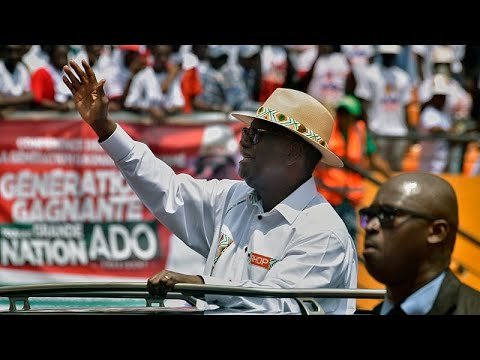
Alassane Ouattara of the RHDP was the 83-year-old incumbent who ran for a fourth term, citing the 2016 constitutional change as a reset for his term limits. His campaign focused on infrastructure, security, and maintaining GDP growth.
Jean-Louis Billon of CODE was a 60-year-old tycoon and former commerce minister, one of the country’s wealthiest men. Originally from the PDCI, he ran under the Democratic Congress banner after his former party backed Thiam. He positioned himself as a generational change candidate focused on private sector investment and youth employment.
Simone Ehivet Gbagbo of the MGC was the former First Lady, known as the Iron Lady, who led the Movement of Capable Generations. Her platform prioritized national reconciliation, healthcare reform, and monetary sovereignty by exiting the CFA franc.
Ahoua Don Mello ran as an independent after being expelled from Gbagbo’s PPA-CI for refusing to join their election boycott. Henriette Lagou Adjoua of the GP-PAIX was a veteran politician and women’s rights campaigner who led the Group of Political Partners for Peace.
Key campaign issues
The 2025 elections in Ivory Coast were defined by a sharp divide between the ruling party’s focus on economic continuity and the opposition’s demands for democratic reform and social equity. The campaign for the presidency centered on Alassane Ouattara’s track record versus the opposition’s call for systemic change.
The RHDP under Ouattara campaigned on a continuity platform, highlighting an average annual GDP growth of 7% and massive infrastructure projects including roads, bridges, and stadiums. The opposition argued that economic growth was not trickling down to the average person. Key voter concerns included high inflation, youth unemployment, and urban gentrification.
Simone Gbagbo made national reconciliation her centerpiece, proposing a general amnesty law to release political and military prisoners and facilitate the return of exiles.
Some opposition candidates suggested diversifying partnerships toward Russia and China, tapping into anti-French sentiment in western regions. A major issue for Simone Gbagbo was achieving true monetary autonomy by replacing the CFA franc. With cocoa as the lifeblood of the economy, addressing declining production due to climate change, aging trees, and European anti-deforestation laws was a critical concern for investors and farmers alike.
Domestic reactions
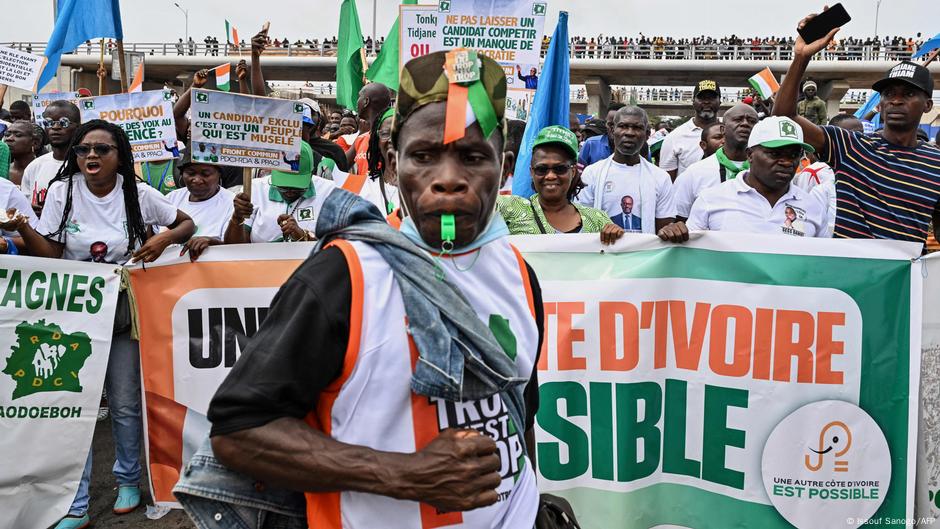
The major opposition parties, whose leaders were barred from running, were the most vocal critics. The coalition of parties led by Tidjane Thiam of the PDCI and Laurent Gbagbo of the PPA-CI denounced the election as a civilian coup d’état.
They stated they would not recognize Ouattara as a validly elected leader due to the exclusion of his strongest rivals. Supporters in opposition strongholds like Yopougon and the southern and western regions largely heeded the boycott call, leaving many polling stations empty.
In contrast, Jean-Louis Billon, who finished second, congratulated Ouattara shortly after initial results showed a clear lead, acknowledging the announced victory while thanking his own supporters.
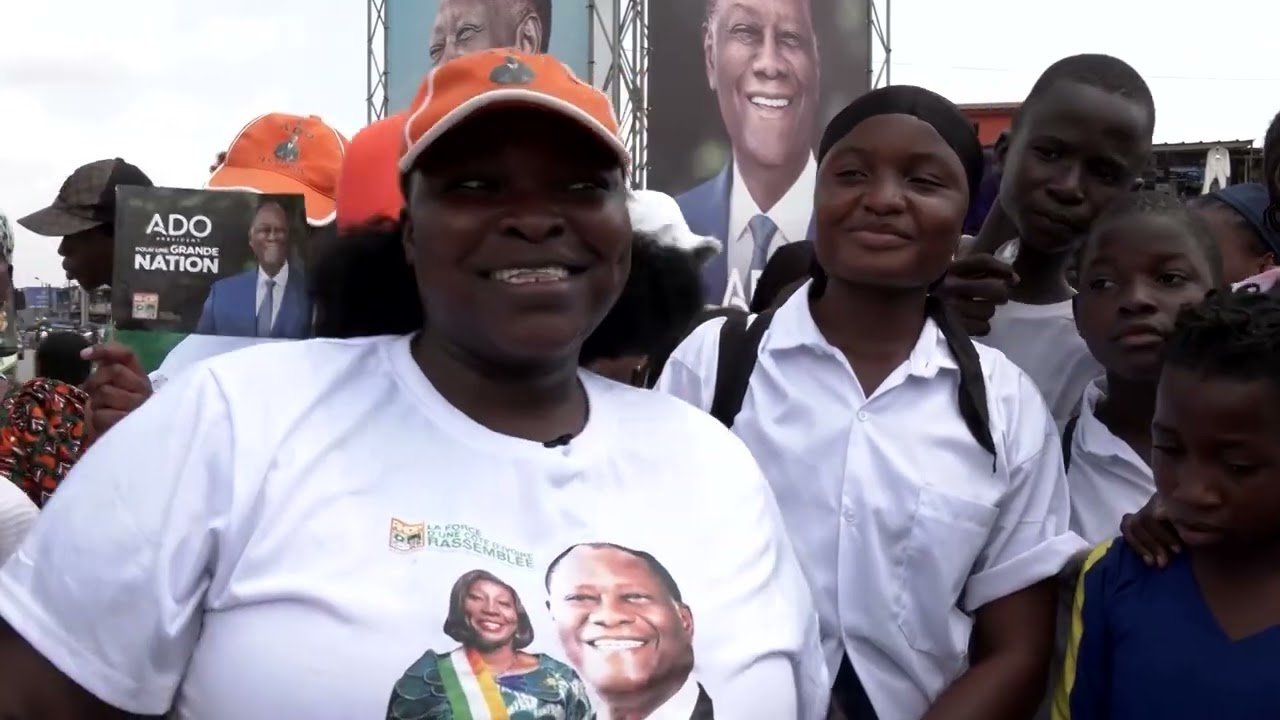
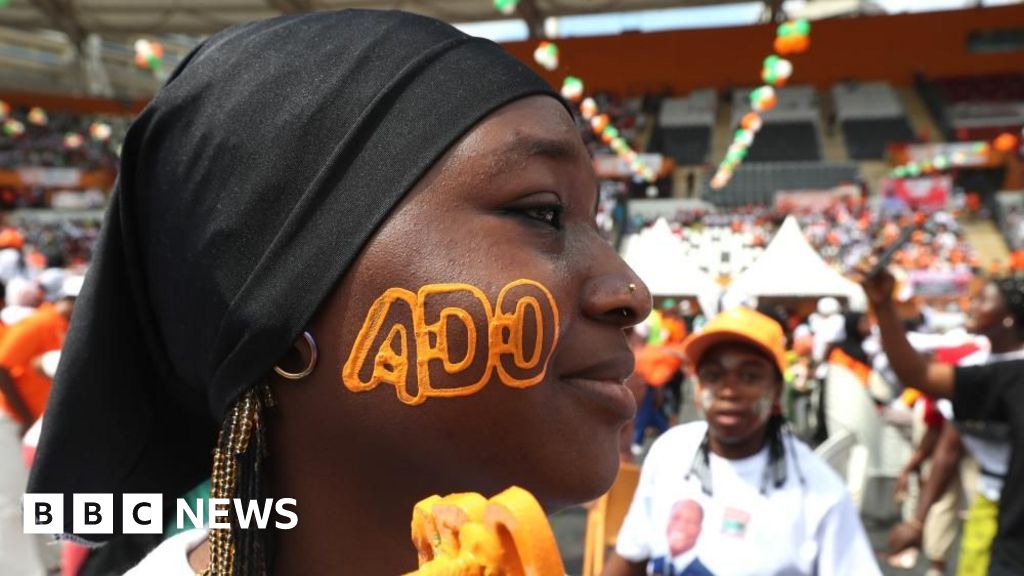
While Ouattara’s supporters celebrated the win as a vote of trust for continued stability and growth, many other citizens remained indoors due to fears of a repeat of the 2011 or 2020 post-election bloodshed. The Ivorian Human Rights Commission reported at least 6 to 11 deaths linked to election-related violence and protests. Amnesty International condemned the pre-election crackdown, which included the arrest of over 250 protesters and a two-month ban on demonstrations.
International and regional observers
International reaction was generally focused on the peaceful conduct of the vote rather than the legal controversies. Some regional analysts and international media outlets, such as DW and Al Jazeera, noted that the exclusion of key candidates diminished political competition and deepened democratic decline in the region.
Organizations like the United Nations and Human Rights Watch expressed concerns over the uneven leveling field caused by the disqualification of major rivals.
Chinese President Xi Jinping sent a congratulatory message on November 10, 2025, calling Ivory Coast a good partner on the path toward modernization and emphasizing solidarity within the Global South. UAE Sheikh Mohamed bin Zayed sent a message of congratulations on October 31, 2025, reaffirming bilateral cooperation.
African Union Commission Chairperson Mahmoud Ali Youssouf congratulated Ouattara and urged all political actors to maintain peace and national cohesion following the boycott. Liberal International, the global federation of liberal parties, issued a statement commending Ouattara’s liberal project for transformation and his roadmap for 2025 to 2030.
Why it matters
Ouattara’s fourth term consolidates his grip on power after nearly 15 years in office, raising questions about democratic backsliding in one of West Africa’s most stable economies. While his economic reforms have driven growth and infrastructure development, the exclusion of major opposition figures and low turnout highlight deep political divisions. The election outcome positions Ivory Coast to continue its economic ascent while navigating regional security threats from Sahel terrorism and mounting pressure for democratic reform.