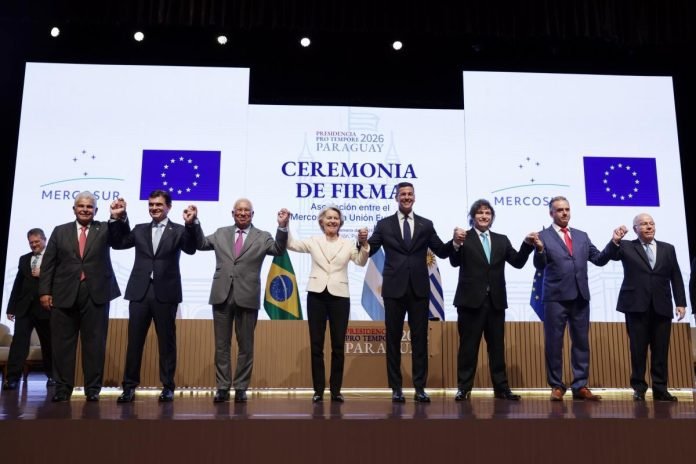
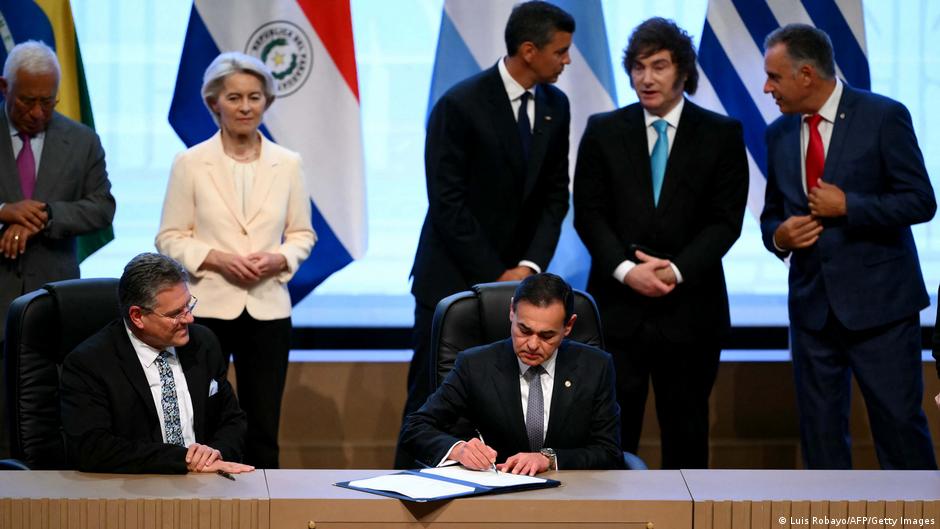
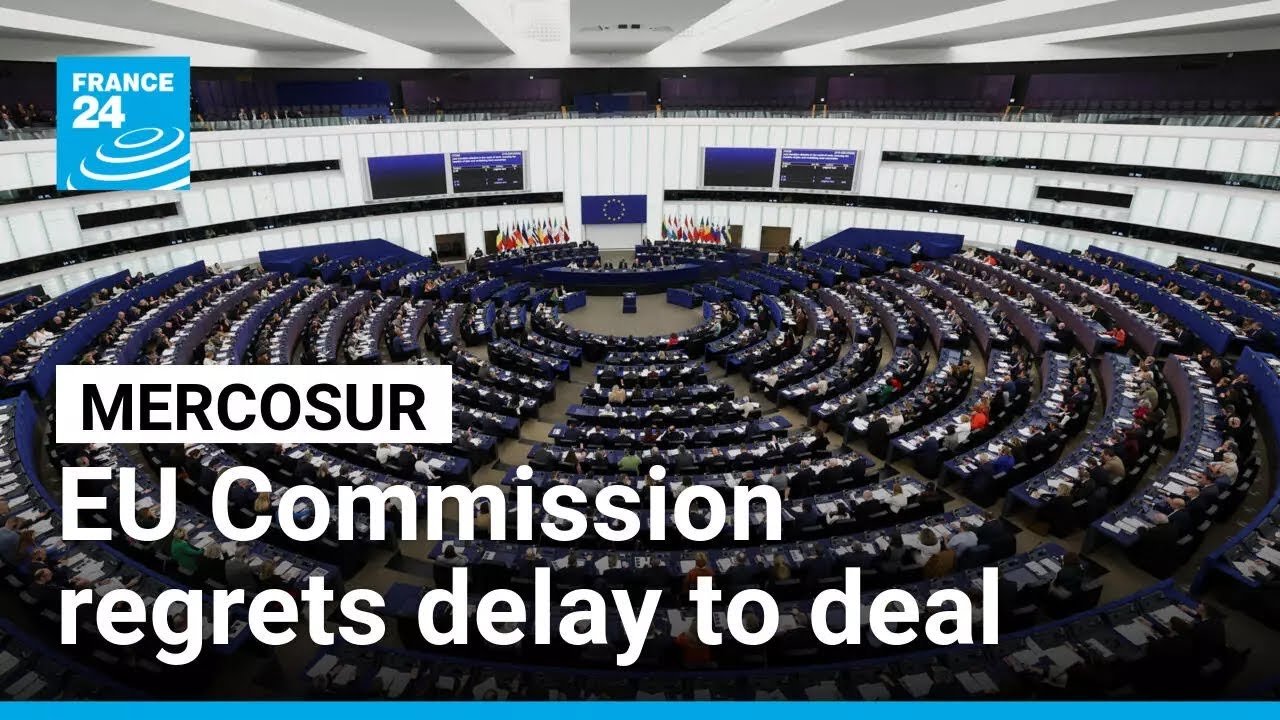
On January 21, 2026, the European Parliament voted to refer the European Union’s long-debated free trade agreement with four South American nations to the bloc’s highest court, introducing new uncertainty after 25 years of negotiation. The referral of the EU-Mercosur agreement to the European Court of Justice (ECJ) has created a significant legal and political “freeze” that directly impacts the timeline for its application.
Narrow vote suspends legislative approval until ECJ ruling
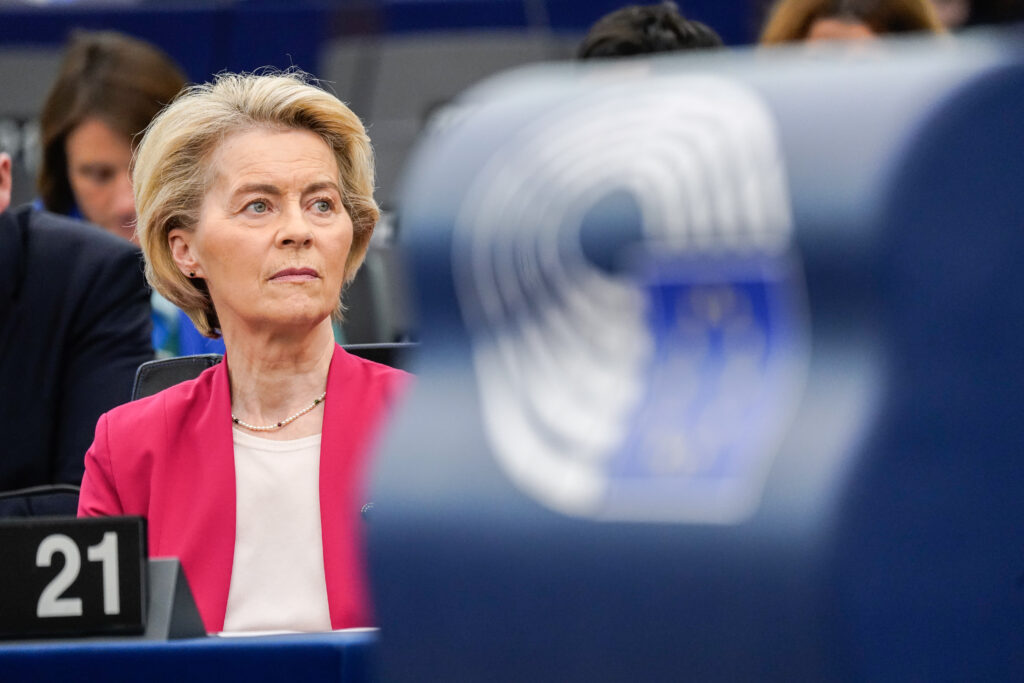
In a narrow vote held in Strasbourg, lawmakers backed the move by 334 to 324, requesting the Court of Justice of the European Union to assess whether the deal, supported by most EU member states and the European Commission, complies with the bloc’s policies.
The European Parliament’s vote effectively suspends the legislative approval process. MEPs cannot grant the final consent required for the agreement to enter into force until the ECJ issues its ruling.
The court is tasked with determining if the “splitting” of the deal into two separate instruments, intended to bypass national parliament vetoes, is compatible with EU treaties.
While some hope for an expedited procedure, standard advisory opinions typically take 16 to 26 months. This could push final ratification into late 2027 or 2028.
Commission and Germany push for provisional application
Despite the parliamentary freeze, a major institutional battle has emerged regarding whether the Interim Trade Agreement (iTA) can be applied immediately. The European Commission and several member states, led by Germany, argue that the trade pillar falls under “exclusive EU competence” and can be applied provisionally once at least one Mercosur country ratifies it.
Diplomatic sources suggest the EU may attempt to trigger provisional application as early as March 2026, following expected ratification by Paraguay. Critics in Parliament warn that “going it alone” would provoke a constitutional crisis between the Commission and lawmakers, as current EU law generally requires parliamentary approval before any trade deal can be provisionally applied.
Farmers and environmentalists celebrate “legal brake”
European farmers, particularly in France (FNSEA) and Ireland (IFA), erupted in celebration following the vote. They view the delay as a critical opportunity to “test the deal” against EU standards and potentially set it aside entirely.
French Prime Minister Sébastien Lecornu and Foreign Minister Jean-Noël Barrot welcomed the decision, insisting the vote must be “respected” as a necessary move to protect food sovereignty. The Greens and The Left, who spearheaded the referral, argue the delay is a necessary safeguard to ensure the deal complies with the precautionary principle and doesn’t bypass national parliaments through the “splitting” tactic.
Chancellor Friedrich Merz sharply criticized the referral, stating the Parliament “misjudged the geopolitical situation.” He argues that in the face of rising US tariffs and Chinese competition, Europe cannot afford a two-year legal stalemate.
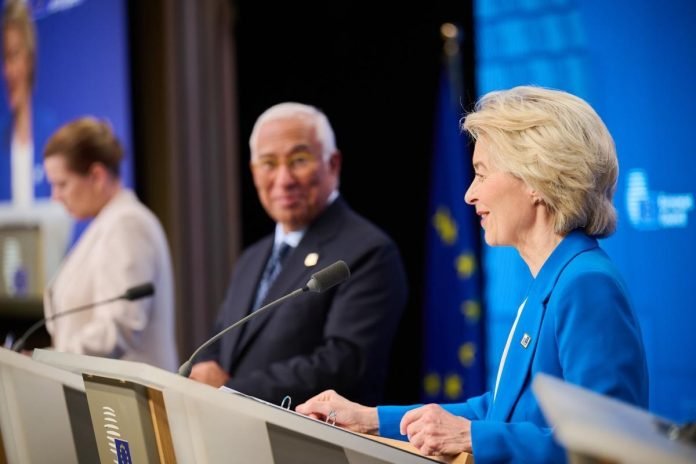
European Commission President Ursula von der Leyen expressed regret over the decision, maintaining that the legal concerns raised are “not justified.” The Commission is now exploring provisional application to bypass the delay, though this remains politically explosive. Lobbies representing the automotive, machinery, and wine sectors expressed “fury” and disappointment, citing billions in continued annual tariff costs.
Mercosur leaders warn patience wearing thin after 25 years of talks
The response from South American capitals has been one of concern and caution. Leaders in Brazil and Argentina have warned that their patience is wearing thin after 25 years of talks.
Several Mercosur governments signaled they would accelerate national ratifications (with Paraguay expected to finish in March 2026) to exert maximum pressure on the EU to activate the deal provisionally.
“Shitstorm” in parliament over 10-Vote margin
The narrow 10-vote margin (334 to 324) has left the European Parliament deeply divided, with major parties like the EPP and Renew Europe facing internal “bloodbaths” as national delegations broke party lines to vote with the opposition.
Legal analysts note that if the ECJ eventually rules against the “splitting” of the deal, the entire 2026 signature could be invalidated, requiring a complete renegotiation or a return to a structure requiring unanimous consent from all 27 national parliaments. Until provisional application or final ratification occurs, the existing high-tariff regime remains.
European exporters continue to face 20% duties on industrial goods, while Mercosur agricultural exports remain subject to EU tariffs of up to 35%. Industry groups, such as the VDMA, have criticized the delay, stating it creates prolonged uncertainty for businesses planning long-term investments in South America.

Read also: 2026 EU-Mercosur Free Trade Agreement