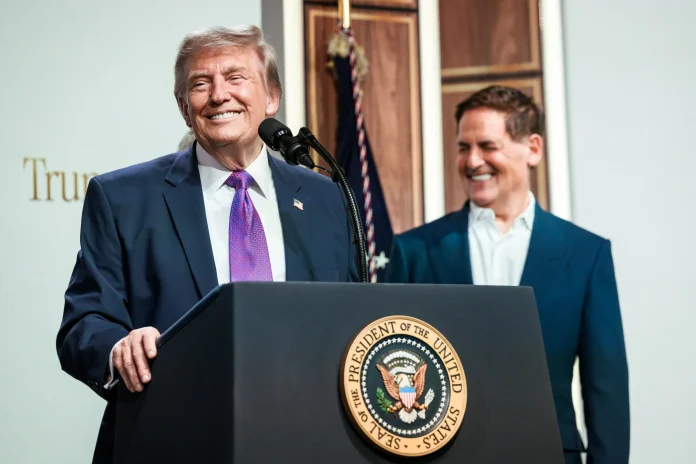
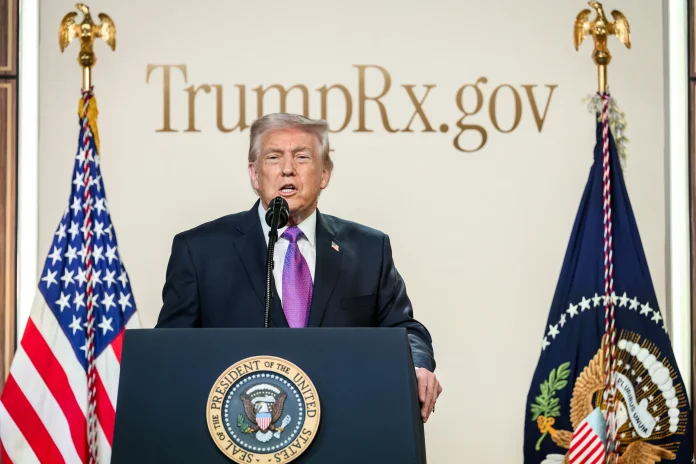
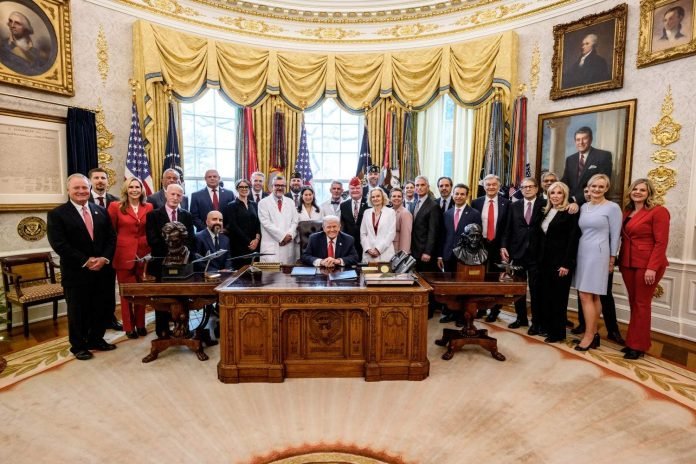
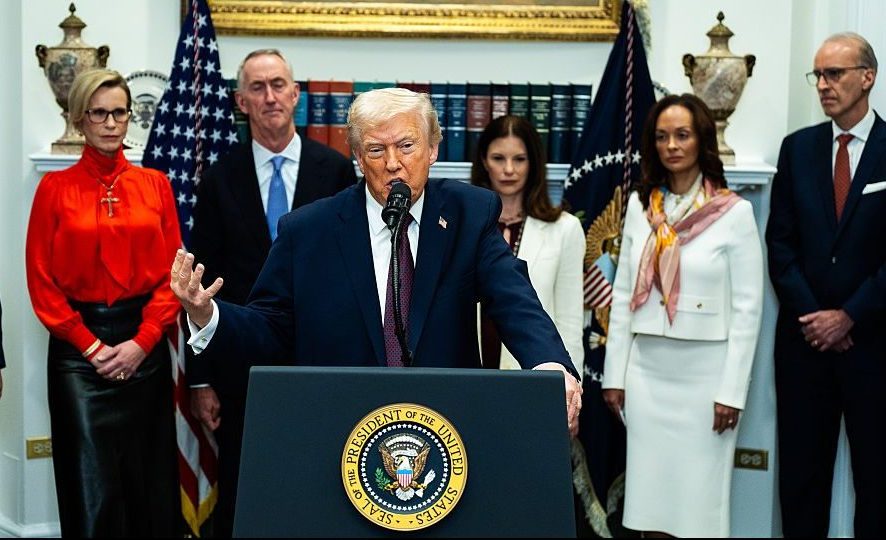
In December 2025, President Donald J. Trump announced a series of Most-Favored-Nation agreements with major pharmaceutical companies, saying the deals would tie US prescription drug prices to the lowest levels paid in other developed countries.
The agreements mark the latest step in Trump’s push to force down medication costs, while also reshaping how drugmakers sell to Medicaid, uninsured patients and cash-paying consumers.
By the end of 2025, nine additional drugmakers had signed on: Amgen, Boehringer Ingelheim, Bristol Myers Squibb, Genentech, Gilead Sciences, GSK, Merck, Novartis and Sanofi. Those deals followed earlier agreements with Pfizer, AstraZeneca, EMD Serono, Novo Nordisk and Eli Lilly, bringing the total number of companies under MFN-style arrangements to 14.
Additional deals with Johnson & Johnson and AbbVie were announced in early 2026.
MFN pricing
The core promise is MFN pricing. The companies agreed to match US prices to the lowest prices they charge in other wealthy countries, including on new drug launches. The agreements also give state Medicaid programs access to those lower rates.
Bristol Myers Squibb separately agreed to provide its blood thinner Eliquis to Medicaid for free.
Investments
The companies also pledged at least $150billion in new US-based pharmaceutical manufacturing investment. In exchange, they received a three-year exemption from potential Section 232 tariffs, a move designed to avoid the threat of punitive import duties.
Several firms also agreed to donate active pharmaceutical ingredients to a national emergency stockpile, including ingredients used in blood thinners, asthma inhalers and antibiotics.
TrumpRx launch
A central part of the rollout is TrumpRx.gov, a government-branded direct-to-consumer portal expected to launch in January. The site is aimed primarily at uninsured or under-insured patients paying cash, and it will route buyers to drugmakers’ own discount sales channels.
Trump officials say the platform will help consumers access lower prices on select medications outside the traditional insurance system. For example, Merck plans to offer Januvia at $100 instead of $330, Gilead’s Epclusa at $2,425 instead of $24,920, and GSK’s Advair Diskus at $89 instead of $265.
Limits of the savings
The biggest savings may not reach most insured Americans, who often already pay less through their health plans. Analysts say the more meaningful exception could be GLP-1 drugs such as Wegovy and Zepbound, where direct-to-consumer pricing and broader Medicare access may lower out-of-pocket costs.
Even so, critics argue that list prices have not fallen across the board, which may limit the impact for many privately insured patients.
Reaction and risks
The White House and participating CEOs described the agreements as a major breakthrough for affordability and a historic turning point for US patients. Industry executives also appeared eager to avoid tougher measures, including the 100% tariffs on branded imports Trump had threatened earlier.
But the deals have also raised questions. Legal experts have warned that cross-company coordination on pricing could create antitrust concerns, while Public Citizen filed a FOIA lawsuit in January 2026 seeking the release of the deal terms.
The agreements have been welcomed by investors as a sign that the tariff threat is easing, but the sector has remained volatile as markets weigh the effect of MFN pricing on future profits.
At the same time, the deals are accelerating a broader onshoring trend, with analysts saying companies are committing hundreds of billions of dollars to US manufacturing. Health policy experts, however, warn that steep price cuts could pressure future biotech research and development, especially at smaller firms.
Investors have responded unevenly: Novo Nordisk shares fell sharply after the company warned of profit pressure, even as analysts said the deals were driving more than $500billion in US manufacturing commitments.
Health policy experts have also warned that deep price cuts could weigh on future biotech innovation, while critics say the headline savings may not reach most privately insured Americans because list prices have not broadly changed.
Read also:
Trump launches “The Great Healthcare Plan”
US launches online platform TrumpRx for discount drugs
Eli Lilly first pharma to reach $1T market cap