President Donald Trump announced on January 15, 2026, a new initiative called “The Great Healthcare Plan” which is a policy framework aimed at lowering drug prices and insurance premiums rather than a full replacement for the Affordable Care Act (ACA).
The framework aims to lower costs by redirecting insurance subsidies directly to citizens and codifying international drug pricing deals. While presented as a “comprehensive reform,” the plan is currently a conceptual outline that requires Congressional action to be fully implemented. It focuses on affordability, price transparency, and sending more federal money directly to individuals instead of insurance companies.
Analysts describe it as a collection of cost-control measures, not a comprehensive new health system. The plan proposes fully funding the Affordable Care Act’s (ACA) cost-sharing reduction program, which the administration claims could save taxpayers $36billion and lower some premiums by over 10%.
Direct-to-consumer subsidies to HSAs, MFN drug pricing codified
The most significant proposal involves stopping federal subsidy payments to large insurance companies and instead depositing those funds directly into Health Savings Accounts (HSAs) for eligible Americans to purchase their own coverage. The plan calls on Congress to lock in the voluntary deals reached with pharmaceutical companies, ensuring the US pays the same low prices for certain drugs as other developed nations.
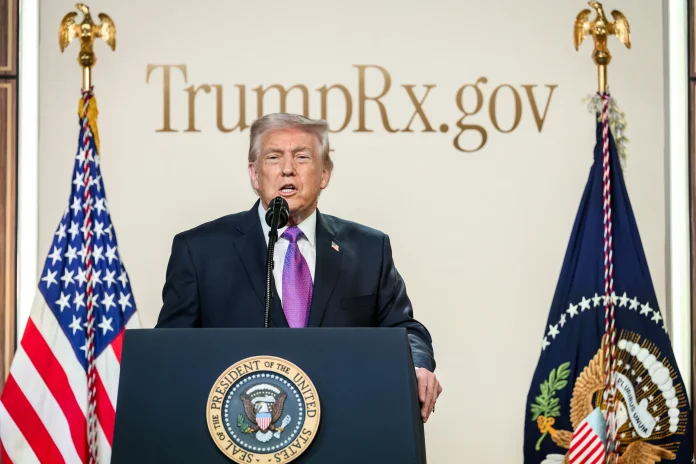
Launched in February 2026, TrumpRx.gov offers discounted “cash-pay” medications from participating manufacturers (like Pfizer and Eli Lilly) directly to patients, bypassing traditional insurance middle-men. Insurers would be required to publish clear, jargon-free comparisons of rates and coverage, alongside data on claim denial rates and overhead profits.
Any provider or insurer accepting Medicare or Medicaid would be mandated to prominently post their full pricing and fees to eliminate “surprise” medical bills. The framework proposes making more “verified safe” drugs available without a prescription to increase competition and reduce unnecessary doctor visits.
Experts skeptical, critics warn of “death spiral” for pre-existing conditions
Health policy analysts have noted the plan’s lack of specific legislative text and clear funding mechanisms. Critics warn that redirecting subsidies to HSAs could hurt lower-income Americans who may not be able to navigate high-deductible plans, potentially leading to a “death spiral” for those with pre-existing conditions if healthy individuals opt for cheaper, lower-coverage alternatives. Congressional Democrats have criticized the plan as a “one-page document” that fails to address the recent expiration of enhanced ACA subsidies, which is expected to drive up out-of-pocket costs for millions in 2026.
Congress asked to codify MFN deals, Senate negotiations stalled
President Trump has called on Congress to formally codify the MFN deals into federal law. This would make the voluntary price reductions permanent and expand them to all Americans, not just those using the TrumpRx portal.
A major legislative hurdle is the proposal to redirect federal insurance subsidies directly into individual Health Savings Accounts (HSAs). While the Consolidated Appropriations Act, 2026 (signed February 3, 2026) included some transparency and PBM reforms, it did not include the core pillars of the Great Healthcare Plan.
Negotiations in the Senate are currently stalled. The administration is working to ensure all state Medicaid programs can access MFN pricing through manufacturer rebates, with implementation expected later in 2026.
Following an executive order, federal agencies (HHS, Labor, and Treasury) are finalizing rules to “standardize” public pricing disclosures for health plans to maximize price transparency.
By June 2026, the HHS Secretary must issue interim final rules for new Medicaid work reporting requirements, with state-level implementation expected to follow. Senate Democrats, led by Ron Wyden, announced their own policy framework on February 4, 2026, which seeks to expand Medicare’s direct price negotiations as an alternative to Trump’s MFN model.
Read also:
US launches online platform TrumpRx for discount drugs
Trump reaches MFN agreements with 16 major pharmas
Eli Lilly first pharma to reach $1T market cap