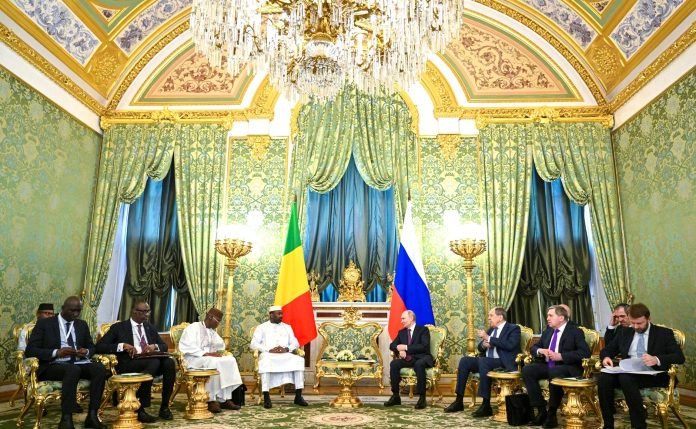
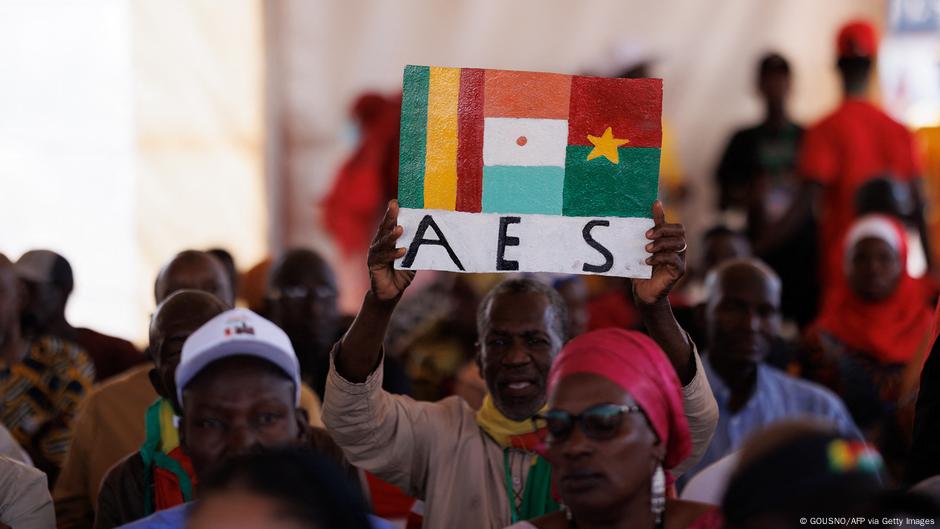
The Alliance of Sahel States, comprising Mali, Burkina Faso and Niger, held its second summit of heads of state in Bamako on December 22 to 23, 2025, as the three junta-led governments moved to deepen their regional alliance and further distance themselves from the Economic Community of West African States (ECOWAS). The summit also marked a continued shift toward institutional autonomy, with leaders highlighting new bloc-wide bodies and symbols of sovereignty, including a joint broadcaster and separate travel documents.
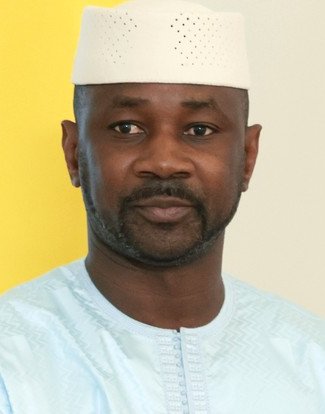
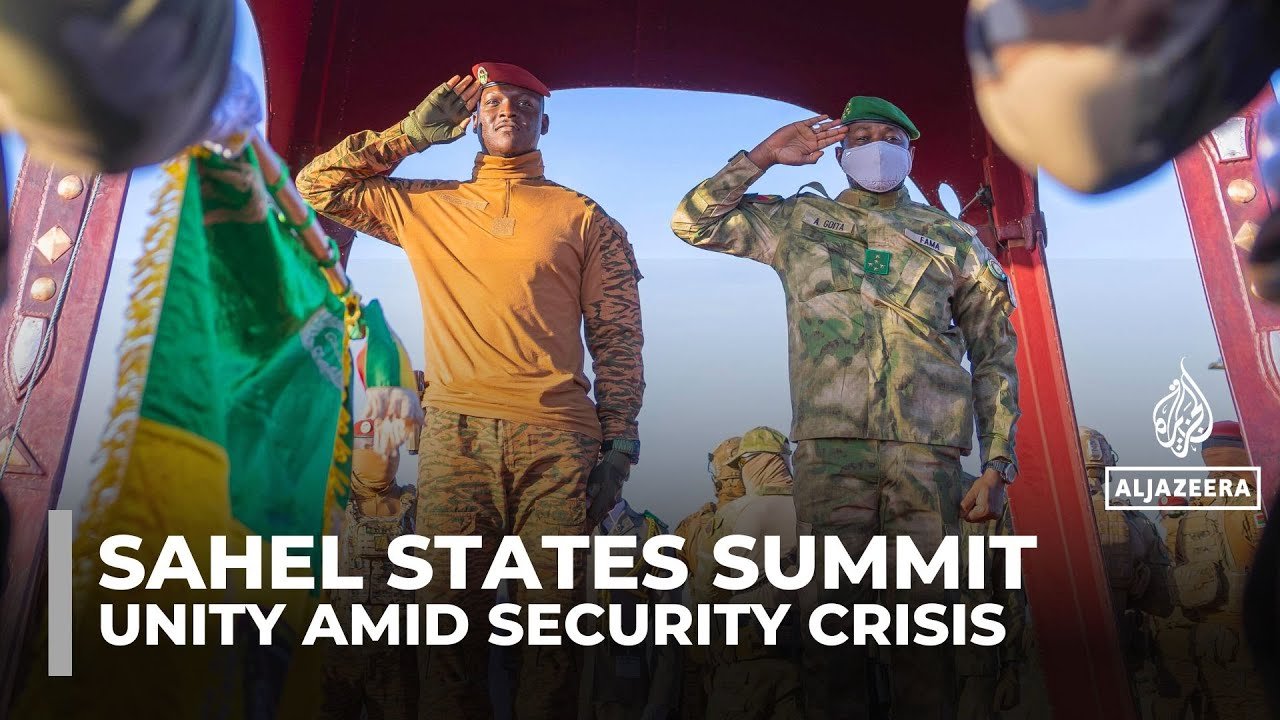
Burkina Faso’s Captain Ibrahim Traoré was named chairman of the alliance, succeeding Mali’s General Assimi Goïta. The leaders also formalized a 5,000-strong unified military force to fight armed groups across the Sahel, with Burkina Faso’s General Daouda Traoré appointed to lead it and headquarters established in Niamey.
The summit underscored the bloc’s deepening ties with Russia, which Sahel officials have increasingly cast as a security and technology partner. ECOWAS signaled it remained open to dialogue, but the rift between the regional bloc and the Sahel alliance appeared to harden as the summit ended.
Breaking from Western influence
The summit was framed by leaders as a “ribbon-cutting moment” for institutions designed to bypass Western-led frameworks. The leaders reaffirmed their withdrawal from ECOWAS, which they accused of being a puppet of French and Western interests.
The summit was framed by leaders as a “ribbon-cutting moment” for institutions designed to bypass Western-led frameworks. The creation of the AES Investment and Development Bank (500 billion CFA francs) was explicitly intended to fund infrastructure without relying on Western lenders or conditional aid.
The launch of AES Television was presented as a tool to counter “disinformation” and “digital colonization” from Western media, promoting a unified pro-sovereignty narrative. The bloc introduced its own biometric passports, replacing ECOWAS documents to assert full control over regional movement.
Growing ties with Russia
Russia is positioning itself as the “partner of choice” for these regimes, offering security and technology without the human rights or governance conditions typically required by the West. It has pledged modern weapons and instructors to support the new 5,000-strong FU-AES unified force, following a formal defense cooperation memorandum signed in Moscow in August 2025.
The AES partnered with Roscosmos to launch the region’s first shared telecommunications and surveillance satellites, intended to revolutionize secure military communications and border monitoring.
The partnership is increasingly defined by a barter-style model where Russia provides military training and equipment, often through the Africa Corps (formerly Wagner), in exchange for access to gold and uranium mines. For instance, Burkina Faso granted a major mining license to the Russian firm Nordgold in April 2025.
The AES has also engaged in regular “AES-Russia consultations” and expressed interest in linking up with the BRICS bloc, mirroring Russia’s vision of a multipolar world.
Reactions
While official statements maintain a “doors open” policy for dialogue, ECOWAS leaders have expressed alarm at the regional “emergency” caused by the split. In response to the AES military pact, the ECOWAS Parliament approved its own regional defense pact in late 2025 to counter rising external influences.
French authorities have been highly critical, viewing the AES actions as a total rupture of traditional security frameworks. The US has adopted a “selective engagement” strategy, attempting to maintain counterterrorism ties while publicly “monitoring” Russia’s expanding footprint.
The AU has restarted mediation efforts, sending envoys to Bamako to discuss a return to constitutional rule. However, officials privately expressed concern over the “entrenched positions” of Sahelian leaders and the potential for a permanent “governance gap” in the region.
The Kremlin hailed the summit as a “clear success” and a model for a “multipolar world”. President Putin has praised the expansion of military-technical cooperation, framing Russia as a “trusting partner” that respects sovereignty without interfering in domestic politics.
Read also:
Russia, Mali to strengthen ties on trade, nuclear energy
Mali dissolves political parties leading to widespread protest
Maso, Burkina Faso issues reciprocal US travel ban