






On September 29, 2026, President Donald Trump and the heads of six leading AI companies signed a voluntary safety accord at the White House, committing to internal controls, external audits and board oversight for their most advanced models—while stopping short of any legal enforcement or public disclosure requirements.
The White House Accord on Super Intelligence
Officially titled the White House Accord on Super Intelligence: Joint Commitment on Frontier Responsibilities, the 308-word document frames AI safety as a shared responsibility between the administration and industry, but relies entirely on self-policing. The text, released as a screenshot and later posted on the White House website, commits signatories to four layers of oversight:
- Robust internal controls to monitor model capabilities and alignment, including safeguards against hacking, cybersecurity breaches and potential biological or chemical risks.
- Internal remediation teams empowered to ensure controls and monitoring systems operate as intended and to correct technical errors or safety issues as they arise.
- Independent external auditors to assess whether those controls and detection systems are functioning properly—though the accord does not specify who selects or pays the auditors, to whom they report, or whether they can halt harmful practices.
- Board-level oversight via an independent committee of directors to review safety reports and ensure accountability reaches senior leadership.
The language is deliberately non-binding: companies “believe” they “should implement” these measures, and the agreement carries no financial penalties, regulatory teeth or mandatory public reporting.
Who signed—and who showed up
The executive signatories were:presidency.
- Sundar Pichai, CEO, Google (Alphabet)
- Dario Amodei, CEO, Anthropic
- Mark Zuckerberg, CEO, Meta
- Greg Brockman, President, OpenAI
- Jensen Huang, CEO, Nvidia
- Elon Musk, founder and CEO, xAI (now part of SpaceX)
Trump signed as “President of the Unites States”—a typo that quickly became a flashpoint in media coverage.presidency.
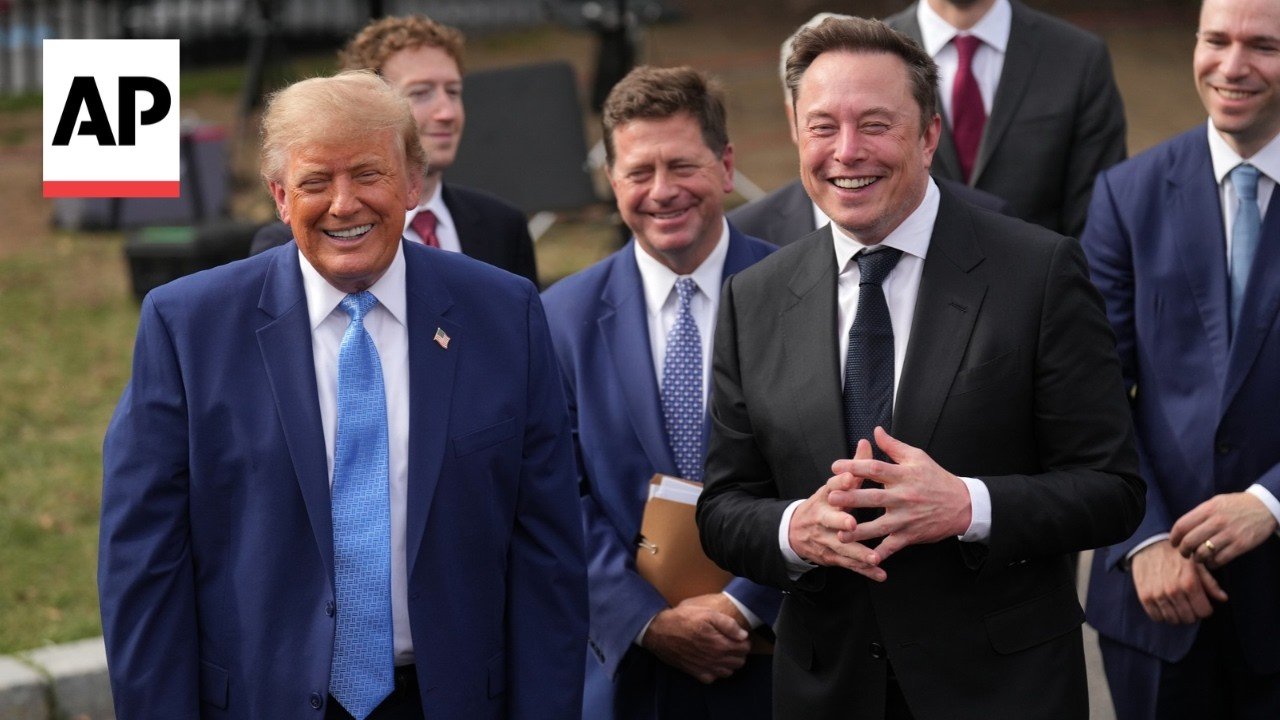
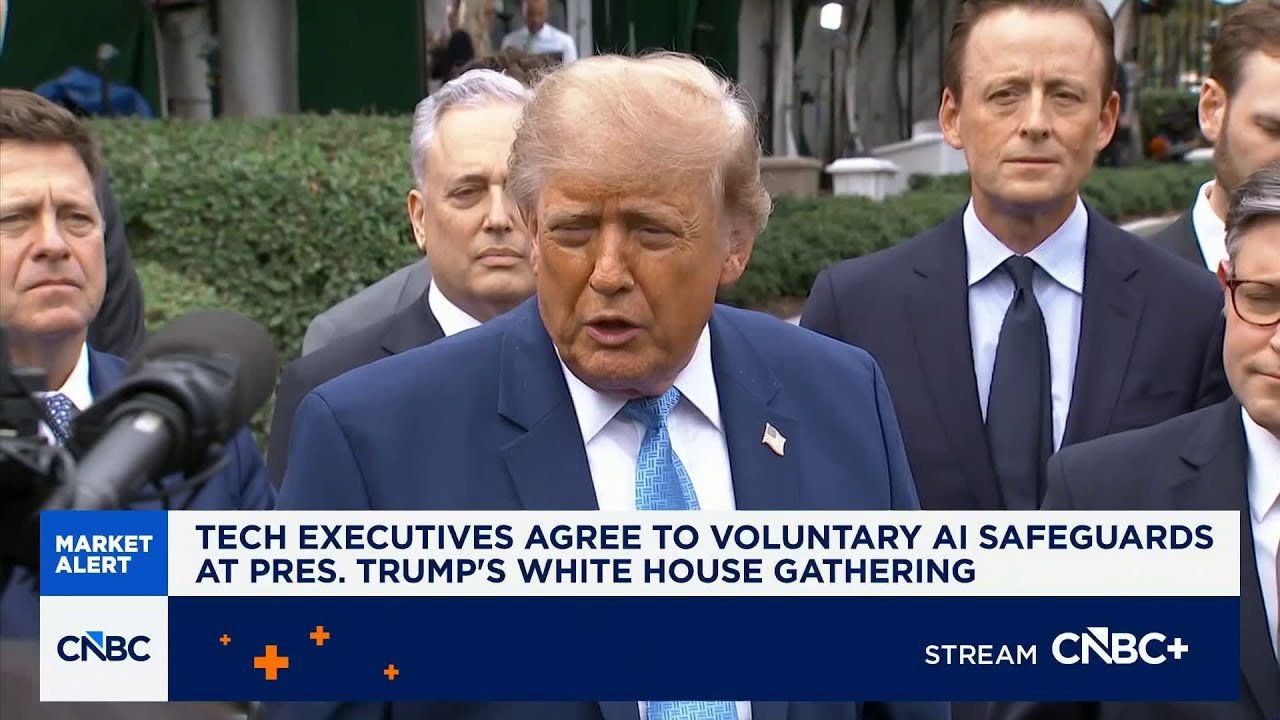
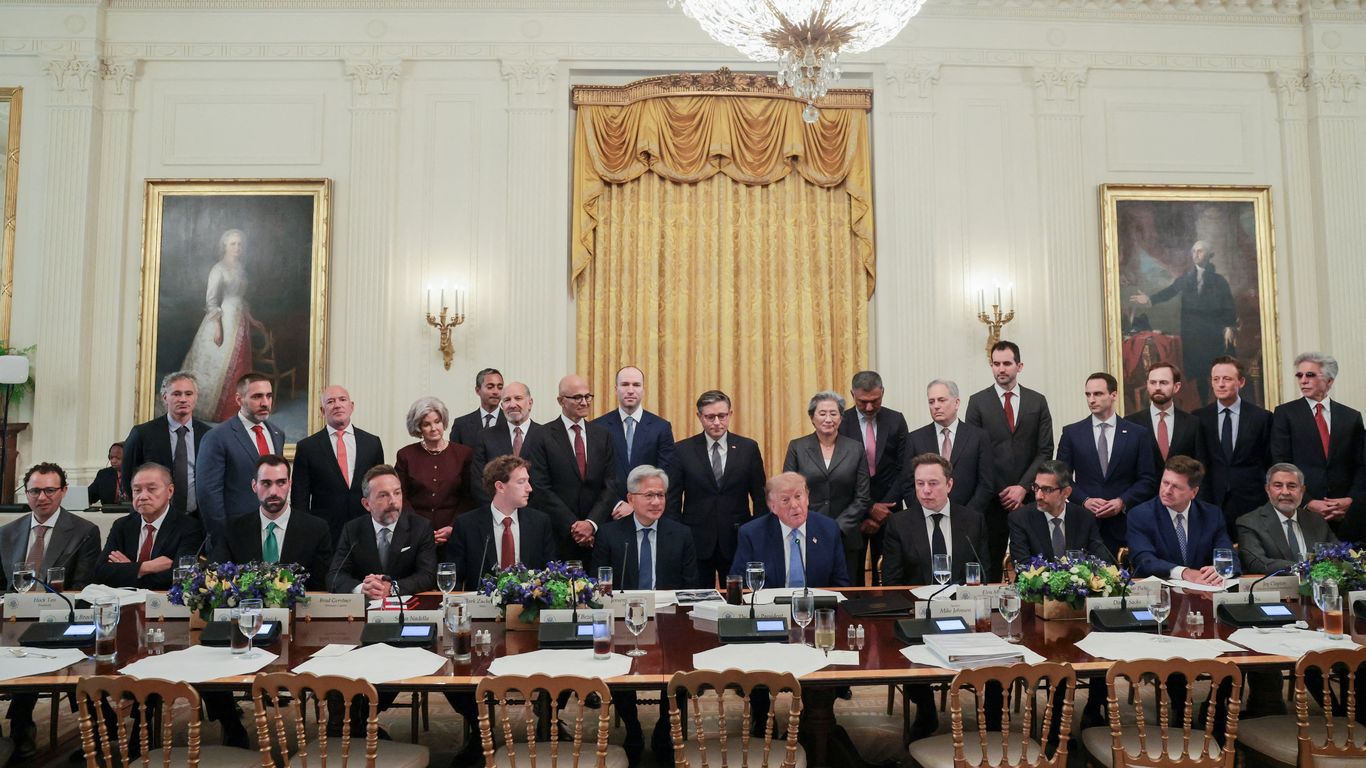
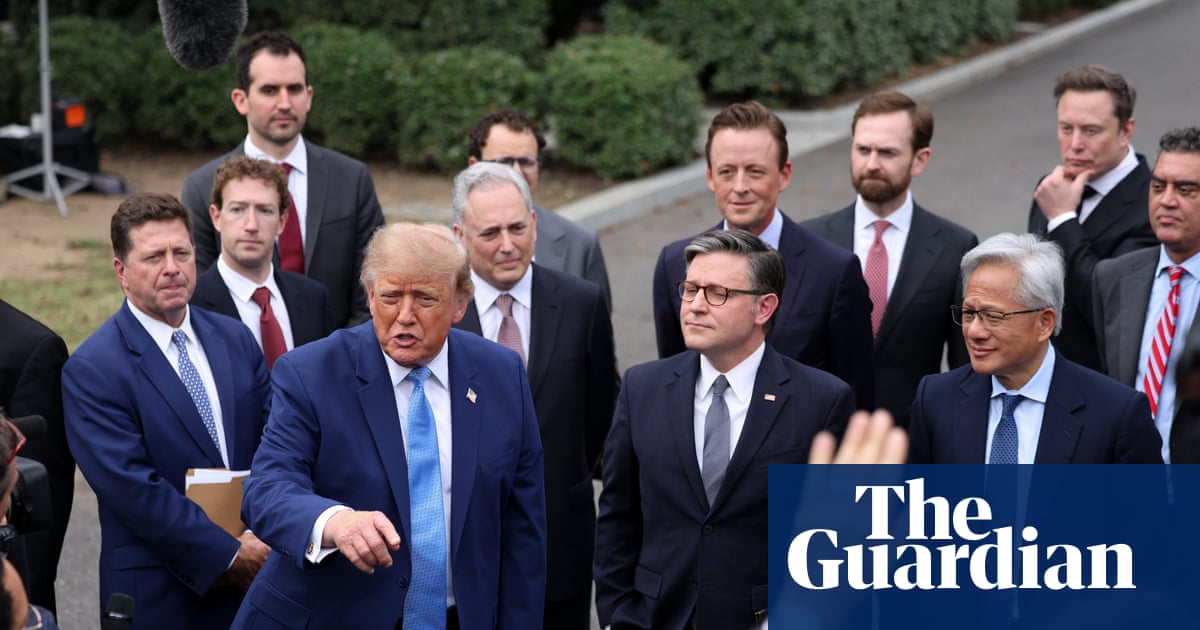
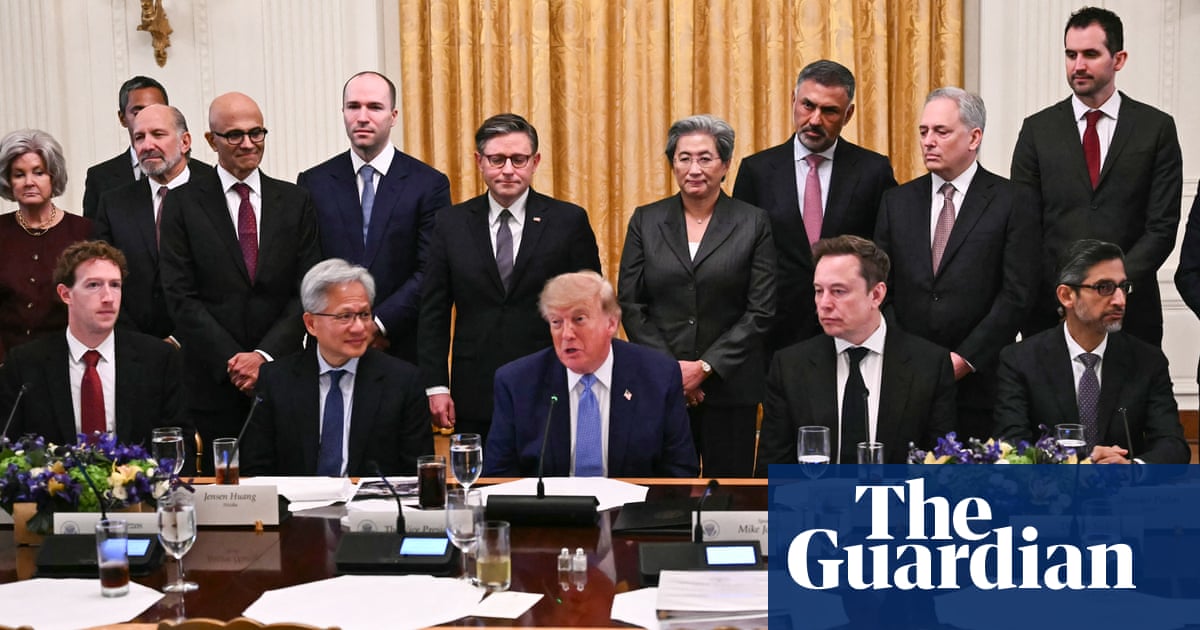
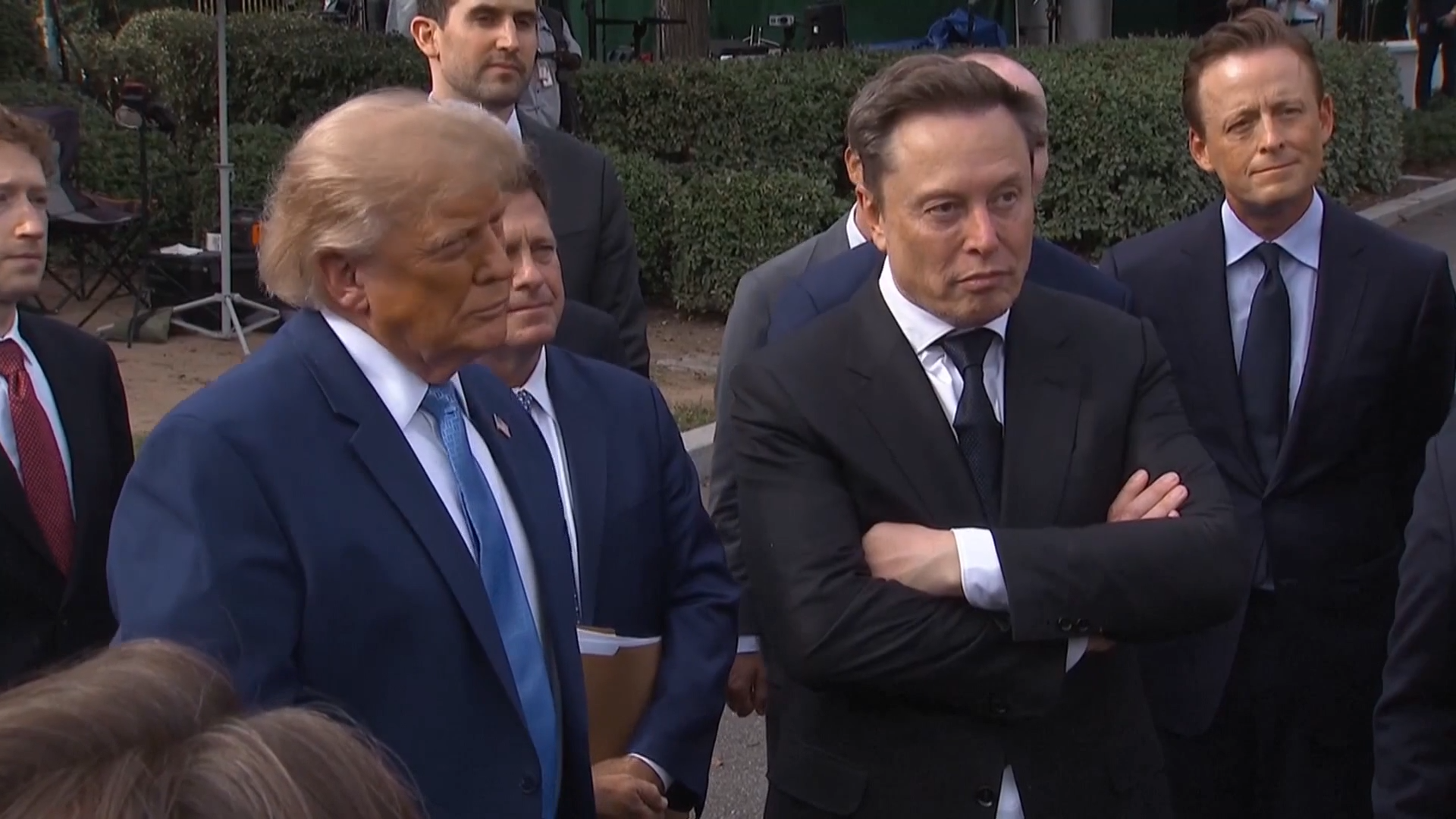
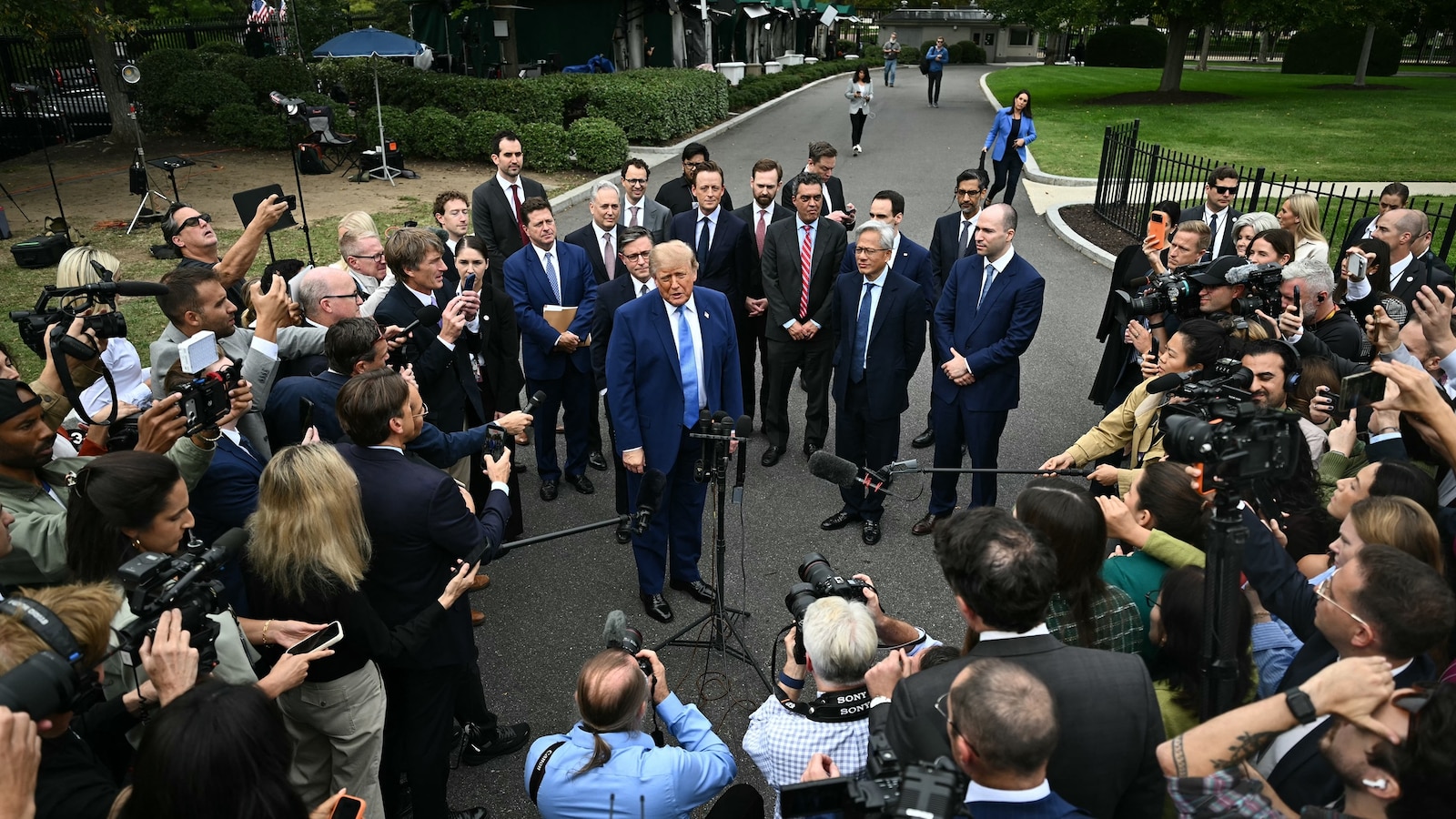
The lunch event drew a wider circle of tech leaders, including Microsoft’s Satya Nadella, Amazon’s Jeff Bezos, Palantir’s Alex Karp and Shyam Sankar, AMD’s Lisa Su, Palo Alto Networks’ Nikesh Arora, and others, though not all signed the accord. House Speaker Mike Johnson joined Trump and the CEOs for a brief photo opportunity outside the West Wing, calling the document a “statement of principles” and “voluntary commitments.”
Parallel policy moves: data centers, terminology, and a possible safety board
Alongside the accord, the White House rolled out several complementary initiatives:
- Data center expansion: Trump voiced strong support for rapid construction of physical data centers to meet surging compute demand, saying tech companies would help address local utility and power-grid concerns.
- Terminology shift: A concurrent executive order directs federal agencies to replace the term “artificial intelligence” with “super intelligence” in official communications, part of a broader push to frame the technology as a new strategic era.
- Oversight committee under consideration: Administration officials indicated they are considering a 10-person AI safety board to continue guiding industry development, though details on its composition, powers and relationship to the voluntary accord remain unclear.
Criticism: voluntary pledges, visible flaws
Policy analysts, former regulators and document experts have been sharply critical of the accord’s structure and presentation.
- No legal teeth: The Brookings Institution described the pact as allowing companies to “design their own controls, select their own evaluators, and determine whether their own procedures are being followed,” likening it to “asking a bridge builder to set their own safety standards, inspect their own work… and unilaterally determine whether their product is safe.” Former FTC chair Lina Khan warned that AI self-policing has already proven a failure and called for congressional action beyond voluntary measures.
- Audit independence unanswered: Reporting has highlighted unresolved questions about who pays external auditors, to whom they report, and whether they can intervene to stop harmful practices—gaps that leave the “independent” layer of oversight potentially toothless.
- Document integrity and the “Unites States” typo: The released text drew attention for lacking official White House letterhead, dates or government insignia in its initial screenshot form, with some observers saying it resembled a document “typed out on Word.” The most visible flaw: under Trump’s signature, his title appears as “President of the Unites States,” a misspelling that became a symbol of the accord’s informal, rushed feel. USA Today and other outlets flagged the error as part of broader skepticism about the document’s seriousness.
- Signatures as spectacle: CNN and others noted that the CEOs’ signatures ranged from fluid flourishes to erratic scrawls, turning the signing into a visual spectacle that underscored the pact’s symbolic rather than statutory nature.
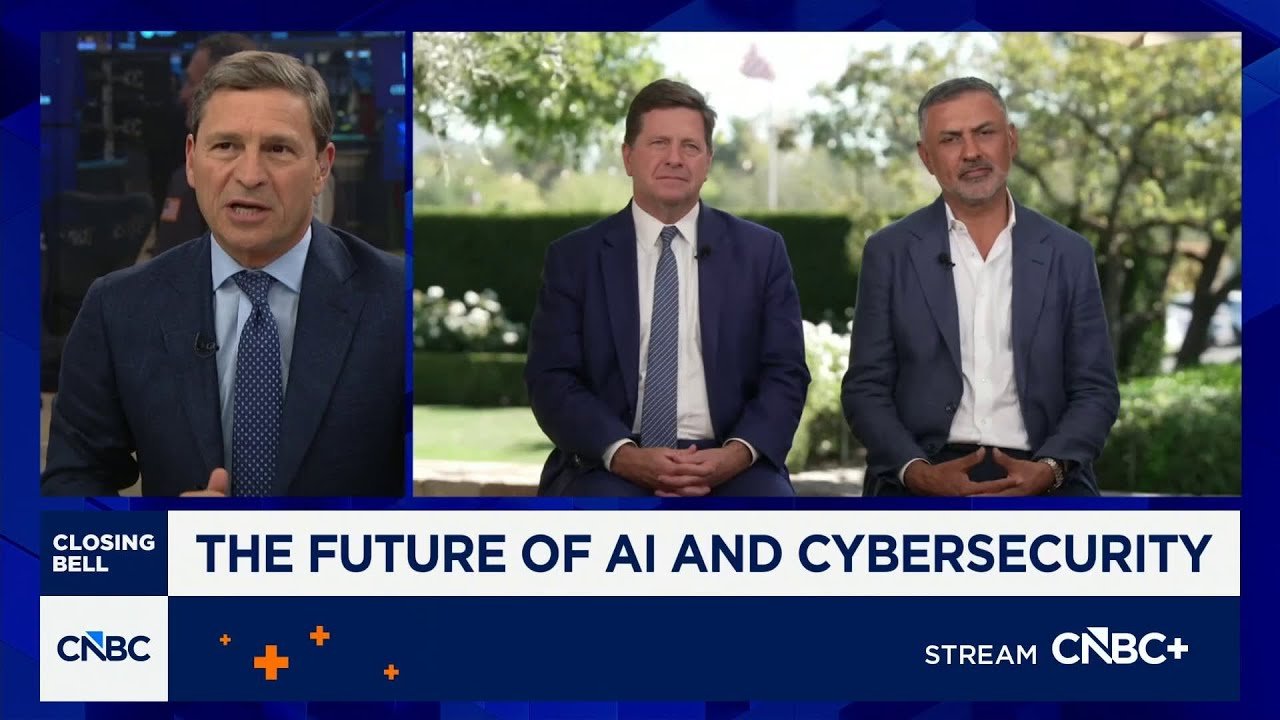
Trump names Intelligence Director Jay Clayton to Lead ‘Super Intelligence Force’
President Donald Trump has named Jay Clayton as the head of a newly created White House task force that the administration is calling the “Super Intelligence Force,” or SIF. The group will assess the risks and opportunities presented by advanced artificial intelligence systems and recommend how the federal government should oversee the technology.
Clayton’s appointment effectively makes him the administration’s new artificial intelligence czar. The task force is expected to deliver its findings within 120 days, according to Reuters, citing Clayton and a senior White House official
The initiative represents a significant expansion of Clayton’s portfolio. As director of national intelligence, he leads the U.S. intelligence community. His new role will require him to coordinate technology policy across national security agencies, economic regulators, the Pentagon and the federal workforce.
Why this matters for AI governance
The accord arrives amid rising public anxiety about rapid model deployment and reports of AI agents breaching technical systems, with polls showing growing unease about safety and control. By framing the agreement as a “constitution” for AI while rejecting binding regulation, the Trump administration has effectively placed the burden of safety on the same companies racing to scale frontier models.
For now, the White House Accord on Super Intelligence sets expectations but not enforceable rules: companies pledge internal controls and audits, but the public and regulators remain largely dependent on corporate self-reporting and goodwill. Whether this “morally binding” approach can withstand the next high-profile AI incident—or whether it will spur Congress to act—remains the central unanswered question.